If there’s one design built to withstand vandalism in the world of security cameras, it’s the dome camera. That’s also why it has become one of the most common forms in surveillance systems. Its rounded structure, combined with a tough outer shell, makes it difficult to tamper with, damage, or even redirect.
Yet even this durable design doesn’t escape a well-known limitation in the field: infrared (IR) night vision. In low-light conditions, IR forces cameras into black-and-white mode, which means losing critical visual details like clothing colors, vehicle colors, or other identifying features. In real-world scenarios, that can make all the difference, whether it’s identifying the color of a suspect’s hat or a vehicle involved in a hit-and-run.
When analytics are added into the mix, another issue often arises: false alerts. Movement from birds, branches, or even shadows can trigger notifications, leading many users to disable alerts altogether because they become more frustrating than useful. The result is a system that technically works, but isn’t always helpful when it matters most.
Dahua’s approach is to tackle both challenges at once, combining AI with full-color imaging to produce clear, detailed color footage even in very low light, almost as if it were captured during the day. Because the improvement is noticeable even in near-total darkness, it also enhances the effectiveness of the camera’s intelligent analytics.
Dahua WizColor – Color, Even Without Light
To overcome the limitations of traditional night imaging, Dahua developed WizColor technology: a significant step forward in low-light video capture. This approach is built on several key elements working together.
First is the lens aperture. By using an exceptionally large F1.0 aperture, the camera is able to capture roughly 2.5 times more light than a typical F1.6 lens. More light reaching the sensor directly translates into a brighter, more detailed image.
The image sensor itself also plays a major role. Larger pixels are more sensitive to light, improving performance in dark environments. WizColor cameras use a 1/1.8-inch sensor that offers about 30% greater light sensitivity compared to more conventional sensors.
Instead of relying on harsh white illumination, Dahua uses warm LED lighting that produces a softer, more natural light. This allows the camera to capture accurate colors even when ambient light is almost nonexistent, without the glare typically associated with standard lighting solutions.
All of this is paired with AI-ISP (Image Signal Processing), which continuously analyzes the scene and dynamically adjusts sharpness, contrast, saturation, and color balance in real time. The end result is an image that feels remarkably close to daylight—even late at night.
Dahua
Founded in 2001 in China, Dahua is now considered one of the leading global players in video surveillance and security technology. The company invests heavily in research and development and continues to push forward with solutions that integrate artificial intelligence, facial recognition, and real-time video analytics.
In Israel, Dahua maintains an official presence with local engineering support, ensuring a high level of service. The distributor is Getter Group, which provides not only the cameras themselves but also complementary solutions such as analytics, cabling, communications, and infrastructure. That ability to deliver a complete, end-to-end solution is especially important in systems of this kind.
DH-IPC-HDW2449T-S-PRO
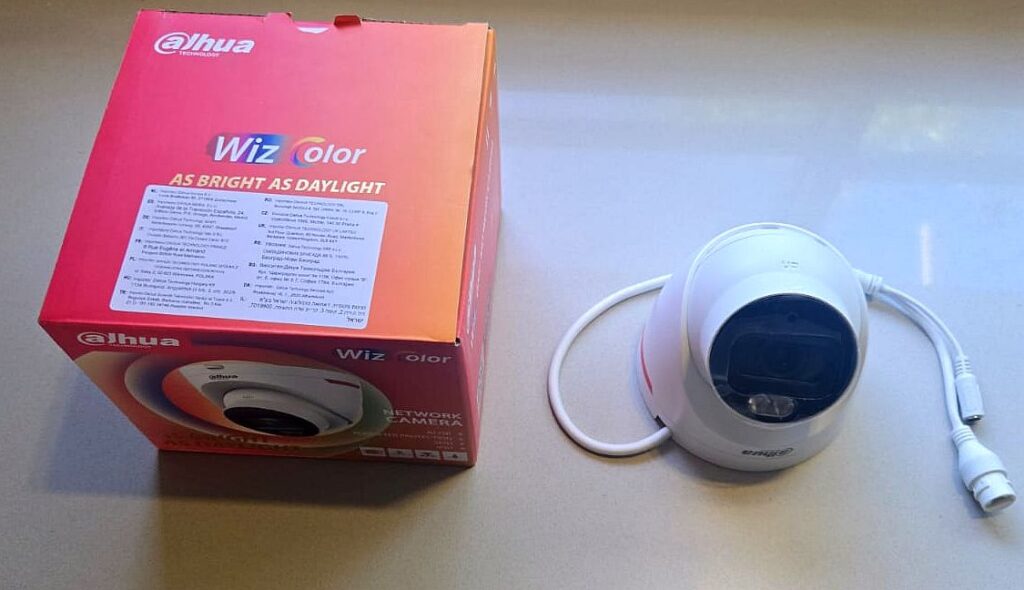
Out of the box, this model follows the familiar dome design seen in earlier generations. However, it quickly becomes clear that this is not just a cosmetic update. The camera integrates significantly more advanced optics and analytics, reflecting the shift toward smarter, more capable surveillance systems.
WizSense
One of the most common frustrations with older analytics systems is the sheer volume of false alerts. Birds, moving branches, and even shifting shadows can all trigger notifications, often leading users to disable alerts entirely.
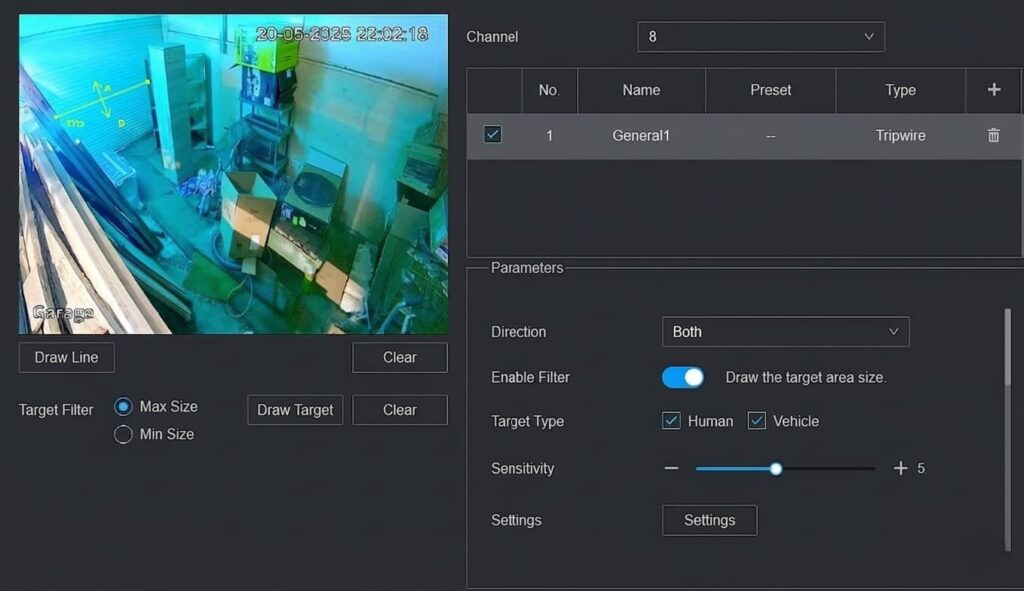
Dahua addresses this with its WizSense technology, which incorporates a dedicated AI chip and deep-learning algorithms. The system is designed to distinguish between humans and vehicles while ignoring irrelevant triggers such as animals, foliage, or shadow movement. This allows for far more accurate alerts, based on clearly defined rules for perimeter protection and motion detection.
SMD Plus (Smart Motion Detection) further refines this capability by classifying objects that trigger motion events, filtering out non-relevant targets and significantly reducing false alarms.
Design
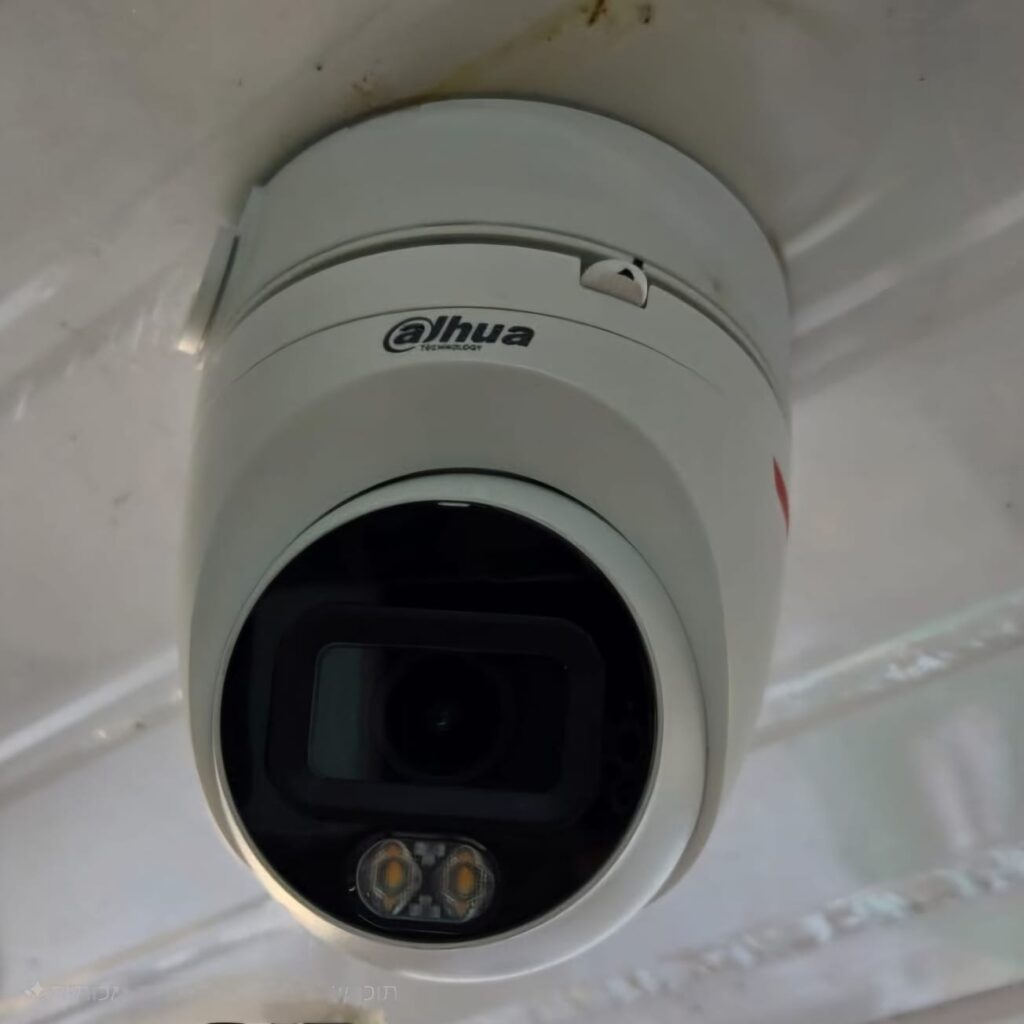
The DH-IPC-HDW2449T-S-PRO features a clean, modern dome design that works equally well indoors or outdoors. Built from cast metal with a matte white finish, it has a minimal, screw-free appearance that keeps it discreet while still feeling robust. It carries an IP67 rating, ensuring full protection against dust and water.
At its center is a fixed len, 2.8mm in the review unit, with a 3.6mm option also available, mounted within an internal spherical housing that allows full 360-degree adjustment. This makes it possible to fine-tune the viewing angle in any direction with precision.
Positioned alongside the lens are two powerful warm LEDs, which replace traditional infrared lighting and enable full-color night imaging while preserving accurate detail.
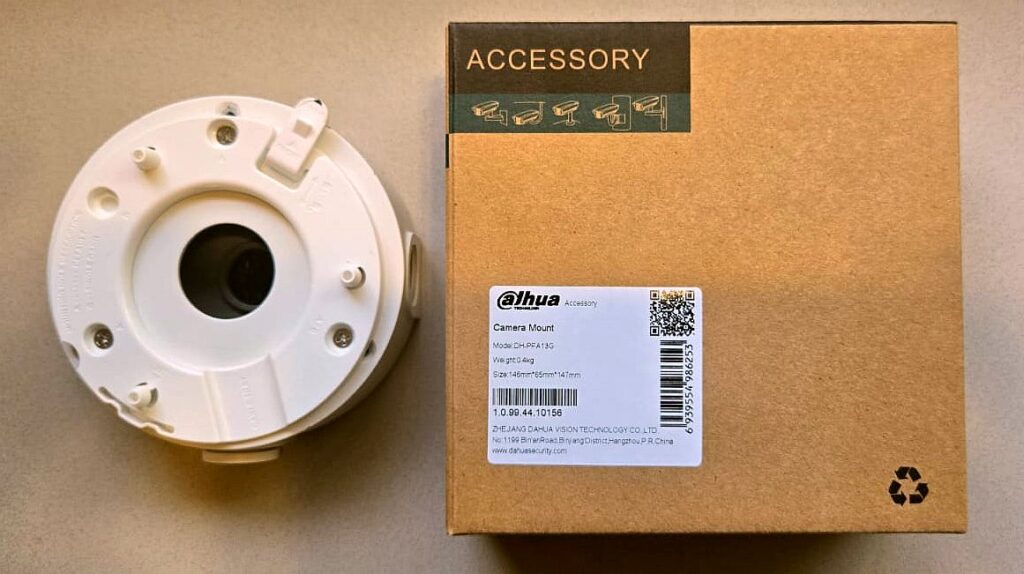
The camera connects to a dedicated mounting base that snaps into a DH-PFA13G junction box. This serves both as a mounting solution and as a sealed enclosure that protects cables and connections. The design eliminates the need for external junction boxes, which often compromise both aesthetics and weather sealing.
Because of the snap-in mounting system and the fact that the lens itself is not lockable, the camera is best installed at heights that are out of reach, typically around 8 to 12 feet (2.5–3.5 meters). This helps protect it from tampering while still maintaining optimal viewing angles for entrances, parking areas, and corridors.
Technical Specifications
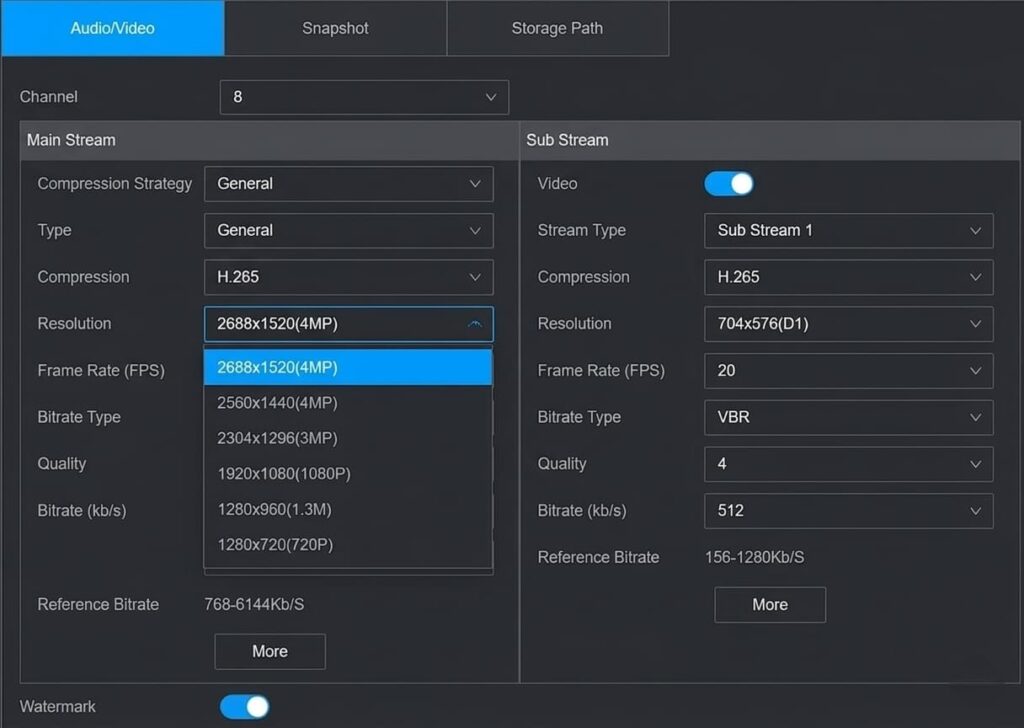
The camera offers 4MP resolution with a 1/2.7-inch CMOS sensor, delivering detailed images at either 2688 × 1520 at 20 frames per second or 2560 × 1440 at 25 frames per second. Even when using digital zoom, image clarity remains high.
With a wide dynamic range of 130dB, it handles scenes that include both bright and dark areas effectively. A built-in microSD slot provides local backup recording in case the main recording system fails.
To manage storage efficiently, the camera supports H.265 compression, producing smaller file sizes than H.264 while maintaining high image quality.
It also includes a built-in microphone capable of detecting unusual sounds or changes in ambient noise levels, triggering alerts accordingly. These alerts can be scheduled based on user-defined timeframes, allowing for flexibility depending on the environment.
All of this is supported by the integrated AI-ISP engine, which continuously optimizes image processing in real time.
Installation
Installation begins with mounting the dedicated junction box to the wall, followed by attaching the camera base and snapping the camera into place. The use of standard Phillips screws simplifies the process, even when using basic tools.
Adjusting the camera is straightforward, as the dome can be rotated freely in all directions. The end result is clean and visually seamless, with no exposed drilling points or external junction boxes.
To evaluate the real-world benefit of the technology, I installed the camera in a covered area that receives no direct street lighting, resulting in near-total darkness at night. In the same location, I already had an older Dahua 4MP dome camera installed, allowing for a direct side-by-side comparison.
User Experience
To demonstrate the camera’s full capabilities, I connected it to a Dahua NVR5208-EI recorder, which includes advanced AI features.
Adding the camera requires assigning it an IP address that matches your network. Once recognized by the Dahua NVR interface, all configuration, including analytics, recording schedules and alerts, is handled directly through the system.
Image Quality
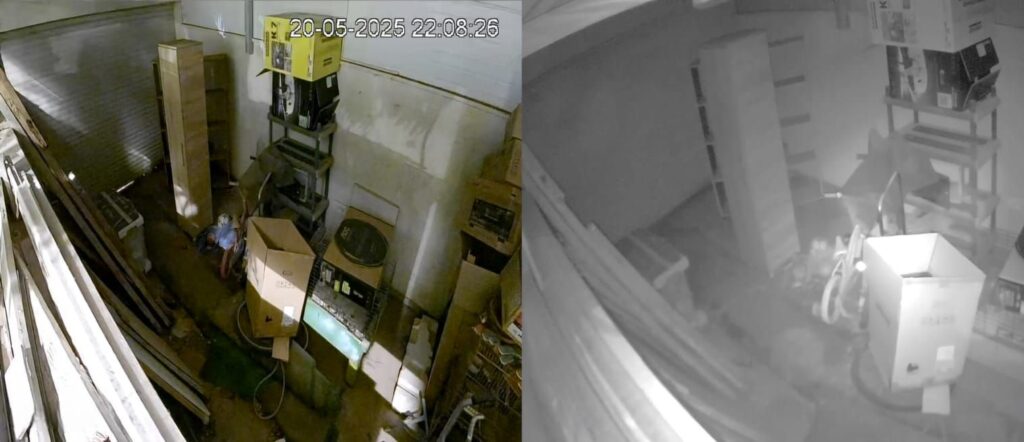
This is where everything comes together. The goal is simple: to demonstrate that WizColor can deliver a daylight-like image even in near-total darkness.
Installed in a very dark area of my home, the camera was compared directly to an older Dahua 4MP model. Without infrared illumination, the older camera produces little more than silhouettes, while the WizColor system delivers a full-color image with significantly more usable detail.
Conclusion
Sometimes the best way to understand technological progress is by comparing it to what came before. In this case, the WizColor dome camera clearly shows that there is no longer a need to settle for black-and-white night footage.
With improved image processing, better object classification, and the ability to distinguish between people, animals, and vehicles, the system also delivers more reliable alerts with far fewer false positives.
If you’re planning to install a new security system or upgrade an existing one, Dahua’s WizColor technology is definitly something worth considering.
Dahua camera systems are sold and installed by authorized professionals.