
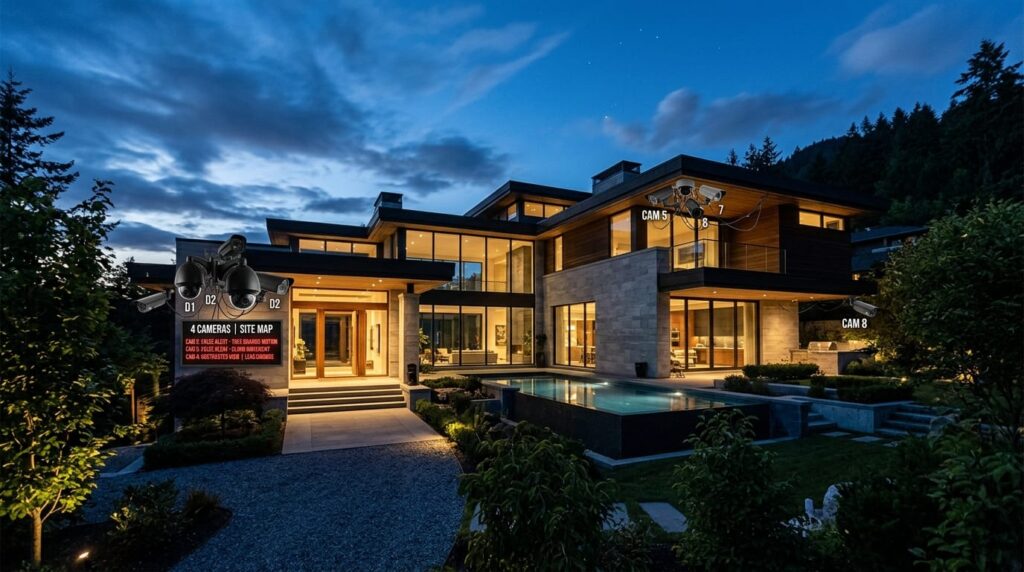
Learn how to place, pair, and manage security cameras like a pro
When John moved into his sprawling Texas home, he wanted total peace of mind. After spending over $50,000 on a state-of-the-art security system, he envisioned seamless coverage: cameras, AI-powered alerts, and real-time monitoring protecting every corner. Instead, he found chaos. Cameras lined the driveway, backyard, and even the flowerbeds, but John couldn’t monitor them all. Notifications flooded his phone nonstop, many triggered by shadows, passing cars, or the wind. What was supposed to feel safe became overwhelming noise, and he eventually ignored alerts altogether.
John’s experience isn’t unique. Many homeowners fall into the same trap: installing too many cameras, overfocusing on visually busy areas rather than strategic points, or buying high-tech equipment without understanding how to integrate it effectively.
The Hidden Risk Behind Bad Recommendations
Never accept a contractor’s recommendation at face value, because the risk is yours, not theirs. Installation skills alone are not enough; a poorly planned system can leave critical blind spots, generate constant false alerts, or completely fail when it matters most. Your installer must deeply understand the products they recommend: their capabilities, limitations, and how they perform in real-world conditions.
Ideally, they should be trained or certified by the manufacturers, not simply sourcing whatever is most profitable or readily available. Too often, systems are built around what’s easy to sell, not what actually protects the property.
The result? Expensive equipment that underperforms, critical features that don’t work together, and a false sense of security that can cost far more than the system itself.
A true professional designs with intent, selecting the right components, ensuring full compatibility, and delivering a system that
Common Pitfalls in Security Camera Installation
1. Overloading Non-Critical Areas
It’s tempting to cover every visible space: garages, side yards, patios, and gardens. But more cameras don’t always mean better security. Excess cameras can dilute attention, making it hard to focus on the most important areas. Instead of monitoring doors, windows, and high-value zones, homeowners invest in equipment that contributes little.
2. Wrong Cameras or Lenses
Many buyers rely on contractor recommendations or marketing hype. A 4K AI camera sounds perfect, but if the lens type or field of view doesn’t match the area, footage becomes ineffective. Wide-angle lenses in distant areas distort details; telephoto lenses in tight spaces miss critical context. Compatibility with recorders is also essential, as mismatched devices reduce image quality and render high-end features useless.
3. AI Alerts That Overwhelm
AI is powerful only if set up correctly. Too often, systems generate endless notifications for every minor movement, from pets to leaves. Homeowners grow frustrated and eventually turn alerts off, undermining the entire purpose of “smart” security.
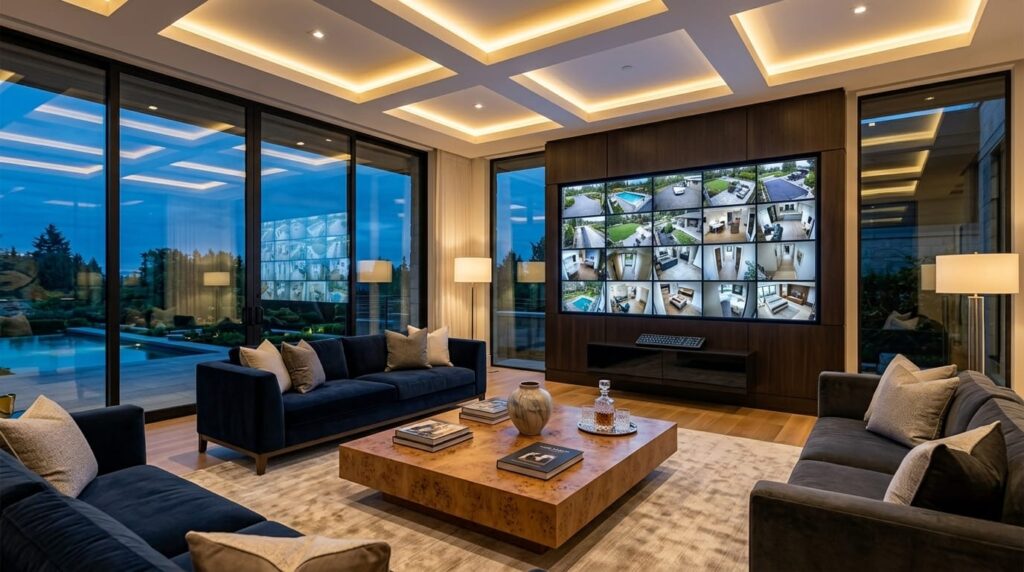
Integration Is Everything
Maximizing a security system’s potential requires compatible equipment. Cameras, recorders, intercoms, and access control systems must communicate seamlessly. For example:
- AI-based alerts usually work best when camera and recorder are from the same manufacturer.
- High-resolution cameras paired with low-spec recorders can create bottlenecks, reducing frame rates and image quality.
- Access control, intercoms, and cameras function optimally when integrated into one ecosystem, allowing coordinated alerts and smarter monitoring.
John’s original setup mixed brands. Despite investing in AI cameras, incompatible recorders and network mismatches left blind spots and unmanageable alerts.
Smart Security Placement: Less Is More
Effective security isn’t about the number of cameras. It’s about coverage:
- Primary Access Points: Doors, garages, main entryways.
- Property Perimeters: Fences, gates, driveways. Wide-angle or multi-lens cameras maximize coverage with fewer units.
- High-Value Zones: Rooms with valuables or areas with heavy foot traffic.
- Blind Spots: Identify limited-visibility areas for overlapping coverage.
Modern multi-lens cameras allow panoramic views or combined focal lengths, reducing the need for multiple cameras in one spot.
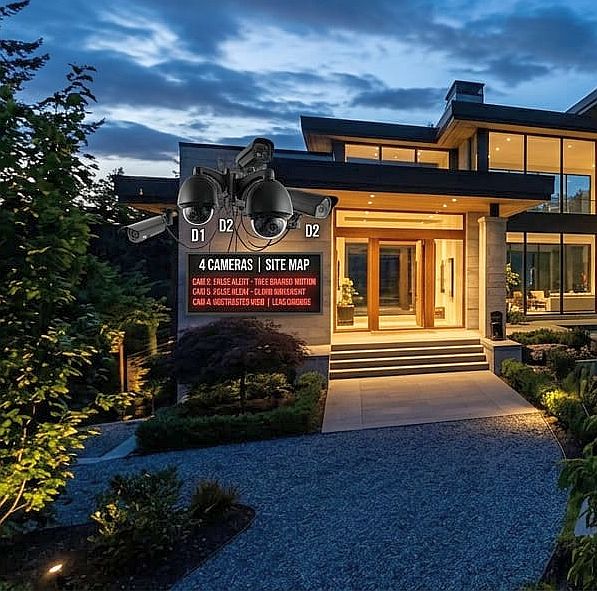
Avoid “Camera Clusters”
Some homeowners install cameras side by side, thinking more coverage is better. The result? Footage overload, countless notifications, and missed critical events. Using panoramic or multi-lens cameras reduces clutter, simplifies monitoring, and maximizes investment.
When “Access Everywhere” Becomes Too Much
One of the most attractive promises in modern security systems is the ability to view camera feeds from anywhere: on wall panels, smartphones, tablets, or even multiple screens throughout the house. On paper, it sounds like ultimate control. In reality, it often creates friction.
When every room becomes a potential control point, the system can quickly feel overwhelming rather than intuitive. Users are forced to navigate multiple interfaces, switch between screens, and manage an excess of visual information that rarely adds real value.
Instead of simplifying access, it complicates it, turning a system meant to provide clarity into one that demands constant attention. In practice, a focused approach works better: a central, well-organized viewing point, combined with meaningful alerts, delivers far more control than scattered access across every device in the home.
Proper AI and Analytics Setup
AI and analytics deliver value only when they are not just installed, but fully understood and correctly implemented. One of the most overlooked realities in modern security systems is how rapidly AI technology evolves. Manufacturers such as Dahua and Hikvision continuously release updated AI platforms: WizSense, WizSense 2.0, WizSense 3.0, and newer generations with enhanced detection accuracy WizColor 1, WizColor 2.0 and soon to become WizColor 3.0, improved classification, and significantly reduced false alerts. Each iteration brings meaningful improvements in how the system distinguishes between people, vehicles, and irrelevant motion.
However, many installations fail to account for these differences. Systems are often built using a mix of components, cameras, recorders, and firmware, that don’t fully support the same AI standard. The result is a critical gap: homeowners invest in advanced AI cameras but experience performance closer to older-generation systems. Features like accurate human detection, smart tracking, and reliable alerts may be partially supported, or not function at all.
This is where the real risk lies. You may be paying for cutting-edge AI capabilities, but due to poor integration or outdated infrastructure, you’re effectively receiving yesterday’s performance. The system looks advanced on paper, but in practice delivers inconsistent results, false alerts, and missed events.
Beyond compatibility, configuration plays an equally important role. Leaving analytics on default settings is one of the most common mistakes. Detection zones, sensitivity levels, and event rules must be carefully tailored to the specific environment. Without this, the system either overwhelms the user with irrelevant notifications or fails to capture critical activity when it matters most.
A properly designed system aligns all components: camera, recorder, firmware, and analytics, into a unified ecosystem. Only then does AI fulfill its promise: delivering accurate, actionable insights instead of noise, and turning surveillance into true situational awareness.
Otherwise, you’re not using smart security. You’re just paying for the illusion of it.
Budget Smarter, Not Just Bigger
One of the most common and costly mistakes in home security is being pushed toward high-end, feature-heavy cameras that don’t truly match the property’s real needs. Battery-powered cameras with built-in solar panels are often marketed as premium, flexible solutions.
While they can make sense in specific situations, many installers recommend them even when proper wiring is easily available. In these cases, a wired camera would provide far more stable performance, consistent image quality, and long-term reliability, without the risk of battery degradation over time.
Batteries wear out. After a few years, charging cycles become inconsistent, performance drops, and suddenly the camera needs replacement. What seemed like convenience at first turns into long-term maintenance and hidden costs. The same mistake occurs with 4G-enabled cameras. They’re pushed as advanced “always connected” options, even when strong, stable Wi-Fi already exists. This adds complexity, potential connectivity problems, and recurring data costs, without offering any real benefit.
The key lesson is clear: smarter choices beat bigger features every time. A well-designed system focuses on reliability, stability, and long-term usability, not on chasing the flashiest gadgets. Spending more doesn’t guarantee better security, choosing the right camera for the right spot does.
Expensive gear won’t protect your home if it’s the wrong fit. Smart planning will.
Why Motorized PTZ Doesn’t Always Mean Better Security at Home
Many homeowners are pitched PTZ cameras with 30x optical zoom, built to track moving subjects in control rooms, and not private homes. These cameras can rotate, tilt, and zoom across vast areas, ideal for security personnel actively monitoring a scene.
But in most residences, the homeowner never manually moves the camera. They only review footage after an event. Paying top dollar for such features is often wasted: bigger and fancier does not equal better.
Smart planning means matching the camera’s capabilities to real-world use, ensuring you don’t overpay for tech you’ll never use.
The Bottom Line
John eventually simplified his system: fewer cameras, proper integration, and optimized AI zones. Result: clear alerts, manageable footage, and genuine peace of mind.
Security isn’t about more cameras; it’s about smarter placement, proper integration, and usable AI analytics. Focus on critical zones, match equipment, configure alerts thoughtfully, and invest where it truly counts.