
The objects that surround us in modern living spaces have long since crossed the boundary between pure functionality and design. Increasingly, products once engineered solely for utility are undergoing a transformation, evolving into true design statements. objects that not only perform their intended role, but also add depth, elegance, and presence to a room.
One category where this trend is especially evident is audio, particularly wireless speakers. A Bluetooth speaker is now a staple in nearly every home, but there’s no reason to settle for something that merely sounds good. Today, it can also serve as a visually striking centerpiece.
This philosophy is embraced by forward-thinking audio manufacturers who understand that consumers want more than just sound, they want an experience. A speaker that fills a space with rich, detailed audio while also complementing, or even defining the room’s aesthetic becomes essential not only for music lovers, but for design-conscious users as well.
Pantheone I
One of the standout brands in this niche is Pantheone Audio, an Australian company founded in 2019. From the outset, the brand set out to create speakers that combine high-end acoustic performance with refined artistic design, products that function not only as audio devices, but also as premium décor pieces.
Pantheone was born in Australia and developed by a global team of creators, designers, and engineers. The company is built on the belief that art and sound can coexist in harmony. According to the manufacturer, their speakers go beyond traditional audio products, they are sculptural objects designed to enrich a space both sonically and visually.
Packaging
Although the Pantheone I is not especially large in footprint, its unique structure and materials require substantial protection. Upon opening the box, the speaker appears smaller than expected, surrounded by thick internal padding that significantly increases the overall package size.

In fact, the packaging is unusually large, closer in scale to a washing machine box than a typical speaker carton.

Design
The Pantheone I is a premium active wireless speaker that combines luxurious design with high-quality sound. It is clearly aimed at audiophiles who also value aesthetics, those who want both sonic performance and visual harmony.
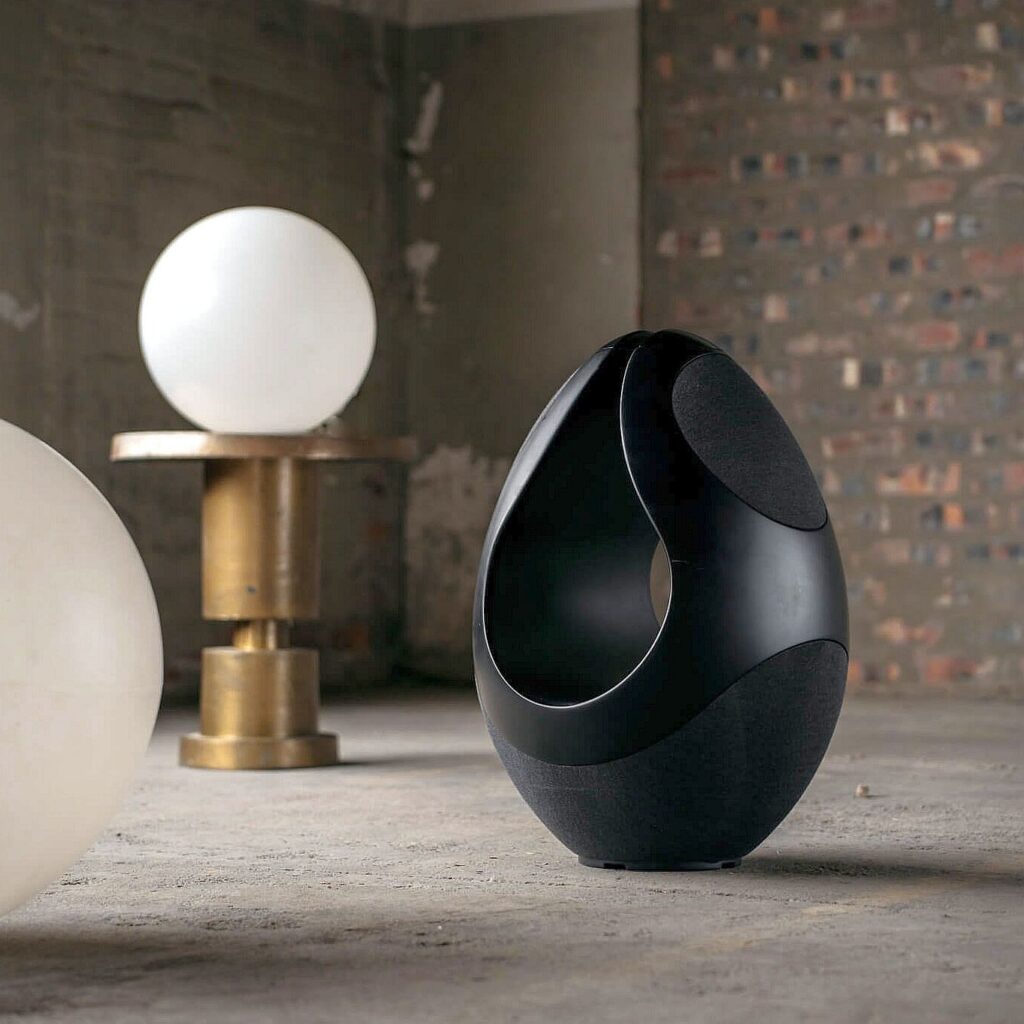
Spending time with the Pantheone I makes it clear that this is more than just a speaker. It’s essentially a contemporary sculpture, crafted from a proprietary polymer composite that is poured into a single mold to create a seamless, monolithic body. According to the manufacturer, this material minimizes unwanted vibrations and improves acoustic performance.
Its organic elliptical shape is not only visually distinctive and elegant, but also serves an acoustic purpose, helping disperse sound naturally and evenly throughout the room. In an industry where many speakers resemble generic rectangular boxes, this design feels like a refreshing departure.
The speaker is available in glossy black and matte white. It weighs 22.5 kg (about 50 lbs), providing excellent stability despite its curved form. Once removed from its oversized packaging, it doesn’t actually dominate the room. Its dimensions are 65 cm tall, 46 cm wide, and 43 cm deep (approximately 25.6 × 18.1 × 16.9 inches).
From my experience, it’s almost guaranteed to spark curiosity, guests will likely ask what exactly this object is the moment they notice it in your living space.
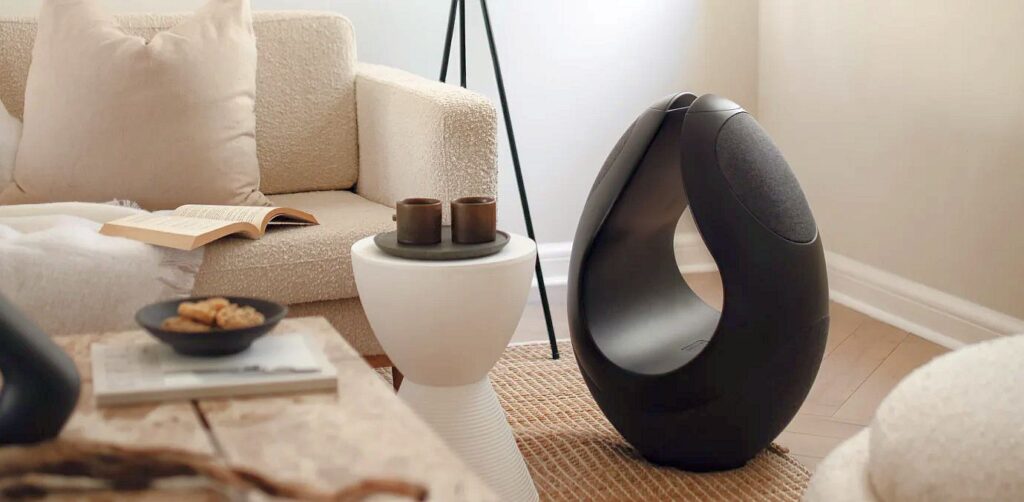
Its refined design allows it to integrate seamlessly into modern living rooms, studios, or any thoughtfully designed interior, maintaining a balance of minimalism, elegance, and presence. For those unwilling to compromise on style, it offers a compelling solution.
Controls and Operation
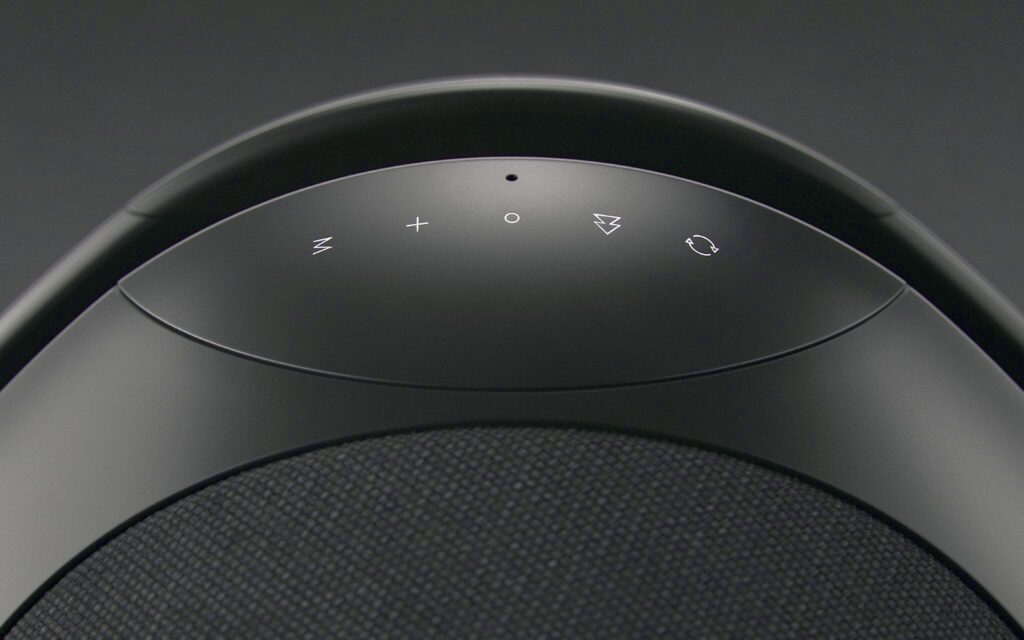
At the top of the speaker, you’ll find illuminated touch controls that disappear when the unit is powered off. Their operation is intuitive, and when combined with the companion app, they provide a comprehensive control experience.
The Pantheone I also supports Amazon Alexa, enabling voice control, for example, adjusting volume without physically interacting with the device.
The touch interface includes playback controls (play/pause, skip forward/back), mute, volume adjustment, power, and Bluetooth pairing. One minor drawback: since there’s no dedicated grip area, moving the speaker often results in accidentally triggering one of the touch controls.
Technical Specifications
The speaker is designed to project sound in a 360-degree pattern.
It features:
- Two 6.5-inch subwoofers
- Two 4-inch paper-cone midrange drivers
- Four 0.75-inch silk dome tweeters
Connectivity includes both Bluetooth 5.0 and Wi-Fi. It supports popular streaming platforms such as Spotify, TIDAL, Amazon Music, and Qobuz, as well as internet radio services like TuneIn and iHeartRadio. Apple users will appreciate support for AirPlay 2.
Amplification is handled by a Class D system with DSP:
- 130W per subwoofer
- 70W per midrange driver and tweeter array
The companion app supports multi-room playback for up to 10 synchronized speakers. (I only had one unit for testing, so I couldn’t evaluate this feature.)
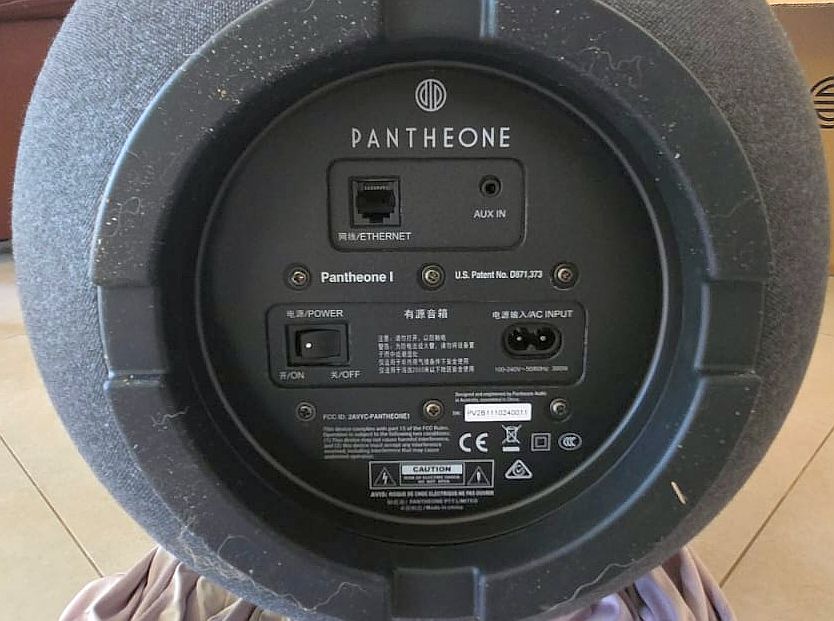
At the bottom of the speaker, you’ll find physical connections: power input, a 3.5mm AUX input, and an RJ45 Ethernet port—all discreetly hidden to preserve the clean aesthetic.
Placement in the Room
The Pantheone I functions as an omni-directional speaker, or at least one that disperses sound broadly, delivering an immersive and natural soundstage that feels quite unique.
However, placement is critical. Positioned in the center of a room, it sounds open, airy, and room-filling. The challenge, of course, is that it still needs to be connected to a wall outlet, typically located along the perimeter.
Since most users prefer not to have visible cables stretching across their living space, this creates a practical compromise that needs to be considered.
Additionally, from my experience, the speaker does not perform well when placed too close to walls, or worse, in corners. In those positions, I found myself significantly reducing bass levels. My listening space (roughly 7 × 5 meters / 23 × 16 feet, open to a patio) benefited greatly from pulling the speaker forward into the room, where it truly opened up and performed at its best.
The takeaway: while it looks great almost anywhere, optimal performance requires thoughtful placement, and some planning around cable management.
App Experience
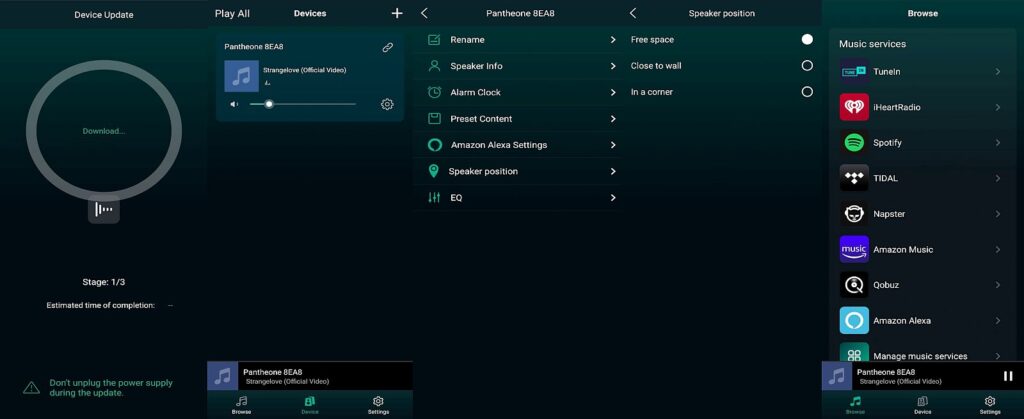
The Pantheone companion app is not optional, but essential. Through the app, you can:
- Update firmware
- Connect to Wi-Fi
- Adjust sound settings
- Configure placement modes
Streaming directly from Spotify and TIDAL worked seamlessly in my testing.
The app is available on both iOS and Android and performed smoothly overall. It includes EQ controls for bass and treble adjustment. One issue I noticed: custom EQ settings reset when the speaker is unplugged, something that could hopefully be addressed in future software updates.
Listening Experience
To evaluate the Pantheone I at its best, I selected four representative tracks and listened in a quiet environment, seated about four meters away (roughly 13 feet), at a natural listening volume simulating a live performance in a medium-sized room.
“The Race” – Yello
The opening of The Race immediately showcases the speaker’s impressive transient response. Percussive elements are crisp and precise, delivering a strong sense of punch and energy. There’s a noticeable sense of air movement that pulls the listener into the performance.
Despite being a single unit, the soundstage feels sufficiently wide, though it doesn’t extend far beyond the speaker itself. Bass is tight and well-controlled, with strong mid-bass presence, though I did find myself wishing for slightly deeper sub-bass extension.
“Clair de Lune” – Claude Debussy
Here, the Pantheone I demonstrates its tonal finesse and ability to reproduce fine nuances. The piano flows gently, revealing impressive microdynamics.
Lower notes are present without becoming heavy, while the highs are airy and detailed. Each note has space to breathe, and at times, it genuinely felt as though I was seated beside the instrument.
The speaker fills the room beautifully, performing particularly well in medium-sized spaces. The resonance of the piano strings is rendered with striking realism.
“So What” – Miles Davis
In this jazz classic, the Pantheone I captures the essence of a live performance. The acoustic bass resonates warmly, the saxophone feels intimate, and Miles’ trumpet cuts cleanly through the air.
There’s a tangible sense of space between instruments, as if the room itself expands. The soundstage has convincing width, with clear instrument placement and a sense of depth.
Bass remains tight and full, though there is a slight limitation in the lowest frequencies compared to full-sized floor-standing systems.
Billy Joel – And So It Goes
To conclude, I chose a Billy Joel’s vocal track to evaluate how the speaker handles the human voice.
Joel’s vocals come through as intimate and emotionally engaging, you can hear his breathing, the texture of his voice, and the subtle imperfections that make it feel authentic. The soundstage here is more focused and less expansive, but it creates a kind of intimate musical bubble.
Rather than filling the entire room, it draws you inward. The presentation feels authentic, very much like hearing him through a classic radio broadcast.
Conclusion
It turns out that the next generation of audio products doesn’t just sound good, it looks exceptional as well. Sculptural speakers like the Pantheone I reflect a broader shift in design philosophy: audio equipment can, and perhaps should blend aesthetics with performance.
The Pantheone I excels in tonal balance, acoustic instrument reproduction, and delivering an intimate, refined listening experience. It’s not designed for extreme volume levels or deep, room-shaking bass, but it offers clarity, resolution, and musicality, wrapped in a warm, non-fatiguing sound signature.
In short, if you’re looking for a design-forward speaker that also clears the WAF (Wife Acceptance Factor) and integrates naturally into a shared living space, the Pantheone I is a compelling option.