
Let’s put it on the table: the smartphone market in 2025–2026 is no longer in the hyper-aggressive hardware race we saw a decade ago. Where manufacturers once competed over an extra CPU core or more megapixels, today the real battle revolves around user experience, software, artificial intelligence, and ecosystem integration.
Samsung, alongside Apple, continues to hold one of the largest global market shares, with competitors like Xiaomi steadily gaining ground.
The direction is clear: hardware is already more than capable, and true differentiation now comes from software, AI, and supporting services. That’s exactly where the Galaxy S26 series positions itself.
Galaxy S26 Series Launch
Last month, Samsung introduced the Galaxy S26 lineup as part of its annual Galaxy Unpacked event, with full coverage available here.
The series includes the S26, S26 Plus, and S26 Ultra.
As expected, the Ultra model remains the flagship, bringing together Samsung’s most advanced technologies, innovations, and long-term vision. Ahead of launch, rumors pointed to major hardware upgrades, new battery technologies, a photography revolution, and even a dramatic design shift.
In reality, however, the Ultra feels far more like an evolution than a revolution. Many of the leaks turned out to be exaggerated or inaccurate, especially around battery and design. Instead, Samsung has taken a clear and deliberate direction: less emphasis on flashy hardware, and more focus on intelligence.
Design: Refined, Not Reinvented
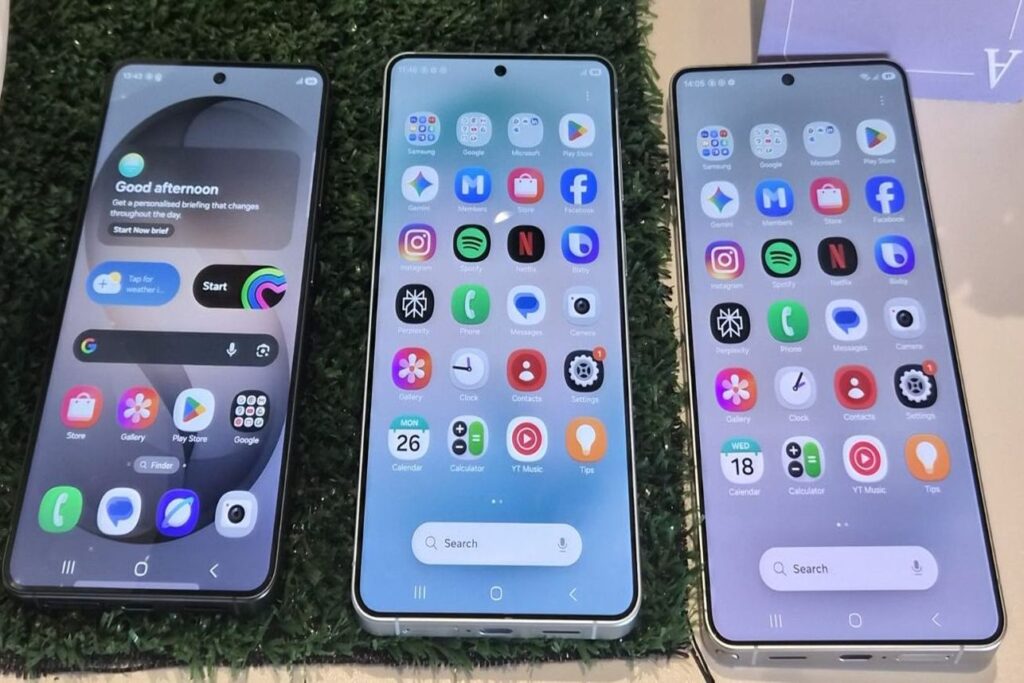
The Ultra looks instantly familiar, and that’s intentional. Samsung sticks to its recognizable design language, with a rectangular body, clean lines, and a bold camera array. At the same time, subtle but meaningful changes are present, including a shift from titanium to aluminum, allowing for a lighter and thinner device.
On paper, aluminum might sound like a downgrade, but in practice, it’s a smart move. The device feels better balanced in hand, less heavy, and more comfortable during extended use, whether watching content or working.
At approximately 7.9mm thick and around 214 grams, it feels more comfortable than its predecessor. The 6.9-inch display is massive, with extremely thin bezels.
The in-hand experience is improved, but there’s no dramatic design “wow” moment.
Another standout detail is the precision. Buttons are perfectly placed, with crisp feedback and zero looseness. The transition between frame and glass is seamless, reinforcing the premium feel.
Still, the conservative approach may be seen as a downside. Those expecting a bold visual shift or a new design statement won’t find it here.
Samsung plays it safe and while it works, it doesn’t excite.
Display: Still the Industry Benchmark
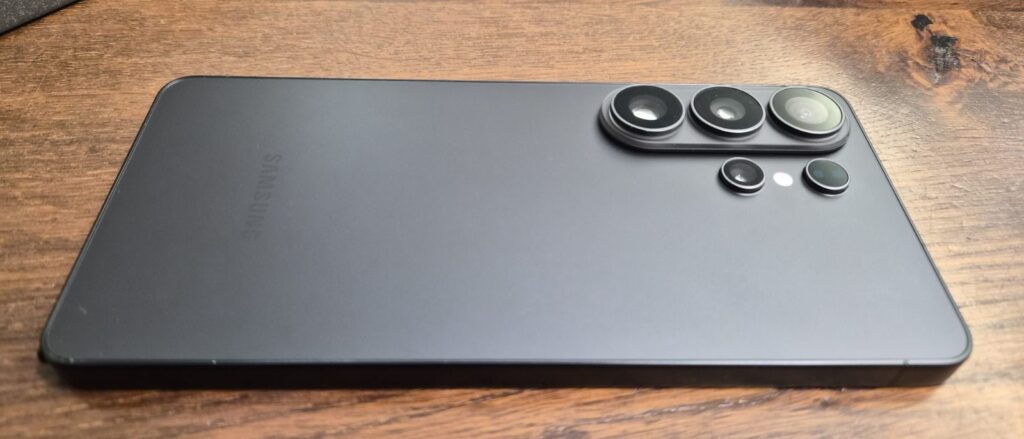
The Ultra’s display remains one of the most impressive aspects of the device, even without a dramatic leap. It features an advanced AMOLED panel with a dynamic refresh rate from 1 to 120Hz, balancing power efficiency with ultra-smooth performance.
Brightness is extremely high, and even under direct sunlight, the screen remains clear and readable. Samsung continues to lead in this area. The automatic brightness system is also more precise, adapting quickly to environmental changes.
Color accuracy is strong, though Samsung still leans toward slightly saturated tones, visually appealing, but not always perfectly natural.
The addition of Privacy Display introduces a new layer of functionality, addressing real-world privacy concerns, even ones that have made headlines in legal cases. This feature is likely to resonate with many users, although it does slightly reduce brightness. It represents a shift toward displays that are not just beautiful, but context-aware.
Privacy Mode: A Physical Change at the Pixel Level
The Ultra’s OLED panel operates with precise control over each pixel, made up of red, green, and blue sub-pixels. In normal mode, all pixels function dynamically, delivering a bright and uniform image.
When Privacy Mode is enabled, the system selectively disables specific pixels, narrowing the viewing angle and making side viewing much more difficult. To demonstrate this, I used an electronic microscope to capture pixel behavior.
Once with Privacy Mode off all the pixels are on:
With Privacy Mode ON, certain pixels, especially those projecting at wider angles, are turned off. This creates a privacy effect while slightly reducing brightness, but also turns the screen less bright.
This combination of software control and physical pixel behavior highlights how deeply software now impacts hardware.
At the end of the day, even without a dramatic leap, this is still the best smartphone display available, thanks to refinement and meaningful innovation.
S Pen: Still Unique, But No Longer Untouchable
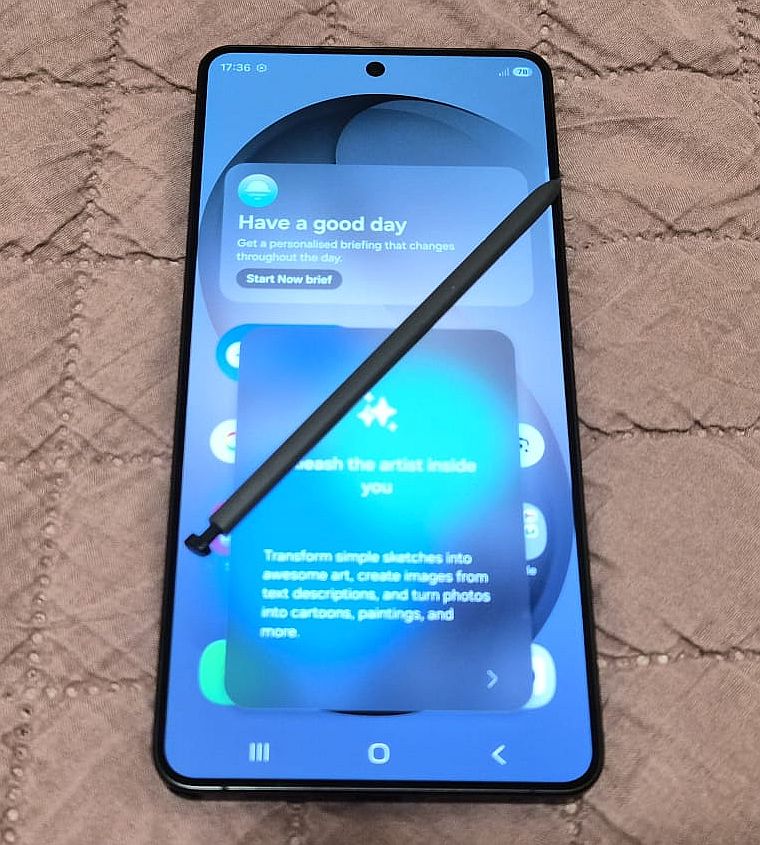
The S Pen remains one of the Ultra’s most distinctive features, and one of the last true differentiators in a market where most smartphones feel increasingly similar. Unlike foldables such as the Galaxy Z Fold, where the stylus is an accessory, here it’s fully integrated into the device. Always there, always ready.
But that’s only part of the story.
With the Galaxy S24 Ultra, the S Pen included Bluetooth functionality, allowing it to double as a remote control, triggering the camera, navigating presentations, and interacting with the device from a distance. It wasn’t just a stylus; it was a control interface.
Starting with the S25 Ultra, Samsung quietly removed that capability. The S Pen is now a passive tool, and that continues with the S26 Ultra.
Samsung’s reasoning is practical: most users didn’t use those features, and removing Bluetooth simplified the design, reduced weight, and improved efficiency. On paper, that makes sense.
In practice, however, it subtly changes what the S Pen represents.
It’s still excellent for precision tasks: signing documents, annotating, editing, but it no longer expands how you interact with the device. What was once a multifunctional tool has been refined into something more focused, but also more limited.
That doesn’t make it bad. Far from it. But it does raise a question: is Samsung simplifying the experience, or quietly redefining what “Ultra” really means?
Still unique—but no longer as ambitious as it once was.
Performance and Thermal Management
Beyond raw specs, sustained performance matters, and here the Ultra delivers noticeable improvements. Even under heavy workloads like gaming, 8K video, or multitasking, performance remains stable.
A larger vapor chamber improves heat dissipation, resulting in less heat buildup and fewer performance drops. In everyday use, everything feels fluid. Fast app switching, short load times, and no lag, even after prolonged use. It may not be flashy in benchmarks, but it’s the difference between power and polish.
GeekBench results placed it at the top of its category, both in single-core and multi-core performance.
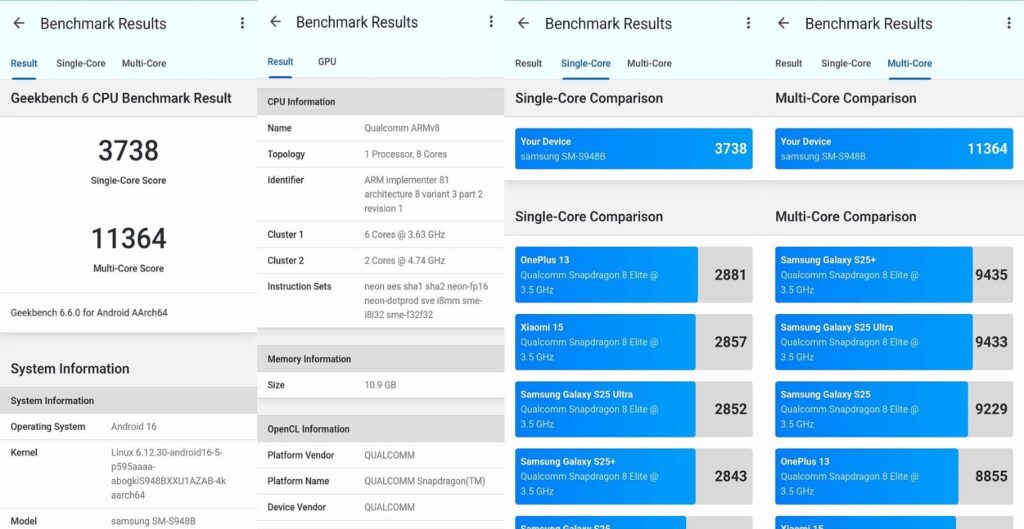
GPU results were equally strong, supporting real-world performance.
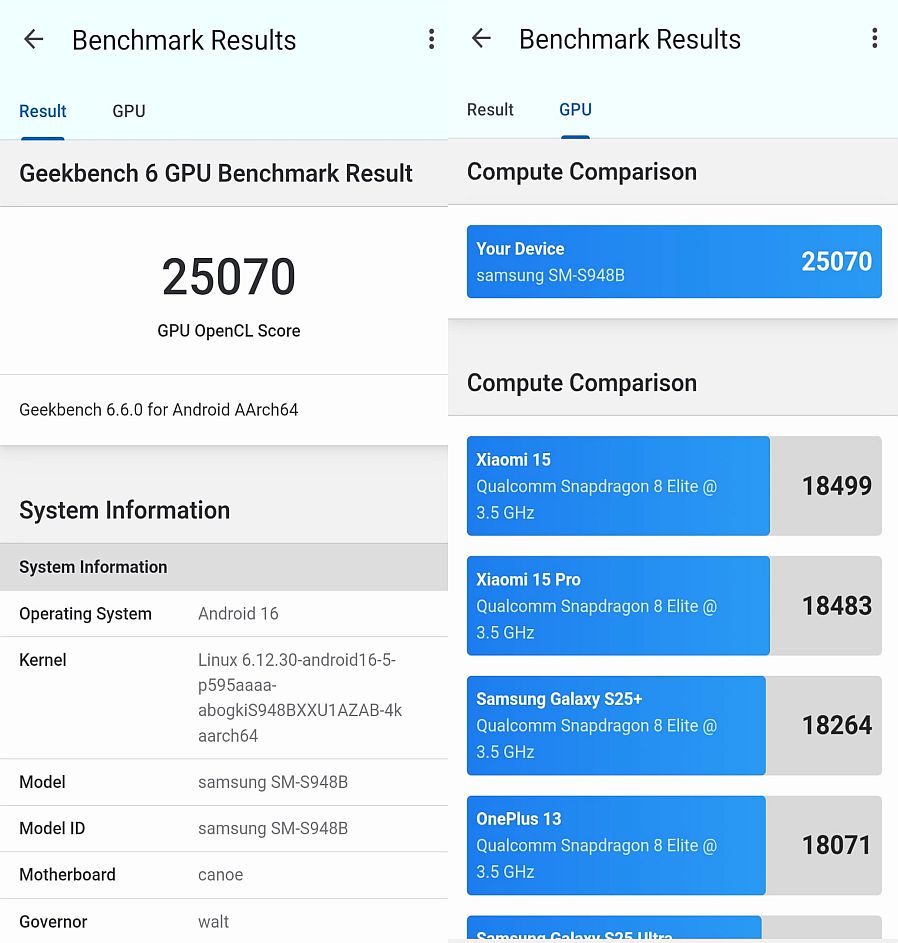
Samsung is clearly focusing not just on power, but on how intelligently that power is used.
Software and AI Integration
Running the latest One UI, based on Android, the Ultra emphasizes direction more than version. AI is deeply integrated into the system: from smart typing and text summaries to intelligent notifications and adaptive UI behavior. Samsung continues offering strong long-term update support, reinforcing reliability and security.
However, the richness of features may overwhelm some users. One UI has become extremely powerful, perhaps even too complex for some. Still, it stands as one of the most advanced Android experiences today.
Camera System
The camera system remains highly capable, with a 200MP main sensor, advanced telephoto, and improved night performance. To check that, I took a picture on my parrot at night, with only ambient distant street light, and despite it’s movements, being uncomfortable to the lens, the picture turned sharp and bright.

Results are sharp, even in low light, with strong video capabilities including 8K. However, image processing can sometimes feel overly aggressive, with saturated colors.
Stabilization is where things get interesting. With gyro lock and advanced sensor stabilization, motion is significantly reduced, even when walking or lightly running. This doesn’t replace professional gear, but it narrows the gap.
Battery and Charging
Battery life is solid, though not groundbreaking. A full day is achievable, but heavy users may still need to recharge before the day ends. Charging speeds improved to 60W, with faster wireless charging as well. Samsung continues balancing speed, heat, and battery longevity rather than chasing extreme numbers.
Ecosystem and Connectivity
Samsung is heavily investing in its ecosystem. Integration with Galaxy Watch, Buds, and TVs creates a seamless experience. However, the best results come when staying within Samsung’s ecosystem, as mixing brands reduces efficiency.
User Experience
After several days of use, the picture becomes clear: the Ultra doesn’t try to impress, but simply works extremely well. Everything feels fast, stable, and refined. Small details, like instant app launches and seamless multitasking, define the experience. AI features like live translation and visual search are becoming genuinely useful, though not always perfect.
So What Is Samsung Really Doing Here?
The S26 Ultra represents a strategic shift. The future is no longer about hardware competition, but about software intelligence. Hardware upgrades now serve real needs, not marketing battles.
Final Verdict
The Samsung Galaxy S26 Ultra is an excellent device. Not revolutionary, but a clear signal of where Samsung is heading. This is no longer about megapixels, but about algorithms.
It delivers one of the best cameras, excellent performance, refined usability, and unique features like Privacy Display, but at the same time, hardware upgrades are minimal, AI still feels early, and the price is high.
This is a device preparing the ground for the next big leap, but not quite delivering it yet.
If you’re upgrading from an older device, it’s a strong leap forward. If you already own a recent Ultra, the upgrade is less essential.
Most importantly: this may be the first smartphone where it’s clear that the real competition is no longer about who is the most powerful, but who is the smartest.