
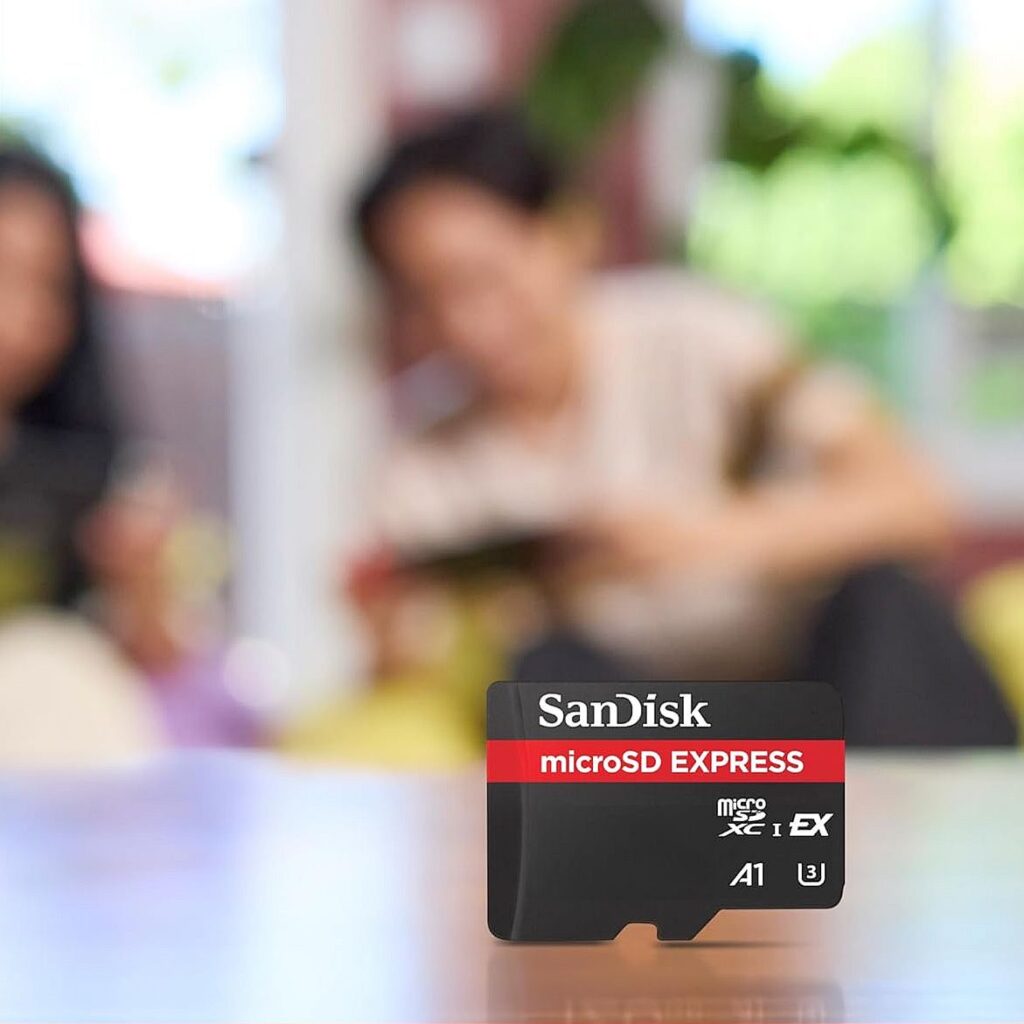
When Removable Storage Starts Performing Like an SSD
There are moments when technology does not simply improve incrementally, it fundamentally changes the pace at which we create. In an era where consumer cameras capture 8K video, action cameras record high-bitrate footage at extreme frame rates, and 360-degree systems generate immersive content once reserved for cinema studios, storage is no longer a passive component. It is either the bottleneck or the enabler.
The SanDisk microSD Express 512GB, model SDSQXFN-512G-GN4N, represents one of the first serious attempts to bring SSD-class architecture into the microSD form factor. For creators working at the edge of resolution and data rates, that shift matters.
Why microSD Needed Reinvention
For years, memory card standards evolved through refinements of the SD interface. UHS-I and later UHS-II significantly expanded bandwidth, allowing sustained 4K recording and high-speed burst photography. But those standards have practical ceilings.
As 5.3K and 8K video recording become common in action cameras, drones, and 360-degree systems, sustained write performance is critical. A card that can read quickly but fails to maintain high write throughput will trigger dropped frames, buffer overruns, or recording interruptions. Many creators have experienced the frustration of hitting record only to see a “media too slow” warning.
The microSD Express standard addresses that ceiling by incorporating PCIe Gen 3 x1 and the NVMe protocol, technologies previously associated with internal SSDs. Instead of relying solely on legacy SD bus architecture, microSD Express effectively transforms the card into a miniature NVMe drive.
This is not a marginal upgrade. It is a structural redesign.
Technical Specifications and Architecture
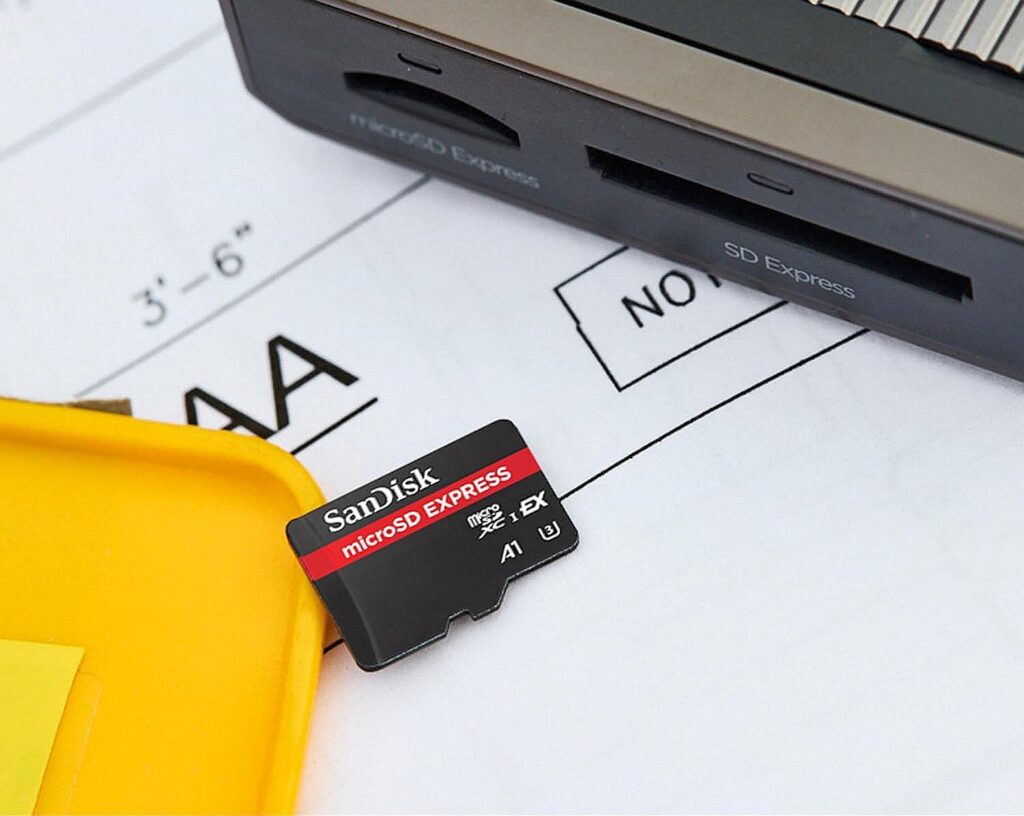
The SanDisk microSD Express 512GB leverages PCIe Gen 3 x1 and NVMe to achieve:
- Up to 880MB/s read speeds
- Up to 650MB/s write speeds
For context, those figures approach the performance of internal consumer SSDs from just a few years ago. They are multiple times faster than traditional UHS-I microSD cards.
The card also carries U3 and V30 ratings, ensuring backward compatibility with devices that support standard microSD UHS-I. In non-Express devices, it operates under UHS-I constraints. In Express-compatible hardware, however, it unlocks its full PCIe-based bandwidth.
Physically, it retains the familiar microSD dimensions. Flip the card over, and you will notice an additional row of contacts. That second row enables the PCIe interface, differentiating it from legacy designs.
Real-World Performance Considerations
On paper, 512GB is no longer considered high capacity in the 8K era. High-resolution video can consume storage rapidly, especially at elevated bitrates. A single hour of 8K footage may require hundreds of gigabytes, depending on compression.
The 512GB capacity strikes a practical balance. It offers several hours of high-quality 4K or 5.3K recording and a meaningful buffer for 8K projects, without moving into higher-cost tiers.
Where the difference becomes immediately noticeable is in offloading footage. When paired with a compatible microSD Express reader and a high-speed USB interface, file transfers feel dramatically faster than traditional microSD workflows. Large multi-gigabyte files that once required extended wait times now transfer in a fraction of that time.
For content creators, that reduction in transfer time accumulates into tangible productivity gains. Hours saved per week during ingest and backup workflows translate into faster turnaround and more efficient post-production.
It is important to note that maximum performance depends on using Express-compatible hardware. Without it, the card reverts to UHS-I performance levels. The backward compatibility ensures versatility, but the full benefit requires next-generation support.
Build Quality and Durability
SanDisk maintains its recognizable red-and-black design, with clear “Express” branding to distinguish the card from conventional models.
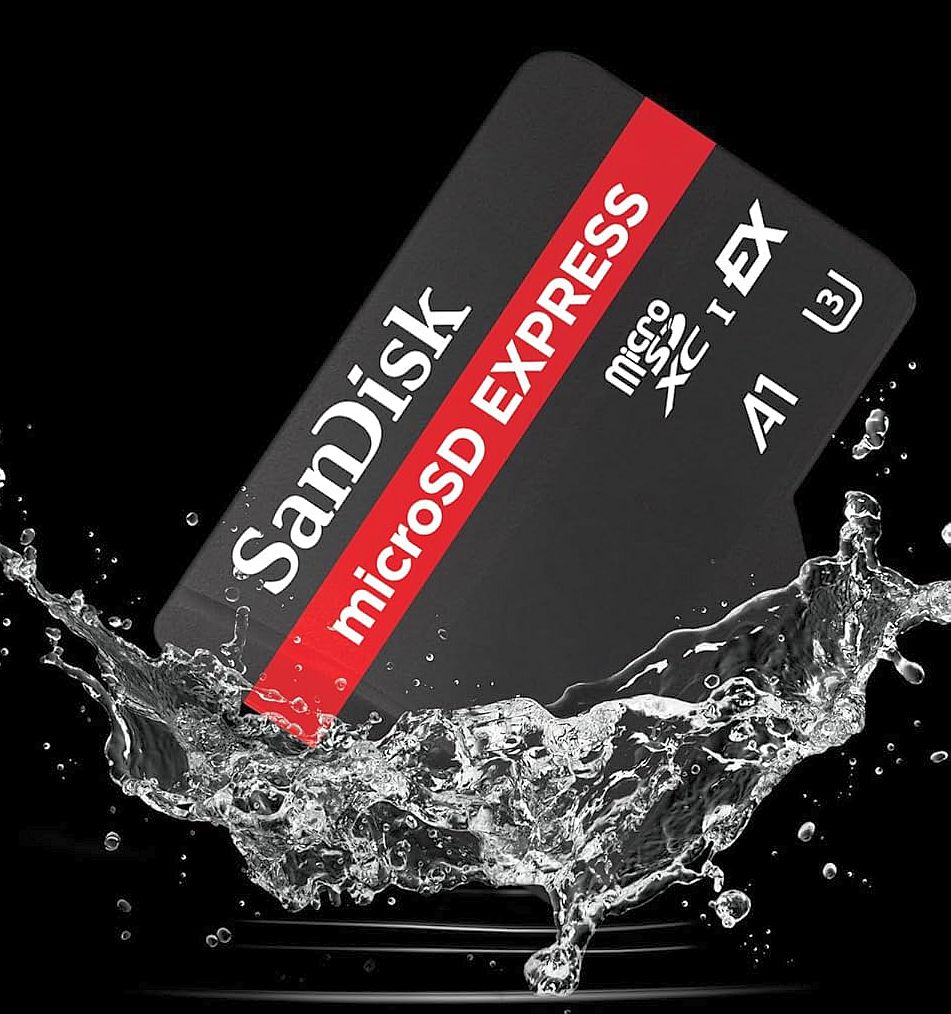
As expected from SanDisk’s premium tiers, the microSD Express 512GB is engineered for durability. According to the manufacturer, it is built to withstand extreme temperatures, shock, water exposure, and even airport X-ray environments. These characteristics are particularly relevant for action shooters, travel videographers, and drone operators working in demanding conditions.
While any microSD card should be handled with care due to its size, the construction quality aligns with SanDisk’s reputation in professional-grade removable storage.
Beyond Cameras: Gaming and Future Devices
The introduction of PCIe and NVMe into the microSD format opens doors beyond photography and videography.
Future handheld gaming consoles and portable computing devices that support microSD Express could leverage this performance for faster game loading, reduced asset streaming delays, and improved overall responsiveness. The ability to approach internal storage speeds in a removable format could reshape how portable systems handle expansion storage.
While widespread adoption will depend on hardware ecosystem support, the architectural groundwork is now in place.
Compatibility and Ecosystem Outlook
As of today, microSD Express support remains limited but growing. Early adopters will likely be high-end imaging systems, specialized portable devices, and next-generation hardware platforms.
The backward compatibility with UHS-I ensures the card remains usable even before Express becomes mainstream. However, professionals investing in this card should consider pairing it with a compatible reader to experience the full 880MB/s read potential.
For American creators working in professional production environments, the investment may make sense today if time efficiency and high-bitrate reliability are critical factors.
Who Should Consider It
This is not a card designed for casual Full HD family photography. Standard UHS-I cards remain sufficient for light-duty use.
The SanDisk microSD Express 512GB is best suited for:
- 4K, 5.3K, and 8K video creators
- Action camera users shooting high frame rates
- Drone operators capturing maximum-quality footage
- 360-degree content producers
- Professionals seeking faster ingest workflows
- Early adopters of Express-enabled portable systems
It may also signal a broader shift in how removable media is perceived. Rather than serving solely as passive storage, microSD Express cards begin to function as true working drives.
Competitive Context
In previous years, high-end SD cards such as UHS-II models delivered read speeds around 300MB/s. The leap to 880MB/s in the microSD form factor is significant.
By integrating PCIe and NVMe into a card small enough to fit on a fingernail, SanDisk effectively narrows the gap between removable and internal storage. The performance multiple compared to earlier premium SD cards underscores the magnitude of the transition.
Final Assessment
The SanDisk microSD Express 512GB is more than a faster memory card. It represents a shift toward SSD-class architecture in removable media.
In a production landscape where image quality and resolution continue to climb, storage must keep pace. By integrating PCIe Gen 3 and NVMe into the microSD format, SanDisk delivers a product that does not merely keep up with evolving demands, it anticipates them.
For American creators and professionals equipped with compatible hardware and seeking uncompromising performance in the smallest possible footprint, this card offers a glimpse into the future of mobile imaging and portable gaming storage.