The sports watch market, particularly the segment focused on running, has become increasingly competitive. Long-standing brands such as Garmin, Polar, COROS and Suunto continue to dominate the category, but in recent years tech giants like Samsung and Apple have entered the space from the smartwatch side—adding sports and fitness features that increasingly compete with dedicated running watches.
According to a report by HTF Market Intelligence, the global running watch market is expected to grow at roughly 13% annually through 2032, reflecting the increasing popularity of running, fitness tracking, and connected health technologies.
In the past, consumers often had to choose between a sports watch and a smartwatch. Today, many users expect a hybrid experience, combining serious training tools with everyday features such as notifications, music control, and app connectivity. Yet some manufacturers still prioritize athletic performance over smartwatch functionality, focusing on accuracy, battery life, and training metrics.
The Suunto Run was announced globally in May and quickly entered a crowded and highly competitive market where standout performance is essential.
Design
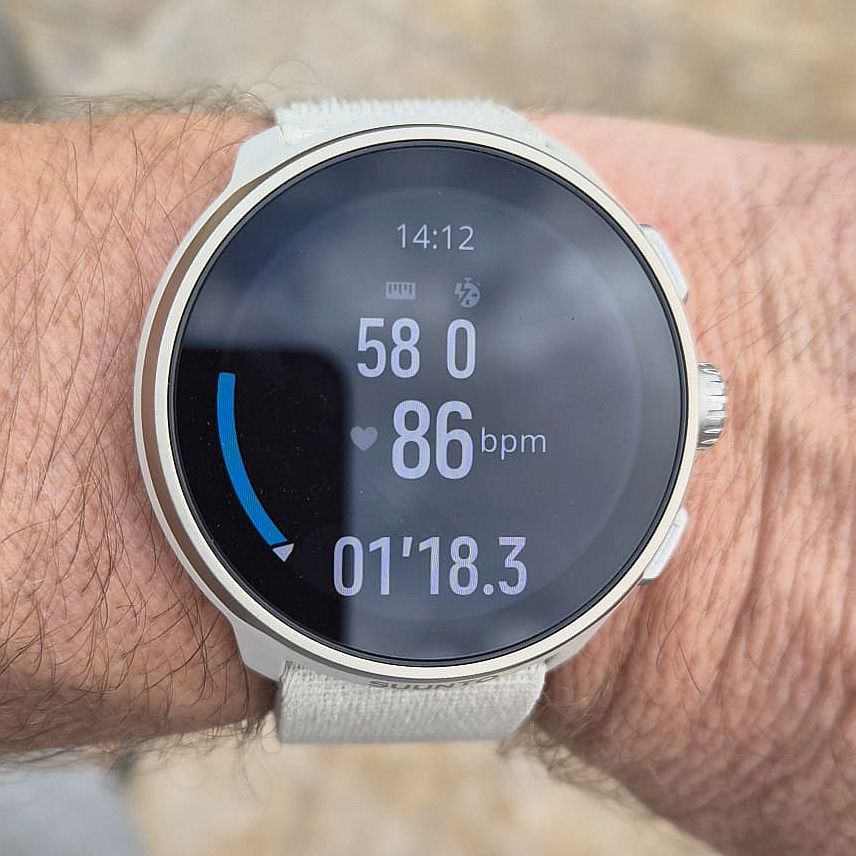
The Suunto Run features a compact 46 mm case with a high-quality AMOLED display protected by Gorilla Glass. The screen resolution is 466×466 pixels, delivering a crisp and vibrant image with excellent visibility even in direct sunlight.
What truly sets the watch apart is its weight: just 36 grams. That makes it one of the lightest running watches currently available.
Another distinctive feature is the textile nylon strap with a Velcro closure, which I found exceptionally comfortableת even during sleep. During extended use, I often forgot I was wearing the watch at all.
The lightweight build and breathable strap make it particularly appealing for runners who dislike bulky gear on their wrist.
Interface
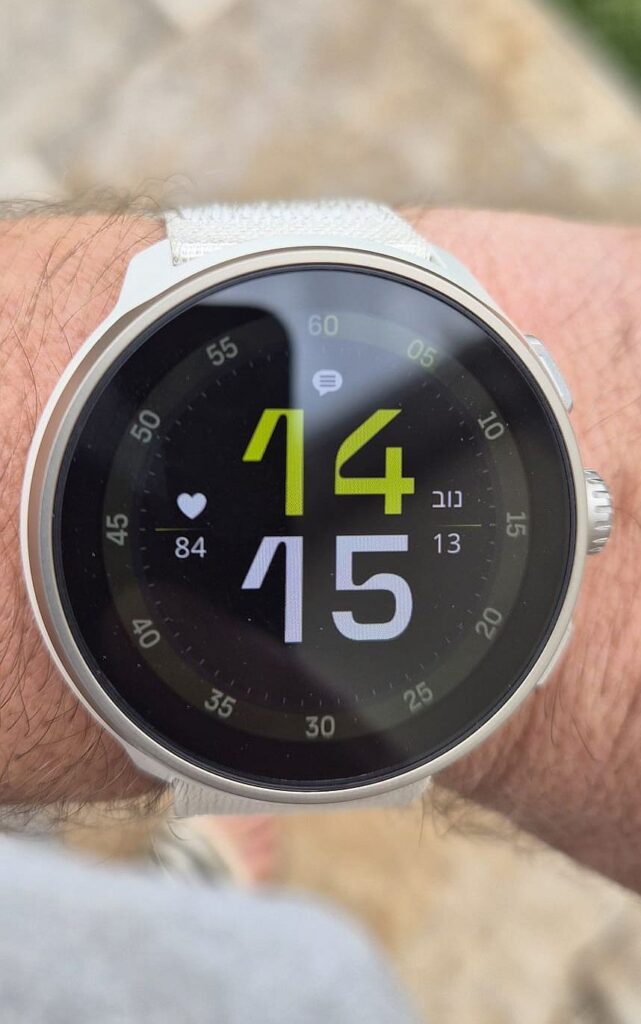
A modern smartwatch combines hardware with software design, and in the case of the Suunto Run, the interface is somewhat unusual.
To be direct: the menu system is not particularly intuitive.
Switching between sports activities requires pressing the crown button, while navigation through the menus is done by scrolling. While functional, the structure may take time to learn, especially for users coming from watches by Garmin or Apple.
Notifications and Font Size
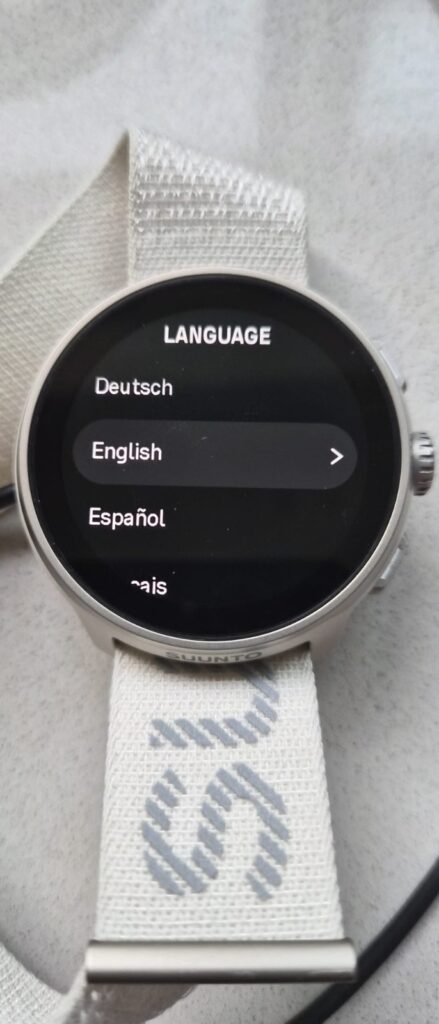
The watch supports multiple languages, but the font size in notifications is quite small.
Incoming messages from apps like Gmail or messaging platforms appear in very small text. Even with reading glasses, they can be difficult to read, especially when the wearer is moving, during a run or even a brisk walk.
Unfortunately, font size cannot be adjusted, which may make the watch less comfortable for users who require larger text.
Another limitation is that the notification view does not fully utilize the display area, leaving unused screen space while keeping the text small.
Training and Activity Tracking
During workouts, the data screens can be customized, but only before the activity begins, through the companion smartphone app.
Many competing sports watches allow these changes during an activity, which provides more flexibility mid-workout.
During swimming sessions, the watch records the workout, but heart-rate data is not visible in real time during the swim. Instead, it becomes available afterward in the app.
After completing a swim session, the watch provides detailed statistics including distance, duration, and performance metrics.
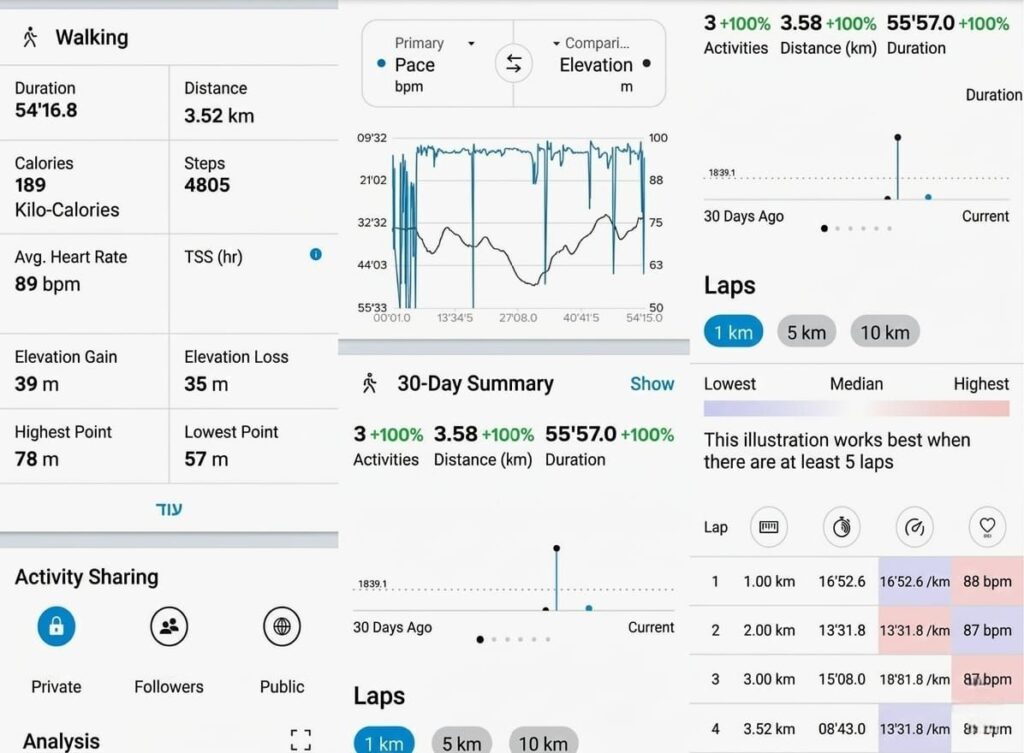
During walking workouts, the watch delivered a wide range of data, including heart rate zones, step count, altitude and duration and pace.
Navigation through the watch’s menus occasionally felt less smooth than expected, with slight lag and occasional jumps between submenu titles.
For users who mainly want a simple training companion, the interface will likely be sufficient. But those expecting a fully polished smartwatch experience may feel some compromises.
GPS and Sensors
The Suunto Run uses dual-band GNSS positioning, enabling highly accurate tracking even in challenging environments such as dense urban areas or forested trails.
In my testing, location accuracy was excellent. The optical heart-rate sensor performs well overall, although during workouts with rapidly changing intensity, such as interval training, it sometimes took about a second to catch up with heart-rate fluctuations.
The watch supports 34 built-in sports modes, including running, pool swimming, open-water swimming, cycling, triathlon, hiking and other activities.
Unlike some competitors, however, the Suunto Run does not include full graphical maps for navigation. Instead, it offers simpler breadcrumb route guidance.
Battery
According to the manufacturer, the watch can last up to 12 days in smartwatch mode and about 20 hours in high-accuracy GPS training mode.
In real-world testing, with roughly one hour of daily sports activity, the watch lasted about five days before requiring a recharge. With Always-On Display enabled, battery life dropped to around four days.
This means the battery performance is reasonable for the price, but users who train frequently should not expect two weeks between charges.
Charging is done through a USB magnetic charging cable, and a full recharge takes roughly 90 minutes. A wall adapter is not included in the box.
Connectivity and Smart Features
The Suunto Run displays incoming notifications, alerts users to phone calls, without the ability to answer them, and allows basic music control from the wrist.
However, the smartwatch experience remains limited:
- Notifications cannot be fully scrolled or expanded
- There is no full Spotify app support
- The watch lacks NFC, so contactless payments are not available
Software updates are delivered through the companion smartphone app, and the watch can sync with popular training platforms such as Strava and TrainingPeaks.
Comfort
This is where Suunto truly excels.
The combination of the feather-light 36 g weight, breathable nylon strap, and slim case makes the watch extremely comfortable for long-term wear, including during sleep.
For swimmers and water sports enthusiasts, the watch is water-resistant up to 5 ATM (50 meters).
Conclusion
During extended testing, the Suunto Run revealed several strong advantages compared with competing watches: highly accurate dual-band GPS, extremely lightweight and comfortable design, high-quality AMOLED display, wide variety of sports modes and smartphone notifications and call alerts.
Nevertheless, it’s limitations are non-intuitive interface, battery requires charging roughly every five days with daily training, no full map navigation, fixed font size for notifications, data screens cannot be changed during workouts and no real-time heart-rate display during swimming.
Overall, the Suunto Run is best suited for runners looking for a lightweight, accurate sports watch at an accessible price, with reliable GPS and solid training tools.
However, it may be less ideal for triathletes who rely heavily on swimming metrics, or for trail runners who need full navigation maps in remote terrain.
Global price: around $199–$249 depending on region.
Suunto