
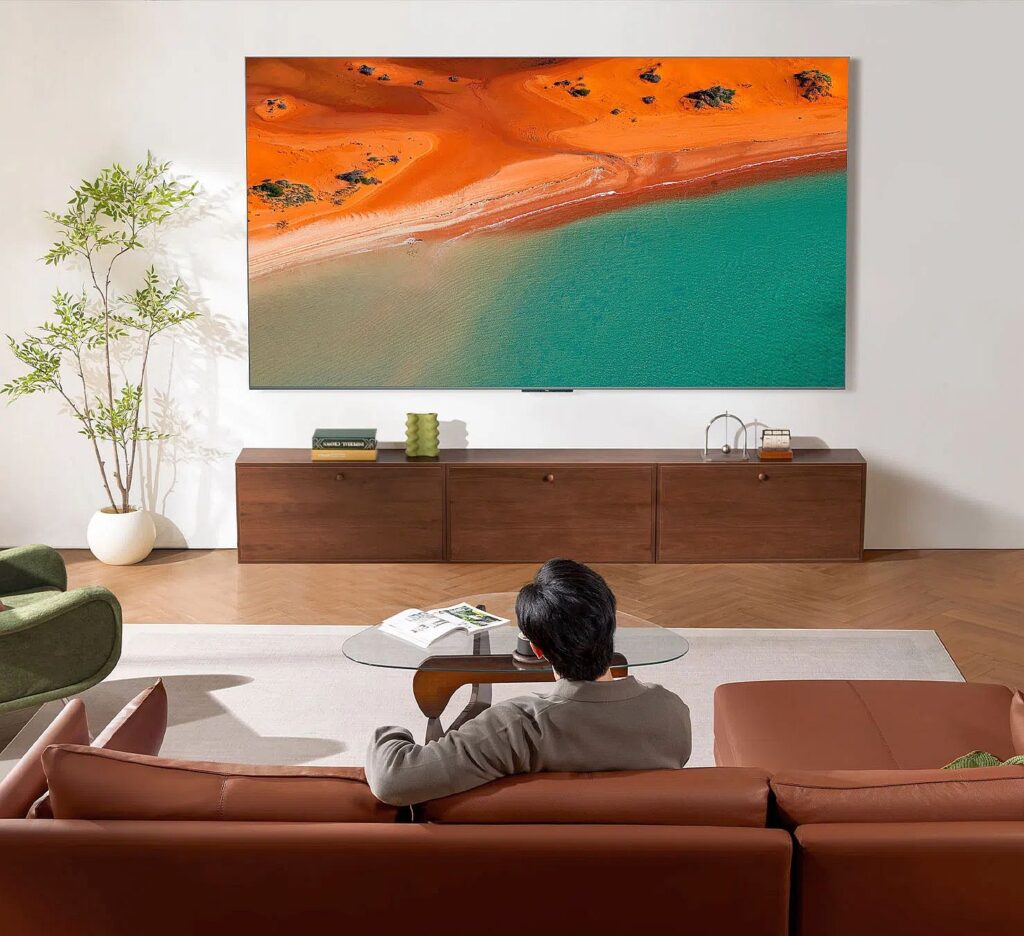
In recent years, a quiet but dramatic shift has taken place in living rooms around the world. If 55-inch and even 65-inch TVs were once considered massive, today 75-inch displays and larger are quickly becoming a natural choice for many households.
Industry sales data, consumer surveys from major electronics retailers, and market reports from the past two years all point to the same trend: consumers are rapidly moving toward larger screens.
The reasons are clear. Modern homes increasingly feature open living spaces, streaming services now deliver large amounts of 4K and HDR content, TV prices have dropped significantly, and perhaps most importantly, people now understand that a large television is no longer a luxury but rather a central component of a true home-cinema experience.
Within this evolving market, TCL is challenging the pricing strategies of competing brands by offering high-performance Mini LED televisions at more competitive price points.
TCL’s Position in the Global Market
By 2025, TCL is no longer positioned merely as a budget alternative. The company ranks among the top global TV manufacturers by sales, and it owns its own display panel production facilities.
In recent years, TCL has invested heavily in:
- Mini LED display technology
- AI-based image processing
- Partnerships with premium audio brands
The most recent collaboration is with Bang & Olufsen, the iconic Danish audio manufacturer.
The C8K, reviewed here, reflects this strategy directly: a premium model designed to compete head-to-head with flagship TVs from leading manufacturers.
Mini LED Challenging OLED
For years, OLED displays were considered unbeatable when it came to absolute blacks and maximum contrast. However, Mini LED technology has rapidly closed that gap.
Advanced Mini LED TVs like the C8K feature:
- Thousands of local dimming zones
- Extremely precise backlight control
- Very high peak brightness
This combination produces an image that delivers deep blacks while achieving brightness levels OLED simply cannot reach.
The result is especially impressive in bright rooms, where everyday HDR viewing benefits significantly from the added brightness while maintaining strong contrast performance.
QD-Mini LED: A Complete Visual Package
TCL’s QD-Mini LED technology combines precise Mini LED backlighting with a Quantum Dot layer, delivering:
- Exceptional color richness
- Very high brightness
- Strong color accuracy even at extreme brightness levels
After recently reviewing the C7K, I was eager to test the C8K, the higher-end model in the series, to understand the differences between them.
On paper, the gap between the two is not merely cosmetic.
Key Advantages of the C8K Over the C7K
The main improvements include:
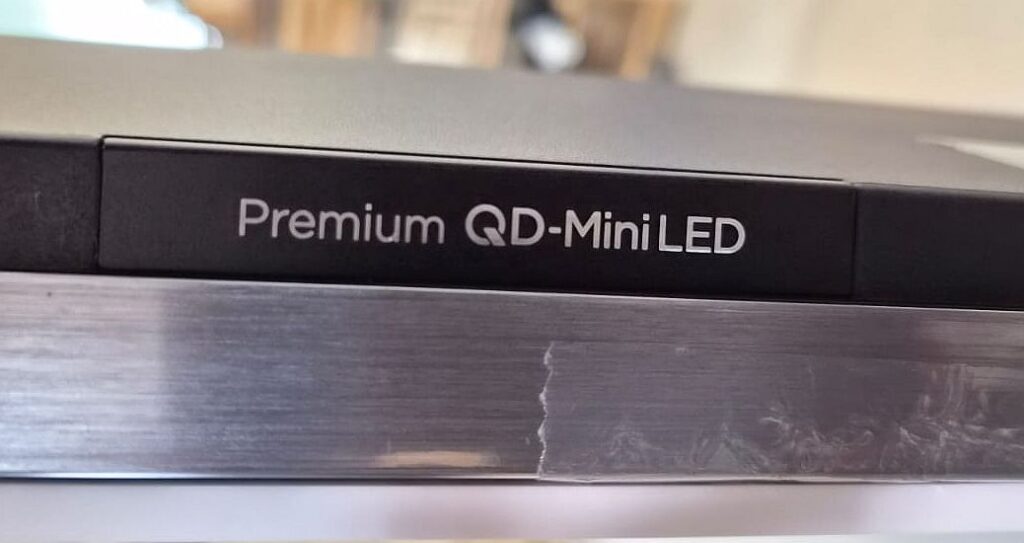
- QD-Mini LED panel
- Significantly higher peak brightness (up to approximately 4,500 nits, compared to lower values on the C7K)
- More local dimming zones
- More advanced image processing
- Substantially upgraded audio system
- More premium build quality
Given these differences, the important question is whether the C8K truly justifies its flagship positioning.
Design
Despite the enormous dimensions of a 75-inch screen, the C8K still manages to appear elegant.
The TV features:
- A thin bezel
- High-quality metallic finishing
- A rear panel designed to combine aesthetics with efficient heat dissipation
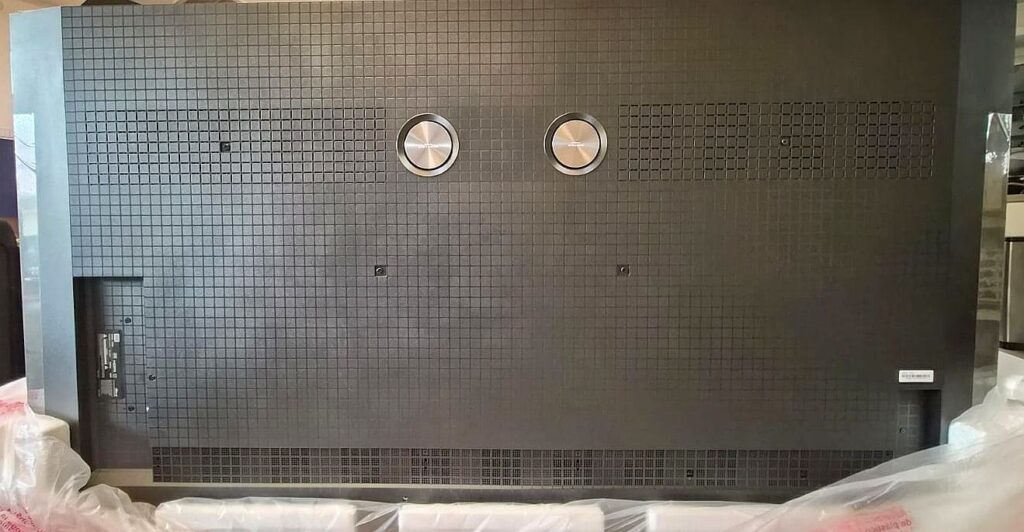
The silver frame gives the television a premium appearance even when the display is turned off, a detail that becomes increasingly important with screens of this size.
At 5 cm thick, the C8K is not as ultra-thin as some OLED TVs, but from the front the thickness is hardly noticeable.
Dimensions:
- Width: 1.66 meters
- Height: 94 cm
The unit tested here was wall-mounted, so the stability of the included tabletop stand was not evaluated.
Installation
Installing a 75-inch TV typically requires two people, but otherwise does not demand extensive preparation. Most professional installers arrive with a variety of VESA-compatible wall mounts, including:
- Standard fixed mounts
- Tilting mounts
- Articulating full-motion mounts

Cable access requires some attention. The TV’s connection panel is recessed about 24 cm into the side, meaning it is advisable to connect all necessary cables before mounting the TV flush against the wall.
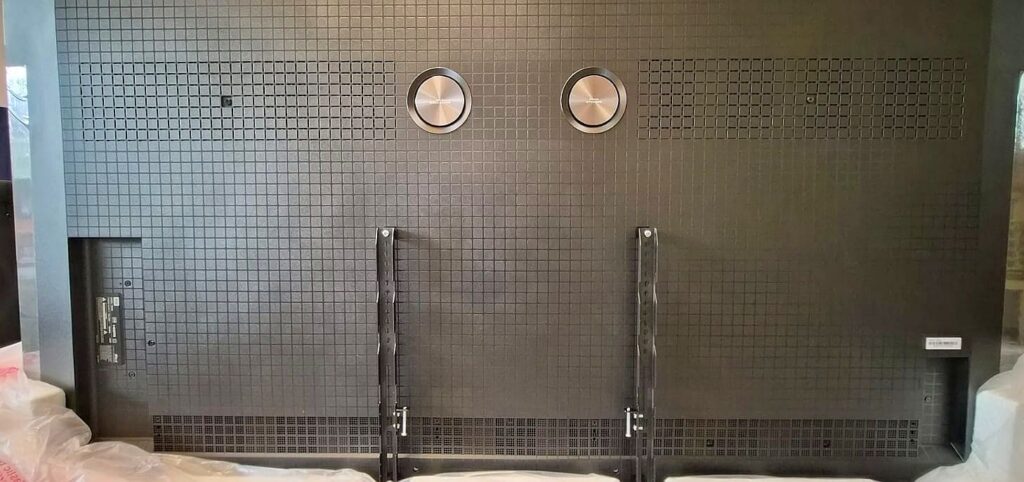
The detachable power cable is located on the opposite side, making it easy to route through cable conduits or in-wall cable management systems.
Initial Setup
When first powered on, the C8K launches a guided setup process similar to that of a modern smartphone.
The system runs Google TV (version 12) and walks the user through:
- Google account login
- Wi-Fi connection
- Picture setup
- App installation
Anyone familiar with Android smartphones will feel immediately at home. Compared with earlier generations, the interface feels faster and smoother. Even users familiar with other TV platforms such as Samsung’s Tizen or LG’s webOS will find the layout familiar and intuitive.
Connectivity
The connectivity specification is identical to that of the C7K. Ports include:
- 4 HDMI inputs
- 2 supporting 4K at 144Hz (one with eARC)
- 2 supporting 4K at 60Hz
- Support for VRR (Variable Refresh Rate)
- ALLM (Auto Low Latency Mode)
Additional connections:
- LAN (Ethernet)
- 2 USB ports
- USB 2.0
- USB 3.0
- Optical audio output
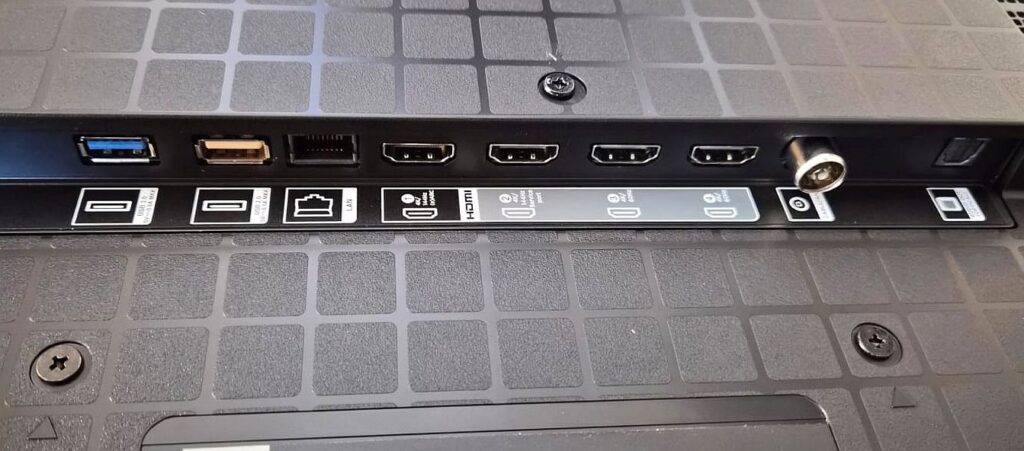
Wireless connectivity includes:
- Wi-Fi 6
- Bluetooth 5.4
Power Consumption
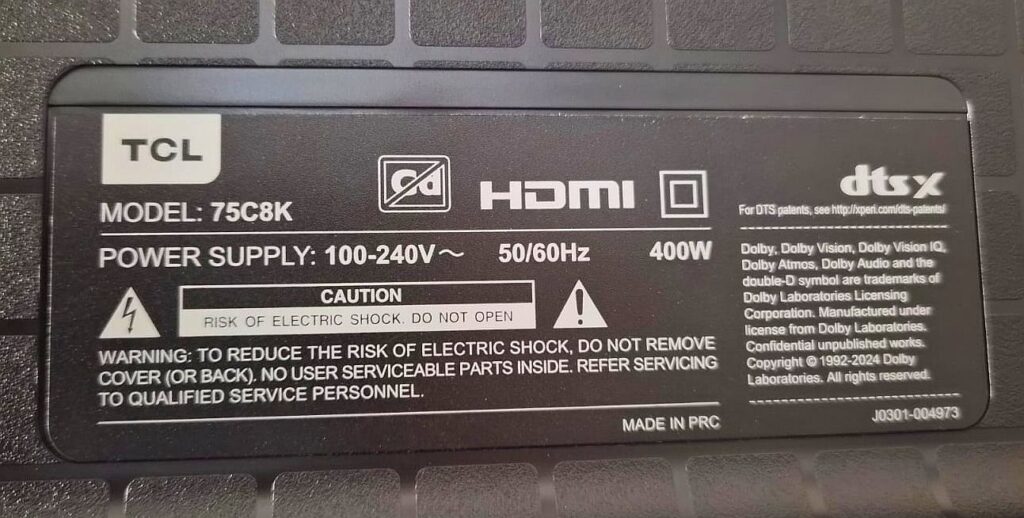
For the 75-inch model, maximum power consumption is rated at approximately 400 watts.
Google TV Experience
The user interface is identical to the one found on the C7K. However, the C8K includes more internal storage: 64GB, compared with 52GB on the C7K. This allows users to install a larger number of applications.
Like other Google TV devices, it is also possible to sideload apps from external sources, significantly expanding the TV’s capabilities. The home screen presents content recommendations from installed streaming services, based on viewing history and user preferences. For maximum stability, the TV in this review was connected using wired Ethernet.
Live TV and Broadcast Reception
The C8K includes a built-in digital tuner compatible with standard over-the-air digital broadcast systems (DVB-T/T2 depending on region). Accessing broadcast TV is simple thanks to a dedicated TV button on the remote, which switches directly to the last watched channel and displays the electronic program guide.
When a USB storage device is connected, the system can even record live broadcasts directly from the program guide.
Streaming Services
The C8K includes all major global streaming platforms in their latest versions:
- Netflix
- Amazon Prime Video
- Apple TV+
- Disney+
These run directly on the TV without requiring an external streaming box. Additional regional streaming apps can also be installed through the Google Play Store.
Content from local network devices can be streamed using DLNA software such as Serviio. In testing, playback was handled using VLC and Kodi installed directly on the TV. Like the C7K, the C8K struggled to play very high-bitrate 4K Remux files above roughly 40 Mbps, but handled lower bitrate WEB-DL content without issue.
Remote Control
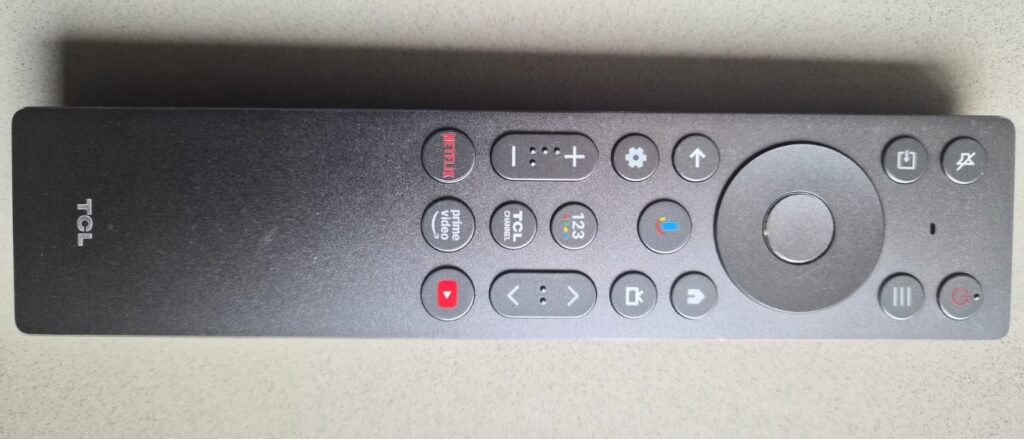
TCL clearly invested effort in the remote. Unlike the plastic remote bundled with the C7K, the C8K includes a premium metal remote with full backlit buttons. This makes operation in dark rooms much easier and gives the remote a significantly more premium feel. The button layout remains similar to the C7K and includes dedicated buttons for:
- YouTube
- Netflix
- Amazon Prime Video
- TCL Channel
Navigation is intuitive and comfortable.
Built-In Sound Experience
The C8K features a 90-watt audio system tuned by Bang & Olufsen. This marks a significant change from previous TCL TVs that used the Onkyo branding. The speakers were developed by Bang & Olufsen engineers, the same team behind many of the company’s iconic audio products.
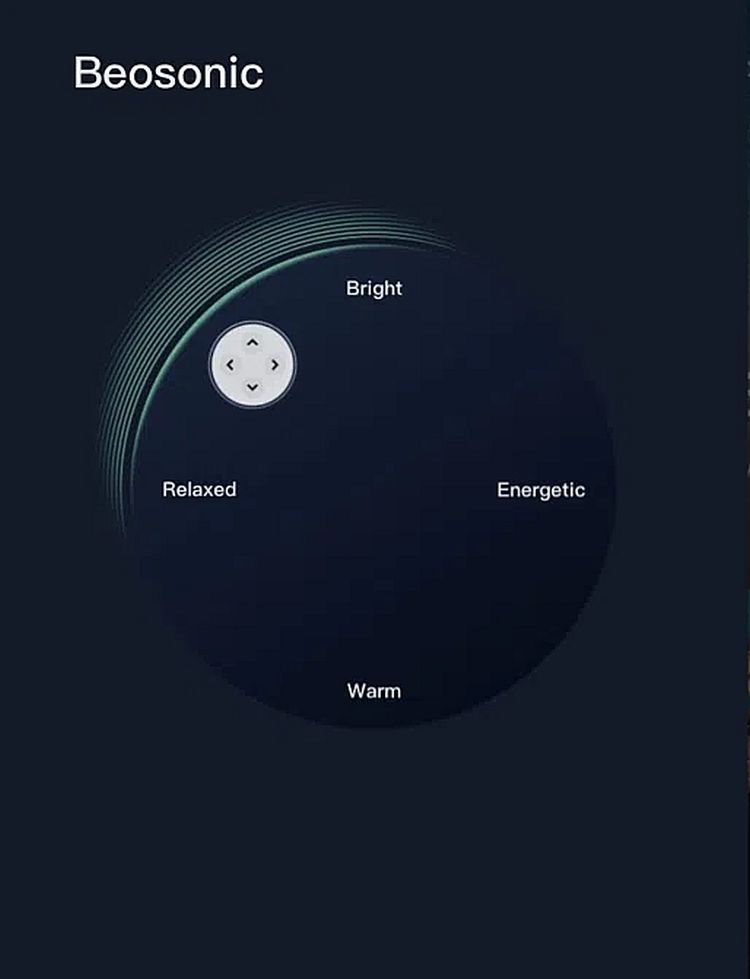
The TV also includes Beosonic sound tuning, a feature known from Bang & Olufsen’s premium headphones. This circular interface allows users to customize the sound signature by moving a pointer around the sound profile.
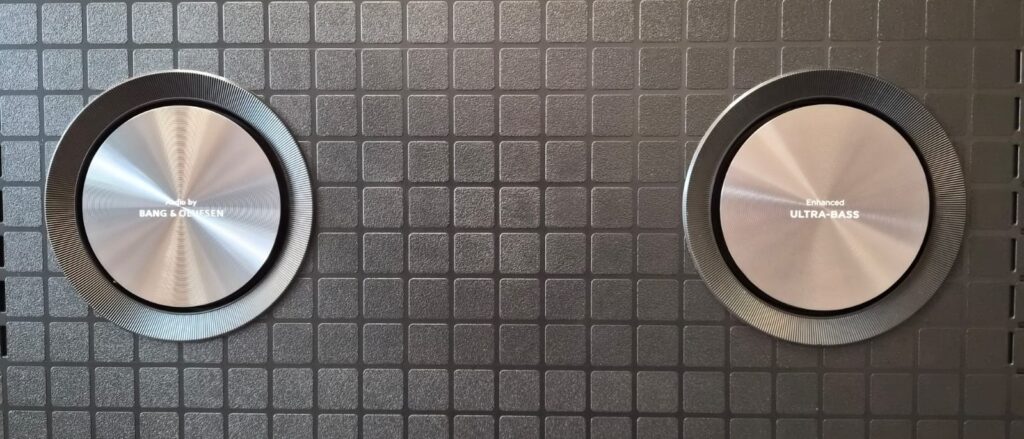
In practice, the audio performance is among the best I have heard from a 75-inch television. Bass depth, clarity, and overall balance clearly benefit from the Bang & Olufsen collaboration.
The TV’s sound quality turned out to be better than I initially expected. TCL collaborated with Bang & Olufsen on the audio system, and the result is noticeable.
The sound is relatively full, with good clarity in dialogue and a respectable level of detail across different frequency ranges. Voices remain clear even during busy scenes, while background effects and music are presented with enough presence to create a more immersive experience than what you typically get from built-in TV speakers.
While the bass cannot compete with a dedicated external sound system, it is still surprisingly present for a built-in solution, adding a certain sense of depth to action scenes and cinematic moments.
Overall, the built-in speakers deliver a solid listening experience for everyday viewing. Users who want a more powerful cinematic soundstage will still benefit from adding a soundbar or home theater system, but many viewers may find the TV’s integrated audio more than sufficient for regular use.
Q75H soundbar experience
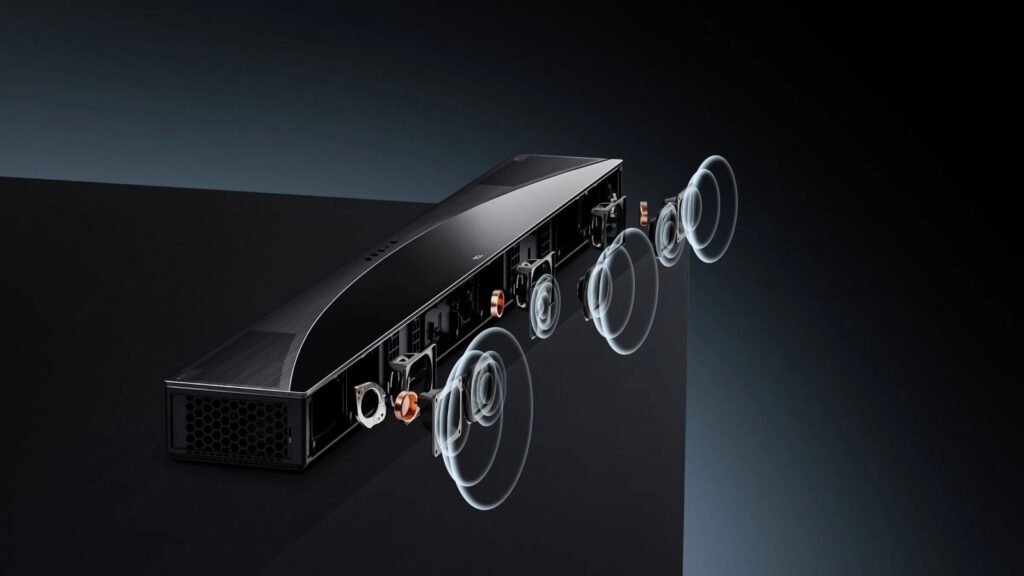
The sound quality on the C8K is outstanding, but to get the most out of the home cinema experience, a surround sound system is essential. For this, TCL sent me the Q75H soundbar, the first generation of TCL’s soundbars. It’s clear that the manufacturer studied the field carefully before producing soundbars, as the Q75H includes all the features required for a successful soundbar: support for 5.1.2 channels, that is, five main audio channels, two upward-firing drivers, and a wireless subwoofer.
To develop it, TCL partnered with the former head of Harman’s acoustic department, and together, in acoustic labs in Belgium, they designed this soundbar. It has two HDMI inputs, one of which supports eARC, as well as an optical input and a USB port.
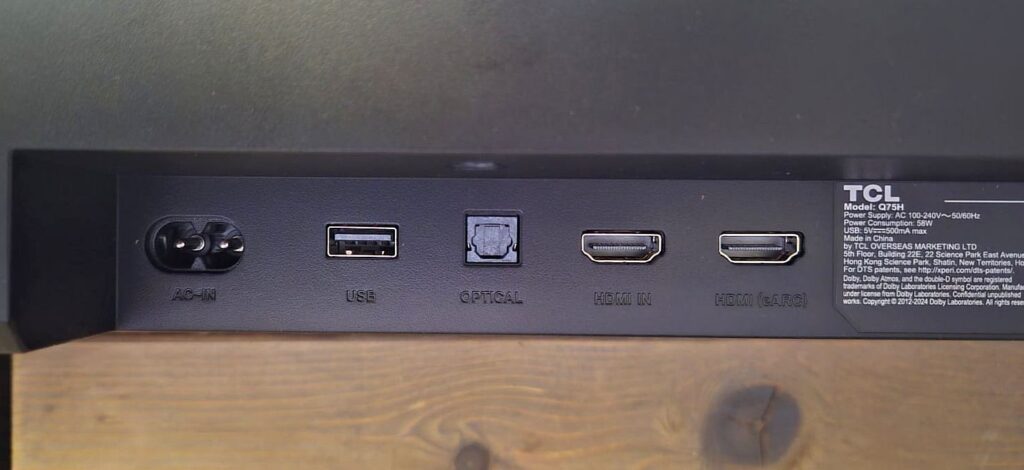
The Q75H is made of a combination of glass and PET (polyethylene terephthalate). Its dimensions are very compact: 105 cm long, 12 cm deep, and 7 cm high, so it doesn’t stand out on a media console. The subwoofer isn’t very large either, measuring 37 x 22 x 27 cm.
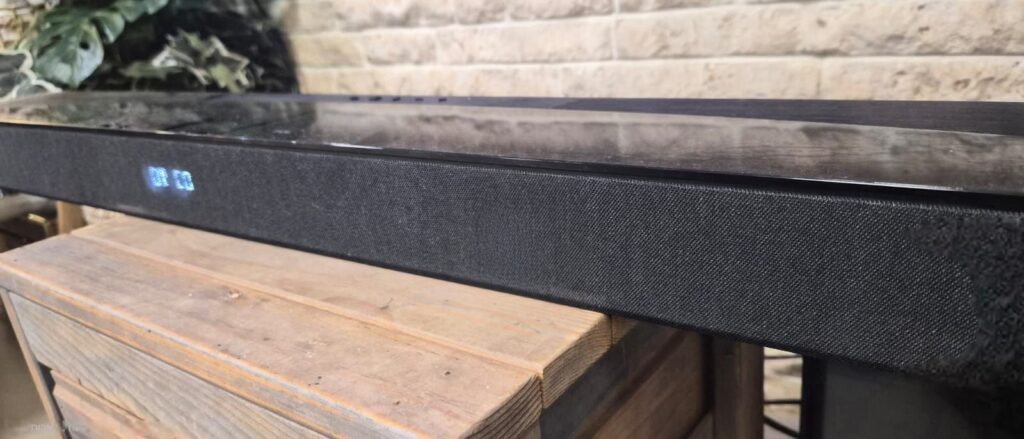
It has a front display that shows its status. The wireless subwoofer delivers 200 watts and only requires a connection to a power outlet.
It supports AirPlay 2 and Bluetooth 5.1, allowing content streaming from various sources. It features large magnets and elastic wave materials from Conex, providing an impressive bass experience while effectively reducing distortion and delivering immersive sound.
Unlike competitors, it doesn’t support voice assistants, Tidal streaming, Chromecast, or smart home integration.
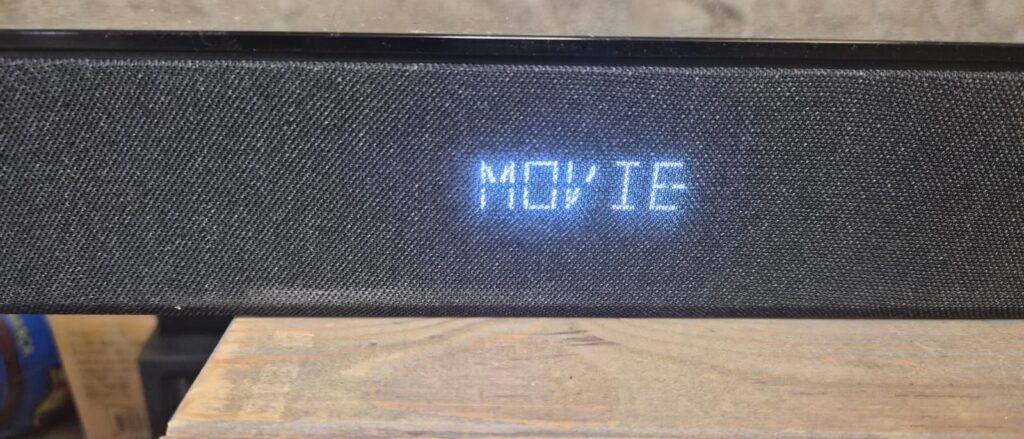
The equalizer supports several built-in sound modes: Standard, Voice, Music, Movie, Game, and Sports.
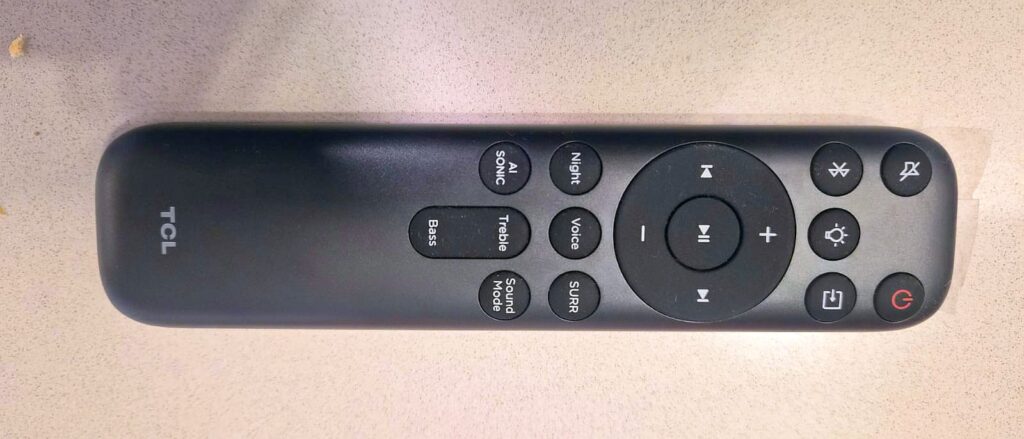
It comes with a separate remote control, offering features missing even on some competitor models: dimming the soundbar’s display, switching between HDMI sources, changing surround modes, and even an AI SONIC mode.
I tested the sound with movies, comparing playback with and without the soundbar, focusing solely on the audio, with visuals aside. The C8K’s audio is very deep and rich, providing a completely different experience from typical TVs.
The Q75H delivers even deeper, more immersive sound, but to me, the TV’s built-in sound still felt more natural. Occasionally, static sounds were noticeable from the soundbar, and changing volume via its remote produced glitches, which will likely be fixed in a future software update. For that reason, I continued listening directly through the TV’s speakers.
When I played the opening of Tron: Legacy and the race scene from Mad Max: Fury Road, the room was filled with energy. Low frequencies vibrated, dialogue remained clear, and the experience was almost cinematic.
A major advantage of TCL compared to competitors is full support for advanced audio formats like Dolby Atmos and DTS Virtual-X. In contrast, LG removed DTS support this year, and Samsung has a history of DTS incompatibility. TCL gives users broad audio format support, and since the 75-inch TV isn’t ultra-thin, it also delivers deep sound compatible with these advanced formats.
The Q75H provided greater surround presence, but the TV’s built-in audio sometimes sounded more natural. Occasionally, minor static noises were heard from the soundbar, likely something that could be addressed in future firmware updates.
Dolby Atmos and DTS Support
A major advantage of TCL compared with some competitors is broad audio format support, including Dolby Atmos and DTS Virtual:X. Samsung lacks these formats, and LG recently excluded such support for certain DTS formats. Nevertheless, TCL continues to support a wide range of audio codecs, which will be appreciated by home-cinema enthusiasts.
Pixel Performance
To examine the pixel performance of the C8K, I attached an electronic microscope magnifying at 300x magnification, and later at 1,600x, with the results as follows: the pixels turn off completely to achieve full darkness. Additionally, as seen in the video starting at 0:38, the pixels are arranged in groups of two rows of the same primary color. When there is a need to increase brightness, all the pixels in one color group light up, dramatically boosting brightness.
The second video, filmed at 1,600x magnification, shows that the pixels are arranged in groups of 12 subpixels per color, which light up and turn off in clusters of 4 pixels together. It is also possible to observe the full pixel shutdown, achieving absolute black.
Viewing Experience
The C8K’s QD-Mini LED panel is designed as a high-performance alternative to OLED. Available picture modes include: Dynamic, Standard, Intelligent, Filmmaker Mode, Movie and Sports. The most balanced results were achieved starting from the Standard mode with manual adjustments.
To evaluate the C8K’s real-world performance, I began with the final scene from The Running Man (2025), a sequence packed with intense HDR highlights and deep shadows. Flaming bottles fly across a dark stage, creating a striking contrast between bright bursts of light and surrounding darkness.
Scenes like this are ideal for testing a display’s ability to manage dynamic contrast and brightness. The C8K’s video processor handled the challenge confidently, analyzing each frame and adjusting contrast in real time so that both bright flames and darker background details remained clearly visible. Throughout the sequence, the image remained stable, detailed, and impressively controlled.
Next, I moved to Die My Love, a film that explores how a couple deeply in love can gradually turn into bitter adversaries over the years. The close-up shots in the following scene proved to be an excellent test of the TV’s ability to render fine detail and natural color.
Here the C8K performed beautifully. Facial details were crisp, skin tones appeared natural, and the overall image maintained a balanced and cinematic look without exaggerated contrast or oversaturated colors.
I concluded the test with Now You See Me: Now You Don’t (2025), a film shot with exceptionally sharp and high-quality cinematography. In the scene below, the actors wear black suits while standing against a bright white background, a scenario that can easily expose weaknesses in local dimming systems.
Despite the challenging contrast, the C8K handled the scene impressively. The dark suits retained visible texture and detail while the bright background remained clean and controlled, demonstrating the effectiveness of the TV’s Mini LED backlighting and local dimming precision.
To conclude the viewing experience, after extended viewing sessions across movies, streaming content and broadcast material, the TCL C8K proves to be a remarkably capable large-screen television. Its QD-Mini LED panel delivers a combination of extremely high brightness, rich color volume and strong contrast that makes it particularly impressive for HDR content.
The most noticeable advantage of the C8K is its ability to maintain image impact even in bright living rooms. With peak brightness reaching up to 4,500 nits, highlights feel intense and realistic, while the high number of local dimming zones helps preserve deep blacks and strong contrast across complex scenes.
Color performance is equally convincing.
The Quantum Dot layer provides vibrant yet controlled colors, avoiding the overly saturated look that sometimes appears in showroom-style picture modes. Once properly adjusted, the image becomes balanced and cinematic, making the TV suitable both for everyday viewing and dedicated movie nights.
Motion handling also performs well, with the panel maintaining stability during fast camera movements, action scenes and sports broadcasts.
The AI-based image processing works effectively in the background, sharpening details and improving contrast without creating an artificial appearance.
Brightness and Local Dimming
The 75-inch C8K reaches up to 4,500 nits of peak brightness, compared with 3,000 nits on the C7K. Local dimming zones also differ. While the C8K has 2,176 zones, the C7K only has 1,248 zones. This increased zone count improves contrast and backlight precision.
Color coverage reaches 97% of the DCI-P3 color space, similar to the C7K.
AI Image Processing
The C8K uses TCL’s TSR AIPQ AI processor, which analyzes content frame-by-frame using advanced algorithms. Adjustments are performed at the pixel level to optimize contrast, color, and sharpness.
After calibration, the TV delivered Balanced colors, Excellent HDR and Smooth motion handling. Blacks are not as absolute as OLED, but remain very deep and highly satisfying.
Viewing Experience
Several films were used to evaluate performance. Action scenes with intense HDR effects showcased the TV’s brightness and contrast control, while close-up shots demonstrated excellent detail and natural color rendering. Even challenging scenes featuring dark objects against bright backgrounds were handled impressively thanks to the TV’s advanced local dimming.
Reflections and Bright Room Performance
The C8K was tested in a typical living room environment with natural daylight. Reflections were visible only when the screen was completely dark. Thanks to the extremely high brightness, the TV performs exceptionally well even in brightly lit rooms, making it ideal for open living spaces.
Final Verdict
The TCL C8K proves that the company is not merely competing with established TV manufacturers. It is pushing the industry forward. It’s Highlights include Bang & Olufsen-tuned audio, Google TV with extensive app support, Backlit premium remote, QD-Mini LED picture quality with deep blacks and extremely high brightness, 144Hz refresh rate and Wide audio format compatibility. Combined with large screen options and competitive pricing, the C8K delivers a true cinematic experience at home.
While the C7K remains an excellent option, the improvements in the C8K, particularly in brightness and local dimming, are clearly visible.
TCL is also entering the soundbar market with products like the Q75H, showing its ambition to expand its home-cinema ecosystem.
Despite spending less on advertising than many competitors, TCL has already become one of the world’s top TV brands, and if the current trend continues, it may soon climb even higher.
For anyone seeking a large-screen TV that genuinely feels like a home theater, the 75-inch TCL C8K is one of the most impressive options available this year.