
Daniel had been planning the evening for weeks.
A brand-new 65-inch television had just arrived, the centerpiece of his living room. He had spent hours comparing reviews, watching YouTube demos, and reading specs. This was supposed to be a major upgrade. Brighter highlights, deeper blacks, and colors that looked closer to real life than anything his old TV could produce.
It was his first television with HDR.
To celebrate, he invited a few friends over for movie night. The plan was simple: pizza, drinks, and a visually stunning blockbuster streamed in 4K. The movie started. The opening scene appeared.
And suddenly… something looked wrong.
The picture lookws purple and green, shadows were tinted. Faces had a strange hue. Within minutes the picture shifted into a faint but unmistakable greenish cast.
Someone joked that it looked like the movie was filmed underwater.
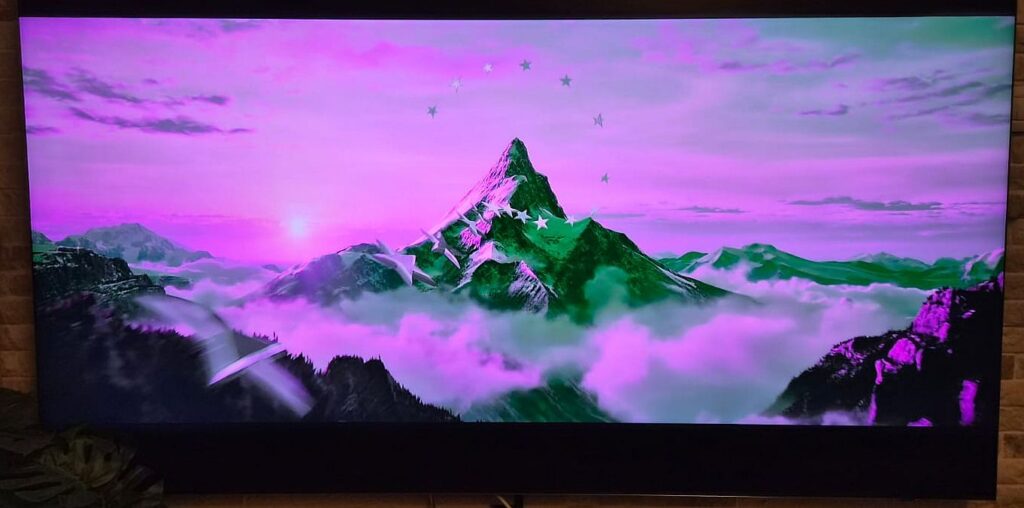
Dolby Vision: Not Supported.
The film he had chosen was mastered in Dolby Vision, but his new television only supported HDR10+.
What Daniel had just discovered live, in front of his guests, was the reality of one of the most confusing technology battles in modern consumer electronics: the HDR format war.
What HDR Actually Is
Before understanding the conflict, it’s important to understand the technology itself.
HDR stands for High Dynamic Range, and it represents one of the biggest visual improvements in television since the move to HD and 4K resolution.
Traditional video, often called Standard Dynamic Range (SDR), has limitations in brightness and color. Bright highlights get clipped, shadows lose detail, and colors can appear flatter than in real life.
HDR expands these limits in three major ways:
- Higher brightness
- Deeper contrast
- Wider color range
Instead of compressing everything into a narrow visual range, HDR allows filmmakers to show blazing sunlight, neon lights, deep shadows, and subtle color gradients all at once.
But making HDR work requires coordination between content creators, streaming services, and TV manufacturers. And that’s where formats enter the picture.
Why HDR Formats Exist
HDR content isn’t just brighter video. It includes metadata, instructions embedded in the video, that tell a TV how to display brightness and color correctly. These instructions help the TV adapt the image to its capabilities.
Different systems were created to deliver this metadata in different ways. The major formats today include:
- HDR10 (the baseline standard)
- HDR10+
- Dolby Vision
- HLG (used mostly for broadcast)
The real competition, however, is between HDR10+ and Dolby Vision.
Both aim to produce the best possible picture, but they do it in slightly different ways, and they come from competing industry camps.

The Rise of Dolby Vision
Dolby Laboratories introduced Dolby Vision in 2014 as a premium HDR solution designed for cinema and home entertainment. The key innovation was dynamic metadata. Instead of sending one set of instructions for an entire movie, as standard HDR10 does, Dolby Vision can adjust brightness and color scene by scene or even frame by frame.
This allows filmmakers to preserve creative intent across many different displays. For example:
- A dark nighttime scene can be optimized differently than a bright desert shot.
- A dim TV can receive different instructions than a high-end OLED.
- Dolby Vision also supports extremely high theoretical limits:
- Up to 12-bit color depth
- Up to 10,000 nits of brightness
No consumer TV currently reaches those numbers, but the format was designed with future displays in mind. Because of this flexibility and quality, Dolby Vision quickly gained traction among Hollywood studios and streaming platforms.
Services like Netflix, Apple and Disney, widely adopted Dolby Vision for premium content.
But there was a catch.
Dolby Vision is proprietary. Manufacturers must license the technology from Dolby. And not everyone was willing to pay.
The Countermove: HDR10+
In response, a group of companies led by Samsung Electronics developed an alternative. The format is called HDR10+. Like Dolby Vision, HDR10+ also supports dynamic metadata, the key feature needed to optimize brightness scene by scene.
But HDR10+ was designed with a different philosophy: Open standard, royalty-free licensing and easier integration for manufacturers
Samsung partnered with companies like Amazon, Panasonic and 20th Century Studios, to create a competing ecosystem. In theory, the visual results between HDR10+ and Dolby Vision can be very similar.
In practice, however, the industry split into two camps.
The Dolby Vision Camp
Several major TV manufacturers embraced Dolby Vision support. These include LG, Sony and TCL. Their reasoning was simple: Their televisions, especially OLEDs, already targeted the premium market, so supporting the most advanced HDR format helped reinforce their reputation for cinematic image quality.
Dolby Vision also had strong support from Hollywood studios and streaming platforms, making it attractive to consumers who wanted the best possible experience.
The HDR 10+ Camp
The most prominent supporter of HDR10+ is Samsung, who remained notably resistant to adding Dolby Vision support, even on its flagship televisions.
Why?
There are several strategic reasons.
- First, avoiding Dolby Vision means avoiding licensing fees.
- Second, Samsung helped create HDR10+, giving the company influence over the format’s development.
- Third, supporting a competing standard helps prevent Dolby Vision from becoming the de facto industry monopoly.
Samsung instead promotes its own HDR ecosystem, including technologies like HDR10+ Adaptive, which adjusts HDR brightness based on room lighting.
The Middle Ground: TVs That Support Both
Some manufacturers decided not to pick sides. Companies like TCL and Hisense increasingly support both Dolby Vision and HDR10+ in their televisions.
This strategy has a clear advantage:
- Consumers never need to worry about compatibility.
- Whether a movie is mastered in Dolby Vision or HDR10+, the TV can display it correctly.
However, supporting multiple formats adds complexity and sometimes additional costs. For brands trying to control pricing or maintain strategic partnerships, choosing a single format can still make business sense.
What Happens in the World of Projectors?
Most home cinema projectors on the market do not natively support Dolby Vision, and there are both technical and business reasons for this.
The technical limitation starts with the projector’s design. Most home projectors rely on lamps or lasers that produce relatively lower brightness compared to HDR-capable TVs. On top of that, Dolby Vision requires support for dynamic metadata, adjusted on a per-scene or even per-frame basis. This demands advanced processing power and an expensive license from Dolby. As a result, many projectors settle for HDR10 or HDR10+, or simply use Dynamic Tone Mapping to enhance the image.
In practice, nearly all home projectors, even premium models, do not officially support Dolby Vision. When a Dolby Vision signal is sent to these projectors, they usually decode only the HDR10 layer and display it as standard HDR, or apply automatic tone mapping to simulate an improved image. While this improves picture quality compared to basic HDR, it cannot fully realize the dynamic potential of Dolby Vision as seen on supported TVs.
Is This a Big Loss for Projector Owners?
On one hand, most home projectors still cannot match the brightness or advanced features of high-end HDR TVs, so the difference between Dolby Vision and a well-implemented HDR10+ image isn’t always dramatic, especially in a darkened room. Many projectors use tone mapping features to boost brightness and color performance, meaning HDR10 or HDR10+ can still deliver an impressive viewing experience even without Dolby Vision.
On the other hand, Dolby Vision is designed to provide a more precise HDR experience, and in theory, it can deliver richer colors, higher brightness, and better contrast when all components, content, source, and hardware, are optimized for it. On projectors that do support it, Dolby Vision can significantly enhance image fidelity, particularly in fast-changing scenes where brightness shifts quickly.
The Technology Is Still Evolving
The HDR war is far from over, since both formats continue to evolve. Dolby has introduced newer iterations of Dolby Vision, named Dolby Vision IQ, which uses sensors in the television to adjust picture settings based on ambient light in the room.
HDR10+ has responded with HDR10+ Adaptive, offering similar environmental adjustments, and at the same time, content availability continues to expand. Streaming platforms now host thousands of titles in HDR, and studios increasingly master films with multiple HDR versions. Ironically, this abundance of formats has created the exact confusion consumers hoped HDR would eliminate.
A TV may support HDR, but whether it supports the right HDR format can still determine what you actually see on screen.
Why the War Continues?
From a consumer perspective, supporting every format seems like the obvious solution. So why don’t all TV manufacturers do it?
Because format support is not just a technical decision, but also a strategic business choice. For companies backing Dolby Vision, it’s alignment with Hollywood studios and premium brand positioning.
For companies backing HDR10+, it means lower licensing costs, greater industry control and independence from Dolby’s ecosystem.
And for companies supporting both, it’s all about consumer convenience, compatibility across streaming services and broader market appeal.
Each approach reflects a different philosophy about how the HDR ecosystem should evolve.
The Real Winner: Better Pictures
Back in Daniel’s living room, the movie night eventually recovered, as following some quick research, and a little embarrassment, he switched to a different streaming version of the film that supported HDR10+.
The picture improved instantly, the green tint disappeared ,highlights sparkled, shadows deepened, and the room filled with the vivid colors HDR promised in the first place.
In the end, the format war may continue for years. But the good news for viewers is that both Dolby Vision and HDR10+ represent a huge leap forward from traditional video.
Even if the logos on the box differ, the goal remains the same:
To make the images on our screens look a little closer to the way the world really does.