
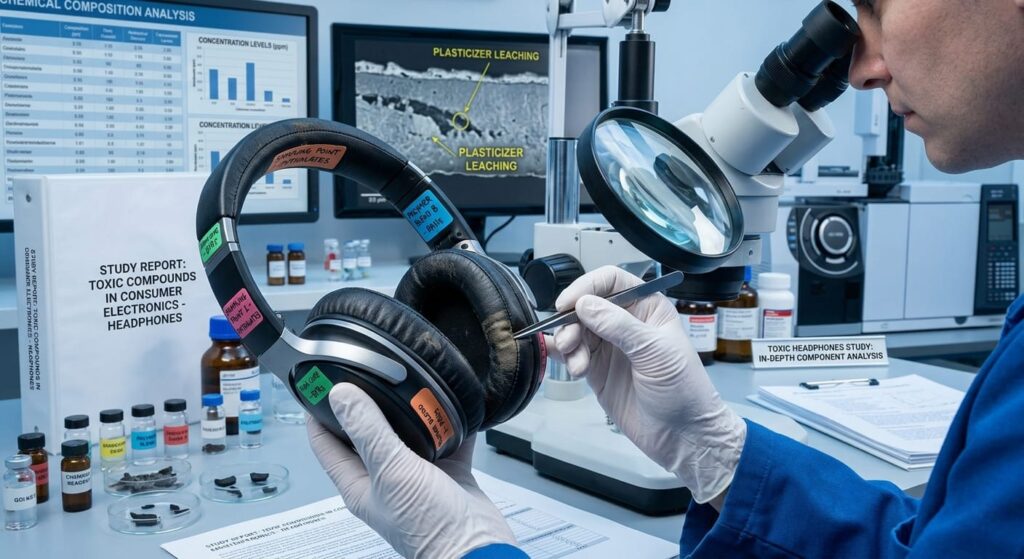
The recent study exploring the presence of certain chemical compounds in consumer headphones has attracted attention in media coverage and among safety-conscious consumers. This created headlines about so-called “toxic headphones”. The study’s findings identify trace substances that, in some cases, are subject to regulatory scrutiny when used in food containers or liquids. However, these results require context: the materials in question are not prohibited for direct contact in wearable consumer products such as headphones, bracelets, or other accessories.
It is crucial to differentiate between chemical detection and actual exposure. While the study effectively identifies compounds present in manufacturing materials, it does not assess the degree to which these chemicals transfer to the user during normal use. In toxicology, the principle that “the dose makes the poison” remains fundamental: detecting a substance does not automatically imply a hazard under realistic conditions of use.
The concern that some readers might misinterpret the findings highlights a common challenge in science communication. Simplified summaries or headlines can inadvertently create impressions of danger, even when the research is focused on chemical identification rather than exposure assessment. In some cases, this may lead to unnecessary anxiety among consumers or management teams considering product safety policies. A more precise framing clarifies that wearing or handling these materials does not equate to risk, unlike scenarios involving ingestion or prolonged exposure to liquids.
From a regulatory perspective, the compounds identified in the study are generally considered safe for their intended use in electronics and accessories. Restrictions typically apply to items designed for food contact, beverages, or other applications where chemical migration can occur. For wearable electronics, bracelets, or headphones, these limitations do not apply. Thus, while the study is scientifically valid in detecting the substances, its implications for consumer safety should be interpreted within the proper exposure and regulatory context.
This analysis also serves to remind decision-makers that risk assessment depends on actual exposure levels, duration, and context of use. The detected substances are not inherently unsafe when used as intended in headphones or similar devices. Consequently, management responses based solely on detection without considering exposure may lead to overly cautious or unnecessary actions.
Finally, it is worth noting that the study contributes useful data to the broader scientific discussion. It provides insight into manufacturing materials and chemical presence, which can inform future research or design considerations. However, emphasizing proper interpretation, exposure assessment, and regulatory guidance ensures that the discussion remains grounded in sound science and responsible communication.
In conclusion, while the study highlights interesting chemical findings in headphones, I believe that the potential risks are minimal under normal usage. Consumers can confidently use such electronics without concern, and the study should be viewed as a scientific assessment of materials, not as an indictment of product safety. Clear communication of these nuances helps prevent misinterpretation and unnecessary alarm, promoting informed decisions by both the public and product managers.