
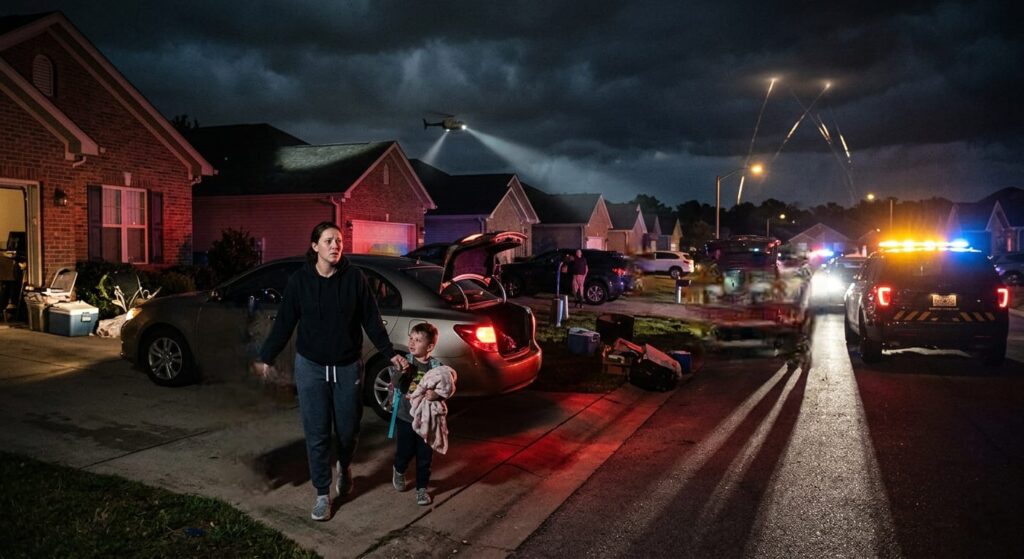
Would you survive constant alarms, rockets, and terror? A look inside a reality Americans rarely imagine.
It starts subtly, almost innocuously: a sharp, unfamiliar sound in the middle of the night. In most of the U.S. The alarm blares like an Amber Alert, taking over your phone, leaving no time to think. But imagine that it demands your instant action. You have thirty seconds. Maybe less. You grab your child, your phone, whatever is closest, and you run toward a shelter you have rehearsed only in your mind. And then, when it’s over, you go back to sleep knowing that it will happen again. And again. And again.
This is no longer a thought experiment. It becomes personal. What happens when a society built on comfort and perceived safety is forced to live under constant threat?
The Shock of a New Reality
In Israel, daily life and danger coexist. Shelters are built into homes, instructions for children are rehearsed, and civilians navigate careers, relationships, and school alongside an ever-present awareness of risk. The extraordinary becomes infrastructure.
In the United States, however, danger arrives episodically. Terror, mass shootings, and disasters shock the public because they are exceptions, not routine. The psychological impact of turning those exceptions into a daily rhythm would be profound. The first cracks would appear not in buildings or budgets, but in minds unprepared for constant threat. Anxiety, disorientation, and fear would ripple across communities that have long assumed safety as a baseline.
No Shared Script
Israelis often share a formative experience of military service, where responsibility and risk are part of everyday learning. In the U.S., military service is voluntary, and most citizens have never been placed in situations where hesitation can cost lives.
This absence of collective preparation matters deeply. Under repeated attacks, Americans would be improvising survival strategies without the advantage of shared protocols or experience. The instinct to act calmly under fire would have to be learned suddenly, in real time, amid chaos. Some would rise to the challenge; many would struggle.
Comfort as Vulnerability
Modern American life is optimized for ease and predictability. Climate-controlled homes, fast delivery, digital convenience. These systems are not just luxuries; they shape expectations. Remove them, disrupt them repeatedly, and daily life begins to feel unmoored.
Imagine constant sirens interrupting sleep, sudden school closures, blocked roads, and supply chain disruptions. The familiar becomes unreliable, and comfort. Once taken for granted, turns into fragility. Unlike societies accustomed to enduring uncertainty, Americans might initially struggle to recalibrate.
The Weight of Mental Strain
Stress is never isolated. The U.S. is already grappling with widespread mental health challenges and substance dependency. Introduce chronic threat into this environment, and the effect is exponential. Anxiety deepens. Isolation spreads. Addiction and depression intensify. Social cohesion frays under the strain.
The question is not whether Americans would feel fear, because they would, but how quickly systems and individuals could adapt without collapsing.
Individualism vs. Collective Survival
American culture prizes autonomy, independence, and self-reliance. These values are celebrated, but they are not always compatible with enduring shared crisis. In Israel, collective responsibility like neighbors checking on neighbors, a sense of “we are in this together”, is embedded in the social fabric.
If the U.S. faced repeated attacks, would individualism hinder collective response? Or would Americans find unexpected solidarity under pressure? History suggests both outcomes are possible: crises can either unify or divide.
Politics in the Eye of Fear
In a prolonged threat environment, the American political machine would feel immense pressure. Each attack would spark public outrage, media frenzy, and calls for immediate action. Patience is a scarce commodity in U.S. politics, yet sustained threat demands exactly that.
The nation’s instinct might lean toward overwhelming military responses or aggressive countermeasures. Unlike Israel, which has learned to coexist with ongoing conflict, the U.S. might demand quick, decisive, and absolute solutions: an expectation difficult to fulfill in the real world.
Adaptation and Human Resilience
Humans are adaptable. If this reality persisted, Americans would change. New systems would evolve, children would grow up with different rules and communities would form new rhythms. A different kind of resilience would emerge. One which is quiet, enduring, forged by necessity rather than choice.
But adaptation takes time. The period of adjustment would be chaotic, painful, and destabilizing. Comfort would be replaced by vigilance, predictability by contingency, and freedom by a constant negotiation with uncertainty.
The Uncomfortable Truth
Even as adaptation occurs, the deeper question remains personal: when the alarm sounds, when your world contracts to seconds, when the ordinary becomes life-threatening, can you continue? Can you continue with work, love, daily routines? Can you persist without losing yourself?
This is not about America versus Israel. It is about humanity under pressure. About the limits we think we have and the hidden reserves we might discover when the world suddenly demands more than comfort, certainty, and predictability.
Final Thought
Before you answer whether Americans could endure such a reality, ask yourself: if it happened to you tomorrow, would you? Would your life, your habits, and your identity survive, or would fear redefine everything you thought you knew?