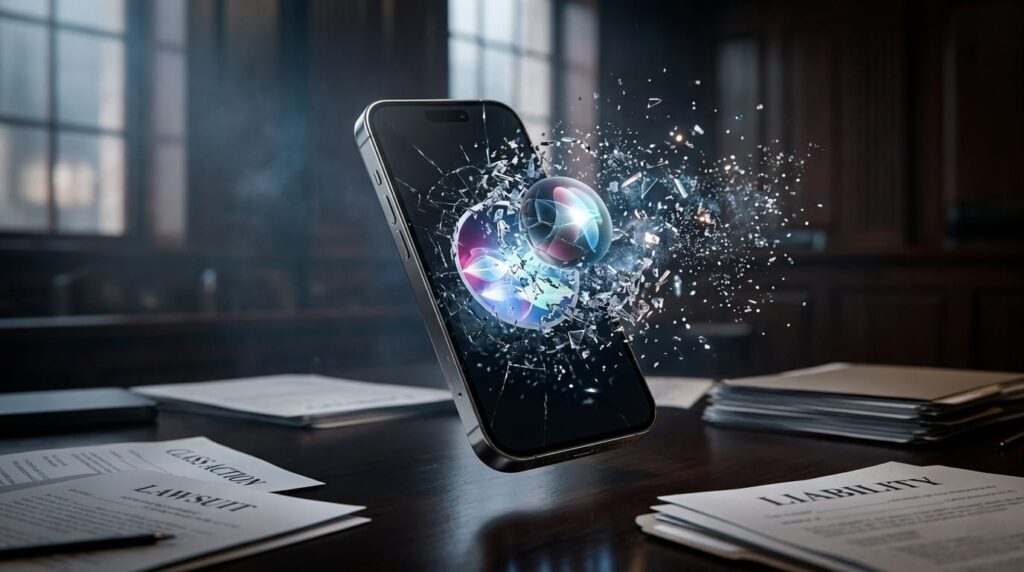
Apple promised an AI revolution with the iPhone 15 Pro and iPhone 16, but many users discovered a very different reality. Now Apple agrees to pay $250m over claims it misled buyers on Siri’s AI features
Just days ago, the Apple Intelligence controversy officially evolved from a public relations disaster into a massive legal and financial crisis for Apple. As reported in the NY Times, The company reportedly agreed to a class-action settlement worth approximately $250 million after being accused of misleading consumers about the real capabilities and availability of its highly promoted Apple Intelligence features tied to the iPhone 15 Pro and iPhone 16 lineup. According to the lawsuit, Apple’s marketing created what plaintiffs described as a clear and reasonable expectation that users would receive a dramatically more advanced Siri experience powered by artificial intelligence at launch, only for many customers to discover that several headline capabilities were delayed, missing, or significantly more limited than what had been showcased during Apple’s keynote presentations and advertising campaigns. The controversy immediately reignited criticism surrounding the widening gap between Apple’s polished AI demonstrations and the actual experience consumers received after spending premium flagship prices on the company’s newest devices.
What makes this situation especially damaging for Apple is that it revives a familiar criticism that has followed the company before: the accusation that Apple sometimes sells a vision of the future before the technology is truly ready for mass adoption. Reports surrounding the settlement suggest that qualifying U.S. customers could receive compensation ranging from roughly $25 to $95 per eligible device depending on how many claims are ultimately approved. But beyond the financial cost, the larger issue may be the growing erosion of consumer trust, particularly at a moment when artificial intelligence has become the most important battleground in the tech industry. Apple has not published a dedicated apology regarding the settlement on its official website so far, though statements attributed to the company indicate it chose to resolve the matter in order to continue focusing on future product development and innovation. The timing could not be worse for Apple, as the company now heads into its next generation of AI-focused announcements under far heavier scrutiny from consumers, regulators, investors, and even longtime loyal iPhone users who are beginning to question whether Apple Intelligence was truly ready for the spotlight when it was first unveiled.
Now that we understand the current state of Apple’s growing AI controversy and the legal storm surrounding it, let’s dig deeper into how the company reached this point in the first place, because the real story is not just about one lawsuit, but about a pattern of expectations, marketing, consumer trust, and a tech giant that may have promised the future before it was truly ready to deliver it.
Apple Intelligence Was Supposed to Change Everything
There was a moment during Apple’s glossy iPhone 15 Pro and iPhone 16 presentations when it genuinely felt like the company had finally arrived at the future everyone had been waiting for. The demos looked effortless, polished, and almost magical in the classic Apple way. Siri suddenly appeared smarter, more contextual, and capable of understanding conversations naturally while interacting across apps as if the iPhone had evolved into a true personal assistant instead of a voice-triggered shortcut machine. For millions of viewers around the world, it felt like Apple had finally solved the AI puzzle in a way only Apple could: elegantly, privately, and deeply integrated into the ecosystem people already trusted. Many loyal iPhone users who upgrade every year, immediately believed this was the next major leap, the kind of innovation that justified spending another thousand dollars on a new device. The promise was not just about artificial intelligence, but about convenience, productivity, and finally making smartphones feel genuinely intelligent. Apple created an emotional expectation that the future had arrived, and for many buyers, that expectation became the reason to upgrade immediately rather than wait another year.
Then the reality and gap between Apple’s marketing and Apple’s actual delivery arrived, and this became impossible to ignore.
Watch here promises about pf Apple Inteligence:
The Features People Bought Were Not Fully There
Imagine buying a brand-new iPhone after watching Apple demonstrate a smarter Siri capable of understanding context from emails, calendars, messages, and on-screen content, only to discover weeks later that many of those capabilities either did not exist yet, were delayed indefinitely, or functioned in an extremely limited way. That is exactly where many customers found themselves after purchasing the iPhone 15 Pro and iPhone 16 lineup. The lawsuit now surrounding Apple argues that the company created “clear and reasonable consumer expectations” that Apple Intelligence would be available and functional at launch, when in practice many core features remained absent long afterward. The frustration became even larger because Apple’s entire marketing campaign revolved around these AI promises, treating Apple Intelligence not as a future experiment but as a central reason to buy the new devices immediately. Consumers were suddenly buying the promise of a smarter iPhone era, and not simply titanium frames, slightly faster chips, or marginal camera improvements .
That disappointment quickly spread online because users realized that Apple’s AI demos looked dramatically more advanced than the product people actually received. In some advertisements, Siri appeared capable of remembering people, meetings, and contextual details naturally in a conversational way that still has not fully materialized. For many users, this created the unsettling feeling that Apple had marketed an aspiration rather than a finished product, and the difference between those two things matters enormously when customers are paying premium flagship prices. What makes the situation even more damaging is that Apple has spent years positioning itself as the company consumers can trust more than competitors. When a smaller startup overpromises, people shrug. When Apple does it, the backlash becomes global.
Apple’s AI Problem Is Bigger Than One Lawsuit
The most fascinating part of this controversy is that it exposes a deeper issue inside Apple: the company appears to have entered the AI race later than its competitors and is now desperately trying to close the gap while maintaining the illusion that it still leads the industry. For years, Apple avoided the chaotic race surrounding generative AI while companies like Google, Microsoft, OpenAI, and Samsung aggressively accelerated their AI ecosystems. Then suddenly, Apple needed an answer immediately, not next year. That pressure created the perfect environment for inflated expectations because Apple could not afford to appear behind during the most important technological shift since the smartphone itself. Instead of cautiously presenting Apple Intelligence as an evolving roadmap, Apple presented it as a polished revolution ready to transform the iPhone experience.
This becomes even more important when comparing Apple to Samsung, something explored in depth in the article iPhone 17 vs Samsung S26: The AI Battle Just Began. Samsung aggressively pushed Galaxy AI features while integrating Google’s rapidly evolving Gemini ecosystem, and suddenly Apple found itself in an unfamiliar position: reacting instead of leading. Consumers began asking whether Apple was truly innovating in AI or simply trying to create the perception of innovation through marketing. That pressure explains why Apple showcased capabilities that appeared far more mature during presentations than they did in real-world consumer hands. The company needed to reassure investors, loyal customers, and the broader market that it was still a dominant force in the next era of computing. But reassurance through marketing becomes dangerous when the actual product cannot keep pace with the story being told on stage.
BatteryGate Proved This Is Not New Behavior
For longtime Apple users, this entire controversy feels strangely familiar because it echoes the infamous BatteryGate scandal that severely damaged Apple’s credibility years earlier. Back then, Apple quietly throttled iPhone performance on older devices in an attempt to prevent unexpected shutdowns caused by aging batteries. Technically, Apple argued that the move was designed to protect device stability and prevent overheating or crashes, but the company failed in one critical area: transparency. Consumers suddenly felt their devices becoming slower without understanding why, and many assumed Apple was intentionally degrading performance to push people toward buying newer iPhones. Even users who experienced these issues firsthand on older iPads remember how devices gradually became almost unusable over time, creating enormous frustration and distrust.
The deeper issue with BatteryGate was never only the throttling itself but it’s desicion what was best for consumers without openly communicating what was happening. That same pattern appears again with Apple Intelligence. Instead of clearly stating that many AI capabilities would roll out gradually over time and might initially be limited, Apple allowed consumers to believe they were purchasing a fully realized AI experience. Once again, the criticism is not simply about technology failing to evolve quickly enough, because technology always evolves imperfectly. The criticism is about Apple presenting a version of reality that feels cleaner, more complete, and more advanced than what users actually receive after spending premium prices. In both BatteryGate and the Apple Intelligence controversy, the central accusation is remarkably similar: Apple chose image management over radical transparency.
Why Would Apple Risk Another Class Action Crisis?
That question may ultimately define the entire controversy: why would one of the richest companies in the world knowingly create expectations that it could not fully satisfy? The answer may lie in the brutal pressure of the modern AI race. Artificial intelligence is no longer just another smartphone feature, but the foundation for the future of personal computing. Investors and consumers expect it, while competitors are aggressively marketing it. It is likely that Apple understood that remaining quiet while Samsung, Google, and OpenAI dominated the conversation, could create the dangerous perception that it had lost its innovative edge.
So Apple did what many massive corporations do under competitive pressure: it sold the vision first and hoped that the technology would catch up quickly enough afterward. The problem is that consumers today are more informed, connected, and far less patient than they were a decade ago. When features are missing, people notice immediately, and when advertisements showcase functionality that does not fully exist, videos comparing promise versus reality spread across social media within hours. And that disappointment reaches millions of users simultaneously, and lawsuits become inevitable. Apple has reportedly agreed to settle claims connected to Apple Intelligence marketing for hundreds of millions of dollars, with payouts potentially reaching affected users of iPhone 15 Pro and iPhone 16 devices.
But the financial penalty may not even be the biggest problem. The real danger is erosion of trust.
The Bigger Question: What Happens With iPhone 17 And iPhone 18?
That is where this story becomes genuinely important for the future of Apple rather than merely another temporary scandal. If Apple already exaggerated the readiness of Apple Intelligence for the iPhone 15 Pro and iPhone 16, consumers now have every reason to question future AI promises tied to the iPhone 17 and even the iPhone 18. Every AI demo presented on stage from this point forward will face heavier scrutiny because the public has learned that coming soon can sometimes mean not really ready. That changes the relationship between Apple and its audience in a profound way.
Imagine watching another Apple keynote next year where Siri appears dramatically more intelligent again, capable of handling tasks autonomously, interacting between apps, making reservations, or understanding deep personal context. Many viewers who once instantly believed Apple’s demos will now pause and ask themselves a much more skeptical question: is this a real shipping product, or another carefully edited vision of the future? Once trust weakens, every future promise becomes harder to sell. That is the invisible cost of controversies like BatteryGate and the Apple Intelligence lawsuit. They they permanently reshape consumer psychology, and not just create legal settlements.
Apple still has the engineering talent, ecosystem strength, and global loyalty to recover from this moment. But recovery will require something the company has historically struggled with during crises: radical honesty. Consumers can forgive delays and technological limitations. What they do not forgive easily is feeling manipulated into buying products based on expectations that never truly existed. And unless Apple learns from both BatteryGate and the Apple Intelligence controversy, the company may discover that the next class-action lawsuit is not a question of if, but simply when.
Share your experience
Did you buy the iPhone 15 Pro or iPhone 16 expecting Apple Intelligence to completely change the way you use your iPhone, only to feel disappointed once you actually started using it? Or maybe not?
Share your experience in the comments and tell us whether Apple truly delivered the AI revolution it promised, or whether the reality felt very different from what was shown on stage during the launch events.