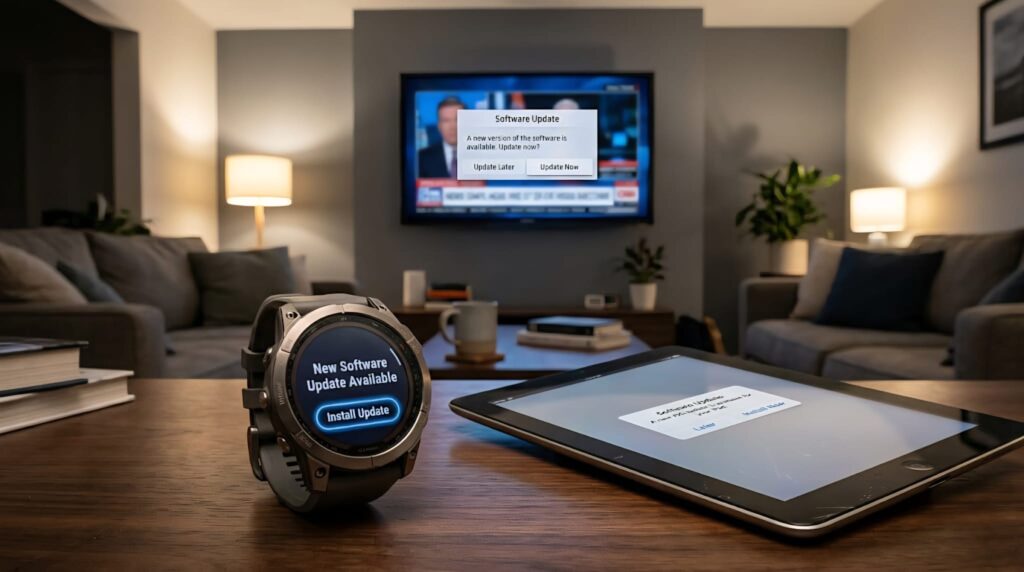
From iPads to Samsung TVs and Garmin watches, more consumers are asking the same uncomfortable question: are software updates quietly making our devices slower over time?
Almost every tech owner experienced the following situation: a device that once felt fast, fluid, and responsive slowly begins to hesitate. Menus lag, apps take longer to open, button presses feel delayed and animations stutter. Eventually, the experience becomes frustrating enough that replacing the device starts to feel inevitable. So do software updates slow down devices?
For years, consumers have debated whether this gradual decline is simply the natural aging of hardware, or whether software updates themselves contribute to the slowdown. After experiencing the phenomenon across multiple categories of devices over more than a decade, the question no longer feels theoretical.
It feels personal, and increasingly widespread.
The iPad 2: The Device That Started the Question
The first time I found this issue impossible to ignore was with an Apple iPad 2. When it was new, it felt remarkably smooth: apps launched quickly, navigation was immediateand even years after launch, the hardware itself still physically worked perfectly. But with every major iOS update, the experience became gradually slower, but then dramatically.
Eventually, it became so sluggish that basic tasks felt exhausting, opening apps took too long, browsing lagged constantly and a tablet that once felt premium eventually became nearly unusable despite still functioning physically. Today, it mostly sits unused waiting for salvation. And that experience was not unique to me.
Apple itself became the center of one of the biggest consumer technology controversies of the last decade after admitting it (published also in Vanity Fair) intentionally slowed older iPhones under certain conditions.
The company said the slowdown mechanism was designed to prevent unexpected shutdowns caused by aging lithium-ion batteries, and argued that older batteries could no longer provide peak power consistently, and that reducing processor performance improved device stability.
That explanation became known worldwide as “battery throttling.”
While the lawsuits primarily focused on iPhones rather than the iPad 2 specifically, the controversy validated a suspicion many consumers had already developed: software updates could materially change device performance over time. Apple later agreed to a settlement connected to the lawsuits, while continuing to deny wrongdoing.
Importantly, there is no verified evidence that Apple intentionally slowed the iPad 2 specifically in the same way described in the iPhone battery-throttling controversy. But for many users, including long-time Apple customers, the experience of aging iPads becoming progressively slower after years of software updates felt strikingly similar.
That distinction matters, since there is a difference between documented throttling and perceived long-term software degradation. But for users experiencing lag every day, the distinction can become blurry.
Why Devices Often Feel Slower Over Time
To be fair, not every slowdown is evidence of malicious intent. There are legitimate technical reasons why older devices struggle after years of updates. Modern operating systems continuously evolve and add heavier graphics, AI-powered features, expanded background services, larger security frameworks, advanced multitasking and more demanding applications.
Hardware designed eight or ten years ago was never built with many of those modern workloads in mind, so as software becomes more capable, older processors and limited memory can begin to struggle. Security patches can also reduce performance since advanced protections often require additional background computation, and that tradeoff between security and responsiveness is real.
But consumers rarely experience those changes as technical evolution. Instead, they experience them as lag, and that growing disconnect is where frustration begins.
Samsung Smart TVs and the Slow Decline of Responsiveness
The same pattern eventually appeared elsewhere including on my Samsung smart TV that has been in use for roughly eight years. In its early years, it felt quick and responsive: apps opened rapidly, the remote reacted instantly and navigation across menus was smooth. But today, after years of firmware and operating-system updates, the experience is noticeably different.
Remote-control inputs respond more slowly, certain menus hesitate before openingand some apps that once worked normally are no longer supported at all. That experience eventually led to a decision many consumers quietly make: disabling automatic software updates entirely.
Not because updates are inherently bad, but since they sometimes appear to trade long-term responsiveness for new features and ecosystem changes that older hardware struggles to handle, and that creates a difficult balancing act.
Disabling updates may expose devices to security vulnerabilities, but continuing to update older smart TVs can sometimes make them feel slower and less stable in everyday use. Reports across the internet suggest many users have experienced similar frustrations with aging smart TVs and app ecosystems. Samsung itself publishes troubleshooting documentation addressing sluggish or malfunctioning TV apps, including freezing, crashing, and loading issues.
Technology publications like Tom’s Guide, have also documented how smart TVs commonly become laggy over time due to cache accumulation, firmware complexity, storage limitations, and persistent background processes.
Recent outages affecting Samsung smart TV apps also demonstrated how dependent modern televisions have become on constantly evolving online infrastructures.
My Garmin Fenix 8: A Flagship Watch That Feels Slower After Updates
More recently, the same question emerged again, this time with my Garmin Fenix 8. When flagship smartwatches are launched, their responsiveness is often part of the premium experience. Menus feel fluid, buttons react instantlyand navigation appears polished. But after multiple software updates, the watch increasingly feels slower. Each button press can involve a brief pause, interface transitions hesitate, navigation sometimes stuttersand certain interactions now require waiting roughly a second before the next response appears.
To be clear: this observation is based on my personal experience with my single watch, and not a controlled testing across multiple devices. But online discussions suggest other users have reported similar concerns. Garmin’s own forums contain multiple threads from Fenix 8 owners describing lag, sluggish scrolling, delayed display wake-ups, and reduced responsiveness after firmware updates.
Some users specifically reported that the watch initially felt “snappy” before becoming slower after later software revisions. Garmin moderators acknowledged at least some of the issues publicly, stating that engineers were investigating certain lag-related concerns.
Reddit discussions reflect similarly mixed experiences. Some owners describe serious lag and instability after updates, while others report smooth performance. That nuance matters.
This is not an evidence that every Garmin Fenix 8 becomes slow after updates, but it is evidence that enough users have discussed the issue publicly for the pattern to become noticeable.
Planned Obsolescence, Or the Cost of Modern Software?
The deeper question behind all of this is unavoidable: Are modern devices intentionally designed to age faster through software? Or are companies simply prioritizing innovation over long-term optimization for older hardware?
To my undserstanding, the answer is probably somewhere in the middle.
There is little hard evidence proving deliberate slowdown strategies across the broader electronics industry. In most cases, software engineers are attempting to deliver new features, improved security, compatibility updates and ecosystem integration. But those improvements often arrive on hardware that was never designed for today’s software complexity.
Consumers experience the result as a gradual erosion of responsiveness and over time, that erosion can subtly encourage replacement behavior whether intentional or not. That is why the conversation around software slowdown after updates continues to resonate so strongly with users. Because millions of people have experienced some version of it.
- A phone that once flew now hesitates.
- A TV that once reacted instantly now stumbles through menus.
- A premium smartwatch suddenly feels slower after another firmware update.
Each individual case may have a technical explanation, but collectively, they create a broader cultural suspicion that modern consumer technology is not truly built to age gracefully.
The Real Question Consumers Are Asking – Software updates slow down devices?
Perhaps the most important issue is not whether updates technically cause slowdowns, but whether consumers deserve greater transparency about the tradeoffs involved with the update.
- Should companies clearly explain when new features may reduce performance on older hardware?
- Should users have more control over lightweight operating systems?
- Should manufacturers offer performance preservation modes for aging devices?
Those questions are becoming increasingly relevant as consumers spend more money than ever on premium electronics expected to last many years, and ultimately, the frustration is not just about lag.
It is about trust. And whether the devices people rely on every day are evolving with them, or slowly aging out by design.