

Después de varias semanas de uso del EZVIZ HP7 Pro Al usarlo como intercomunicador principal en mi casa, me quedó claro que no se trata de un simple videoportero inteligente. Es un videoportero 4K completo, diseñado para reemplazar los sistemas de intercomunicación residenciales tradicionales e incorporar funciones modernas para el hogar inteligente que muchos productos de la competencia aún no tienen. En lugar de probar el HP7 Pro solo un fin de semana, lo instalé como intercomunicador principal y lo usé a diario durante varias semanas. Esto me permitió comprender mucho mejor tanto sus ventajas como sus limitaciones.
Durante años, los sistemas de intercomunicación residenciales apenas cambiaron. Eran funcionales, fiables y, francamente, un poco aburridos. Un pequeño botón de llamada en el exterior, un teléfono de pared en el interior y, tal vez, un solo botón para abrir la puerta principal. Esa era toda la experiencia.
Mientras tanto, casi todos los demás aspectos del hogar conectado evolucionaron. Las cámaras de seguridad se volvieron más inteligentes, las cerraduras de las puertas se conectaron, la iluminación pasó a controlarse mediante aplicaciones móviles e incluso los asistentes de voz se generalizaron. Sin embargo, los sistemas de intercomunicación tradicionales permanecieron prácticamente inalterados. Hoy, eso finalmente está empezando a cambiar.
En mi opinión, hoy en día los propietarios ya no esperan que un interfono simplemente permita que las visitas se anuncien, sino que esperan vídeo de alta resolución y acceso remoto desde cualquier lugar. Además, esperamos detección de movimiento inteligente, conectividad en la nube, notificaciones en el smartphone e integración perfecta con el resto de nuestro ecosistema de hogar inteligente.
A primera vista, muchas empresas parecen ofrecer exactamente eso. Productos como Ring, Google Nest, Videoportero Reolink Además, varios timbres inteligentes prometen transformar la entrada de tu casa en una experiencia conectada. Si alguien pulsa el botón, suena tu teléfono, abres la aplicación, ves quién está fuera y puedes hablar con esa persona a través de la cámara integrada.
En teoría suena perfecto, pero tras probar varios timbres inteligentes a lo largo de los años, he aprendido que la experiencia real suele ser muy diferente. Puede que tu teléfono esté cargando arriba o sobre tu escritorio mientras trabajas en el jardín. También puede estar en silencio o guardado en otra habitación. Incluso si recibes la notificación, hay muchas situaciones en las que abrir la puerta desde el móvil no es la solución más rápida ni la más cómoda.
¡Este no es el único desafío!
Los niños pequeños a menudo no llevan teléfonos inteligentes por casa, y los miembros mayores de la familia pueden sentirse incómodos respondiendo videollamadas a través de una aplicación móvil. Sin embargo, nuestros visitantes siguen esperando que alguien responda de inmediato después de tocar el timbre. Precisamente por eso, un sistema de monitoreo de interiores dedicado sigue siendo útil, incluso en 2026.
Otra limitación de muchos timbres inteligentes se hace evidente en el momento en que alguien necesita entrar a su propiedad. La mayoría de los timbres con video más populares se centran casi exclusivamente en la comunicación, permitiéndole ver a los visitantes y hablar con ellos de forma remota, pero ahí suelen terminar sus funciones. Si su propiedad incluye una puerta peatonal eléctrica, una puerta de acceso vehicular o un acceso controlado a la entrada, a menudo se ve obligado a comprar hardware adicional, controladores de terceros, servicios de suscripción o sistemas de automatización independientes solo para desbloquear la puerta de forma remota.
Esto fue, sin duda, lo primero que me llamó la atención durante mi evaluación. En lugar de intentar reemplazar un intercomunicador con una cámara y una aplicación para smartphone, el HP7 Pro adopta un enfoque opuesto. Parte de un sistema de intercomunicación residencial tradicional y lo moderniza en todos sus aspectos.
El resultado es algo que se parece menos a un timbre inteligente y más a un sistema completo de gestión de accesos.
EZVIZ no es nuevo en el sector de la seguridad para el hogar.
He analizado varios productos de EZVIZ a lo largo de los años, así que el ecosistema de la compañía no era nuevo para mí. Ofrece un amplio catálogo que incluye cámaras de interior, sistemas de vigilancia exterior, cámaras con batería, cámaras de seguridad 4G, sensores inteligentes, productos de iluminación y dispositivos de domótica.
En los últimos años, se ha expandido progresivamente más allá de las cámaras, abarcando el control de acceso inteligente y ecosistemas completos de seguridad para el hogar. Una de sus mayores ventajas es que prácticamente todo funciona dentro de la misma aplicación móvil. En lugar de tener que usar aplicaciones separadas para cámaras, sensores, timbres e intercomunicadores, los propietarios pueden gestionar todo su sistema de seguridad desde una única interfaz.
Tras pasar varias semanas con el HP7 Pro, llegué a la conclusión de que es uno de los sistemas de intercomunicación residencial más completos que EZVIZ ha lanzado hasta la fecha. En lugar de presentar otro timbre con video, la compañía intenta unir dos mundos diferentes.
- Por un lado, está el tradicional interfono doméstico con cable, en el que se ha confiado durante décadas porque siempre está disponible dentro de la casa.
- Por otro lado, está el hogar inteligente conectado de hoy en día, donde el acceso remoto, el reconocimiento impulsado por IA, los servicios en la nube y el control mediante teléfonos inteligentes se han convertido en características habituales.
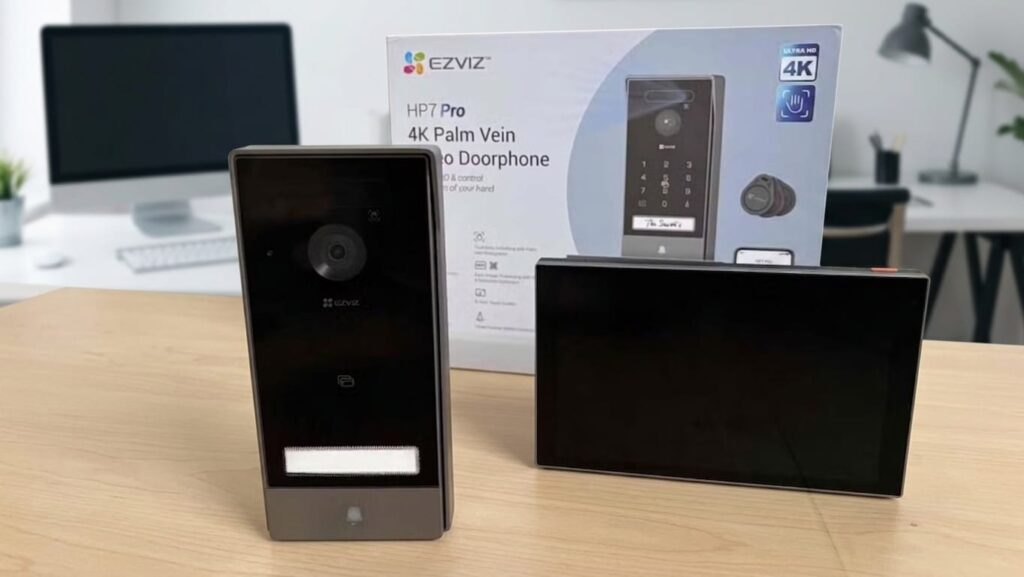
El HP7 Pro combina ambos enfoques en un único sistema.
En el uso diario, me di cuenta de que lo veía menos como un timbre y más como un sistema completo de gestión de accesos. Combina un videoportero 4K, control de acceso y un panel de control para el hogar inteligente en un solo dispositivo. Esta combinación lo convierte de inmediato en uno de los productos más interesantes disponibles actualmente para los propietarios que buscan modernizar la entrada de su casa sin tener que renovar todo el cableado.
Diseño y hardware: una versión moderna del intercomunicador tradicional.
Lo primero que llama la atención del EZVIZ HP7 Pro es que no se parece a un sistema de intercomunicación tradicional. Durante décadas, los intercomunicadores residenciales se diseñaron casi exclusivamente en función de su funcionalidad. Solían ser cajas de plástico blanco con pantallas pequeñas, botones físicos y diseños que priorizaban la practicidad sobre la estética. Cumplían su función, pero rara vez parecían algo que los propietarios instalarían con orgullo en la entrada de una vivienda moderna.
El HP7 Pro adopta un enfoque completamente diferente.
El sistema se basa en dos componentes principales: una estación exterior instalada cerca de la puerta de entrada y un monitor interior con pantalla táctil que funciona como centro de control dentro del hogar. Juntos, crean una experiencia mucho más similar a la de un producto para el hogar inteligente que a la de un intercomunicador convencional.
La unidad exterior destaca de inmediato gracias a su acabado metálico y su aspecto prémium. La primera impresión que tuve al sacarla de la caja fue que se siente mucho más sofisticada que muchos sistemas de intercomunicación tradicionales que he usado. Se percibe sólida, moderna y diseñada para soportar las condiciones exteriores, no solo para sobrevivir a ellas. Esto es importante porque, a diferencia de muchos dispositivos inteligentes para el hogar, un intercomunicador de entrada tiene que lidiar con todo lo que la naturaleza le depare: lluvia, humedad, polvo, cambios de temperatura e impactos accidentales.
EZVIZ diseñó la estación exterior para su montaje en superficie directamente sobre la pared, en lugar de requerir una instalación empotrada dentro de una caja eléctrica integrada. Para muchos propietarios, especialmente aquellos que están renovando una propiedad existente, esto representa una gran ventaja, ya que simplifica la instalación, pero también significa que la unidad sobresale de la pared.
Si bien esto no es necesariamente una desventaja, es algo a tener en cuenta durante la planificación. Personalmente, me hubiera gustado que EZVIZ ofreciera un kit de montaje empotrado opcional para proyectos de nueva construcción. El montaje en superficie simplifica la instalación, pero una opción empotrada crearía una apariencia aún más limpia. Si está diseñando una casa nueva o renovando un área de entrada, una solución de montaje empotrado puede verse más elegante. Sin embargo, en una propiedad ya existente, la facilidad de instalación puede compensar la diferencia en la apariencia.
Un detalle que aprecié especialmente es el diseño físico del botón de llamada. Muchos videoporteros modernos han optado por diseños minimalistas donde no siempre es obvio dónde deben presionar los visitantes. Esto puede verse elegante en las fotos del producto, pero también puede generar confusión en situaciones reales, especialmente para visitantes mayores, repartidores o personas que no estén familiarizadas con el sistema.
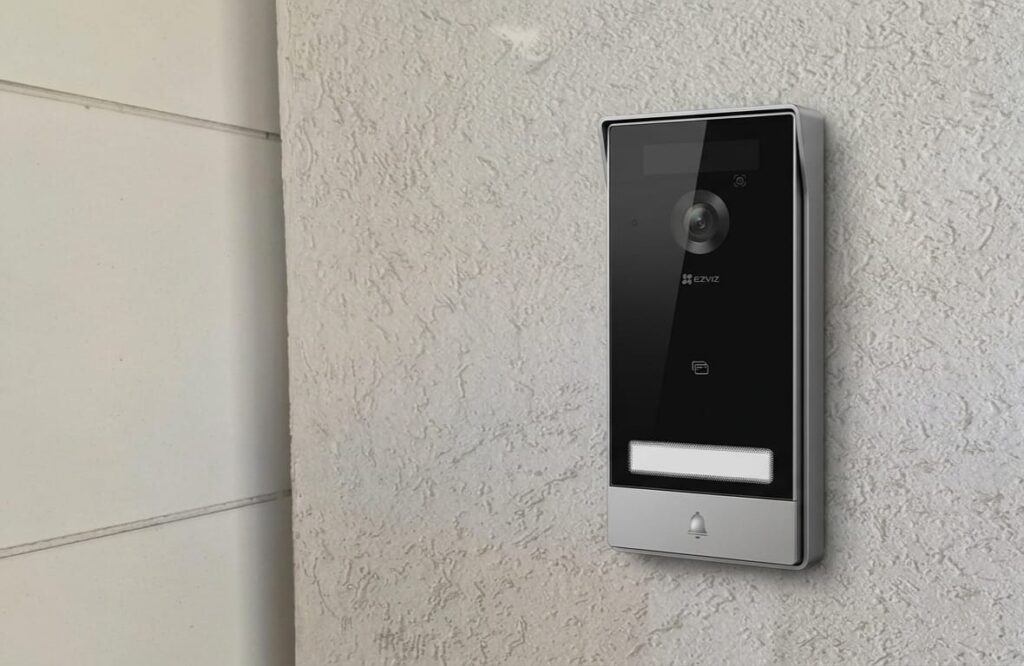
El HP7 Pro mantiene la intuición.
El botón de llamada es grande, claramente visible y comunica inmediatamente su función. Quien se acerque a la puerta simplemente pulsa el botón y no necesita instrucciones.
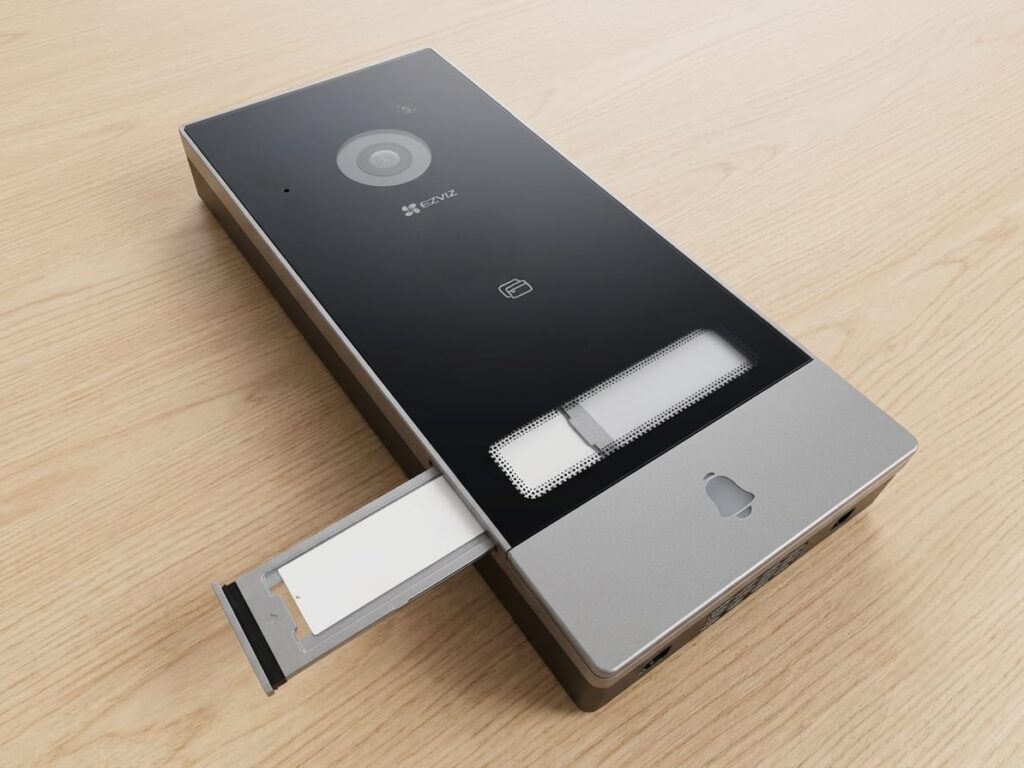
La unidad exterior también incluye un letrero iluminado con el nombre o la dirección de la familia. Es un detalle menor, pero después de probar decenas de dispositivos inteligentes, he aprendido que la facilidad de uso suele ser más importante que las funciones llamativas. Esta pequeña adición resulta sorprendentemente útil, sobre todo de noche. Ayuda a los visitantes a identificar la casa correcta y, además, le da a la instalación un aspecto más elegante y profesional. Es una función que muchos timbres inteligentes de empresas como Ring o Google Nest simplemente no ofrecen, ya que están diseñados principalmente como cámaras independientes en lugar de sistemas de entrada completos.
La pantalla de interior: mucho más que una simple pantalla de intercomunicación.
En los sistemas de intercomunicación antiguos, la pantalla interior solía tener una sola función: mostrar quién estaba afuera y permitir abrir la puerta. Pero después de usar el HP7 Pro durante varias semanas, me di cuenta de que la pantalla interior era mucho más que una simple pantalla de intercomunicación. Se había convertido en un auténtico centro de control para el hogar inteligente.
A primera vista, parece una tableta compacta montada en la pared en lugar de un interfono tradicional. La pantalla mide 8 pulgadas y ofrece una resolución de 1280 × 800 píxeles, con pantalla táctil, lo que proporciona una visualización nítida y cómoda al controlar a los visitantes en la entrada. Personalmente, esta es una de mis características favoritas de todo el sistema.
Cuando alguien toca el timbre, la pantalla muestra inmediatamente quién es el visitante. Pero cuando no se usa para comunicarse, se convierte en un panel de control inteligente para el hogar que proporciona información adicional y opciones de control.
Puede mostrar la hora actual, las condiciones meteorológicas, la temperatura, las actualizaciones de la cobertura de la nube y los controles de los dispositivos inteligentes del hogar. Esto hace que el monitor sea útil incluso cuando no hay nadie en la puerta. En lugar de estar inactivo la mayor parte del día, me encontré usando la pantalla con regularidad para consultar el clima, monitorear las cámaras y revisar otra información del hogar inteligente. Para los propietarios que ya han invertido en el ecosistema EZVIZ, esto se vuelve aún más valioso. Lo que me impresionó fue que miraba la pantalla incluso cuando no había nadie en la puerta, simplemente porque proporciona información útil de un vistazo.
El panel interior puede gestionar otros dispositivos inteligentes EZVIZ, como sensores de puertas y ventanas, interruptores inteligentes y cámaras de seguridad compatibles. En lugar de abrir varias aplicaciones o recorrer la casa para comprobar los diferentes sistemas, los usuarios pueden acceder a todo desde una ubicación central.

Cómo convertir el intercomunicador en un centro de seguridad para el hogar.
Una de las mayores ventajas de la EZVIZ HP7 Pro es que no se limita a controlar la entrada, sino que también puede funcionar como estación de monitoreo para otras cámaras EZVIZ. Algo que me sorprendió fue la facilidad con la que la HP7 Pro se convirtió en la estación de visualización central para el resto de mis cámaras EZVIZ. Esto incluye cámaras Wi-Fi e incluso cámaras con conexión 4G instaladas en lugares completamente distintos a la casa. Por ejemplo, un propietario podría monitorear una segunda propiedad, una casa de vacaciones, el garaje u otra ubicación remota a través de la misma interfaz.
Esto transforma el HP7 Pro de un simple dispositivo de comunicación para visitantes en un sistema de gestión de seguridad más completo. En lugar de tener pantallas separadas para las cámaras y un intercomunicador independiente, el propietario dispone de un único punto de control centralizado.
Para las familias con varias cámaras de seguridad en su propiedad, este enfoque resulta práctico. La entrada suele ser el punto de seguridad más importante de una vivienda, por lo que combinar el control de acceso y la videovigilancia en un solo sistema crea una solución más completa.
Instalación: Diseñada para viviendas reales, no solo para construcciones nuevas.
Uno de los mayores desafíos al actualizar la tecnología del hogar es la compatibilidad con las propiedades existentes. Muchos productos para el hogar inteligente parten de la base de que se empieza desde cero. Requieren cableado nuevo, conexiones Ethernet, instalación profesional o modificaciones que resultan difíciles y costosas una vez que la casa está terminada.
El HP7 Pro adopta un enfoque más realista, ya que muchas viviendas ya cuentan con un sistema de intercomunicación cableado básico instalado entre la puerta de entrada y el teléfono interior. En muchos casos, esta infraestructura consta de tan solo dos cables que atraviesan las paredes.
Tradicionalmente, esos dos cables se consideraban obsoletos, pero con el HP7 Pro se convierten en una ventaja. El sistema utiliza una conexión de dos cables entre la estación exterior y el monitor interior, lo que permite la comunicación digital y la transmisión de energía a través del cableado existente. Como alguien que ha visto bastantes actualizaciones de intercomunicadores, creo que esta es una de las mayores fortalezas del producto.
La conexión Wi-Fi se utiliza para conectar el sistema a la red doméstica y habilitar funciones avanzadas como notificaciones en el smartphone, acceso remoto, servicios en la nube y control mediante aplicación. Esto significa que los propietarios pueden actualizar su antiguo sistema de intercomunicación analógico a una solución de acceso inteligente moderna sin necesidad de abrir paredes, instalar nuevos cables de red ni rediseñar la infraestructura de entrada.
Para cualquiera que haya reformado alguna vez una vivienda ya terminada, esto supone una gran ventaja.
Fiabilidad por cable sin problemas de batería.
Otra ventaja del diseño con cable del HP7 Pro es su fiabilidad. Muchos timbres inteligentes modernos dependen en gran medida de conexiones inalámbricas y baterías internas. Si bien resultan prácticos durante la instalación, los sistemas alimentados por batería requieren recargas frecuentes y, con el tiempo, pierden capacidad. Además, minimizan la videovigilancia para ahorrar batería.
El HP7 Pro evita este problema por completo, ya que se alimenta permanentemente mediante conexión por cable, por lo que no hay que recargar, reemplazar ni supervisar ninguna batería. Para un producto diseñado para proteger y gestionar la entrada de una vivienda, este funcionamiento continuo resulta muy práctico.
Funciona incluso cuando se cae Internet.
Una de las ventajas más importantes de un intercomunicador cableado tradicional siempre ha sido su fiabilidad. Cuando alguien pulsa el botón de la puerta de entrada, la llamada se dirige directamente a la unidad interior. No depende de un servidor en la nube, una notificación en el teléfono inteligente ni una conexión a internet.
El EZVIZ HP7 Pro conserva esa ventaja fundamental a la vez que añade funciones de conectividad modernas. Esto significa que incluso si su conexión a Internet se interrumpe temporalmente... desconectado, las funciones esenciales del intercomunicador continuar trabajando, La estación exterior aún puede comunicarse con la pantalla interior, y aún puedes ver el video del visitante, hablar con él y abrir la puerta. Me gustó especialmente esa función, porque es algo que muchos timbres inteligentes simplemente no ofrecen.
Solo las funciones que dependen de Internet, como las notificaciones del teléfono inteligente y el acceso remoto a través de la aplicación EZVIZ, dejan de estar disponibles hasta que se restablece la conexión de red. Esta es una diferencia importante en comparación con muchos timbres de video inteligentes que dependen casi exclusivamente de Internet. enteramente en un teléfono inteligente como interfaz principal.
Imagina que alguien llega a tu casa mientras tu proveedor de internet sufre una interrupción del servicio. Con muchos timbres inteligentes basados en la nube, la experiencia puede simplemente dejar de funcionar porque la cámara no puede conectarse a la aplicación. Con el HP7 Pro, la función principal permanece disponible.
Para algo tan importante como controlar el acceso a tu hogar, esa distinción importa.
Calidad de vídeo 4K: Una mejora sustancial respecto a los interfonos tradicionales.
La calidad de vídeo es uno de los aspectos donde la HP7 Pro muestra la mayor mejora con respecto a los sistemas de intercomunicación más antiguos. La cámara exterior graba vídeo en resolución 4K a 15 fotogramas por segundo, con un ángulo de visión diagonal extremadamente amplio de 158 grados. En la práctica, esto significa que la cámara puede abarcar una zona mucho más amplia del área de entrada.
Una cámara de videoportero tradicional de ángulo estrecho podría mostrar solo el rostro de la persona que está justo enfrente. Un campo de visión más amplio permite ver más contexto: si hay alguien a un lado, si se ha dejado un paquete cerca de la puerta o si varias personas se acercan a la entrada. Esto es especialmente útil para viviendas particulares con entradas, caminos de acceso o puertas peatonales amplias.
En comparación con muchos sistemas de intercomunicación antiguos que aún se instalan en edificios residenciales, la diferencia es abismal. Algunas soluciones de la competencia han utilizado históricamente cámaras de baja resolución, como sensores D1 o 720p, que suelen ofrecer una imagen borrosa donde resulta difícil identificar los detalles.
La HP7 Pro acerca la experiencia de la cámara de entrada a lo que los propietarios esperan de las cámaras de seguridad modernas. Durante las pruebas, el sistema funcionó correctamente en diferentes condiciones de iluminación. No esperaba una mejora tan notable en comparación con las cámaras de intercomunicación antiguas, pero la diferencia es inmediatamente visible. En entornos con poca luz, la cámara ofrece visión nocturna a color cuando hay suficiente luz ambiental. Si la zona se oscurece por completo, cambia automáticamente al modo infrarrojo y continúa grabando en blanco y negro. Esta transición automática garantiza que los visitantes permanezcan visibles independientemente de la hora del día.
Características del sistema de control de acceso EZVIZ HP7 Pro
Podría decirse que esta es la categoría de características donde la reseña del EZVIZ HP7 Pro revela su mayor diferencia en comparación con productos como Ring, Google Nest y muchos otros timbres inteligentes. Estos productos son excelentes para responder a una pregunta: ¿Quién está en la puerta?
Pero la HP7 Pro va más allá y responde a otra pregunta: ¿Cómo puedo permitirles el acceso de forma segura? El sistema incluye funciones de control de acceso reales y se puede conectar directamente a una cerradura eléctrica o a un mecanismo de puerta mediante relés integrados. Esto significa que no se trata simplemente de una cámara conectada a un timbre, sino de un sistema completo de gestión de accesos.
Una casa típica en los suburbios de Norteamérica puede tener una puerta de acceso vehicular, una puerta peatonal o ambas. El HP7 Pro fue diseñado pensando en este tipo de propiedad, por lo que para los propietarios con puertas eléctricas, esta distinción es importante.
La estación exterior incluye dos salidas de relé independientes, lo que permite controlar dos puntos de acceso distintos. Por ejemplo, un relé puede accionar una puerta peatonal, mientras que el segundo puede controlar una puerta de acceso vehicular. Esto elimina la necesidad de un controlador externo adicional en muchas instalaciones.
La misma conexión de dos cables entre la estación exterior y el monitor interior maneja ambos comunicación y energía, al tiempo que se mantiene el control de dos mecanismos de apertura separados.
En comparación con algunas soluciones de acceso de la competencia que requieren hardware adicional, módulos celulares o servicios de suscripción para el control remoto de puertas, el HP7 Pro mantiene el sistema más autónomo.
La apertura de la puerta se puede gestionar directamente desde la pantalla interior o mediante la aplicación EZVIZ para smartphone, sin necesidad de contratar un servicio de apertura de puertas adicional. Para los propietarios que simplemente desean que su interfono responda a las visitas y abra la puerta, esta opción me parece mucho más práctica.
Múltiples formas de desbloqueo: venas de la palma de la mano, reconocimiento facial, RFID y más.
El control de acceso moderno no se limita a abrir una puerta de forma remota, sino que también facilita la entrada diaria a los residentes. El HP7 Pro incluye varios métodos de autenticación diseñados para diferentes situaciones. Los usuarios pueden desbloquear el acceso mediante códigos PIN, reconocimiento de venas de la palma de la mano, reconocimiento facial, tarjetas RFID y control desde el smartphone.
La función de reconocimiento de venas de la palma es una de las novedades más interesantes, ya que, a diferencia de los escáneres de huellas dactilares, esta tecnología no depende de la superficie de la piel. En cambio, identifica patrones de venas únicos debajo de la palma, creando un método de autenticación sin contacto. Al principio, pensé que el reconocimiento de venas de la palma sería más una estrategia de marketing que algo que realmente usaría, pero después de probarlo varias veces, resultó sorprendentemente rápido y práctico.
Imagínese llegar a casa cargando bolsas de la compra, con un niño en brazos o con las manos ocupadas después de trabajar en el jardín. Sacar el teléfono, introducir un código o buscar las llaves resulta incómodo. Con el reconocimiento de palma, el acceso se concede simplemente mostrando la mano.
El sistema de reconocimiento facial ofrece otra opción de manos libres para los miembros de la familia, mientras que los códigos PIN siguen siendo útiles para los invitados o para el acceso temporal.
La opción RFID es quizás el método más familiar para muchos usuarios. Cualquiera que haya usado una taquilla de gimnasio, una tarjeta de acceso a un edificio o una tarjeta de membresía de piscina entenderá inmediatamente cómo funciona. Un pequeño chip RFID se puede colocar en un llavero, lo que permite a los miembros de la familia abrir la puerta sin necesidad de llevar un teléfono inteligente. Esto es especialmente útil para hogares con niños o para quienes prefieren una identificación física sencilla.
Calidad de la comunicación: conversaciones claras desde la puerta de entrada.
Se dice que la eficacia de un videoportero depende de la calidad de la comunicación. Si bien la alta resolución del video es importante, si los visitantes no te oyen con claridad o no los entiendes, la experiencia se ve comprometida. Durante mis pruebas, hablé intencionadamente desde diferentes ángulos, en lugar de estar de pie frente al dispositivo, para comprobar si los micrófonos captaban mi voz con nitidez.
El resultado fue una conversación bidireccional clara. El visitante no necesita estar perfectamente centrado frente a la unidad para comunicarse eficazmente, lo que resulta más natural, ya que rara vez las personas se colocan en la posición ideal al acercarse a una puerta.
También me pareció que el volumen de los altavoces era suficiente para entornos residenciales normales, lo que permitía mantener conversaciones sin que los visitantes tuvieran que repetir lo que decían.
Conectividad y almacenamiento del EZVIZ HP7 Pro
El EZVIZ HP7 Pro es compatible con Wi-Fi 6 en redes de 2,4 GHz y 5 GHz, una flexibilidad que me pareció muy útil, ya que cada hogar presenta diferentes desafíos de red. Si bien la banda de 2,4 GHz generalmente ofrece mayor alcance y penetra mejor las paredes, la banda de 5 GHz proporciona velocidades más rápidas y resulta beneficiosa cuando el monitor interior está más cerca del punto de acceso inalámbrico. Esta flexibilidad lo hace adecuado también para instalaciones donde la puerta de acceso está más alejada del router principal, adaptándose mejor a diferentes diseños de vivienda.
La HP7 Pro también es compatible con la compresión de vídeo H.265. Este estándar de compresión más reciente permite almacenar archivos de vídeo de forma más eficiente que con los códecs anteriores. En la práctica, las grabaciones requieren menos espacio de almacenamiento sin sacrificar la calidad de imagen. Para quienes planean guardar las grabaciones localmente, esto ayuda a ampliar la capacidad útil de la tarjeta de memoria.
Experiencia cotidiana: donde la HP7 Pro marca la mayor diferencia
Si bien las especificaciones son importantes, en un producto como un sistema de intercomunicación, la verdadera prueba reside en el uso diario. Al fin y al cabo, se trata de un dispositivo con el que los propietarios y los miembros de la familia pueden interactuar decenas de veces por semana. Debe ser lo suficientemente sencillo para que todos en el hogar puedan usarlo sin complicaciones.
Aquí es donde la reseña del EZVIZ HP7 Pro muestra una de sus mayores ventajas. El proceso de instalación me pareció relativamente sencillo para cualquiera familiarizado con el cableado básico de intercomunicadores o trabajos eléctricos de bajo voltaje. La estación exterior se monta en la pared, se conecta el cable de dos hilos entre las unidades exterior e interior, se configuran los ajustes de Wi-Fi y el sistema está listo para funcionar.
Sin embargo, conectarlo a una cerradura eléctrica, un portón automático o un sistema de control de acceso más avanzado puede requerir instalación profesional, dependiendo de la infraestructura existente. Trabajar con motores de portones, cerraduras eléctricas y sistemas de seguridad existentes no siempre es un proceso sencillo de conectar y usar, especialmente en hogares norteamericanos, donde las instalaciones varían considerablemente de una propiedad a otra. Por lo tanto, mi recomendación para los propietarios que desean aprovechar al máximo las capacidades del sistema es que la instalación profesional puede ser la mejor opción.
Una vez instalado, la experiencia diaria es sorprendentemente sencilla. Cuando alguien pulsa el botón de llamada, la pantalla interior se activa inmediatamente y muestra al visitante. No hace falta buscar el teléfono, desbloquear una aplicación ni explicar a los niños cómo responder a una notificación del smartphone. Funciona como debería funcionar un interfono tradicional: un visitante llega a la puerta, la casa responde y decide si abrirla. Me parece que esta sencillez es algo que muchos timbres inteligentes con aplicaciones aún no consiguen replicar. La interfaz de usuario suele ser rápida, aunque en ocasiones tuve que pulsar dos veces un menú para que funcionara. No fue un problema grave, pero me gustaría que se mejorara en una futura actualización de firmware. El reconocimiento facial funcionó bien en mis pruebas, aunque el reconocimiento de las venas de la palma de la mano me pareció el método de autenticación más rápido.
Acceso remoto cuando estás fuera de casa
El HP7 Pro no renuncia a las ventajas de la conectividad con smartphones, ya que, cuando estás fuera de casa, su aplicación móvil extiende el sistema más allá de las paredes de tu hogar. Si alguien toca el timbre mientras estás en el trabajo, de compras o de viaje, puedes recibir una notificación, ver quién es, iniciar una conversación bidireccional y abrir la puerta de forma remota. Esto crea un equilibrio ideal entre la fiabilidad de un interfono tradicional y la comodidad de un hogar inteligente moderno.
Por ejemplo, si un repartidor llega mientras usted no está, ya no tendrá que cancelar la visita. Puede comunicarse directamente con él y darle instrucciones. Del mismo modo, si un familiar llega a casa cuando no hay nadie cerca del monitor interior, el acceso remoto ofrece otra opción.
Ampliable para casas más grandes
Una característica que merece atención, especialmente para las casas grandes de Norteamérica, es la posibilidad de añadir pantallas interiores adicionales. Muchas casas en Estados Unidos y Canadá son de varios niveles. Si bien un solo monitor de intercomunicación suele ubicarse cerca de la entrada principal, puede resultar poco práctico si los miembros de la familia pasan la mayor parte del tiempo en la planta superior, en el sótano, en la oficina en casa o en otra parte de la vivienda.
El EZVIZ HP7 Pro admite monitores táctiles interiores SD7 adicionales, lo que permite a los propietarios colocar varias pantallas en toda la propiedad. Esta práctica solución permite instalar pantallas adicionales en la cocina, la sala de estar o incluso cerca de los dormitorios. El SD7 funciona como una tableta inteligente portátil. Incluye una batería interna y se puede mover por la casa, lo que me resultó útil para usuarios que desean una pantalla cerca de la cama, en la cocina o en cualquier otro lugar donde pasen tiempo. Además de responder llamadas y controlar la apertura de la puerta, puede mostrar las imágenes de las cámaras EZVIZ y controlar dispositivos compatibles, brindando a los propietarios mayor flexibilidad en la monitorización de su propiedad.
Por ejemplo, si un miembro de la familia está preparando comida en la cocina, también puede vigilar las cámaras de seguridad sin tener que acercarse a una pantalla fija en la pared. Además, permite a los usuarios elegir entre varias opciones de tono de llamada, lo que significa que los propietarios no están limitados a un solo sonido predeterminado.
Pequeños detalles como este son importantes porque ayudan a que el producto se sienta más como un dispositivo doméstico personal que como un equipo de seguridad fijo.
Integración del ecosistema EZVIZ: una mayor ventaja para los usuarios actuales.
Para los propietarios que ya poseen cámaras de seguridad EZVIZ, la HP7 Pro resulta mucho más atractiva. En lugar de gestionar sistemas separados, se puede acceder a todo a través de la misma aplicación.
Durante las pruebas, pude visualizar las cámaras de seguridad y el intercomunicador desde una interfaz unificada, lo que resultó en una experiencia mucho más fluida que tener que cambiar entre diferentes aplicaciones. Al usar este sistema, rápidamente me di cuenta de que este enfoque cobra cada vez más importancia en el mercado de los hogares inteligentes. El usuario promedio no quiere cinco aplicaciones diferentes que controlen cinco productos distintos. Busca un sistema donde las cámaras, los sensores, el control de acceso y la automatización funcionen de forma integrada. El HP7 Pro se ajusta perfectamente a esta filosofía.
Almacenamiento local sin suscripción obligatoria
Uno de los debates recurrentes en el mercado de la seguridad inteligente es la dependencia de las suscripciones. Si bien muchas empresas de seguridad reconocidas han adoptado modelos basados en la nube, el uso de sus funciones avanzadas y el historial de video requieren un pago mensual.
Pero el HP7 Pro adopta un enfoque más flexible. Este monitor de interior incluye una ranura para tarjeta microSD compatible con tarjetas de hasta 512 GB, una solución para guardar grabaciones sin pagar una cuota mensual. Considero que esto es una ventaja significativa para los usuarios que prefieren la propiedad del dispositivo a los servicios de suscripción. Sin embargo, para quienes prefieren el almacenamiento en la nube, EZVIZ también ofrece un servicio opcional. Me gustaría que la ranura para la tarjeta microSD fuera más accesible sin tener que desmontar parcialmente el monitor de la pared. Afortunadamente, esto es algo que la mayoría de los usuarios solo necesitan hacer ocasionalmente.
Sin embargo, hay una consideración importante: una tarjeta de memoria física sigue siendo un componente físico y, como cualquier dispositivo de almacenamiento, puede fallar. Esto significa que quienes dependen exclusivamente de la grabación local deben comprobar periódicamente que la tarjeta funciona correctamente y que las grabaciones se guardan. Porque lo último que uno desea es descubrir que la grabación que necesitaba nunca se guardó porque el dispositivo de almacenamiento falló meses atrás.
Análisis del EZVIZ HP7 Pro: Veredicto final
El mayor error que comete la gente al comparar interfonos es suponer que todos compiten en la misma categoría. No es así. Muchos timbres inteligentes están diseñados principalmente con una idea en mente: notificar al propietario cuando alguien llega y proporcionar una forma de comunicarse a través de un teléfono inteligente.
El HP7 Pro aborda el problema de una manera diferente. Está diseñado para reemplazar y modernizar un sistema de intercomunicación residencial completo, y esa diferencia lo cambia todo. Ofrece una pantalla dedicada para interiores que puede usar toda la familia, control real de puertas, cerraduras eléctricas y compatibilidad con portones de entrada, así como múltiples métodos de desbloqueo. Si a esto le sumamos calidad de video 4K, cobertura gran angular, visión nocturna, almacenamiento local, integración con hogares inteligentes y compatibilidad con instalaciones de dos cables existentes, se convierte en una solución completa y avanzada.
Y quizás lo más importante es la fiabilidad. Este sistema sigue funcionando incluso cuando falla la conexión a internet, lo que permite a los miembros de la familia responder llamadas e interactuar con las visitas, de modo que el hogar permanece accesible y seguro sin depender completamente de una aplicación.
Tras usar el HP7 Pro durante varias semanas, me di cuenta de que lo que más apreciaba no era la cámara 4K ni el reconocimiento de venas de la palma de la mano. Era, sencillamente, la comodidad de volver a tener un intercomunicador interior de verdad, que además ofrece todas las ventajas de un dispositivo inteligente moderno para el hogar. Esa combinación es lo que hace que este sistema destaque.
¿Quién debería comprar el EZVIZ HP7 Pro?
El HP7 Pro resulta especialmente atractivo para propietarios con propiedades privadas, entradas con portón, cerraduras eléctricas o sistemas de intercomunicación existentes que necesitan modernizarse. Es particularmente útil para viviendas unifamiliares, propiedades grandes con múltiples entradas, casas con portones eléctricos peatonales o de acceso vehicular y familias que desean un sistema de respuesta de voz compartido en el interior. Los usuarios actuales de cámaras EZVIZ disfrutarán de una integración perfecta, y los propietarios que actualicen sus antiguos sistemas de intercomunicación de dos cables podrán ahorrarse la actualización del cableado que requieren otros sistemas.
Resulta menos atractivo para quien solo busca un videoportero sencillo, alimentado por batería, que se pueda instalar en minutos y gestionar completamente desde un smartphone, ya que este producto no pretende ser eso. En definitiva, esta reseña del EZVIZ HP7 Pro muestra un sistema que combina con éxito la fiabilidad de un interfono tradicional con la inteligencia de una plataforma de seguridad inteligente moderna.
Tras probar el HP7 Pro, llegué a la conclusión de que llamarlo timbre inteligente no le hace justicia. Se comporta mucho más como un moderno sistema de intercomunicación residencial que, además, incluye una excelente cámara de seguridad 4K.