
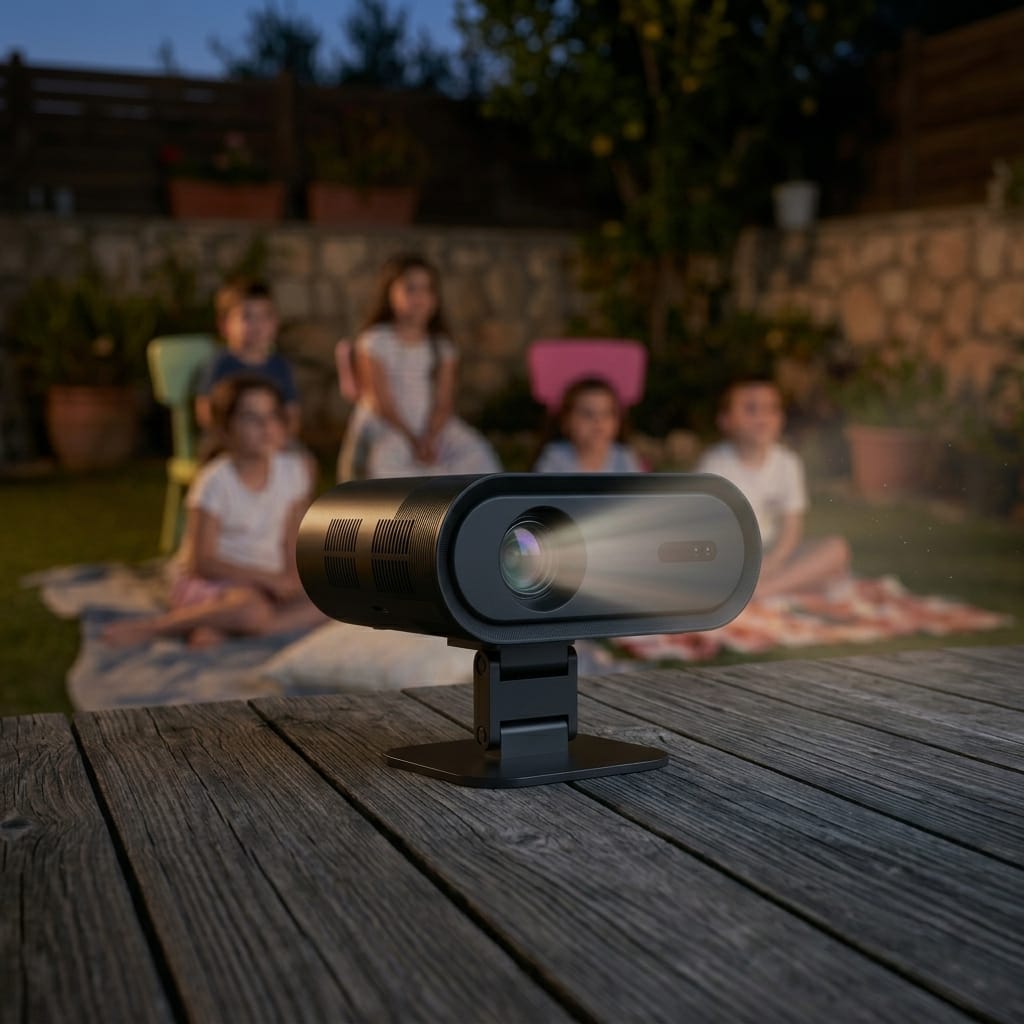
The Philips NeoPix 160 Smart Projector brings Full HD streaming, automatic setup, and big-screen entertainment outdoors, but its brightness limits matter.
There is something different about watching a movie or a sports event outdoors. It might be the evening breeze, the feeling that your living room has suddenly expanded into the backyard, or simply the fact that a screen no longer limits the experience to four walls. Over the past few years, I have found myself using my outdoor space more often for hosting friends and family. Almost every time the food is finished and people start relaxing, someone eventually says the same thing: “Let’s watch a movie!”
A few years ago, that meant carrying a large television outside, finding a power outlet, worrying about humidity, and moving everything back indoors afterward. Today, compact smart projectors have changed that equation completely.
A backyard movie night, a football game with friends, or a kids’ movie projected onto a wall can now happen with far less preparation than before. The appeal is not necessarily about achieving the same picture quality as a dedicated home theater. It is about creating a different kind of experience, one that feels spontaneous and social. This is exactly the type of use case Philips had in mind with the Philips NeoPix 160 Smart Projector.
It is designed for people who want a large image without installing a permanent setup. With Full HD 1080p resolution, LED illumination, automatic focus, automatic keystone correction, and built-in streaming, Philips is targeting users who want a large screen experience without the complexity of a traditional home theater setup.
After spending time with it, I found that the NeoPix 160 Smart does many things right. It is easy to move, quick to set up, and enjoyable to use. However, it also has clear limitations, especially when it comes to brightness and daytime viewing.
That balance is ultimately what determines whether this projector is the right choice. It is not a replacement for a premium television or a dedicated theater projector. Instead, it is a convenient way to turn almost any suitable wall into a large screen when the conditions are right.
Philips or Screeneo? Understanding the Brand Behind the Projector
When most people hear the name Philips, they immediately think of one of the world’s oldest electronics companies. Founded in the Netherlands in 1891, Philips has been involved in everything from lighting and healthcare technology to televisions, consumer electronics, and media products. Over the decades, the brand built a reputation around innovation and reliability.
However, the story is slightly different when it comes to consumer projectors. The Philips projector business today is operated through Screeneo Innovation, a company that licenses the Philips brand for projector products. In other words, the projector carries the familiar Philips name, but the development and product management come from a company focused specifically on projection technology.
That arrangement is not necessarily a drawback. For a category like projectors, it can actually be beneficial. Projectors have very different requirements compared with televisions, and a company focused on compact projection products can concentrate on features that actually matter for everyday users.
The NeoPix lineup follows that philosophy. Instead of competing directly with expensive home theater projectors, these models focus on portability, simple operation, smart features, and accessibility.
For many buyers, that is exactly what makes a compact projector appealing.
Design: Small Enough to Actually Move Around
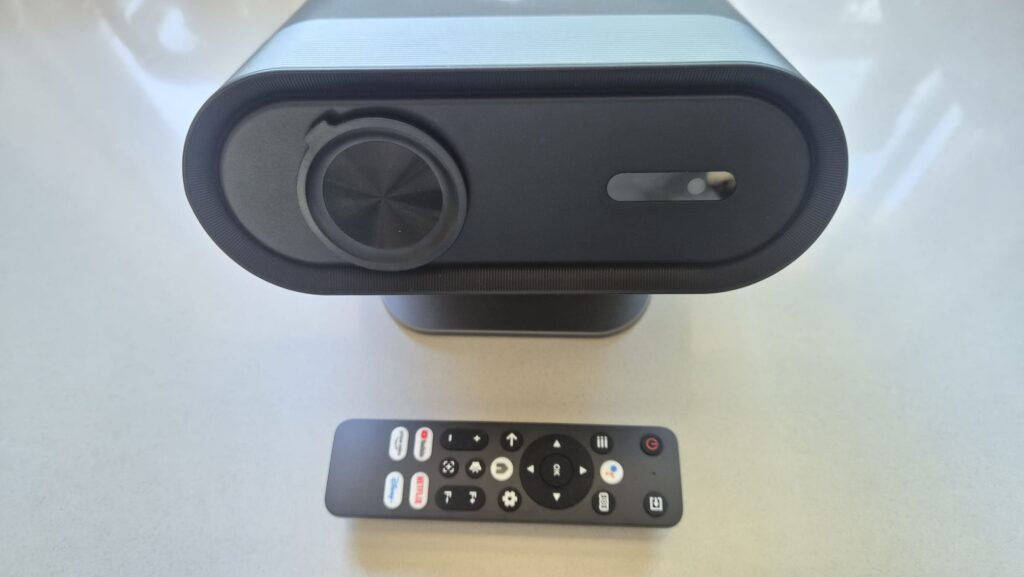
The first thing that stands out about the NeoPix 160 Smart is that it does not look like a traditional office projector. Many business projectors still follow the same formula: a rectangular plastic box designed to sit on a conference room table. Philips takes a different approach here. The NeoPix 160 Smart has a friendlier consumer design, with rounded edges and a compact body that feels more at home in a living room or backyard.
The rounded design even reminds me slightly of E.T., with the projector sitting on an integrated adjustable stand. That stand might seem like a small detail, but it solves one of the most common frustrations with portable projectors. Instead of searching for books, boxes, or random objects to adjust the angle, you can simply tilt the projector into the position you need.
The stand also makes quick setup easier when moving between locations. Whether you are projecting onto a wall, a portable screen, or a temporary outdoor setup, the ability to adjust the angle without extra accessories saves time.
There are limitations, though. The stand does not completely eliminate the need for proper placement. You still want the projector positioned reasonably straight toward the projection surface, especially if you want the best possible image quality. That is a fair compromise for a device designed around convenience.
Real-World Experience: Where the NeoPix 160 Smart Makes the Most Sense
Most of my testing with the NeoPix 160 Smart took place outdoors, because that is where this projector feels most natural. I placed it on a small table in the backyard, connected it to power, and within a short time the projector had adjusted the focus and corrected the image automatically. There was no complicated setup process and no need to spend time fine-tuning settings before starting a movie.
That ease of use is arguably the NeoPix 160 Smart’s biggest advantage. A projector like this succeeds when it removes friction. The idea is not to create another technical project every time you want to watch something. It should be something you can pick up, place down, and use.
The smart interface was also straightforward. Moving between apps was simple, and the dedicated streaming buttons on the remote were genuinely useful. However, the operating system response was not always as fast as I would have liked. Navigation occasionally felt slower than on a modern smart TV or dedicated streaming device. It is not a major issue, but it reinforces the fact that this is a compact entertainment projector rather than a premium smart TV replacement.

Image quality was impressive as long as the projector was used within its intended environment. During evening viewing, colors looked natural, details were clear, and the Full HD resolution was more than sufficient for movies, television shows, and sports.
The limitations became obvious when conditions were less ideal. The 250 ANSI lumens rating means this projector depends heavily on darkness. If you are expecting to watch a movie outside while there is still daylight, or use it in a bright room during the day, this is not the right product. A brighter projector will deliver a much stronger image.
That is an important distinction because many first-time projector buyers underestimate how much brightness affects the experience.
Sound Performance and Fan Noise
The NeoPix 160 Smart includes a built-in 5-watt speaker, which is convenient for casual viewing. For a quick movie in a bedroom or a small gathering, the built-in audio is acceptable. Voices are clear enough, and you do not need to carry additional equipment just to start watching.
However, when using it outdoors with several people, the limitations become more noticeable. The speaker lacks the volume and low-end impact needed for a convincing outdoor movie setup. During backyard movie nights, I preferred connecting an external Bluetooth speaker. It added significantly more impact and made the overall experience feel closer to a traditional entertainment setup.
The projector fan was another area I paid attention to. Compact projectors often have limited space for cooling, which can result in noticeable fan noise. In this case, the fan remained relatively quiet. After a couple of hours of watching, I could still hear it if I specifically focused on it, but during normal viewing it quickly faded into the background. Once the movie starts, it is unlikely to become a distraction.
Portability and Everyday Storage
One of the underrated advantages of the NeoPix 160 Smart is its size. After finishing an outdoor movie night, I simply unplugged it and placed it back in a cabinet. There was no permanent installation, no dedicated space required, and no complicated storage process.
That portability is a major part of the product’s appeal. At the same time, it is worth remembering that this is not an outdoor appliance. The projector is not designed to remain outside permanently and does not offer protection against rain, moisture, or dust. That means you still need to bring it indoors after use.
Fortunately, the compact design makes that easy. Unlike larger home theater projectors, it does not feel like a piece of equipment that requires a dedicated setup area.
Who Should Buy the Philips NeoPix 160 Smart Projector?
The Philips NeoPix 160 Smart Projector makes the most sense for people who want a simple way to create a large-screen experience without installing a permanent system. It is a good choice for:
- Users who want a projector for backyard movie nights.
- Families looking for an easy way to entertain children.
- People who want a portable second screen for bedrooms, balconies, or apartments.
- Casual sports viewing with friends.
- Anyone who values automatic setup and built-in streaming features.
The projector’s biggest advantage is not raw performance. It is convenience. It turns the idea of “let’s watch something outside” from a complicated setup into something that can happen within minutes.

Philips NeoPix 160 Smart vs Cheap AliExpress Projectors: Is Paying More Worth It?
The affordable projector market has changed dramatically in recent years. A quick search on marketplaces such as AliExpress reveals hundreds of compact projectors selling for a fraction of the price of branded models like the Philips NeoPix 160 Smart.
Models from brands such as Yaber, WiMiUS, Groview, HAPPRUN, and countless lesser-known manufacturers often advertise Full HD resolution, smart features, and surprisingly high brightness numbers at prices that can be difficult to ignore. For casual users who simply want to project cartoons on a bedroom wall or watch an occasional movie, some of these budget projectors can provide a fun experience for very little money.
However, the difference between a low-cost projector and a branded model usually becomes clear in the details. Many inexpensive projectors rely on aggressive brightness claims that are not always comparable with industry-standard measurements such as ANSI lumens. A projector advertised with thousands of “lumens” may not deliver brightness comparable to a branded model using properly measured ANSI lumens. Image processing, color accuracy, fan noise, software stability, and long-term reliability can also vary significantly.
The Philips NeoPix 160 Smart is more expensive, but the extra cost goes toward a more predictable experience. Features such as automatic focus, automatic keystone correction, built-in streaming support, and more consistent image quality reduce the frustration that often comes with cheaper alternatives. That does not mean every inexpensive projector should be avoided. If your goal is an occasional movie night, a children’s room, or a temporary setup where image quality is not the main priority, a budget AliExpress projector can be perfectly acceptable.
But for anyone planning to use a projector regularly, especially for outdoor gatherings, sports events, or family entertainment, paying more for a recognized brand often saves time and disappointment. The difference is not only the picture on the wall, but also how much effort is required to get there.
Who Should Skip the Philips NeoPix 160 Smart Projector?
Despite its strengths, this projector is not the right choice for everyone. If you are looking for a true home theater experience, there are better options. The limited brightness and average black levels mean it cannot compete with dedicated home theater projectors designed for controlled lighting conditions.
It is also not ideal for anyone who wants daytime viewing. A bright living room or outdoor afternoon event will expose the limitations of the 250 ANSI lumens output. In those conditions, even a good projector can struggle, and the NeoPix 160 Smart is clearly designed around evening use.
Users who care deeply about premium sound may also want to budget for an external speaker. The built-in 5-watt audio system is convenient, but it does not deliver the impact that a proper sound setup can provide.
Veredicto final
The Philips NeoPix 160 Smart Projector is not trying to replace your television, and it is not competing with high-end home cinema projectors. That is actually where it makes the most sense. Instead of focusing on maximum brightness or professional-level image quality, Philips has built a projector around a different idea: making big-screen entertainment easier to access. The automatic focus, automatic keystone correction, built-in streaming platform, compact design, and simple operation all contribute to a product that feels approachable even for people who have never owned a projector before.
Its weaknesses are clear. The 250 ANSI lumens brightness limits it to darker environments, the built-in speaker is only adequate, and the smart interface could be more responsive. But when used in the right conditions, those compromises become much less important.
A summer evening in the backyard, a movie with friends, or a sports event projected onto a large screen creates an experience that a regular television simply cannot replicate. The NeoPix 160 Smart succeeds because it focuses on the part of projector ownership that matters most for casual users: removing the hassle. When setup takes only a few minutes, a backyard movie night or an outdoor sports event becomes something you actually do rather than something you plan and postpone. For anyone looking for an affordable, portable smart projector for evenings and casual entertainment, it is a compelling option. Just understand what it is designed for, and what it is not.
Testing Conditions
I tested the Philips NeoPix 160 Smart primarily outdoors in the evening, using a standard white wall as the projection surface. The projector was connected through Wi-Fi for streaming and tested with movies, TV shows, and sports content.
Pros
- Compact and easy to move
- Full HD 1080p resolution
- Automatic focus and keystone correction
- Built-in smart streaming features
- Simple setup process
- Good color reproduction in dark environments
- Useful for backyard movie nights and casual entertainment
Cons
- Limited brightness at 250 ANSI lumens
- Not suitable for daytime viewing
- Built-in speaker is only average
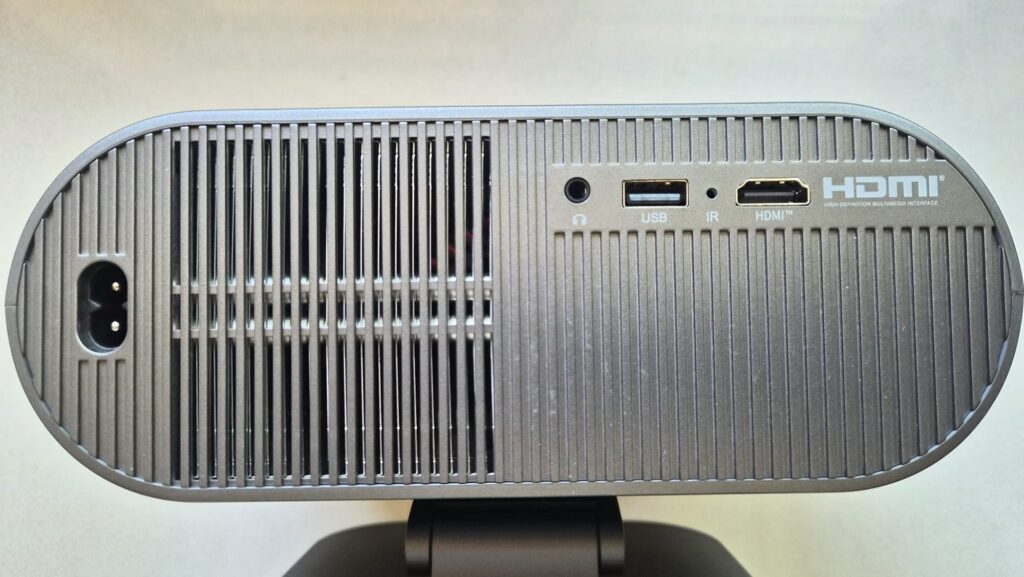
- No Ethernet connection
- Smart interface could be faster
- Not designed for permanent outdoor installation