
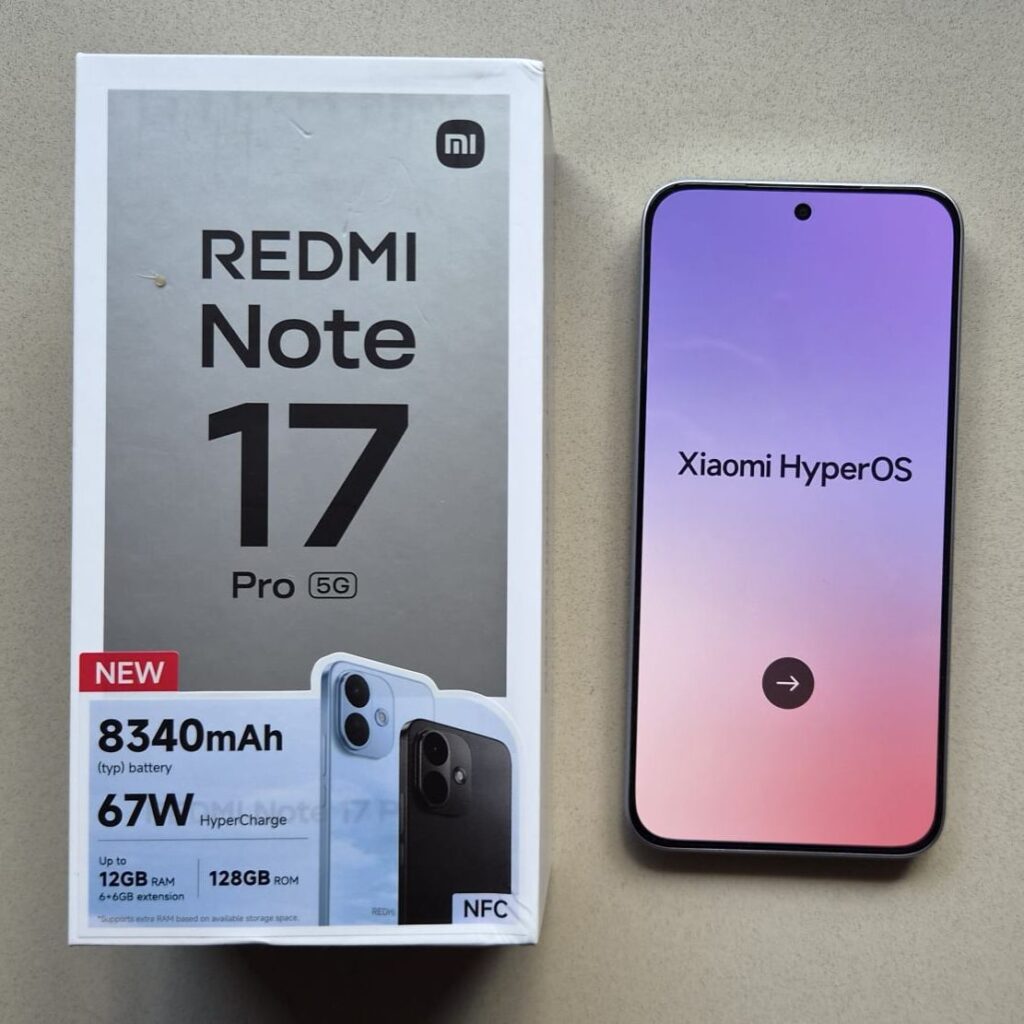
My REDMI Note 17 Pro 5G review begins with a question that matters far more to most smartphone buyers than another impressive benchmark score: can a phone deliver the display quality, battery life, camera performance, and durability we want without forcing us to pay flagship prices? The midrange market has become increasingly competitive, and Xiaomi’s REDMI brand has built its reputation on bringing features that once belonged to expensive phones to a much broader audience.
If you’re wondering how the latest model compares with its predecessor, check out my REDMI Note 15 Pro 5G review for a closer look at what Xiaomi changed and whether the new generation is a meaningful upgrade.
With the REDMI Note 17 Pro 5G, Xiaomi appears to have focused on some of the things that matter most in everyday use, including an enormous 8,340mAh battery, a large AMOLED display, improved resistance to water and dust, and a 50MP main camera with optical image stabilization. After spending time with the phone, I found that its priorities make sense, although a closer look at performance and video recording reveals a few compromises that prospective buyers should understand.
REDMI’s Midrange Philosophy
REDMI was built around a relatively simple idea: most people do not need to spend flagship money to get a smartphone that feels fast, takes good everyday photos, lasts through a demanding day, and offers a screen they genuinely enjoy using. That philosophy has helped the Note series become one of Xiaomi’s most recognizable product lines, particularly among buyers who want practical features rather than expensive extras they may rarely use.
The REDMI Note 17 Pro 5G continues that approach with a 6.83 inch AMOLED display, a silicon carbon battery rated at 8,340mAh, 67W fast charging, substantial water and dust resistance, and a stabilized 50MP main camera. On paper, it is an appealing combination, especially for people who spend much of their day navigating, messaging, watching videos, browsing the web, and taking photographs.
Xiaomi also emphasizes longevity, with six years of security updates advertised for this model on its global product page. That is an important consideration for anyone who prefers to keep a phone for several years rather than replace it every time a new model appears.
Where the REDMI Note 17 Pro 5G Fits
The Note 17 Pro 5G occupies the middle of the REDMI lineup, below the Pro Max model and above the standard Note 17. It does not attempt to compete with Xiaomi’s flagship phones in every category, but it concentrates on a handful of features that can make a more noticeable difference to everyday life.
For me, the battery is the most interesting part of the package. At 8,340mAh, its rated capacity is considerably larger than the batteries found in many conventional smartphones, and the use of silicon carbon battery technology helps Xiaomi offer that capacity without turning the phone into an excessively thick device.
That capacity does come with a physical consequence, as the phone weighs approximately 223 grams, but I would rather judge that tradeoff by how it affects everyday use than dismiss it based on a specification alone.
Design and Build Quality
The REDMI Note 17 Pro 5G follows the familiar design language of the Note family, with relatively flat sides, rounded corners, and a matte finish that feels pleasant in the hand. Xiaomi calls the finish Silky Matte, and during my time with the phone, I appreciated its understated appearance and resistance to the fingerprints and smudges that can quickly make glossy devices look untidy.
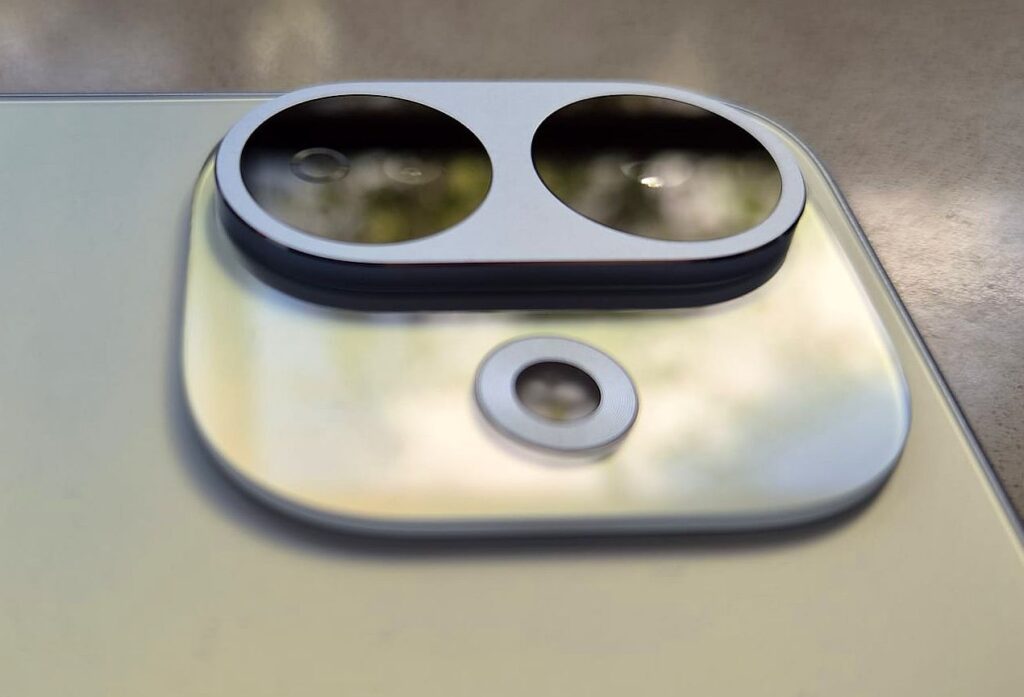
The camera module on the back does not dominate the design, which reinforces the impression that this is a phone intended for regular use rather than one designed primarily to attract attention. At 8.6mm thick and approximately 223 grams, it is certainly not a lightweight handset, although the large battery helps explain why Xiaomi has accepted that compromise.
The overall design feels practical, and I would take a comfortable, well balanced phone with exceptional battery capacity over an unnecessarily thin device that needs to be recharged every evening.
Durability That Goes Beyond the Usual Midrange Promise
Durability is another area in which Xiaomi has invested considerable effort. The REDMI Note 17 Pro 5G carries IP66 and IP68 ratings, with additional IP69 and IP69K ratings listed on Xiaomi’s global product page, alongside Corning Gorilla Glass Victus 2 protecting the display.
Xiaomi also advertises SGS certified drop resistance from heights of up to three meters onto a granite surface under specified test conditions. That does not mean the phone is indestructible, and a real world drop onto concrete, an uneven surface, or a sharp edge can still cause damage, but the additional testing provides a reassuring indication of how the device is designed to handle everyday accidents.
Water resistance also needs to be understood in context. Xiaomi describes testing under controlled conditions, including immersion in static fresh water, and explicitly warns that protection can deteriorate with wear and tear. Liquid damage outside the specified test conditions is not covered simply because the phone carries a water resistance rating.
The phone also includes an underwater camera mode, which adds an interesting creative option, but this should not be confused with permission to take the device swimming without precautions. For ordinary life, however, the combination of water and dust resistance, reinforced display protection, and drop testing is a meaningful advantage.
What’s in the Box?
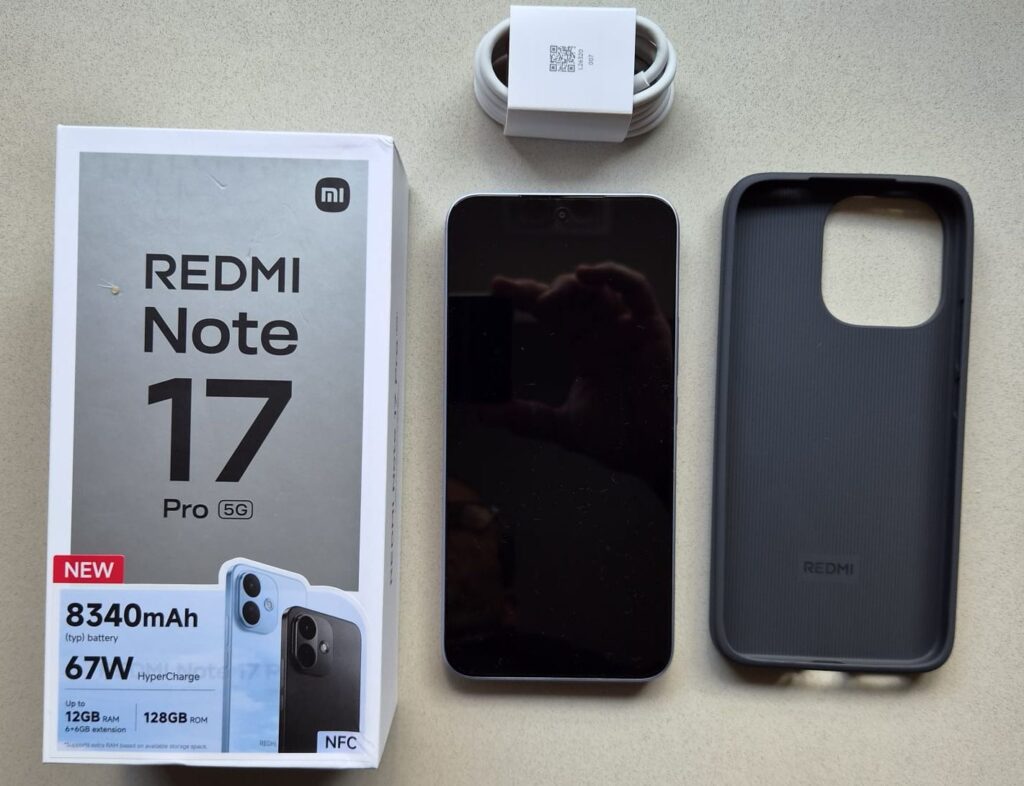
My review unit came with the phone, a 67W charging adapter, a USB C cable, a SIM eject tool, a protective case, and documentation.
The included charger is worth mentioning because a fast charging specification is less useful if you have to purchase the appropriate adapter separately. However, package contents can vary by market and retailer, so buyers ordering an imported version should confirm exactly what is included before completing a purchase.
A Display That Feels More Expensive Than the Phone
If there is one component that immediately makes the REDMI Note 17 Pro 5G feel competitive with more expensive smartphones, it is the display.
The phone features a 6.83 inch AMOLED panel with a resolution of 2772 by 1280 pixels, which Xiaomi describes as 1.5K, and a refresh rate of up to 120Hz. It also supports 12 bit color depth, the DCI P3 color gamut, and a claimed peak brightness of up to 3,500 nits under specified conditions.
In my experience, this is one of the phone’s strongest features. Text looks sharp, colors have plenty of depth, blacks are genuinely dark, and scrolling feels smooth. The benefits of AMOLED become especially obvious when watching video, where dark scenes look richer and the contrast gives the picture a more immersive quality.
Outdoor visibility is another strength. The display remains readable in bright sunlight, making it easier to use navigation, check messages, and view content while away from home.
Xiaomi has also incorporated several display technologies intended to improve viewing comfort, including high frequency PWM dimming at 3,840Hz, DC dimming, and TÜV Rheinland certifications covering areas such as flicker reduction and low blue light. These technologies may help make the screen more comfortable for some users, although individual sensitivity varies and no display technology can guarantee that everyone will avoid eye strain.
For a phone in this price category, the screen is a genuine highlight, and I found it difficult to identify a major weakness during everyday use.
Performance: Fast Enough for Daily Life, Not a Gaming Champion
The REDMI Note 17 Pro 5G is powered by Qualcomm’s Snapdragon 6s Gen 4, an octa core processor manufactured using a 4nm process, with CPU speeds of up to 2.4GHz. My review unit came with 6GB of RAM, and this configuration is worth keeping in mind when comparing benchmark results or considering a different storage and memory variant.
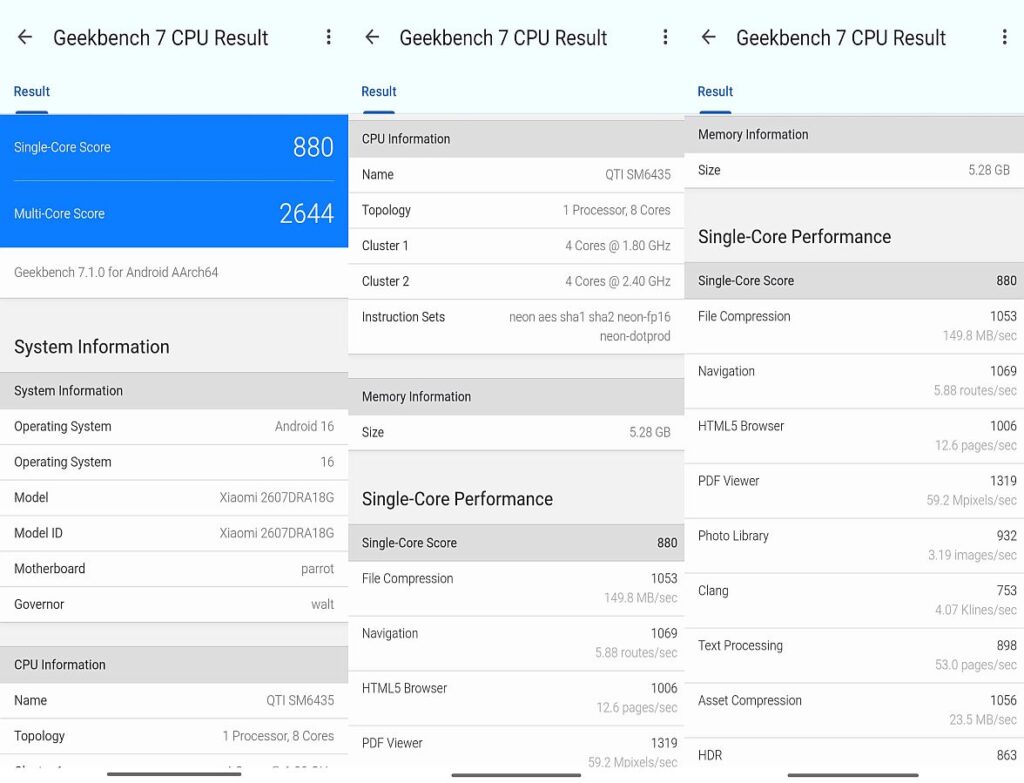
This is not a processor designed to compete with flagship silicon, and the benchmark results I obtained reflect that positioning. In Geekbench 7, the phone delivered results that put it closer to entry level and mainstream midrange performance than to the upper end of the smartphone market, with a profile broadly comparable to the Samsung Galaxy A36 in the tests I conducted.
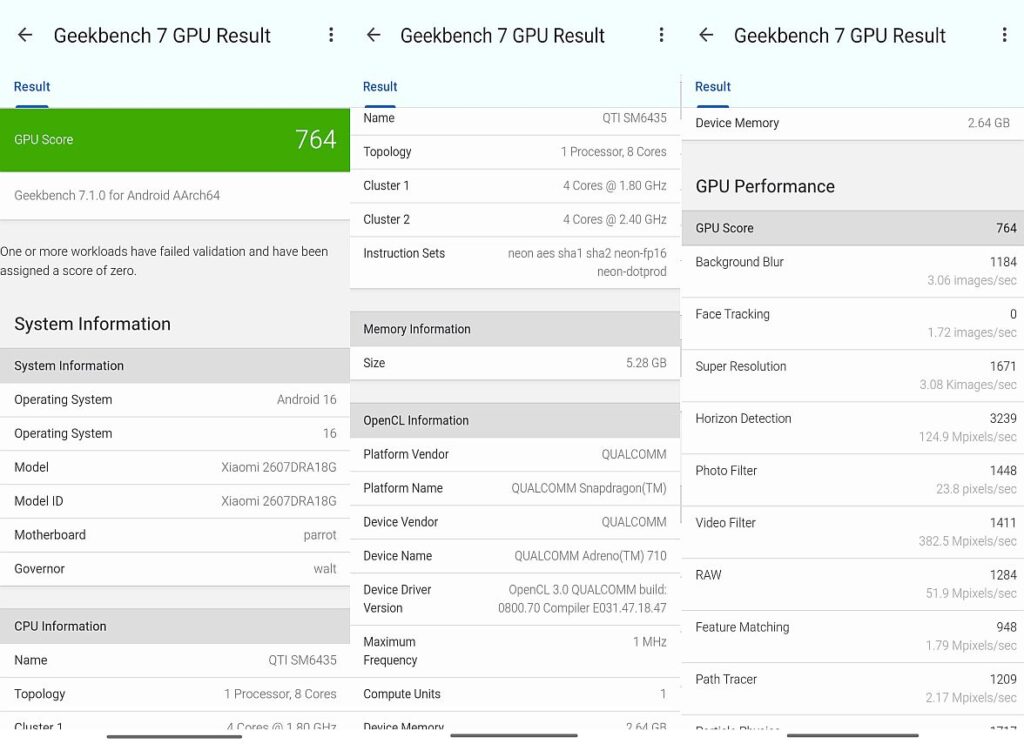
The GPU results told a similar story, suggesting that the phone is not intended for users who prioritize demanding graphics workloads or the highest possible frame rates in modern games.
However, benchmarks tell only part of the story. In everyday use, I found the phone responsive, with applications opening quickly, smooth scrolling through social feeds, and comfortable switching between tasks. Even when I used the camera while navigating and connected Bluetooth accessories, the phone did not feel as though I was pushing it particularly hard.
Gaming is where expectations need to be more carefully managed. Casual games and less demanding titles are perfectly reasonable use cases, but anyone who wants maximum graphics settings and consistently high frame rates in demanding games should look at a more powerful device.
My conclusion is straightforward: for messaging, browsing, streaming, navigation, photography, and the usual collection of everyday applications, the performance is more than adequate. The REDMI Note 17 Pro 5G does not need flagship benchmark scores to be a good everyday phone, but buyers should not mistake its smooth interface for high end gaming performance.
HyperOS 3 and Android 16
The phone runs HyperOS 3 based on Android 16, and my experience with recent REDMI devices suggests that Xiaomi’s software has become a more polished environment over time.
Animations feel smooth, customization options are extensive, and moving between applications is generally quick. The software also incorporates Xiaomi’s HyperIsland interface, Circle to Search, Google Gemini, and AI assisted tools for photography and editing.
People who prefer a completely clean Android experience may find Xiaomi’s approach less appealing, particularly because the phone includes preinstalled applications that some users will never open. That is a familiar compromise with many Android manufacturers, and I would prefer fewer unnecessary applications, but I did not find the software experience fundamentally difficult to live with.
Long term support also deserves attention. Xiaomi advertises six years of security updates for this model on its global product page, which makes it more appealing to buyers who intend to keep their phone for several years. Security support is not the same as a guarantee of six major Android version upgrades, so I would not treat those two promises as interchangeable.
Camera: Fewer Megapixels, a More Practical Approach
One of the more interesting changes in this generation is the main camera. Rather than relying on a 200MP headline specification, the REDMI Note 17 Pro 5G uses a 50MP main camera with optical image stabilization, accompanied by an 8MP ultra wide camera with a 112 degree field of view.
At first glance, moving from a 200MP camera in the earlier Note 15 Pro to a 50MP sensor might look like a downgrade. However, megapixel counts alone do not determine image quality, and optical image stabilization can be particularly useful when shooting in challenging lighting conditions.
In daylight, I found the images sharp, with balanced colors and a pleasing dynamic range. Color processing was one of the more successful aspects of the camera in my experience, because the phone did not appear determined to make every photograph excessively saturated or artificially dramatic.

The resulting pictures looked relatively natural, which is exactly what I want from a camera intended for everyday photography.
When the light starts to fade, optical image stabilization becomes more relevant because it can help reduce blur caused by small movements during exposure. I found the main camera useful in a range of ordinary situations, but the limitations of a midrange camera become more apparent in difficult nighttime scenes, where fine details can disappear and image processing becomes more aggressive.

The 8MP ultra wide camera is useful for landscapes, architecture, and group photographs when fitting more into the frame matters, although detail falls away when examining images closely or shooting in low light. I would rely on the main camera for most everyday photography and treat the ultra wide camera as a useful secondary option rather than expecting both cameras to deliver the same results.
Overall, I prefer the practical benefits of a stabilized main camera to a headline megapixel number that does not necessarily translate into better photographs.
AI Photography Tools
Xiaomi has included several AI assisted editing features, including object removal, glare reduction, image expansion, and tools intended to enhance photographs or modify their appearance.
These features are not a replacement for professional photo editing software, but they can be useful when I want to make a quick correction without transferring an image to a computer or opening a separate application. Removing an unwanted person from the background, for example, can save time when preparing a photograph to share on social media.
As with other AI editing tools, the results will depend on the photograph and the complexity of the change being requested. I see them as useful conveniences rather than a reason to buy the phone on their own.
Video Recording Is a Noticeable Limitation
Video is one area where I expected more from the REDMI Note 17 Pro 5G. The rear camera records at up to 1080p at 30 frames per second, and the front camera has the same maximum resolution and frame rate. There is no 4K video recording.
For short social media clips, casual recordings, and everyday moments, 1080p can be perfectly adequate. The limitation becomes more significant when recording important events, capturing more detailed footage, or watching videos on a large television where additional resolution can make a difference.
Anyone who regularly creates video content should consider this carefully before buying the phone. The camera can take good everyday photographs, but the video specifications are more restrictive than I would like to see in a modern smartphone.
Battery Life: The Feature That Changes Everything
If I had to choose one feature that defines the REDMI Note 17 Pro 5G, it would be the battery.
With a rated capacity of 8,340mAh, the silicon carbon battery is substantially larger than the batteries found in many conventional smartphones. Xiaomi advertises more than two days of battery life under its own test conditions, although actual results naturally depend on screen brightness, network reception, applications, and how intensively the phone is used.
During my testing, the difference was noticeable. I left home in the morning, used Waze with the screen on, browsed websites, chatted on WhatsApp, took photographs, listened to music, and watched videos, yet I did not need to start searching for a charger at the end of the day.
With my normal usage pattern, I managed to get two days between charges.
That changes the relationship I have with the battery percentage. Instead of checking it repeatedly and worrying about whether the phone will last until bedtime, I can simply use the device without thinking about charging nearly as often.
Xiaomi also states that the battery is designed to retain at least 80 percent of its capacity after 1,600 charging cycles under its specified testing conditions. That is an encouraging durability claim for anyone who intends to keep the phone for years, although real world battery health will depend on temperature, charging habits, and usage.
For travelers, commuters, and people who spend long hours away from a power outlet, this kind of battery capacity could be more valuable than a modest improvement in processor speed.
Charging: 67W HyperCharge and Reverse Power
The REDMI Note 17 Pro 5G supports 67W HyperCharge, and Xiaomi states that the phone can reach 50 percent charge in approximately 34 minutes under its specified conditions.
That is useful when I forget to charge overnight and have only a short window to replenish the battery before heading out. However, a battery this large takes considerably longer to fill completely than a typical 5,000mAh smartphone battery, and I would expect a full charge to take substantially longer than half an hour.
Personally, I consider that a reasonable tradeoff. If I can comfortably get close to two days of use, I am less concerned about whether a complete recharge takes an additional hour.
The phone also supports wired reverse charging at up to 22.5W, allowing it to act as a power source for compatible accessories and other devices. That is a useful extra for anyone who carries wireless earbuds, another phone, or small electronic accessories while traveling.
Everyday Use: A Phone Built Around Practical Priorities
After spending time with the REDMI Note 17 Pro 5G, I came away with the impression that Xiaomi has focused less on a single specification designed to dominate a headline and more on a combination of features that make everyday use easier.
The display is large, sharp, and bright, the battery provides excellent endurance, the device offers substantial protection against water and dust, the main camera includes optical image stabilization, and HyperOS 3 feels smooth enough for the tasks most people perform throughout the day.
The stereo speakers are also better than I expected for a phone in this category. They work well for watching videos and taking speakerphone calls, although they are not a substitute for a dedicated Bluetooth speaker or a good pair of headphones.
The main physical drawback is the weight. At approximately 223 grams, the phone is noticeably heavier than some alternatives, and people who prefer compact, lightweight handsets may find it less comfortable. Once I considered how much battery capacity that weight buys me, however, the compromise became easier to accept.
For my own priorities, having a phone that can last close to two days between charges is more useful than saving a few grams while still needing to plug it in every night.
Check current availability and pricing: https://link.amazon/B020Hw9X1
Veredicto final
The REDMI Note 17 Pro 5G continues the Note series’ familiar philosophy, but it makes a particularly strong case for itself through battery capacity, display quality, and durability rather than raw performance.
Its 6.83 inch AMOLED display, 1.5K resolution, 120Hz refresh rate, and impressive claimed peak brightness make it an excellent device for watching videos, browsing, and everyday use. The 8,340mAh battery is the standout feature, and in my experience, its ability to deliver close to two days of use makes a meaningful difference to how often I need to think about charging.
The 67W charging system, reverse charging support, stabilized main camera, and broad set of durability features round out a package that feels designed around real world needs rather than a race for the most impressive specification sheet.
There are compromises. The Snapdragon 6s Gen 4 is not a flagship processor, demanding games require realistic expectations, the ultra wide camera is less impressive than the main sensor, and the lack of 4K video recording limits its appeal to people who regularly create high resolution footage. The weight may also be a concern for anyone who prefers smaller phones.
For me, that combination makes the REDMI Note 17 Pro 5G an interesting midrange smartphone for people who value endurance, a great display, and practical durability over flagship performance. It is not the right choice for everyone, but if your biggest frustration with your current phone is having to charge it too often, Xiaomi has addressed that problem in a particularly compelling way.
Manufacturer: Xiaomi
Model: REDMI Note 17 Pro 5G
Processor: Qualcomm Snapdragon 6s Gen 4
Display: 6.83 inch AMOLED, 2772 × 1280, up to 120Hz
Main camera: 50MP with optical image stabilization
Battery: 8,340mAh silicon carbon
Charging: 67W HyperCharge, up to 22.5W wired reverse charging
Operating system: Android 16 with HyperOS 3
Get it at Amazon: https://link.amazon/B020Hw9X1
Affiliate disclosure: This article contains an affiliate link. As an Amazon Associate, TechAndAudio.com may earn from qualifying purchases.