
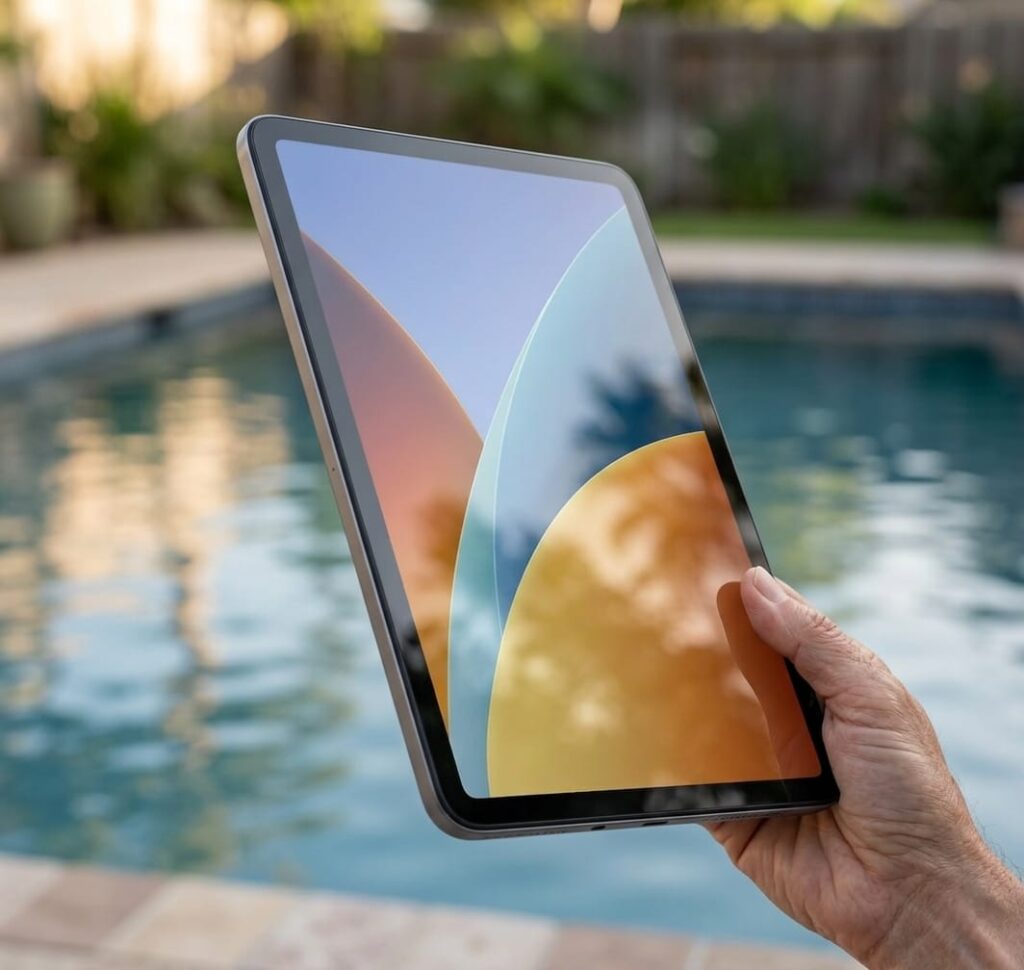
The tablet market has quietly undergone a transformation. For years, consumers were forced to choose between large productivity-focused devices and smaller tablets designed mainly for entertainment. Today, that distinction matters far less. More people are looking for something that sits comfortably in the middle: a device that is portable enough to carry everywhere yet capable enough to handle everyday tasks without compromise. That’s exactly what Xiaomi is aiming for in this Redmi Pad 2 Review.
Rather than competing head-to-head with premium tablets like the iPad Air or Samsung’s Galaxy Tab S series, Xiaomi has taken a different approach. Unlike the Xiaomi Pad 8, the Redmi Pad 2 is designed for people who want a practical, affordable tablet that fits naturally into daily life. It isn’t trying to replace a laptop, and it isn’t chasing flagship specifications. Instead, it focuses on delivering a balanced experience where portability, battery life, and connectivity take center stage. After using the Redmi Pad 2 as part of my daily routine, I came away feeling that Xiaomi has a very clear understanding of who this tablet is actually built for.
A Size That Makes Sense
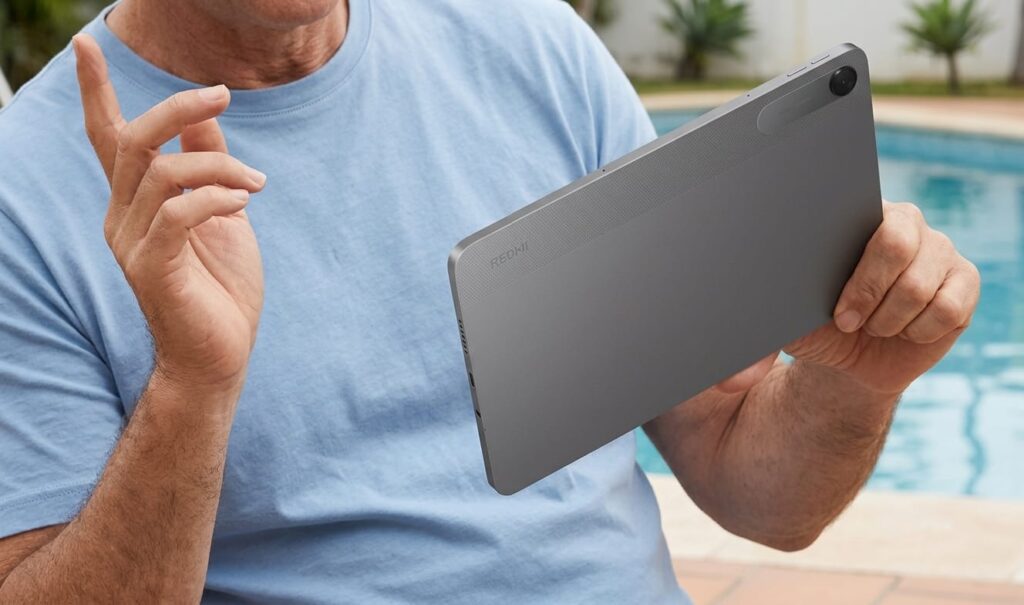
One of the most appealing aspects of the Redmi Pad 2 is something that rarely gets enough attention in today’s tablet market: its size. One of the first things I noticed was how much easier the 9.7-inch form factor felt compared to larger tablets I’ve used in recent years. It slips into a backpack with ease, takes up less space on a desk, and feels more comfortable to hold for extended periods.
The aluminum construction gives the tablet a reassuring sense of quality without adding unnecessary weight. It doesn’t feel premium in the same way a high-end flagship tablet does, but it feels durable and well-builtת exactly what most buyers in this segment are looking for. In my case, the lighter weight made a bigger difference than I initially expected. Whether I was reading articles on the couch or carrying it around during the day, the tablet never felt cumbersome.
Xiaomi has also avoided unnecessary design flourishes. The overall look is clean, understated, and functional. This is a device designed to be used every day, not one built to impress for a few minutes in a retail store.
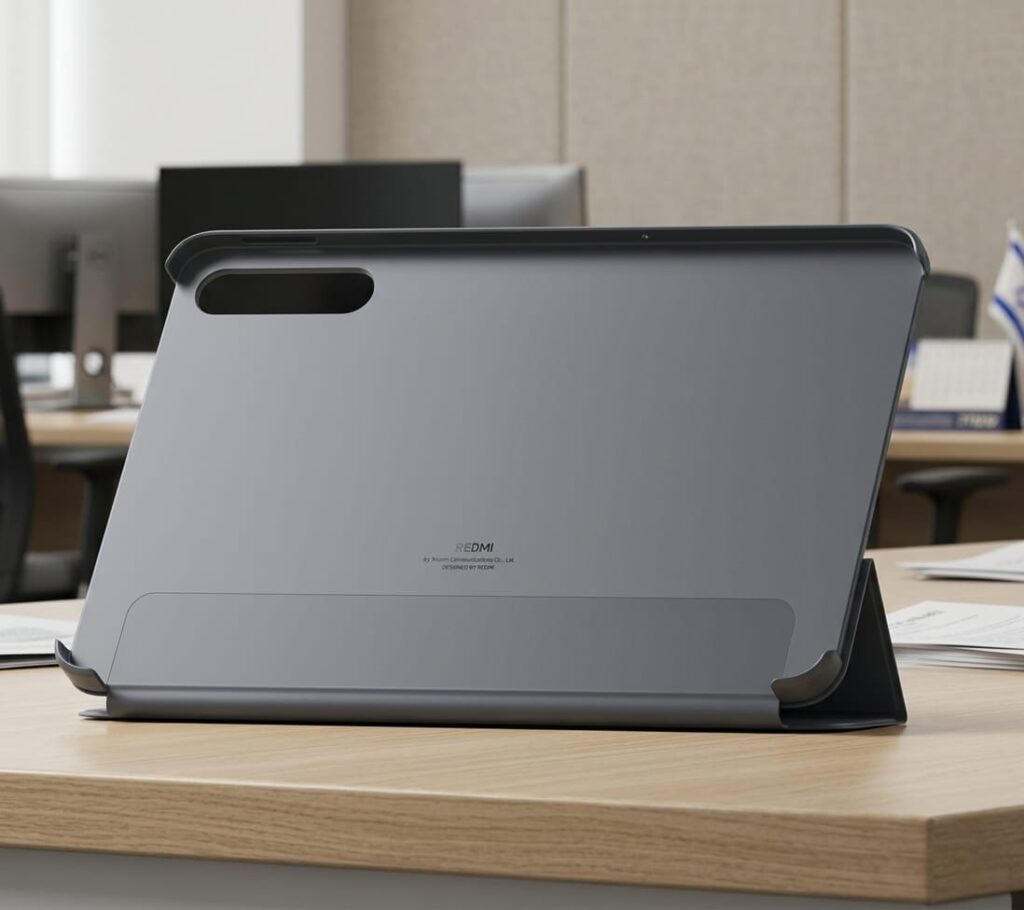
A particularly welcome addition is the included protective cover, which doubles as a stand. It may seem like a small detail, but it significantly improves the day-to-day experience, especially when watching videos, attending online classes, or reading at a desk.
Display Quality Exceeds Expectations
In my experience, the display ended up being one of the most pleasant surprises of the entire package. Xiaomi has equipped the Redmi Pad 2 with a 2K resolution panel, resulting in a level of sharpness that immediately stands out when reading articles, browsing websites, or viewing documents. The relatively compact screen size works in its favor here, creating excellent pixel density that keeps text crisp and easy to read. I especially noticed this while reading long-form articles and reviewing documents, where text remained comfortable to read without excessive zooming.
The adaptive refresh rate of up to 120Hz adds another layer of refinement. I’m usually skeptical when companies highlight refresh rates as a major selling point, but in day-to-day use I could genuinely feel the difference. Scrolling feels smoother, animations appear more fluid, and navigating the interface simply feels more polished.
Eye-comfort features are also well implemented. Blue light reduction modes and TÜV Rheinland certifications make the tablet easier to use during long study sessions, late-night reading, or extended browsing. This isn’t a display designed to compete with premium OLED panels costing several times more, but for its category, it delivers a remarkably balanced viewing experience.
Performance Built Around Everyday Needs
Performance is often where budget-friendly tablets begin to show their limitations, but Xiaomi has made sensible choices here. Powered by Qualcomm’s Snapdragon 6s 4G Gen 2 processor, the Redmi Pad 2 prioritizes efficiency over raw performance. That may sound like a compromise, but it aligns perfectly with the tablet’s intended purpose.
Throughout my testing, I used the tablet for web browsing, streaming, email, social media, note-taking, and document review, and it handled those tasks consistently well. At no point did I feel that the tablet was struggling with the type of workload it was clearly designed to handle. Apps opened reliably, multitasking remained manageable, and the overall experience felt responsive enough for typical users. With 4GB of RAM, nobody should expect workstation-level performance or intensive creative workloads. However, that isn’t what this tablet is designed for.
Storage is another area where Xiaomi gets the basics right. The 128GB internal storage should satisfy most users, while microSD expansion support up to 2TB offers plenty of flexibility for those who prefer storing large media libraries locally.
The Connectivity Advantage
One feature that deserves particular attention in this Redmi Pad 2 Review is the availability of 4G cellular connectivity. This may not be the headline feature that grabs attention, but during my time with the tablet it ended up being one of the features I appreciated most. Many affordable tablets remain dependent on Wi-Fi networks, effectively limiting their usefulness outside the home. By adding cellular 4G support, Xiaomi transforms the Redmi Pad 2 into a device that can remain connected almost anywhere.
Students can work between classes, travelers can stay productive on the road, and commuters can stream content without relying on public networks. The result is a tablet that feels genuinely mobile rather than simply portable. In many ways, this feature does more to define the Redmi Pad 2 than any specification listed on its box.
HyperOS Keeps Things Refreshingly Simple
Software can often make or break the tablet experience, particularly in the budget segment.From my experience, HyperOS felt clean, responsive, and surprisingly easy to live with on a daily basis. Built on Android, the interface avoids overwhelming users with excessive customization options or unnecessary software features. Instead, the experience feels intuitive and approachable.
Features such as Circle to Search add useful functionality without introducing complexity, while Xiaomi’s ecosystem integrations offer additional convenience for users already invested in the company’s products. Throughout daily use, the software remained stable and easy to navigate, reinforcing the tablet’s focus on simplicity and accessibility.
Good Audio for Everyday Entertainment
During everyday use, whether watching YouTube videos or streaming shows, I found the speakers more than adequate for casual entertainment. Dialogue remains clear during movies and video calls, while streaming content from YouTube, Netflix, or other platforms feels enjoyable without immediately reaching for external audio equipment. Support for Hi-Res Audio is a welcome bonus, though most users will appreciate the overall clarity more than the specification itself.
Battery Life Is a Genuine Strength
If there’s one aspect of the Redmi Pad 2 that consistently stood out during my testing, it was battery life. The 7,600mAh battery comfortably lasts through a full day of mixed usage, including browsing, streaming, reading, messaging, and occasional gaming. For many users, charging will become an overnight routine rather than a midday necessity. Even on days when I alternated between streaming, reading, browsing, and messaging, I rarely felt concerned about reaching for the charger.
Charging speeds are limited to 18W, which feels modest by modern standards. However, considering the tablet’s affordable positioning and strong endurance, this is a reasonable trade-off rather than a significant drawback.
Cameras That Know Their Role
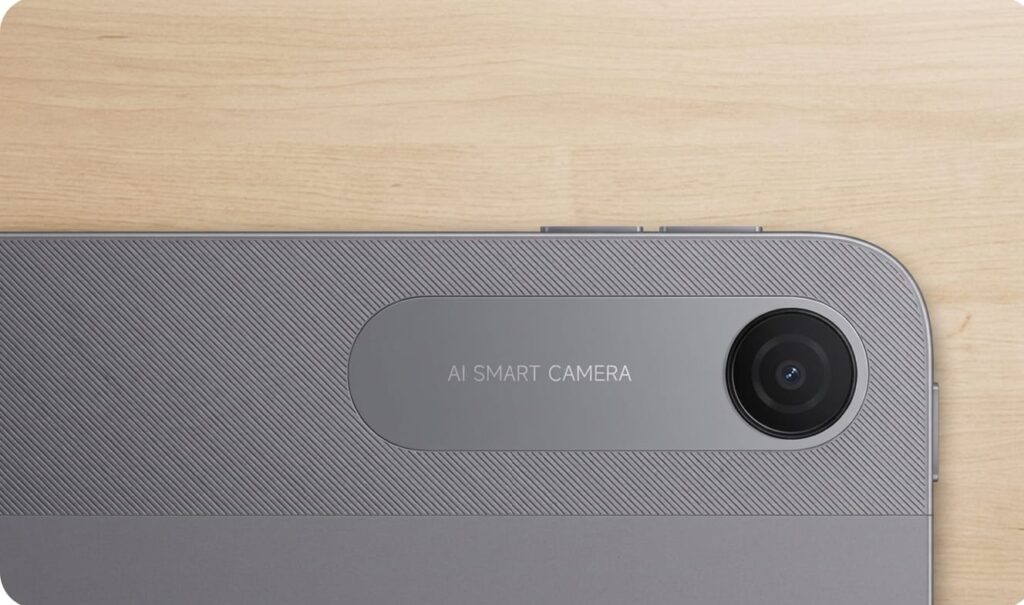
Like most tablets, the Redmi Pad 2 treats cameras as functional tools rather than headline features. The 8MP rear camera and 5MP front-facing camera are perfectly adequate for video calls, virtual learning, quick document scans, and occasional snapshots. They won’t replace a smartphone camera, nor are they intended to. In this case, adequacy is exactly the point.
Redmi Pad 2 Review: The Verdict
After spending time with the Redmi Pad 2, I came away appreciating it for a reason that isn’t often reflected in spec sheets.
Xiaomi has resisted the temptation to overpromise. The company isn’t positioning this device as a laptop replacement, a productivity powerhouse, or a premium entertainment machine. Instead, it has focused on creating a tablet that excels at the tasks most people actually perform every day. In my opinion, the Redmi Pad 2 succeeds because it focuses on the experience rather than the numbers.
For students, frequent travelers, commuters, and casual users looking for an affordable tablet that remains connected and easy to carry, the Redmi Pad 2 makes a compelling case for itself. In a market increasingly obsessed with bigger screens and higher prices, After living with the tablet for a while, I found that its greatest strength wasn’t any single feature. It was how effortlessly it fit into everyday life.