
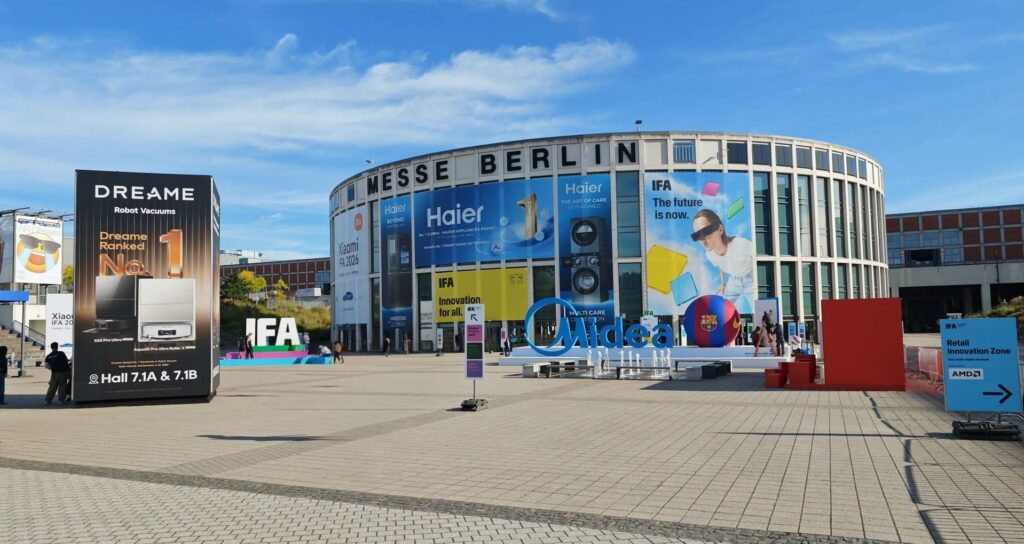
Samsung IFA 2026 may be the clearest sign yet that the world’s largest TV brand is changing the way it fights for its position in the market. Instead of relying on the sheer scale of a giant public exhibition, Samsung moved its main IFA experience away from the Messe Berlin show floor and into a controlled downtown environment built around retailers, business partners, media, creators and carefully structured product experiences. The move comes at a moment when TCL has begun closing the gap in TV shipments, making the question of how Samsung influences the people who influence consumers more important than the question of how large its booth is.
The physical change is extraordinary when measured against Samsung’s history at IFA.
Samsung first exhibited at IFA in 1991 with a modest 43-square-meter stand, then expanded to a 3,600-square-meter exhibition in Hall 20 in 2003. When CityCube Berlin opened in 2014, Samsung became the first company to occupy the building exclusively, using approximately 6,000 square meters for product exhibition space and another 2,500 square meters for presentations and sales meetings. Samsung later described itself as IFA’s largest exhibitor, with 8,700 square meters of hall space.
Samsung’s own retrospective of IFA 2014 described the CityCube operation as an enormous, exclusive exhibition that brought its televisions, appliances, mobile products and other businesses under one roof, while in 2018 Samsung’s German management said the company had presented its new products in more than 6,000 square meters at CityCube for the fifth consecutive year as IFA’s largest exhibitor.
In 2019, Samsung was still using CityCube as the center of its IFA operation, holding its press conference there and describing its exhibition location as the second level of CityCube Berlin. In 2025, the year immediately before the change, Samsung again occupied CityCube exclusively, this time using 6,235 square meters for its IFA exhibition and presenting its AI Home strategy to visitors.
Then came 2026.
Samsung did not simply reduce the size of its booth. It moved the center of its IFA presentation away from the traditional exhibition floor and into Humboldt Carré in central Berlin, while retaining a separate presence at the Messe through the IFA Creator Hub. IFA itself announced that Samsung’s new downtown format would focus on the specialist trade, the B2B audience and media, while Samsung would simultaneously become the official main sponsor of the Creator Hub.
That is not a minor logistical adjustment, but a different communications model.
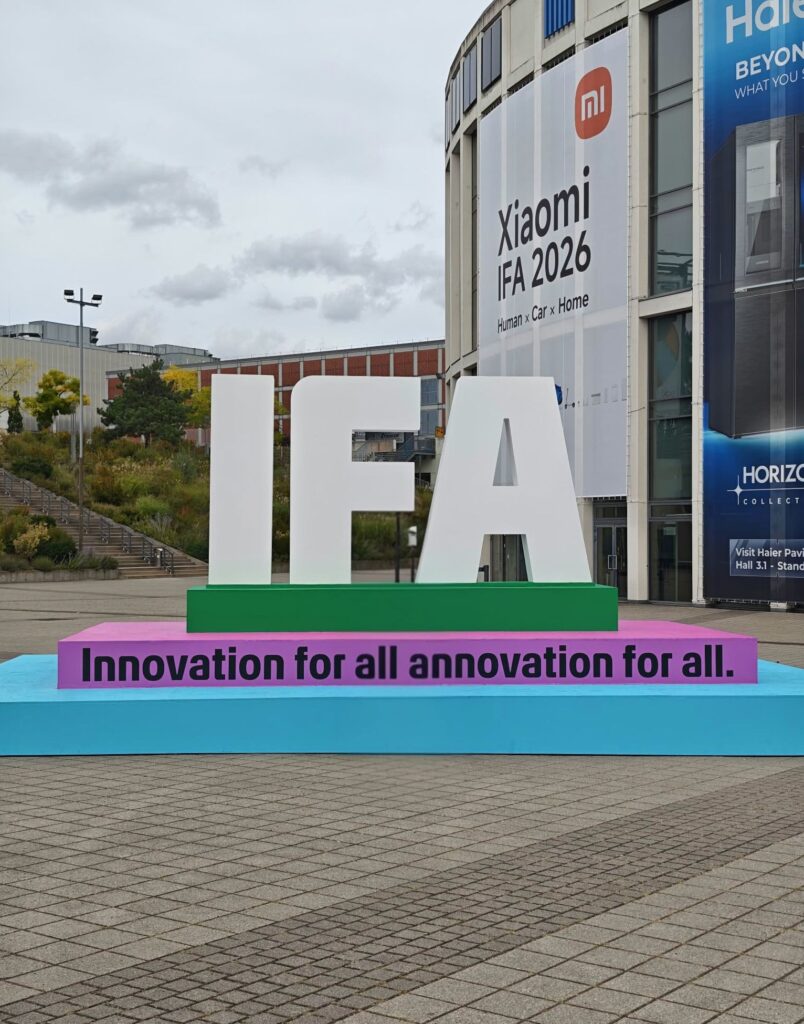
Samsung is not leaving IFA. It is separating the audiences.
Samsung’s own German newsroom provides perhaps the clearest description of what it actually built. The company said that, for IFA 2026, Samsung Connect would operate through two curated hubs for different target groups: an immersive experience at Humboldt Carré for media, creators, trade and business partners, and the Creator Hub at the IFA grounds, where Samsung served as headline sponsor.
That division is important because it means Samsung did not abandon mass communication. Instead, it separated the people it wants to communicate with directly from the people it wants to reach indirectly.
- Retail and business partners received the downtown experience.
- Media and creators were brought into the Samsung Connect environment.
- The broader creator community remained on the Messe Berlin grounds through the Creator Hub.
The consumer audience was then reached through the content, reviews, demonstrations and recommendations produced by those intermediaries. That interpretation is reinforced by Samsung’s own executives.
Mike Henkelmann, Samsung’s Director Marketing Consumer Electronics in Germany, wrote after the event that “Auf der IFA 2026 bieten wir mehr Nähe und Relevanz als jemals zuvor,” which translates to “At IFA 2026, we offer more proximity and relevance than ever before.” He then described Humboldt Carré as an immersive exhibition focused on user experience and dialogue, while saying that Samsung had already demonstrated its ecosystem directly to many “Medien- und Handelspartner”, media and trade partners.
The wording is unusually revealing because Henkelmann did not frame the strategy around maximum visitor numbers or maximum public exposure. He emphasized proximity, relevance, experience, dialogue, media partners and trade partners.
That is the language of targeted influence.
The guided-tour element makes the difference even clearer
Samsung’s new venue was not designed simply as a smaller version of the old CityCube showroom.
Reporting from the event describes visitors experiencing small-group guided tours at Humboldt Carré, while images from the venue show a “Guided Tours” area at the entrance. The physical setup therefore supported a structured journey through the products rather than the traditional trade-show experience in which thousands of visitors wander freely between competing brands.
That distinction matters because the person who controls the route can control the sequence.
The company can decide which product is introduced first, which demonstration follows it, which technical problem is being addressed and which Samsung advantage is explained before the visitor reaches the next product category. None of that means a journalist is being told what to write, but it does mean Samsung has considerably more control over the conditions in which the journalist, retailer or business partner encounters the product.
Samsung itself has used this philosophy elsewhere.
When it announced its standalone CES 2026 exhibition at Wynn Las Vegas, the company explicitly described the exhibition as a “well-curated space” and said that “carefully curated storytelling” would allow visitors to intuitively engage with Samsung’s AI ecosystem. The company also brought product exhibitions, presentations, technology forums and consultations with key clients and partners together in one location.
The parallel with IFA is difficult to miss.
Samsung is moving from the largest possible public stage toward a more controlled experience in which the company can determine how important audiences encounter its products.
The media strategy is selective, but the evidence needs to be described precisely
Samsung’s IFA media strategy is particularly interesting because the Humboldt Carré experience was not simply another open press room.
Samsung’s own German newsroom said that it invited media representatives and creators to its press event at Humboldt Carré on September 2, while independent reporting from TechTimes states that access during the September 2nd and 3rd IFA Media Days was by Samsung invitation. From September 4th, access changed to a trade-visitor model requiring an IFA trade pass.
That means the strongest defensible statement is that Samsung used selective, invitation-based media access during the Media Days, rather than opening its new experience to every journalist who simply happened to be at IFA.
It would go too far to claim that Samsung invited only journalists it believed it could influence, because no public evidence establishes that criterion.
The strategic inference, however, is worth making.
A company that has limited space, uses invitation-based access, organizes guided experiences and separates media from the general show floor can concentrate its communications effort on a smaller group of journalists, creators and industry intermediaries whose reach or commercial importance makes them especially valuable.
The goal does not have to be controlling what those people publish.
The goal can be making sure that the people with the greatest ability to explain the product leave the room with a detailed understanding of the story Samsung wants them to understand.
That is a much more sophisticated form of message management than simply putting a giant television wall in front of 200,000 visitors.
The retailer strategy is even more explicit
This is where the Samsung story becomes much stronger, because the company’s focus on dealers and sales partners did not begin with IFA 2026.
In March 2026, Samsung held a B2B roundtable specifically around its TV and AV strategy for the year. AREA DVD reported that two of the central pillars were strengthening Samsung’s premium strategy and expanding its partnership with specialist retail, or Fachhandel, at a time when aggressive pricing was increasing competition and making it harder for consumers to choose among the growing number of television options.
Samsung’s message to the trade was explicit.
Sven Greier, Samsung’s Vice President TV/AV, said the company’s strategy was based on premium technology, picture quality, practical AI functions, long-term reliability and security, and that these characteristics were intended to create “starke Argumente in der Beratung“, strong arguments for retailers to use in customer consultations.
That sentence is critical.
Samsung is not merely giving dealers product specifications, yet it is giving them arguments for the consultation. The distinction is important because the consultation is the moment when a consumer who may have arrived with five competing television brands in mind can be guided toward a smaller shortlist.
Samsung is therefore trying to influence the person who helps make the shortlist.
The company’s dealer tools make the strategy even more concrete. AREA DVD reported that Samsung’s SPACE sales portal gives retailers product information, ordering functions, campaign overviews and delivery and order data, with more than 1,500 dealers already using the platform. The mobile version, mSPACE, was introduced in early 2026 to make that information available more flexibly during day-to-day retail operations.
Then there is Samsung Premium Shield.
The program is aimed exclusively at physical retail and offers additional compensation per television sold when installation and high-quality consultation are provided at the point of sale. In other words, Samsung is not only giving the retailer information about the product; it is creating a commercial mechanism that rewards with a commision, a particular kind of retail interaction around the product.
That is a much stronger piece of evidence for the “blocking action” thesis than the size of the IFA booth.
Samsung is building the sales argument before the customer walks into the store
Samsung’s March strategy document also laid out a list of specific arguments that its retailers could use, including Samsung’s long-standing market position, Micro RGB, AI features, security, Tizen and its connected ecosystem. It specifically noted that the AI Smart Hub and AI-based picture and sound optimization could be demonstrated effectively in stores.
That last point connects directly to the academic literature.
Research published in the Journal of Retailing and Consumer Services found that in-store demonstrations can increase sales, although their effectiveness depends on when and how they are executed.
A separate peer-reviewed study in the Journal of the Academy of Marketing Science found that process-focused product demonstrations, which walk consumers through how a product works rather than simply displaying the final outcome, can increase purchase intentions by encouraging consumers to become more mentally engaged with the product story.
Research on consumer electronics retail has also examined the role of salespeople in consumer decision-making, while a later study found that high-quality salesperson interaction can increase the likelihood that showrooming consumers complete a purchase in the physical store.
The academic literature does not prove that Samsung designed IFA 2026 because of these studies.
It does, however, explain why a manufacturer might reasonably want to train, equip and motivate retailers to demonstrate a product in a particular way.
A television does not necessarily sell itself simply because its specification sheet is impressive.
The consumer has to understand why the specification matters, how the difference looks in practice, what makes one model worth more than another, and why the premium should be paid.
Samsung appears to be investing heavily in the people and systems that deliver that explanation.
This is where TCL changes the stakes
The timing becomes particularly difficult to ignore because Samsung’s TV market position is facing a more aggressive challenge from TCL.
Counterpoint Research reported that TCL took the top position in global monthly TV shipments in December 2025, with TCL at 16 percent and Samsung at 13 percent. Counterpoint also noted that Samsung remained ahead of TCL for the fourth quarter overall, so the December result should not be interpreted as Samsung losing the annual global leadership position. The significance was that TCL had demonstrated that the gap at the top could be breached on a monthly basis.
The pressure continued into 2026. Counterpoint’s March 2026 report was titled “Samsung-TCL TV Shipment Gap Narrows Further in March 2026; Decisive Q2 Battle Ahead” explicitly describing further narrowing between the two companies.
The broader market data therefore describes a Samsung that remains number one, but is operating in an environment where TCL is growing rapidly and repeatedly narrowing the distance.
This is not a story about Samsung having already lost the TV crown.
It is a story about Samsung seeing a competitor getting close enough that the old assumption of automatic dominance becomes less comfortable.
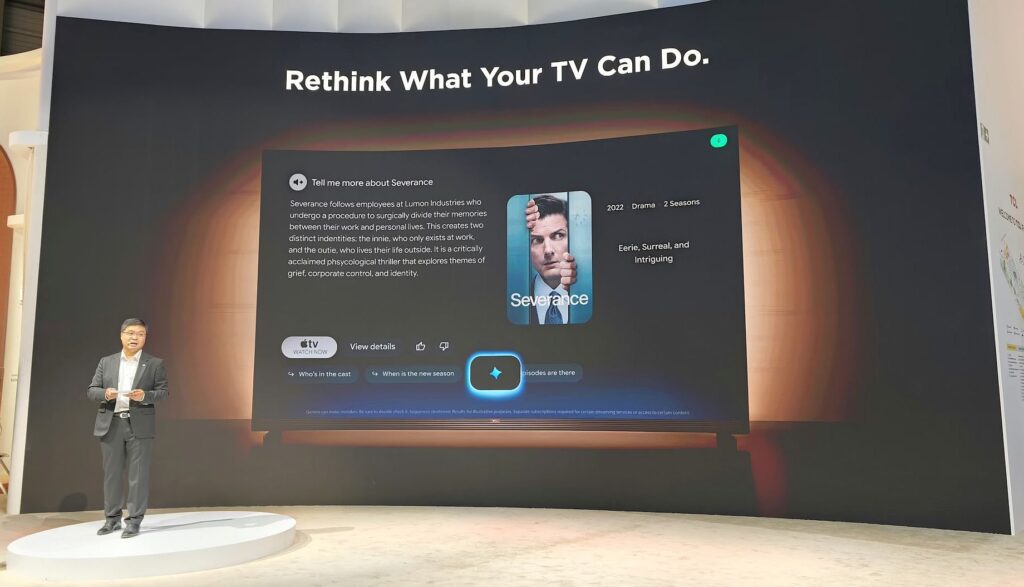
The battlefield Samsung left behind is now occupied by TCL and LG
The visual symbolism at IFA 2026 is almost impossible to miss. TCL established its 2026 IFA presence in Hall 21A, building its Inspiration Habitat around televisions, Mini LED technology and its broader connected ecosystem.
LG remained on the traditional Messe Berlin show floor in Hall 18, booth H18-101, maintaining the kind of physical presence that allows visitors to encounter its products in the same building as competing displays.
The contrast is particularly powerful because Samsung had spent years making its physical IFA presence part of the brand’s identity. Now a visitor walking through Messe Berlin can see TCL, LG, Hisense and other major television brands competing for attention, while Samsung’s principal product experience is several kilometers away in central Berlin.
Samsung has traded ambient visibility for targeted access.
That is a real strategic tradeoff.
The old CityCube model gave Samsung something extremely valuable that cannot be perfectly recreated in an appointment-based environment: the accidental comparison. A retailer could have walked into Samsung’s building without planning to spend an hour comparing televisions, see a giant display, walk out and encounter another brand, then immediately compare the two. The same retailer could discover a competitor simply because the competitor happened to be on the route.
The new Samsung model is more efficient for a scheduled meeting, but it reduces that uncontrolled exposure. That risk is real, and it is one reason the move is strategically interesting rather than obviously one-sided.
CES shows that IFA is probably not a one-off
The strongest evidence that Samsung’s 2026 IFA strategy represents a broader change comes from Las Vegas. At CES 2025, Samsung still operated what its own newsroom called the largest booth at the Las Vegas Convention Center, attracting a steady stream of visitors to its Central Hall installation. The CES organizers themselves described Samsung, LG, Sony and Panasonic as the major “tent pole” brands whose huge Central Hall booths were among the first things visitors encountered.
For CES 2026, Samsung abandoned that traditional Central Hall model and moved its main exhibition to a standalone space at Wynn Las Vegas. Samsung described the new format as a departure from the conventional exhibition framework, combining product exhibitions, presentations, technology forums and consultations with key clients and partners in one location, with what the company called “carefully curated storytelling.”
That is why IFA 2026 should not be read simply as Samsung deciding that Berlin is too expensive or that it no longer likes trade shows.
The evidence points toward a broader shift in how Samsung wants to use major technology events.
The company appears to be moving away from the idea that the primary objective of a trade show is to expose as many people as possible to as many products as possible, and toward a model in which different audiences are given different experiences, different levels of access and different explanations.
The strategy is more segmented, more curated and, by design, more controllable.
The media is another part of the influence chain
There is a larger communications theory behind this. Modern technology buying decisions are increasingly mediated by people who are not the manufacturer and not necessarily the final consumer. Retail salespeople explain products, reviewers compare, YouTube creators demonstrate, and editors decide which launches deserve attention.
As described above, academic research supports the broader proposition that demonstrations, salesperson interaction and credible intermediaries can affect consumer decision-making, although none of that research establishes a direct causal connection to Samsung’s IFA decision.
That is why the structure of Samsung’s IFA 2026 operation is so interesting.
Samsung does not need every journalist, creator or retailer to agree with it.
What it needs, if my interpretation is correct, is for the people with the greatest ability to explain the category to understand Samsung’s chosen arguments clearly enough that those arguments remain part of the conversation when the consumer eventually makes a purchase decision.
That is a fundamentally different objective from filling a convention hall.
The “blocking action” theory
Samsung has not publicly said that it moved away from CityCube because TCL was closing the gap, so it would be wrong to present that causal relationship as established fact. The evidence supports something more nuanced:
- Samsung remains the global TV shipment leader, TCL overtook in December 2025, and continued narrowing the gap in 2026.
- Samsung’s own 2026 TV strategy puts unusual emphasis on specialist retail, sales arguments, training, digital sales tools and point-of-sale consultation.
- It’s IFA strategy then puts specialist trade, B2B and media at the center of a separate downtown experience. Its media access during the IFA Media Days was invitation-based.
- The experience itself was structured around immersive demonstrations and guided tours.
- Its parallel CES strategy emphasized curated storytelling and a standalone environment.
Taken together, those facts make the blocking-action interpretation plausible, even though Samsung has not used that phrase itself.
The defensive move is not necessarily to attack TCL directly.
It is to protect the decision-making chain around the Samsung brand, retailer relationship, premium argument, product story and creator conversation.
Protect the reasons a consumer hears when he or she finally asks the salesperson the question that matters most:
“Which TV should I buy?“
That may be the real meaning of Samsung IFA 2026.
The company that once dominated the physical IFA landscape is no longer trying to prove its leadership simply by being the largest presence in the room. It appears to be trying to influence what happens before the customer ever reaches that room, before the customer compares the products side by side, and perhaps most importantly, before the customer walks into the store and asks someone else to make the decision.
Samsung has not abandoned the TV fight.
It may simply have decided that the next phase of the fight will be won somewhere much closer to the point of sale.