
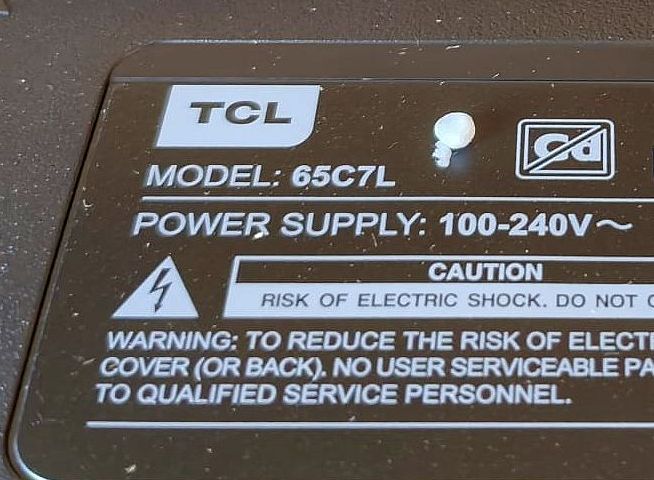
Let’s put it this way: some TV manufacturers enter the market with the goal of improving on what came before, while others seem determined to change the rules of the game altogether. In my view, TCL increasingly belongs to the second group, because the company has spent the last several years taking Mini LED technology, refining it from one generation to the next, bringing it down to price points that make it accessible to a much broader audience, and at the same time challenging manufacturers that, until relatively recently, could comfortably position themselves as unquestioned premium brands. For this TCL C7L TV review, I asked to test the C7L, the successor to the C7K that I reviewed last year. You can read my full review of the previous generation here: TCL C7K review.
This time, I tested the 65-inch version, which is particularly interesting because 65 inches is one of the most competitive sizes in the premium TV market. It is large enough to deliver a genuinely cinematic experience, yet still practical enough for a wide range of living rooms, making it a category in which manufacturers can no longer rely on screen size alone to justify a premium price.
The C7L is part of TCL’s 2026 TV lineup and combines the company’s new Super Quantum Dot Mini LED technology with an HVA 2.0 Pro panel, 1,152 local dimming zones in the 65-inch version, a maximum refresh rate of 144Hz with VRR, and a gaming mode capable of reaching 288Hz at 1080p.
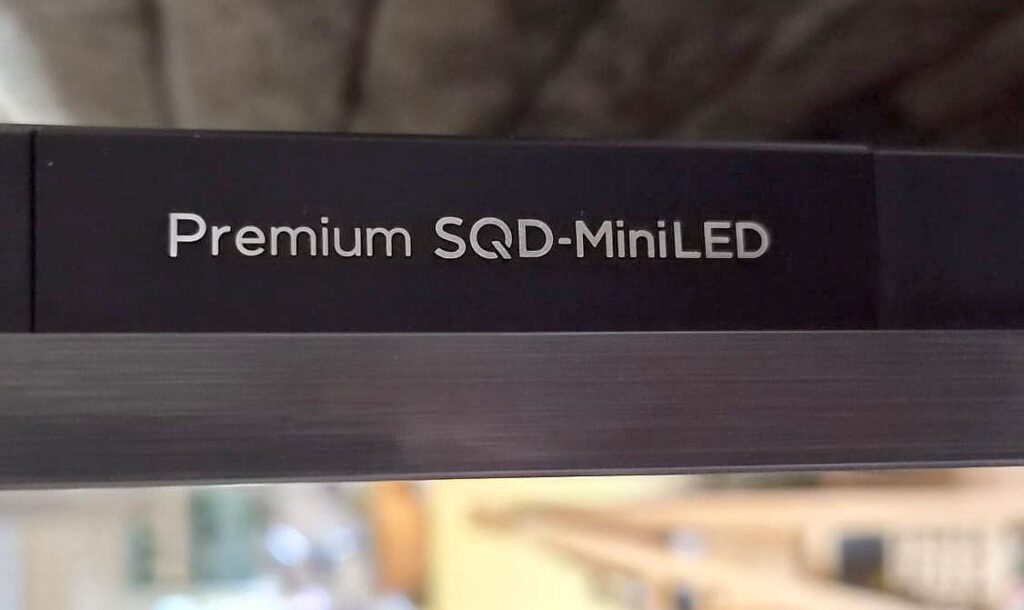
I had already seen the C7L at TCL’s launch event, where the picture immediately struck me as a surprisingly meaningful improvement over the previous generation. That first impression was strong enough that I wanted to spend considerably more time with the television in a real home environment before drawing any conclusions. After doing so, my conclusion is more interesting than simply saying that TCL has made another good Mini LED television.
The C7L suggests that TCL is increasingly treating Mini LED not as a cheaper alternative to OLED, but as a display technology capable of competing with premium televisions on its own terms.
SQD Mini LED Is TCL’s New Battleground
TCL offers the C7L in considerably larger sizes, reaching all the way up to 98 inches, but for this TCL C7L TV review, I was particularly interested in treating the 65-inch model as a product in its own right, rather than simply viewing it as the smaller version of a giant-screen television.
The 65-inch category is arguably one of the most crowded segments in the premium TV market. It is large enough to deliver a genuinely immersive viewing experience, small enough to fit into many living rooms, and competitive enough that manufacturers can no longer rely on size alone to make a television stand out. This is exactly where the C7L has to prove itself.
Who Is TCL, Really?
Before getting into the television itself, it is worth understanding how dramatically TCL has changed, because it is no longer accurate to think of the company simply as a Chinese manufacturer trying to sell a lot of television for relatively little money. Over the past several years, TCL has become one of the most important players in Mini LED television technology, and one of the reasons the company has been able to move so quickly is that it has considerably more control over its display supply chain than many competitors.
TCL manufactures display panels through China Star Optoelectronics Technology, better known as CSOT, its display manufacturing arm. That degree of vertical integration gives the company greater control over the production process and allows it to move new display technologies into consumer products at a remarkably fast pace.
Its enormous manufacturing capability is also part of the reason Sony and TCL announced in January the establishment of a subsidiary controlled by TCL that is expected to manufacture televisions for Sony, reportedly beginning next year. In other words, if you want to understand where the television industry is heading, it is becoming increasingly difficult to look only at the traditional premium brands.
The Rise of Mini LED
Looking across TCL’s 2026 lineup, a very clear trend emerges: the company is bringing Mini LED technology to a wide range of television series, with screen sizes extending to 98 inches and pricing aimed at buyers who may never have considered themselves home theater enthusiasts.
That is an important change, since a few years ago Mini LED was largely positioned as an expensive enthusiast technology. Today, the combination of Quantum Dot and Mini LED has moved firmly into mass production, with manufacturers adding more dimming zones, higher brightness and increasingly sophisticated control over how light is distributed across the panel.
The comparison with OLED is particularly interesting because the two technologies approach image reproduction from fundamentally different directions. OLED emits light at the pixel level, which means that producing very large OLED panels requires extremely precise and uniform organic layers across an enormous surface area. As the panel becomes larger, maintaining a high percentage of usable panels becomes increasingly difficult and expensive.
There are, of course, OLED televisions measuring 97 inches, but this remains an exceptionally expensive category. Mini LED, by comparison, scales to very large screen sizes much more economically because the display combines an LCD panel with a dense array of miniature LEDs and a sophisticated local dimming system.
That is one reason TCL can push Mini LED televisions all the way to 98 inches while keeping the technology within reach of a much larger audience. For comparison, the LG C6 OLED I reviewed here reaches a maximum size of 83 inches.
TCL C7L TV Review: Design
Anyone who has seen the C7K will immediately recognize the design language of the C7L. TCL did not attempt a dramatic redesign, and I think that was the right decision. The previous generation already had a successful design philosophy, one that focuses on delivering a large screen with relatively thin bezels and a cabinet that looks particularly good when mounted on a wall, without trying to turn the television itself into a piece of decorative art.
I chose to wall mount the C7L, so I did not install or evaluate the supplied legs in practical use, including their stability. What I did examine closely was the thickness of the television. For a full-array Mini LED television, the C7L is relatively slim. The 65-inch version measures approximately 6 centimeters at its thickest point and around 3 centimeters across the thinner sections.
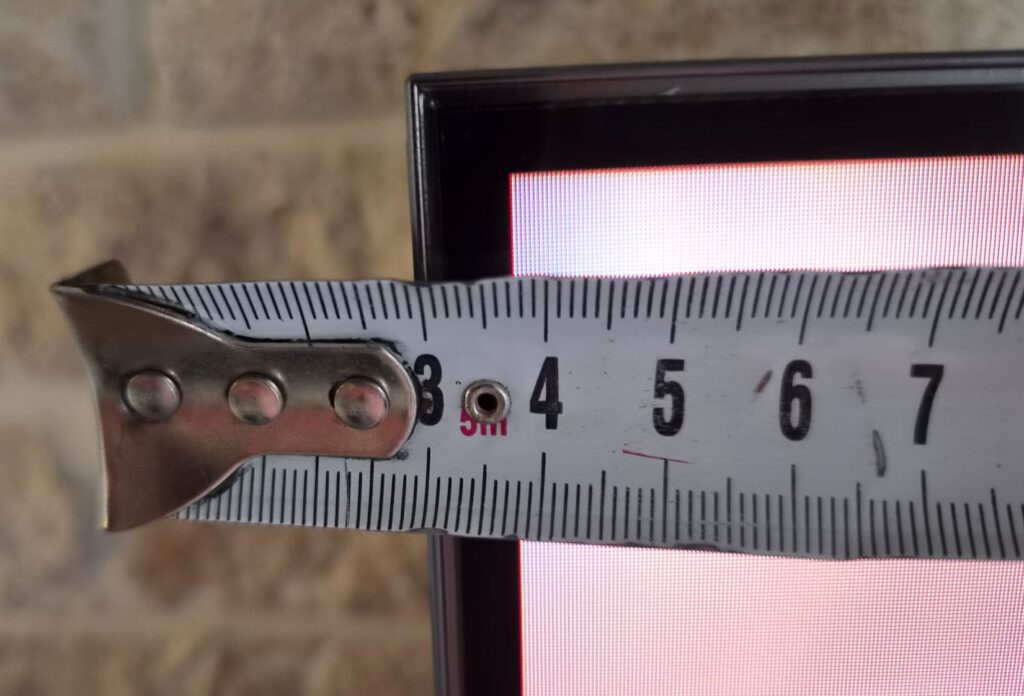
But the maximum thickness is not what matters most visually. What interested me more was the distance between the edge of the chassis and the point where the actual picture begins, which is approximately 7 millimeters. That may sound like a tiny measurement, but when the television is mounted on a wall, the combination of the thin black border and relatively slim rear section creates the impression of a large screen floating against the wall.
In this respect, the C7L continues the C7K’s design almost unchanged: the image begins approximately 7mm from the edge and build quality is also very similar to the previous model. The C7L does not attempt to create the feel of an all-metal luxury product, as some considerably more expensive televisions do, but it feels solid enough, with an even finish that never gives the impression that TCL compromised heavily on construction simply to reach a lower price.
Installation and Wall Mounting
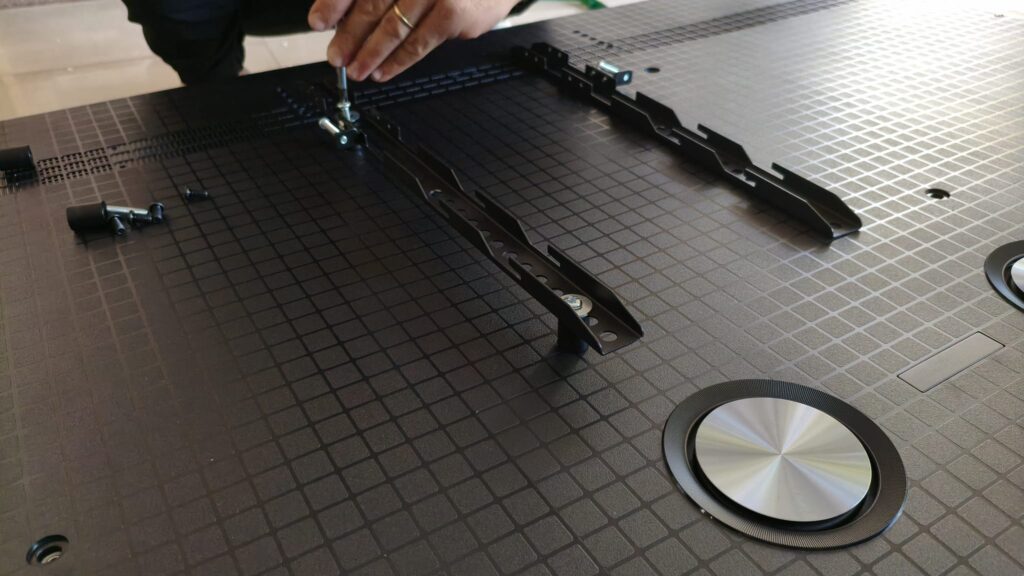
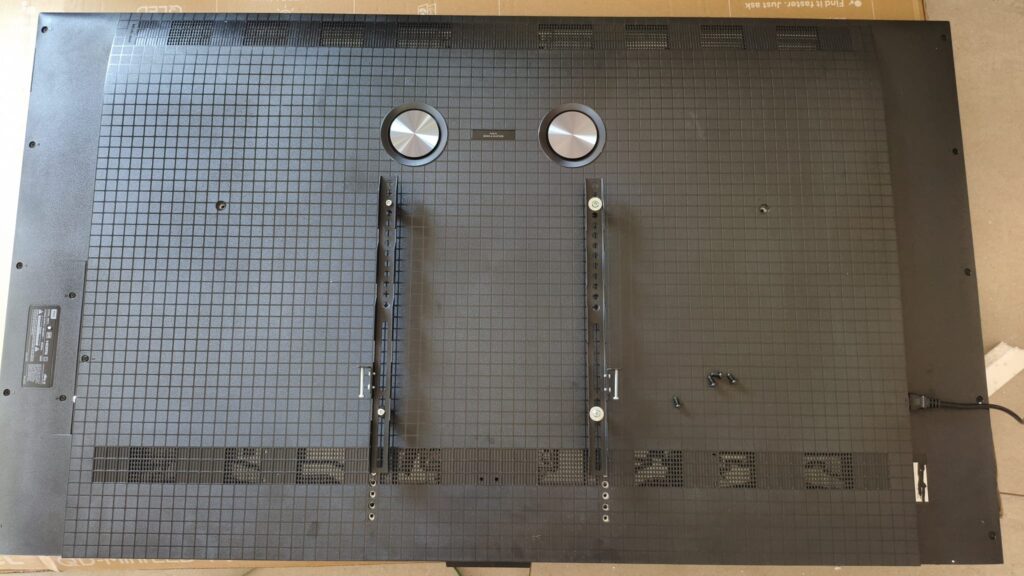
Installation is relatively straightforward, particularly if you already have a suitable wall mount installed. The 65-inch model uses a standard 300 by 300mm VESA mounting pattern, so there is nothing unusual here for anyone familiar with common wall mounting hardware. I had the television installed as part of the review process, with delivery and installation handled by TCL representatives. During installation, customers are also offered the option of purchasing an articulating wall mount, which can be particularly useful if you want easier access to the rear inputs.
The installation itself can be seen here:
For North American readers, it is worth remembering that installation services, distributors, wall mount options and warranty terms are market specific, so these details apply to the Israeli review unit rather than the U.S. retail market.
Connectivity and Communications
Just like the C7K, the C7L has four HDMI inputs, with two supporting HDMI 2.1 functionality and 4K at up to 144Hz with VRR, while the other two are HDMI 2.0 inputs supporting 4K at 60Hz. One of the HDMI 2.1 inputs supports eARC. When connected to a PC, HDMI inputs 1 and 2 can deliver 4K at 144Hz, while 1080p can reach 288Hz. The television also supports ALLM and AMD FreeSync Premium Pro, giving gamers a strong set of features for both console and PC gaming.
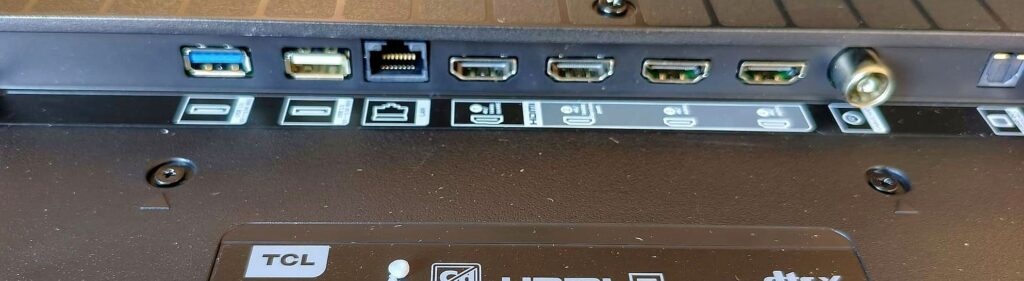
Alongside the HDMI inputs, you will find a wired Ethernet connection, optical audio output and antenna input. Wireless connectivity remains similar to the C7K, with Bluetooth 5.4 and Wi-Fi 5. The connection layout is essentially unchanged from the C7K.
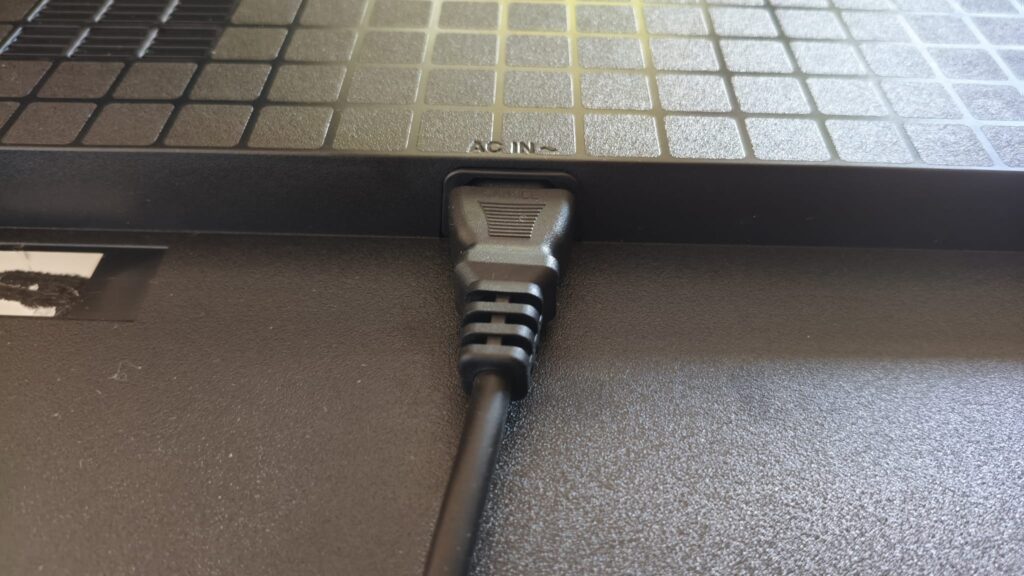
There is one practical detail I particularly like about TCL televisions: unlike LG TVs, the power cable on the TCL C7L is detachable. That makes it considerably easier to route the cable through a conduit inside the wall if you want the wiring completely hidden.
Hardware: Familiar Underneath, Smarter in Practice
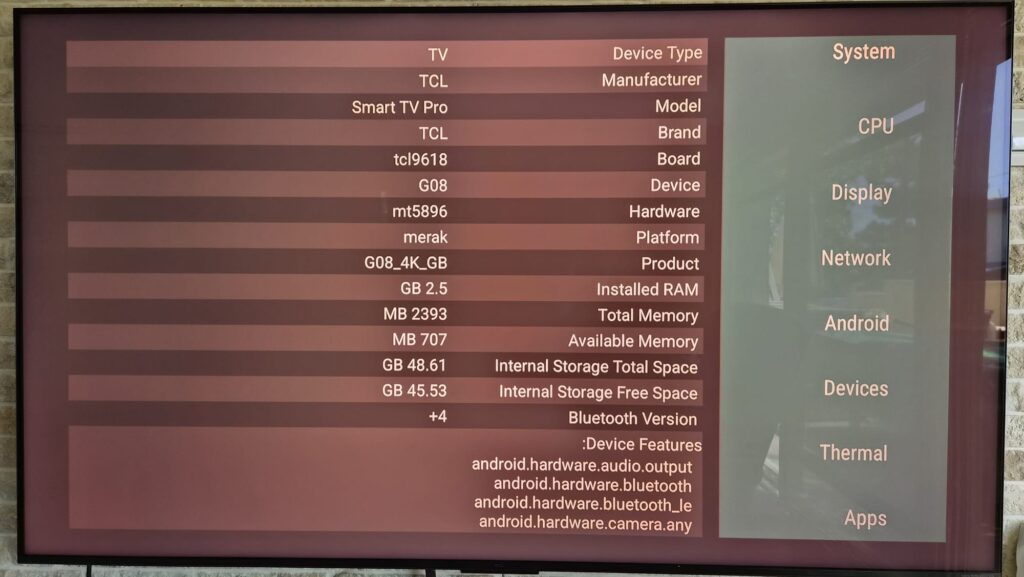
After installing an app that provides detailed hardware information for Google TV devices, I found that the C7L uses hardware very similar to what we saw in the C7K. The processor remains the MediaTek MT5896, RAM remains at 2.5GB, internal available storage is approximately 49GB, and the graphics processor remains the Mali G52. This is important when evaluating the television’s streaming performance and its ability to process locally stored media.
The MT5896 is associated with the MediaTek Pentonic 700 platform, and from a basic processing perspective there is no major leap over the C7K generation. The important difference is therefore not a dramatically more powerful processor, but the way TCL is using the existing system on chip alongside newer image processing techniques and algorithms. That distinction becomes important throughout the TCL C7L TV review, because some of the most meaningful improvements are not visible in the specification sheet.
Picture Settings Matter
As with the C7K, the factory picture settings of the C7L are not necessarily where I would leave the television. TCL knows how to make a display extremely bright and extremely colorful, and the default picture modes tend to showcase those capabilities rather aggressively. That can make a strong first impression in a brightly lit showroom, but it is not necessarily the best way to enjoy movies at home.
After adjusting the picture to my preferences, I found the C7L considerably more balanced. I reduced the overall light output somewhat, allowing the television to remain impressively bright without feeling as though it was constantly trying to overpower my eyes, and I also toned down the color intensity in areas where the default presentation became too aggressive. To me, that small amount of adjustment made a significant difference.
Consumo de energía
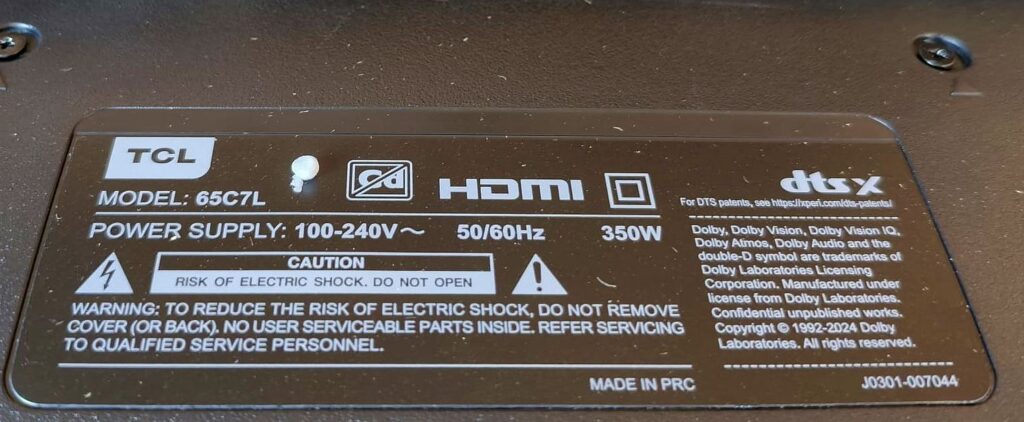
For the 65-inch model, the maximum rated power consumption is approximately 350 watts during operation.
Actual consumption will naturally vary according to brightness, picture mode, HDR content and other settings, but this provides a useful indication of the television’s maximum power draw under demanding conditions.
Google TV Remains One of the Best Smart TV Platforms
One of the strongest advantages of TCL televisions in general, and the C7L in particular, is Google TV. Android smartphone users will immediately recognize the logic of the setup process. Instead of moving through a long sequence of screens, permissions, registrations and configuration menus before you can actually watch something, the initial setup is remarkably straightforward.
You connect your Google account, connect the television to the network and, from there, the process becomes very simple. Year after year, Google TV continues to be one of the most user-friendly operating systems available on a television.
Another major advantage is the way Google TV brings together content from the services you already use. Netflix, YouTube, Disney+, Prime Video and Apple TV can all appear within the same overall interface rather than forcing you to think of each service as a completely separate destination. That may not appear anywhere in the technical specifications, but it has a major impact on the everyday experience of owning a television.
In my experience, the interface was relatively fast, with minimal delay between commands. The application selection is extensive, and the television’s approximately 49GB of available internal storage is considerably more generous than what many competing TV platforms provide. The C7L runs Google TV on an Android TV 14 software foundation, with access to the Google Play Store and its enormous library of applications.
It is also possible to install applications from external sources, which gives advanced users considerably more flexibility and allows them to expand the television’s capabilities beyond the applications available through the standard interface. The home screen emphasizes recommendations for movies and television shows available through the installed services, with recommendations influenced by previous viewing behavior and the streaming services associated with the account. Overall, I found the current interface clean, attractive and easy to navigate.
Streaming and Local Media
When it comes to mainstream streaming, the C7L continues the strong performance we saw with the C7K. The major streaming services are available, moving between them is straightforward, and the television handles 4K content from the major streaming platforms without difficulty.
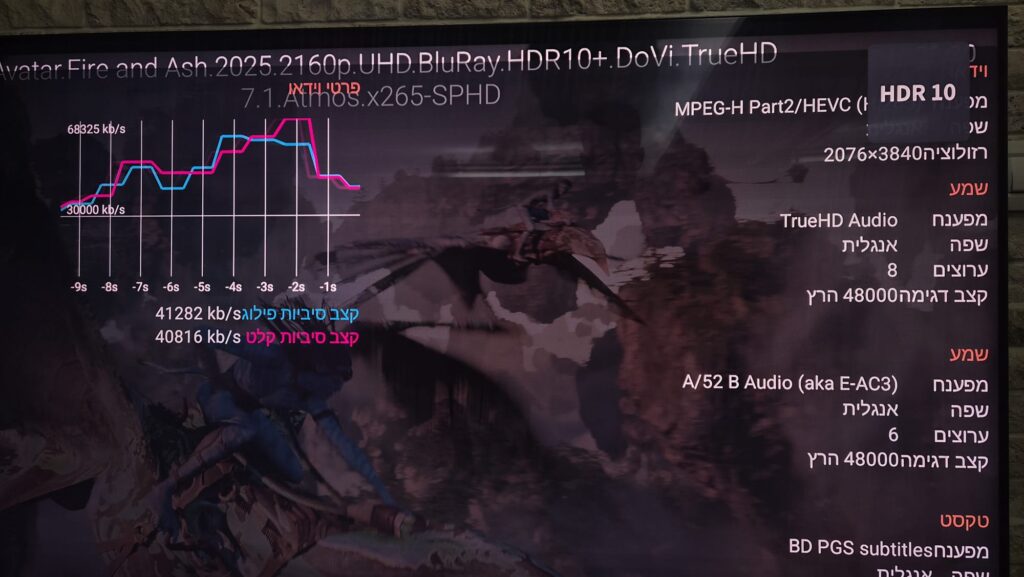
I then moved to a different type of test, streaming movies from a DLNA server located on a computer on my home network. Playback was handled using VLC, which I installed on the C7L. This is where the hardware similarities between the C7L and C7K become particularly relevant, since web-DL movie files with bitrates around 15 to 20Mbps played smoothly, and seeking through them was responsive.
Once I moved to very high bitrate Remux files around 40Mbps, however, the limitations of the television’s internal playback hardware became much more obvious.
The solution is relatively simple: anyone maintaining a serious local movie library and preferring large Remux files will probably already be better served by a dedicated external streaming device. For the vast majority of viewers, particularly those watching Netflix, Prime Video, Disney+, YouTube and similar services, the C7L’s capabilities are considerably more than sufficient.
The Remote Control Is Simple, and That Is a Good Thing
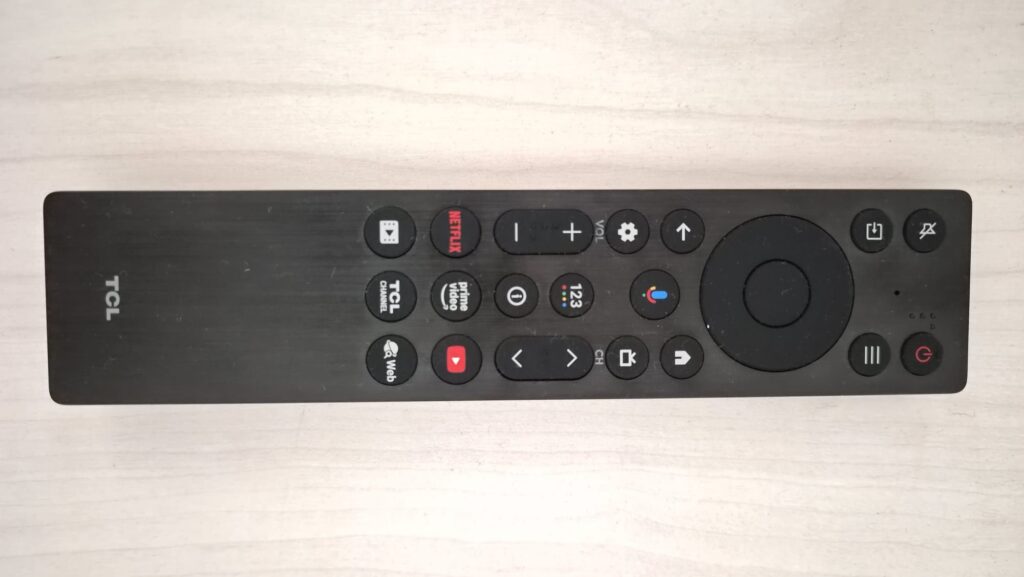
The C7L remote is essentially identical to the remote supplied with the C7K, with the same button layout and the same functional approach. It is not made from metal and it does not include the backlighting found on the more premium C8K TV remote, which I reviewed here.
Instead, this is a straightforward remote that concentrates the essential controls into a single device. There are dedicated shortcut buttons for popular streaming services including Netflix, Amazon Prime Video and YouTube, along with convenient volume controls, a microphone button and a particularly useful input button for switching between sources. That last feature is worth mentioning because it is missing from some Samsung and LG remotes. For me, this is another example of where not changing something is actually an advantage. If the previous remote worked well, there is little reason to force users to learn a new layout simply for the sake of making the product look different.
Sound Is Still a Surprise
If there is one area where TCL has repeatedly surprised me in recent years, it is sound quality. The C7L continues the approach used in the C7K, with an audio system developed and tuned in cooperation with Bang & Olufsen, arranged in a 2.2 channel configuration. The built in system produces substantially deeper bass than the television’s relatively thin body would lead you to expect.
The rated audio output is 40 watts for a 65 inch model, and in practical use the system delivers impressive volume while maintaining a clean and balanced presentation. More importantly, the C7L simply sounds good. That distinction matters because television audio specifications can easily become a distraction from what actually reaches your ears.
The C7L has a surprising amount of depth for such a flat television. Voices remain clear, music does not sound as though it is being squeezed out of a thin plastic box, and there is a genuine sense of volume and space behind the sound. The effect becomes especially noticeable in scenes combining dialogue, music and sound effects, where the television manages to preserve a reasonable amount of separation between the different elements.
It does this without relying on a long list of AI branding claims. In many respects, it simply sounds like a system that has been tuned properly. Naturally, it is not a replacement for a dedicated home theater system, but if you want to use the built in speakers without immediately buying a soundbar, the C7L gives you a much stronger starting point than most televisions in its class.
The television supports Dolby Atmos and Dolby Digital, as well as DTS formats including DTS:X, DTS-MA and DTS-HD, which is an important advantage for viewers with local movie libraries. That matters because Samsung and LG have historically omitted DTS support from many of their television models. For anyone watching local movie files rather than relying exclusively on streaming, this is more than a technical footnote.
Testing the Sound With Sing
I started the audio testing with Sing, using the “Shake It Off” sequence, a scene packed with considerably more sound information than you might initially expect. At approximately 44 seconds, an explosion arrives with deep, rhythmic bass, layered effects and a sense of space that would become noticeably compressed on many television speakers.
On the C7L, those elements came through with considerably more authority, creating a fuller and more convincing presentation than I would normally expect from built in television speakers. You can see the scene here:
I then moved to La La Land, particularly “A Lovely Night,” where the human voice becomes the more important test. What caught my attention was the clarity of the vocals. The singers remained distinct instead of becoming buried beneath the music, which made it possible to simply enjoy the performance rather than constantly noticing the limitations of the television speakers.
Picture Quality: The real Generational Upgrade
If you have made it this far, you have probably noticed that my comments about the hardware, design, remote control, operating system and connectivity all point toward the C7L being a relatively evolutionary product. But the picture is different.
This is where TCL made the most interesting change.
The C7L is based on Super Quantum Dot Mini LED, TCL’s next generation Quantum Dot implementation combined with an HVA 2.0 Pro panel and a full-array backlight with 1,152 local dimming zones in the 65-inch model.
The number of zones increases with screen size, reaching 2,176 zones in the 98-inch version, compared with 2,048 zones in the C7K. On paper, more dimming zones mean finer control over bright and dark portions of the image, and in practice the goal is to reduce blooming, the visible halo that can appear around bright objects against dark backgrounds.
But the more interesting change is not simply the number of zones. It is the panel itself. TCL is using its HVA 2.0 Pro panel architecture, designed to improve native contrast and reduce unwanted light leakage. The television also incorporates an Ultra Color Filter designed to expand color reproduction and produce more vivid colors, together with TCL’s All Domain Halo Control system, which combines optical elements such as Micro OD structures and condensed micro lens technology with algorithms designed to control light and shadow.
The goal of the entire system is straightforward: produce more light while maintaining tighter control over dark areas, while reducing the halos that have traditionally been associated with Mini LED displays. And that is precisely where the C7L becomes interesting.
Brightness Meets Better Blacks
TCL rates the 65-inch C7L at up to 3,000 nits of peak brightness, compared with up to 2,600 nits for the 65-inch C7K. That represents a theoretical increase of approximately 15 percent in the manufacturer’s stated peak brightness. But brightness by itself is not the entire story.
The reason Super Quantum Dot is interesting is that TCL is attempting to improve color purity and color performance at high brightness, so when a scene demands both intense color and strong illumination, the panel does not have to sacrifice one in order to deliver the other. After adjusting the picture to my preferred settings, the result was more balanced. I reduced the overall light intensity slightly, allowing the television to remain impressively bright without feeling as though it was constantly trying to overpower my eyes, and I also restrained some of the stronger colors where the default presentation became too aggressive.
The feeling of high light output is not merely theoretical, because the C7L can become extremely bright in actual use. But the improvement that impressed me most compared with the C7K was not actually the brightness, but the black level. This was the change I found easiest to see.
Mini LED has always had one fundamental limitation compared with OLED: it cannot independently control every individual pixel. Instead, it controls groups of pixels through local dimming zones. TCL is clearly trying to narrow that gap through a combination of a very large number of dimming zones, a panel with high native contrast and an optical system designed to keep light contained where it belongs. On the C7L, I noticed the effect immediately.
Compared with the C7K, blacks look much deeper than the C7K, and scenes containing completely dark areas next to very bright objects are handled with substantially greater confidence.
The difference was particularly obvious in challenging scenes where a bright object sits against an almost completely black background, because the C7L was able to maintain the brightness of the object while keeping the surrounding darkness considerably cleaner. This is one of the most important improvements I saw during the entire TCL C7L TV review. It does not turn Mini LED into OLED, because the underlying technologies remain different, but it demonstrates just how far modern Mini LED televisions have progressed.
HDR Support Covers the Major Formats
The C7L supports HDR10, HDR10+, HLG and Dolby Vision, giving users broad compatibility with current HDR content. TCL and Dolby also announced that Dolby Vision 2 is planned for rollout to its 2026 X and C series televisions through over the air software updates, although availability can depend on the exact model and region. That is an important consideration for a television intended to remain in your home for several years.
There is little reason to choose one HDR ecosystem over another when a television can support the major formats and allow the content itself to determine which format is used. The C7L also supports IMAX Enhanced and Dolby Vision Gaming, making the HDR feature set relevant not only to movies and television shows but also to gaming. For a buyer looking for a display that can handle a broad mix of content, this is one of the C7L’s strongest technical advantages.
TCL C7L TV Review: Looking at the Pixels
To examine how the pixels behave, I attached an electronic microscope to the C7L and examined the panel first at 300x magnification and then at 1,600x. The result was fascinating, as the pixels were capable of going completely dark, while increasing their illumination when the image required it.
Here is the first microscope video of x300 magnification:
The second video was recorded at 1,600x magnification, where the pixel structure becomes considerably easier to examine. The pixels are arranged in groups of 12 subpixels for each color, with the illumination changing in groups of four pixels. Most importantly, you can observe the pixels reaching a fully dark state, creating the visual impression of deep blacks.
C7L pixel microscope test, 1600x
Of course, microscopic behavior is only one part of the viewing experience, because what ultimately matters is how the complete display system handles real moving images. That is where the next series of tests became particularly important.
Real World Picture Testing
Comencé con Project Hail Mary, using a scene specifically because it pushes HDR processing hard, with a dark environment interrupted by sudden, intense flashes of light. Throughout the sequence, the C7L demonstrated how its video processor manages sudden changes in brightness between individual frames, maintaining contrast without losing important information in the darker areas.
The processor performed extremely well throughout the sequence, maintaining the balance between the bright highlights and the surrounding darkness without making either side feel compromised.
I then moved to Shelter, a movie that might as well have been designed to test a television’s ability to deal with difficult contrast and motion. The opening of the sequence shows Jason Statham and the young girl in darkness against a brightly illuminated kitchen. The C7L handled the contrast between the figures and the background without difficulty, while preserving useful detail in the characters.
The following fight sequence introduces a different challenge, with rapid movement and a large amount of visual information arriving in a short period. The television processed the scene reliably overall, although some limitations became more apparent during the most demanding moments.
I finished with Crime 101, which contains scenes filmed under extremely low lighting as well as sequences involving fast movement. Despite the challenging combination of darkness and motion, the C7L handled the sequence very effectively. This is where the improvements over the previous generation became easier to appreciate, because the television does not merely look bright and colorful, it demonstrates considerably better control over the relationship between light and shadow.
Reflections Remain a Weak Point
If you were expecting the new generation to completely solve the problem of reflections, that is not what happened. The reflections I experienced on the C7L are quite similar to those I saw on the C7K. TCL uses an HVA 2.0 Pro panel with a Low Reflection layer, and the company emphasizes the panel’s reduced optical reflection, but in real world use strong light sources can still appear clearly on the screen.
This is not a fully matte display that completely breaks up the reflection of a lamp and turns it into a soft, barely noticeable patch. If you have a strong lamp directly opposite the television, you will still see it. That means placement remains important, particularly in bright living rooms with large windows or strong overhead lighting. It is not a deal breaker, but it is one of the areas where the C7L has not delivered the kind of generational improvement I saw in black levels and overall image control.
TCL C7L TV Review: Final Verdict
A year after reviewing the C7K, I find myself reaching a more interesting conclusion about TCL than simply saying that the company has produced another good television. Year after year, TCL is not merely competing with the established television manufacturers, it is introducing new display technologies and pushing Mini LED into increasingly sophisticated territory, and the C7L is a particularly strong example of that strategy.
Compared with the C7K, the most important improvements are higher peak brightness, a larger number of independently controlled dimming zones, and substantially deeper blacks, with much of the improvement coming from the combination of SQD Mini LED, the HVA 2.0 Pro panel and TCL’s newer optical and local dimming architecture. The result is a television that can become extremely bright when HDR content demands it, while also producing considerably more convincing dark scenes than the previous generation.
Add 144Hz refresh at 4K, VRR and 288Hz via gaming acceleration mode at 1080p, support for the major HDR formats, broad audio compatibility including DTS, Google TV, a straightforward remote, a surprisingly capable Bang & Olufsen audio system and screen sizes extending all the way to 98 inches, and the C7L becomes a very compelling package.
The software experience is one of its strengths, the connectivity is generous enough for most users, and the detachable power cable is a small but genuinely useful advantage for wall mounted installations.
The limitations are also clear: the underlying processing hardware is not dramatically more powerful than the C7K, very high bitrate local Remux playback can expose the limits of the built in hardware, and the anti reflection performance has not transformed the television into a truly matte display.
But none of those points changes the central conclusion: the C7L is no longer simply an inexpensive alternative to more established premium television brands, but a serious Mini LED television that increasingly competes on picture quality, brightness, contrast, sound and overall usability rather than relying primarily on an attractive price.
That is perhaps the most important change in TCL’s position in the television market. The company is no longer asking consumers to buy TCL because they can get more screen for less money. With the C7L, TCL is making a much more ambitious argument: you buy a TV with an exclusive improved technology. After spending considerable time with the 65-inch model, I think that argument is becoming increasingly difficult to dismiss.