
At the recent Galaxy S26 launch event, it was hard to miss the tone. There was no “wow” factor in design that made the audience gasp. No rolling screen from the side, no massive camera sensor, and no 120W fast charging. Instead, the focus was clear artificial intelligence, pixel-level privacy, and processor improvements.
This is not a one-off event, but a clear trend.
Looking back at the last three generations – S24, S25, and now S26 – Samsung has shifted its focus. Where the Ultra model used to boast new glass, titanium frames, larger sensors, or bigger batteries, the physical changes are now relatively minor. The real innovation lies in software and computational capabilities.
What’s New in the S26?
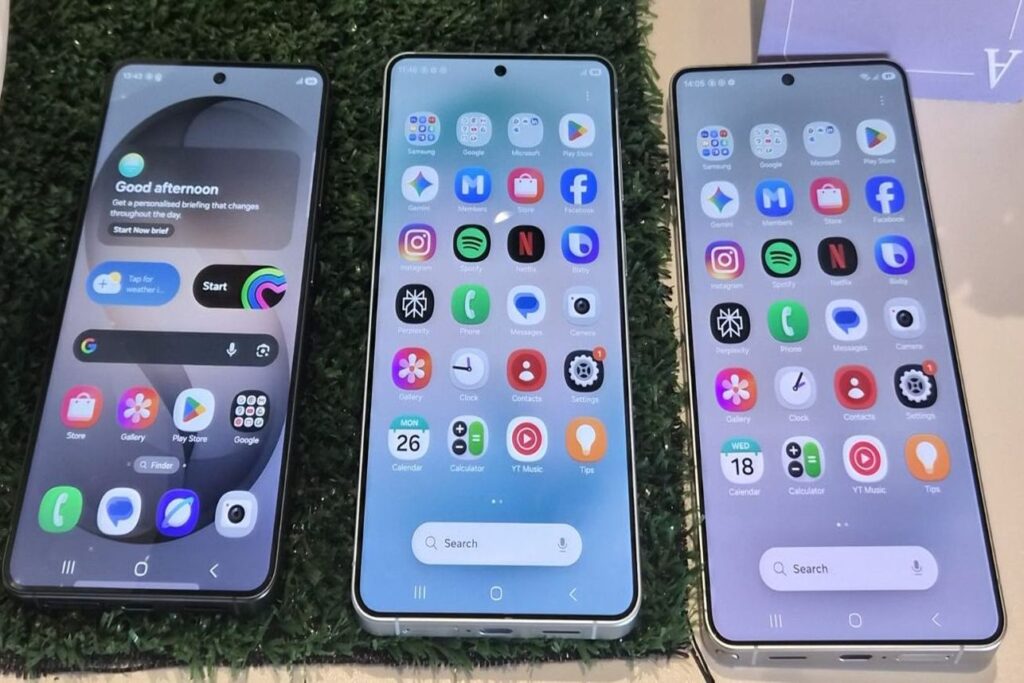
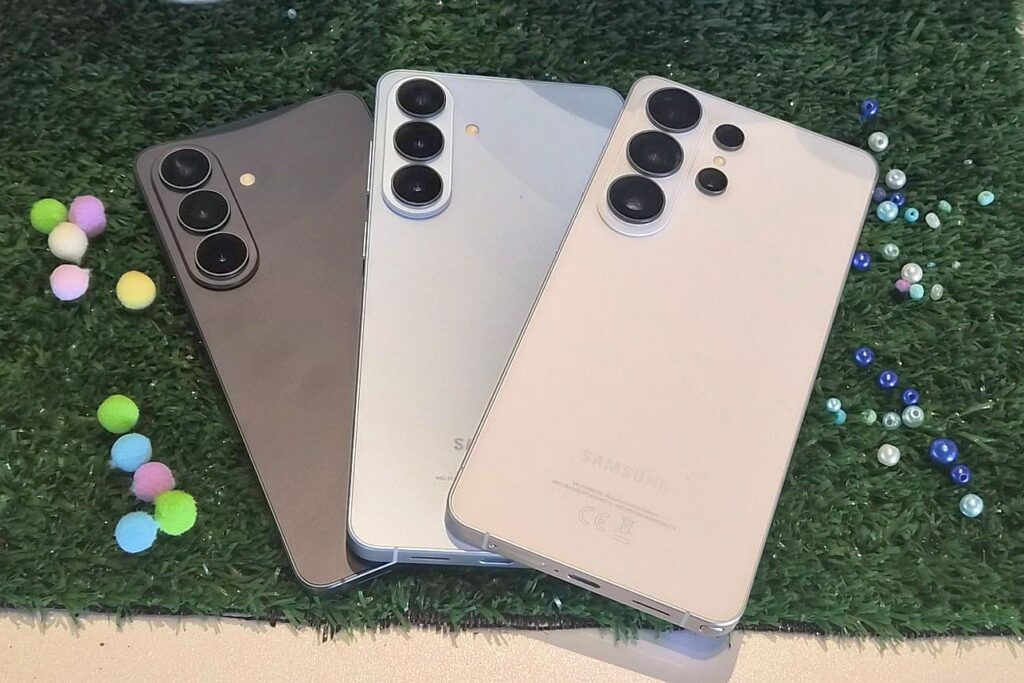
The S26 is slightly thinner than its predecessor (7.9 mm vs. 8.2 mm), lighter by four grams, features improved glass, and better heat dissipation. These are welcome improvements, but they do not fundamentally change the user experience. Even charging has only seen modest updates – the Ultra model supports 60W, while the Plus and standard models remain at 45W, the same as last year.
According to Samsung’s specifications, none of the main hardware components of the S26 Plus are a significant upgrade over the S25 Plus. No jump in screen resolution, no major battery increase, no camera revolution. Even aperture changes are subtle, not groundbreaking.
From Hardware Revolution to Computational Evolution
The S24 introduced Galaxy AI as a key feature. The S25 refined it, and the S26 treats AI not as an add-on but as a core foundation. Samsung reports over 800 million users leveraging Galaxy AI, justifying this strategic shift: less flashy hardware, more integrated intelligence.
The move to a 2nm Exynos 2600 processor is a prime example. On paper, it is an impressive engineering jump, but Samsung emphasizes AI efficiency rather than raw speed.
The improvements in the NPU, along with modest CPU and GPU upgrades, aim for a world where video editing, real-time transcription, smart image processing, and privacy-aware filtering become central to the experience.
Even the standout S26 Ultra feature – an active pixel-level privacy screen – is a hybrid solution. It combines display technology controlled by software with intelligent logic that selectively darkens notifications or apps, rather than a classic hardware innovation.
It is no longer a race for the most megapixels, but a race to develop the smartest algorithms.
Cameras: More Processing, Less Glass
Night mode photography in low-light conditions relies heavily on AI-based image processing. This is the direction Apple and Google have taken in recent years: the sensor matters, but the final result is determined by processing power.
Comparison with Xiaomi
Xiaomi continues to push hardware-first innovation: 120W fast charging, massive Leica co-engineered camera sensors, experimental silicon-carbon batteries, and even unique camera layouts like the 17 Ultra with manual focus and zoom. Xiaomi focuses on impressive numbers.
Samsung, in contrast, slows the pace of external hardware changes in the S series and prioritizes software depth. Instead of being the fastest charger, it focuses on the smartest device. Instead of the most wattage, it emphasizes privacy.
This is a strategic choice. Samsung is a mature manufacturer with a stable market share, so it does not need to impress every year. Xiaomi operates in a more competitive environment, so it continues to highlight hardware leaps to differentiate itself.
Is This Enough for Consumers?
The question is whether consumers spending $900–$1,500 on a new smartphone every two years seek software refinement or hardware excitement.
For years, the S series symbolized hardware innovation: curved displays, new glass, 200MP cameras, 10x zoom. Now, for those seeking a hardware “wow” factor, it is less apparent in the Plus and standard models. Even charging speed has plateaued compared to Chinese competitors, and battery capacity has not increased dramatically, relying instead on the efficiency of the 2nm chip.
Foldables: Where Hardware Innovation Lives
It is important to clarify: Samsung has not abandoned hardware innovation. It has shifted it to foldable devices. Recent Fold and Flip models show significant improvements: thinner builds, reinforced hinges, larger external screens, and advanced materials. Samsung focuses its engineering resources on the foldable segment, where it still leads the market.
In other words, those seeking hardware breakthroughs will find them in the foldable lineup. Buyers of classic S models receive stability, refinement, and more AI, but less dramatic hardware innovation.
What This Means for the S Series Future
Samsung may recognize that the classic smartphone has matured, making it difficult to reinvent a thin glass rectangle annually. Hardware improvements are limited, and development costs are high.
In contrast, software and AI potential remain almost limitless: automatic transcription, smart call handling, message summarization, one-touch photo editing – all can improve through software updates.
The business implication is clear: it is easier to retain users through a smart OS than to impress them yearly with cameras, bigger zoom, or thinner devices.
Between Numbers and Daily Reality
The challenge for Samsung will be to prove that these improvements are tangible. If users notice longer battery life, better night photography, and AI-assisted call management, the strategy will succeed.
If the differences remain mostly theoretical, and the experience feels similar to the S25, perceptions of innovation may suffer. Comparisons with Xiaomi are instructive: a two-year-old Xiaomi user may perceive a charging or sensor leap more clearly than someone experiencing CPU or NPU improvements alone.
This is a philosophical shift: Samsung no longer seeks to dazzle every year, but to stabilize, refine, and deepen. The S series becomes a hardware-mature platform, intended to serve AI and software evolution rather than dramatic hardware experiments.
It is reminiscent of the laptop market: fewer radical hardware jumps, more efficiency and optimization improvements.
Summary: Quiet Evolution in a Noisy World
The Galaxy S26 series signals a clear trend: innovation is moving from hardware to computation. Plus and standard models show minimal hardware upgrades compared to the previous generation. The main progress is in processors, AI, and privacy.
Compared with manufacturers like Xiaomi, which continue to advertise flashy hardware, Samsung chooses a more conservative but deeper approach, reserving hardware breakthroughs primarily for foldables.
Is this the right choice? User experience will tell. If AI becomes integral to the smartphone experience and energy efficiency is noticeable, the S series may be remembered as smartly evolved.
If users continue to measure innovation by watts, megapixels, and milliamp hours, Samsung may still need hardware upgrades in future models.
What about you? What do you look for when choosing a new smartphone? Hardware excitement, AI intelligence, battery life, or software refinement?