
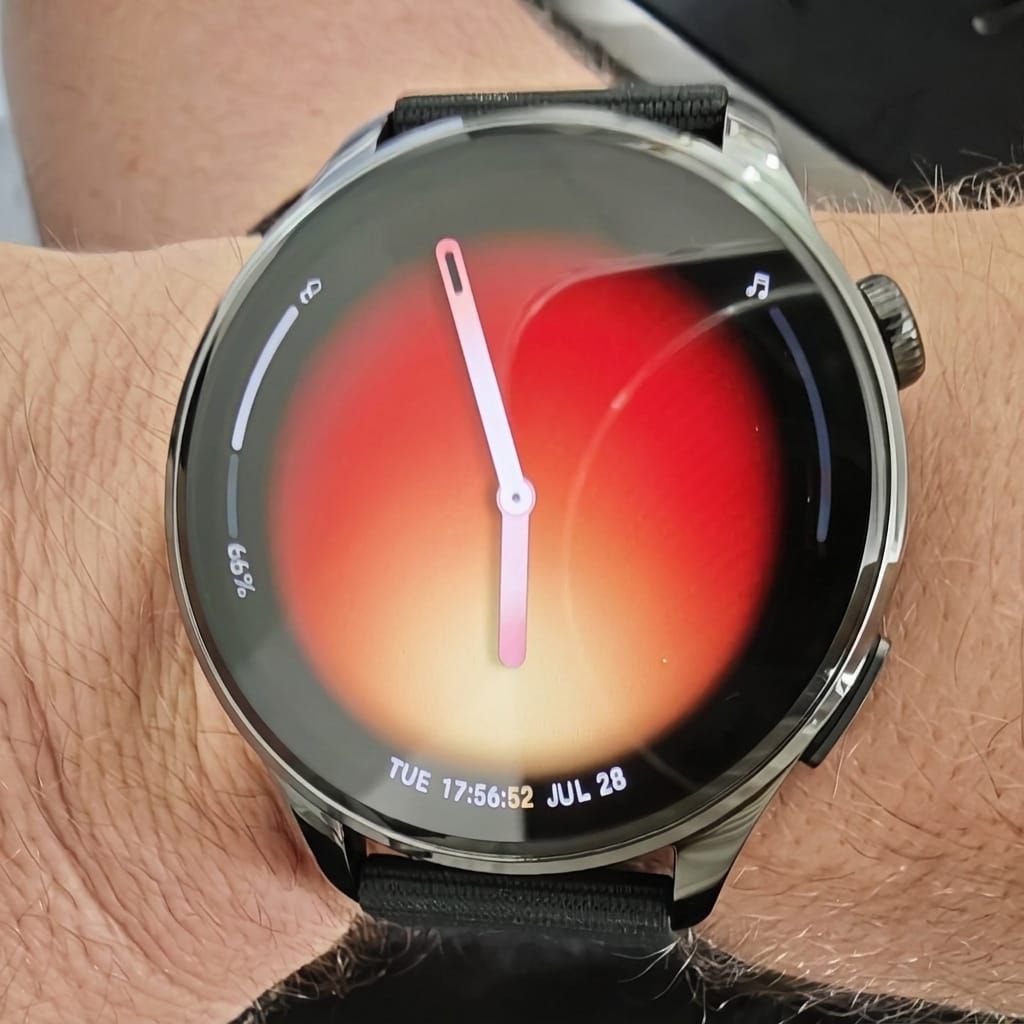
If you had told me just a few years ago that I’d seriously compare a Xiaomi smartwatch with Samsung’s flagship Galaxy Watch and Garmin’s Fenix series, I probably would have smiled politely and changed the subject. Back then, Xiaomi was known for delivering impressive value, but not necessarily for building premium wearables capable of competing with the biggest names in the industry. Time have changed and led me to perform the Xiaomi Watch 5 Review.
After spending several weeks wearing the Xiaomi Watch 5, using it as my primary smartwatch, taking phone calls, tracking daily activity, swimming, playing tennis, sleeping with it every night, and most importantly, wearing it side by side with both the Samsung Galaxy Watch 8 and the Garmin Fenix 8, I came away with one conclusion: This is no longer the affordable alternative.
It’s a legitimate flagship smartwatch, and in a few areas, it actually surprised me enough to outperform devices that cost considerably more.
Smartwatches Have Become More Than Fitness Trackers
The smartwatch market has changed dramatically over the last decade. What started as step counters and notification devices has evolved into an entirely different category. Today’s flagship smartwatches continuously monitor heart rate, blood oxygen saturation, sleep quality, stress levels, skin temperature, and even detect irregular heart rhythms.
Multiple clinical studies over the past few years have demonstrated that wearable devices can reliably identify atrial fibrillation, detect trends in physiological changes, and encourage earlier medical evaluation when abnormal patterns emerge.
No smartwatch should be considered a medical device capable of replacing a physician, however, many cardiologists now acknowledge that wearable data can provide valuable longitudinal information that wasn’t available just a few years ago.
That growing importance has transformed the competition: today manufacturers are no longer fighting over who builds the best fitness watch. They’re competing over who builds the smartwatch people never want to take off.
Samsung has Wear OS tightly integrated with Galaxy phones, Apple dominates the iPhone ecosystem and Garmin remains the benchmark for serious endurance athletes. But Xiaomi has quietly positioned itself somewhere in the middle, combining premium hardware, Google’s Wear OS, impressive battery life, and aggressive pricing.
The Xiaomi Watch 5 represents the company’s biggest step in that direction.
Design: Premium Without Trying Too Hard
One of the first things I noticed when I picked up the Xiaomi Watch 5 wasn’t the display or the software, but the build quality. For years, Xiaomi has been associated with delivering great value, but the Watch 5 doesn’t feel like a value product at all. The stainless-steel case, polished finish, sapphire crystal protection, and excellent overall fit and finish immediately place it in the premium category.
Unlike some sport watches that constantly remind you they’re built for the gym, the Xiaomi Watch 5 is understated. It looks equally comfortable with a workout shirt or a business suit, making it a smartwatch you’ll actually want to wear all day.
The watch features a traditional circular design with remarkably thin bezels that maximize the usable display area. Navigation is handled through a rotating digital crown that also functions as a push button, accompanied by a secondary programmable button. It’s a layout that feels familiar if you’ve used a Garmin or Apple Watch, and after only a day or two, operating the watch becomes second nature.
The rotating crown deserves special mention, since Samsung has invested heavily in touch gestures over the years, while Garmin relies primarily on physical buttons. Xiaomi takes a middle ground by combining a responsive touchscreen with a mechanical crown that allows you to scroll through menus without covering the display with your finger. It’s a small detail that makes a surprisingly large difference during everyday use.

Comfortable Enough to Forget It’s There
At approximately 56 grams, the Xiaomi Watch 5 sits in an interesting middle ground. It isn’t as feather-light as dedicated running watches like the Suunto Run reviewed here, but it never feels bulky or fatiguing. After a few hours, I often forgot I was wearing it, a characteristic that’s particularly important if you plan to use sleep tracking every night.
There is, however, one design choice that became noticeable during sports. One of the small but noticeable design differences between the Xiaomi Watch 5 and the Samsung Galaxy Watch 8 is the way the strap connects to the watch case. On the Xiaomi Watch 5, the attachment point where the strap meets the watch body is relatively narrow. Because the strap is connected through a smaller axis area, the watch has slightly more freedom to move on the wrist, and during sudden movements such as tennis swings, strength training, or swimming, it can occasionally shift or “dance” slightly before settling back into position.
The Samsung Galaxy Watch 8 takes a different approach, with a wider connection area that wraps around the sides of the watch case and provides more lateral support. As a result, the watch feels more anchored to the wrist during dynamic movements. This is not a major issue in everyday use, but for sports activities where consistent sensor contact with the skin is important, the difference is noticeable. A wider strap attachment mechanism could help Xiaomi improve stability in future generations..
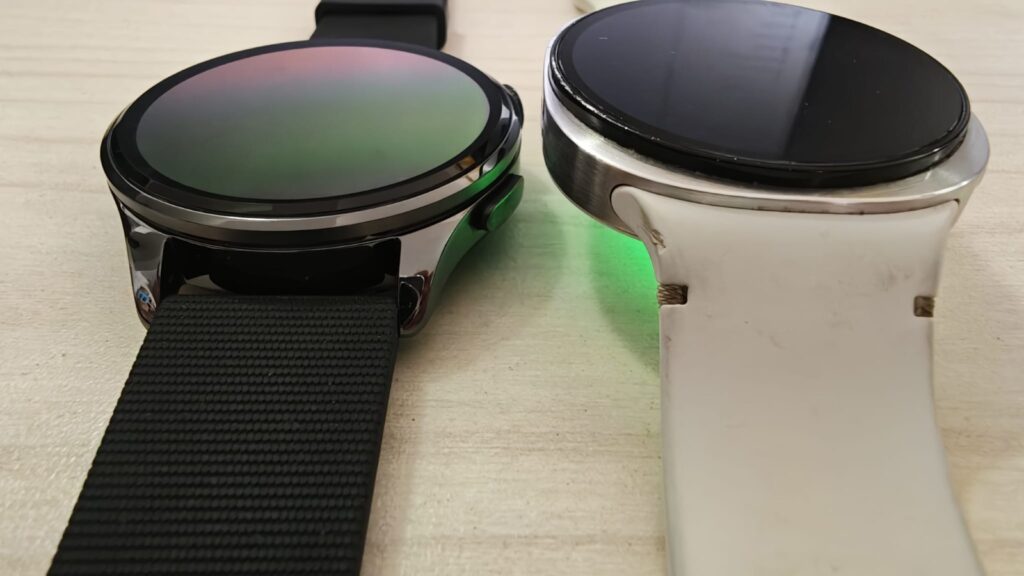
Fortunately, the sensor proved accurate enough that this rarely affected the recorded data, but it’s one of the few ergonomic details I’d like Xiaomi to refine in the next generation.

Display: One of the Best in Its Class
If there’s one component that immediately gives away whether a smartwatch feels premium or budget, it’s the display, and Xiaomi absolutely got this part right. The Watch 5 features a 1.54-inch LTPS AMOLED display with a resolution of 480 × 480 pixels, a 60 Hz refresh rate, and brightness reaching up to 1,500 nits. On paper, those specifications are impressive, and in real life, they’re even better.
Colors are rich, blacks are truly black, text is razor sharp, and visibility outdoors remained excellent even under direct sunlight. I never found myself shading the watch with my hand to read notifications or workout data. The sapphire crystal covering the display adds another premium touch. After weeks of daily use, including swimming sessions and tennis matches, I couldn’t find a single visible scratch.
Always-On Display support is available, allowing the watch to behave much more like a traditional wristwatch without sacrificing the convenience of modern smartwatch features.
Workout Data Readability: A Small Detail That Matters
One of the areas where I believe Xiaomi made a better design decision than Samsung is the way workout information is presented on the screen. During exercise, the ability to quickly read critical metrics such as heart rate, elapsed time, and training data is just as important as the accuracy of the sensors themselves. When you are running, swimming, cycling, or performing interval training, you usually only have a brief moment to glance at your wrist.
This is where the Xiaomi Watch 5 has an advantage over the Samsung Galaxy Watch 8. While Samsung offers an excellent display and allows users to adjust text size in many parts of the interface, the workout screen itself still presents some of the most important metrics in relatively small fonts.
The same limitation has appeared in previous generations of Galaxy Watch devices, and it remains noticeable, particularly for users who are no longer comfortable reading small text during physical activity. The issue is not the quality of Samsung’s display, which is excellent, but rather the way workout information is prioritized and sized.
In my comparison, both the Xiaomi Watch 5 and Garmin Fenix 8 displayed workout metrics in a larger and more immediately readable format. The difference is clearly visible when the three watches are placed side by side, with Xiaomi and Garmin making it easier to identify key information at a glance during movement..

Ironically, Xiaomi has the opposite problem elsewhere. Regular notifications, emails, and text messages still use fonts that are smaller than I’d like. Reading longer messages without reading glasses can be difficult, particularly for older users. It’s one of the few usability compromises in an otherwise excellent display experience. For me, however, readable workout data is ultimately more important than reading an email on my wrist.

Sports Performance: Xiaomi Watch 5 vs Garmin Fenix 8: A Real-World Test
Specifications can tell you a lot about a smartwatch, but they rarely share the whole story. A watch can have an impressive list of sensors, advanced algorithms, and a long list of supported sports modes, yet the real test begins when you start moving, sweating, and asking the device to keep up with your body.
As someone who wears sports smartwatches regularly, I have always believed that the most important measurement is not how many features a manufacturer can list on a website, but how the watch performs when you actually sweat during workout.
For this reason, I decided to test the Xiaomi Watch 5 in a way that would provide a meaningful comparison rather than just another standalone review. During my testing period, I wore it alongside the Samsung Galaxy Watch 8 and Garmin Fenix 8, Garmin’s flagship sports watch and one of the most respected devices among serious athletes.
The first activity I tested was tennis. The Xiaomi Watch 5 includes a wide range of workout modes, covering everything from running and cycling to swimming, strength training, and many specialized sports activities. Tennis is one of those activities where accurate tracking is not simple, because the wrist is constantly moving, the intensity changes rapidly, and the heart rate can rise and fall quickly depending on the rally.
During tennis sessions, the watch tracked my activity consistently, recording heart rate, exercise duration, intensity levels, and calorie expenditure. More importantly, it did not behave like a basic activity tracker that simply counts movement. The data reflected the actual effort involved in the game, including changes in intensity during longer and shorter points.

The more interesting test, however, was swimming, as it has always been one of the more challenging environments for optical heart-rate sensors. The watch has to maintain contact with the skin while the wrist moves continuously underwater, and unlike running, there is no simple way to adjust the position of the watch while exercising.

For this test, I wore the Xiaomi Watch 5 on one wrist and the Garmin Fenix 8 on the other. The goal was not to prove that one brand is universally better than another, but to see whether Xiaomi’s latest smartwatch could genuinely compete with a device that has built its reputation almost entirely around sports performance.
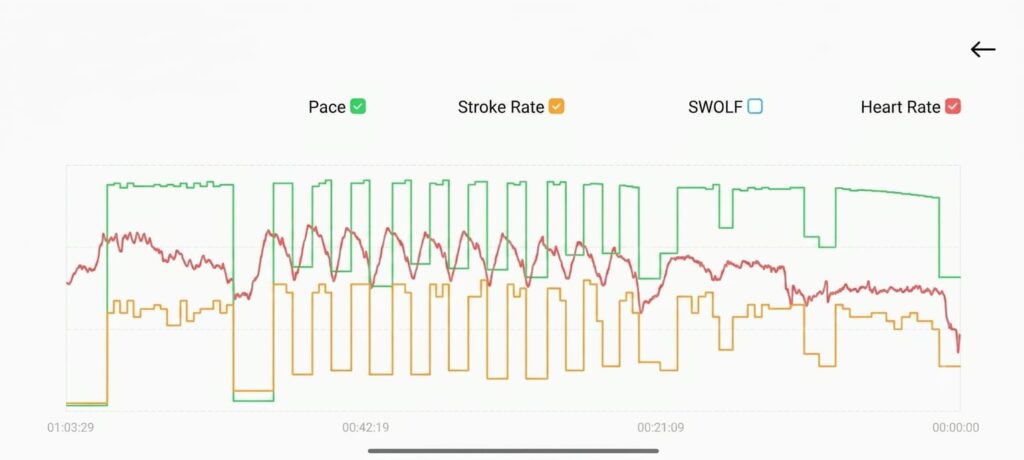
The results were surprisingly close. During regular swimming sessions, both watches provided similar measurements, including distance, pace, stroke information, and heart-rate trends. But the most interesting difference appeared during interval training. When performing repeated 100-meter intervals, moving between high-intensity effort and recovery periods, the Xiaomi Watch 5 impressed me with how quickly it responded to changes in heart rate. It tracked the peaks during intense efforts accurately, followed the recovery phases without significant delay, and in several intervals it appeared to react faster than the Garmin Fenix 8.
This was particularly noticeable because one of the common challenges with wrist-based heart-rate measurement is the delay before the sensor catches up with sudden changes in effort. During these intervals, the Xiaomi Watch 5 did not show the hesitation I expected from a smartwatch positioned below Garmin’s professional sports lineup.
To be clear, this does not mean the Xiaomi Watch 5 replaces the Garmin Fenix 8 for professional athletes. Garmin still offers a deeper training ecosystem, more advanced performance metrics, and years of experience among endurance athletes. However, the fact that a smartwatch positioned as a mainstream premium product was able to match, and in certain high-intensity moments even outperform, the flagship Garmin in heart-rate responsiveness is a significant achievement.
It also highlights how much smartwatch sensors and algorithms have improved in recent years. The gap between traditional sports watches and premium smartwatches is becoming much smaller.
Reading Data During Exercise: A Small Detail That Makes a Big Difference
One of the most overlooked aspects of a sports smartwatch is not what data it can measure, but whether you can actually read that information while moving. This is an area where the Xiaomi Watch 5 has a clear advantage over the Samsung Galaxy Watch 8.
Samsung’s latest smartwatch delivers an excellent display and a beautiful interface, but the size of workout metrics remains one of my biggest frustrations. Even after several generations, important information such as heart rate is often displayed in relatively small text during exercise. While Samsung allows users to increase font sizes in many parts of the interface, workout screens remain limited.
For users with perfect eyesight, this may not be an issue, but for many people over 50, especially during activities like swimming, running, or cycling where you only have a quick glance at the watch, readability becomes critical.
The Xiaomi Watch 5 handles this better. During workouts, the numbers are larger, clearer, and easier to read without slowing down. Whether checking heart rate during an interval, monitoring elapsed time, or looking at training information between sets, the information is presented in a way that feels designed for real-world use. It is a relatively small difference on a specification sheet, but during actual training it becomes one of the features you appreciate most.
Battery Life: The Advantage That Changes the Way You Use a Smartwatch
Battery life has always been one of the biggest compromises in the smartwatch world. The more intelligent a watch becomes, the more power it usually consumes. Bright displays, continuous heart-rate monitoring, GPS tracking, notifications, third-party apps, and advanced health sensors all demand energy. This is why many Wear OS watches, including Samsung’s Galaxy Watch series, still require frequent charging, often every day or every other day depending on usage.
This is also the reason many serious athletes continue choosing dedicated sports watches from Garmin, Suunto, and Polar. They are willing to sacrifice some smart features in exchange for a device that can operate for days or even weeks without being connected to a charger.
The Xiaomi Watch 5 takes a different approach. Inside the watch is a large 930 mAh battery, significantly larger than what is found in Galaxy Watch 8 which was also reviewed here. Xiaomi combines this large battery with a dual-processor architecture: Qualcomm’s Snapdragon W5+ Gen 1 handles demanding tasks, while the BES2800BP low-power processor takes care of simpler operations when maximum performance is unnecessary.
The result is exactly what smartwatch users have been asking for: a device that feels like a modern smartwatch without constantly reminding you about battery percentage. Xiaomi officially claims up to five days of typical usage, although real-world results naturally depend on settings, notifications, screen brightness, and workout frequency.
During my testing, which included daily notifications, health tracking, sleep monitoring, and regular sports sessions, the Xiaomi Watch 5 lasted around two and a half days. That is lower than Xiaomi’s official estimate, but still represents a meaningful advantage over many Wear OS competitors.
For me, the difference was noticeable. Instead of planning my day around charging the watch every night, I could simply wear it, train, sleep, and continue using it the next day without thinking about the battery.
The charging experience itself is straightforward. The watch uses a magnetic wireless charging puck that connects easily and securely. There are no exposed connectors, and placing the watch on the charger takes only a second. It is a small convenience that reinforces the feeling that this is a device designed for everyday life rather than something that constantly requires maintenance.
Everyday Smartwatch Experience: Xiaomi Finally Feels Like a Premium Device
A smartwatch is not only a fitness tool. In many ways, the features I use most often have nothing to do with exercise. Checking who is calling without reaching for my phone, reading incoming messages while my hands are occupied, controlling music, checking reminders, or answering a quick call directly from my wrist are the small conveniences that determine whether a smartwatch becomes part of your daily routine or ends up sitting in a drawer.
I have been using smartwatches for years, and those everyday interactions are often what separate a good smartwatch from a device that is simply packed with features.
The Xiaomi Watch 5 performs very well in this area. Notifications arrive quickly, navigation through menus is smooth, and the overall experience feels mature. The days when Xiaomi watches felt like affordable alternatives that clearly lagged behind premium competitors are gone.
When comparing the everyday experience directly with the Samsung Galaxy Watch 8, the difference is much smaller than many people would expect. Samsung still has advantages, especially for Galaxy smartphone owners who benefit from deeper integration with Samsung’s ecosystem. Features such as Samsung Health, Samsung Health Monitor, and Galaxy-specific services create a very polished experience.
However, Xiaomi has closed much of the gap. The ability to answer calls, interact with notifications, install applications, use Google services, and manage the watch through Wear OS creates a smartwatch experience that feels complete rather than compromised.
Phone Calls From the Watch: Good, But Not Perfect
One of the features I tested carefully was making and receiving phone calls directly from the Xiaomi Watch 5. The microphones performed very well. During calls, people on the other end reported that my voice was clear and understandable, which is often the more important part of a smartwatch conversation.
The built-in speaker, however, is where Xiaomi still has room for improvement. The volume is acceptable in quiet environments, such as an office or home, but it is not as powerful as I would have liked. In a noisy street, inside a car, or in a crowded environment, I often found myself bringing the watch closer to my ear to hear the conversation clearly.
I also tested switching calls between the watch and the smartphone. The idea is excellent: start a call on one device and seamlessly continue it on another. However, during my testing, the transition was not always consistent. Sometimes the audio remained routed through the phone instead of moving immediately to the watch. This feels more like a software refinement issue than a hardware limitation, and it is the type of problem that Xiaomi could potentially address through future firmware updates.
The important point is that the basic experience is already there: The Xiaomi Watch 5 behaves like a true smartwatch, not simply a fitness tracker with notifications added as an afterthought.
Xiaomi Watch 5 vs Samsung Galaxy Watch 8 vs Garmin Fenix 8: Who Should Buy It?
After spending time with the Xiaomi Watch 5 and comparing it directly with two very different competitors, the Samsung Galaxy Watch 8 and Garmin Fenix 8, the most interesting conclusion is not that Xiaomi built a better watch than everyone else.
The reality is more nuanced. Each company has created a smartwatch with a different philosophy. Samsung has spent years refining the experience of a connected smartwatch. The Galaxy Watch 8 is designed for people who want their phone experience to extend naturally to their wrist. Its strongest advantage is not necessarily one individual feature, but the way all parts of the ecosystem work together, especially for Galaxy smartphone users.
Garmin, on the other hand, remains focused on athletes who view their watch primarily as a training instrument. The Fenix 8 is built around endurance, advanced training metrics, navigation, recovery analysis, and a sports ecosystem that has earned the trust of professional and serious amateur athletes worldwide.
Xiaomi entered this competition from a different direction: it took the technologies that users expect from premium smartwatches: Wear OS, AMOLED displays, advanced sensors, GPS, health tracking, and smart features, and combined them into a product that is priced much more aggressively than many of its direct competitors.
The surprising part is that the compromises are much smaller than expected.
Where Xiaomi Watch 5 Has a Clear Advantage
The first advantage is battery life. This is the area where Xiaomi genuinely changes the daily experience. While Samsung Galaxy Watch users often plan charging around their routine, the Xiaomi Watch 5 provides enough endurance that charging becomes something you think about occasionally rather than every day.
For people who track sleep, this difference matters. A watch that needs to be removed every evening cannot measure sleep. A watch that lasts multiple days becomes something you can truly wear continuously.
The second advantage is workout readability. After testing both watches, I found that Xiaomi’s larger workout fonts provide a better experience during physical activity. This is especially noticeable for users who need clearer information while moving.
Samsung’s displays are excellent, but the limitation of smaller workout metrics remains a frustrating point. Being able to customize text size in menus does not solve the problem when the critical information during exercise remains difficult to read.
The third advantage is simplicity. Having everything managed through one Mi Fitness application is a more straightforward experience than Samsung’s multi-application approach. Samsung’s system works, but Xiaomi’s approach is easier for users who simply want their watch to function without learning how the ecosystem is divided.
Where Samsung Galaxy Watch 8 Still Leads
Despite Xiaomi’s impressive progress, Samsung maintains several important advantages. The Galaxy Watch 8 benefits from years of ecosystem development. Samsung Health is one of the most mature health platforms available, and Galaxy phone users receive deeper integration that Xiaomi cannot fully match.
Samsung’s medical-related features, including ECG, blood pressure monitoring in supported markets, and advanced health reporting, are also more established. The company has also built stronger relationships with healthcare providers and has a more developed ecosystem around health data.
For someone already invested in Samsung devices, the Galaxy Watch 8 remains a very compelling choice. The experience feels extremely polished.
Where Garmin Fenix 8 Remains Different
The Garmin comparison is perhaps the most interesting because it represents two completely different philosophies. The Xiaomi Watch 5 is a smartwatch that happens to be excellent for sports, while the Garmin Fenix 8 is a sports watch that has become smarter.
For endurance athletes, ultra runners, serious cyclists, and people who spend significant time training outdoors, Garmin still offers unmatched depth. Training readiness, recovery metrics, advanced navigation, battery management, and years of accumulated sports expertise remain major advantages.
However, my testing showed something important: the assumption that Garmin automatically delivers superior heart-rate tracking in every scenario is no longer accurate. During my swimming interval tests, the Xiaomi Watch 5 followed rapid heart-rate changes extremely well and, in some intervals, responded faster than the Fenix 8. It captured peaks accurately and adapted quickly when intensity changed.
That does not make Xiaomi the new Garmin, but it proves that the gap in sensor performance has become dramatically smaller. A few years ago, this comparison would not have been realistic, but today, it absolutely is.
Final Verdict: Is Xiaomi Watch 5 Changing the Smartwatch Market?
My answer is yes but probably not in the way many people expect. Xiaomi is not replacing Apple, Samsung, or Garmin overnight. Each of those companies has strengths that come from years of ecosystem development. What Xiaomi has done is something arguably more important. It has removed many of the reasons consumers previously had to automatically choose the more expensive option.
The Xiaomi Watch 5 offers a premium build, excellent AMOLED display, sapphire protection, powerful hardware, Wear OS, advanced health tracking, accurate sports measurements, impressive battery life, and a genuinely enjoyable everyday smartwatch experience. Most importantly, it no longer feels like a compromise.
After comparing it directly with the Samsung Galaxy Watch 8 and Garmin Fenix 8, I found that Xiaomi is not simply competing on price. It is competing on experience. For users who want a smartwatch that can handle workouts, monitor health trends, display notifications, answer calls, run apps, and last longer between charges, the Xiaomi Watch 5 deserves serious consideration.
Samsung still offers the more mature ecosystem, Garmin remains the choice for dedicated athletes, but Xiaomi has achieved something that seemed unlikely only a few years ago: it has entered the premium smartwatch conversation, and once a company reaches that point, the entire market has to pay attention.