
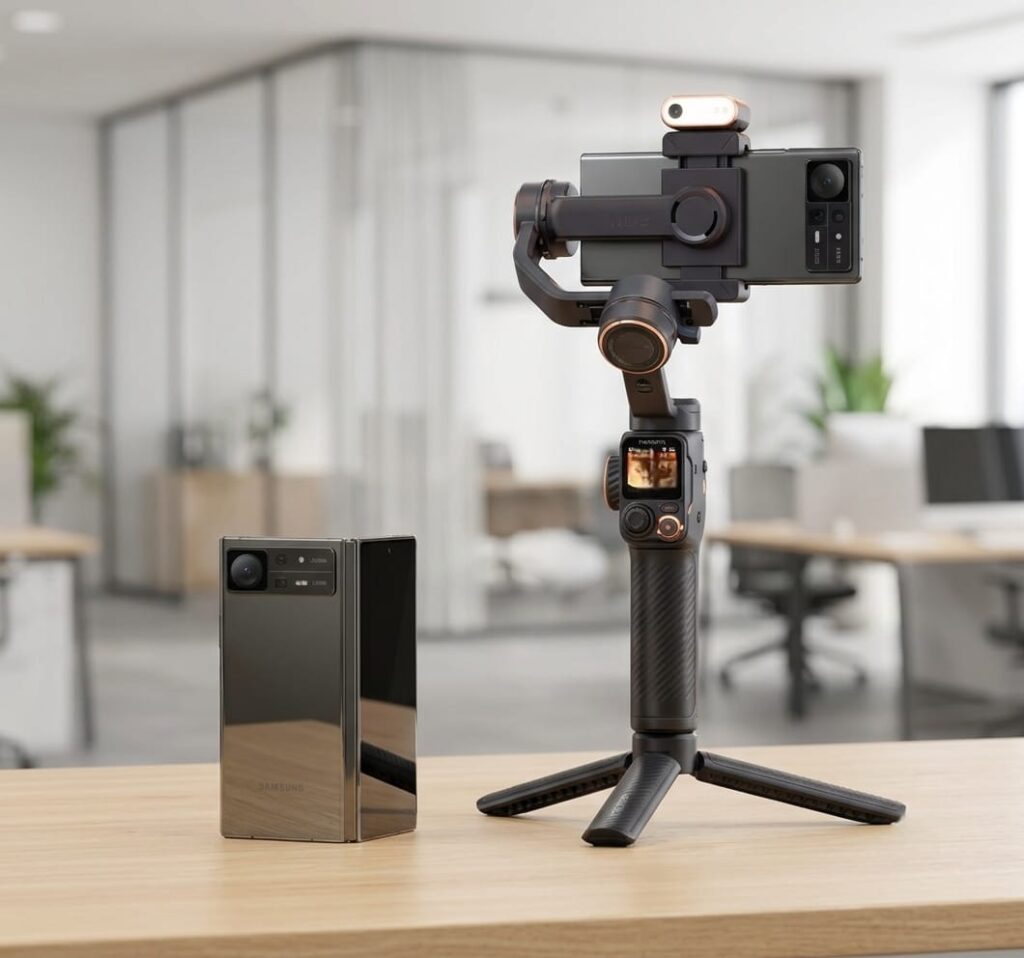
Hohem iSteady M7 review: a complete look at one of the most advanced smartphone gimbals available today. Smartphones have transformed the way we create video, allowing YouTube creators, Instagram users, TikTok personalities, and everyday users to produce high-quality content almost anywhere.
However, even the best smartphone cameras still face one major challenge: stability. While modern phones offer impressive built-in stabilization, smooth cinematic movements, tracking shots, and professional-looking footage often require a dedicated gimbal.
Over the years, I have tested many smartphone gimbals. Some were simple and affordable, while others attempted to compete with professional filming solutions. Most delivered decent stabilization, but they often required compromises in areas such as battery life, subject tracking, or everyday usability.
The new generation of smartphone gimbals is no longer focused only on removing camera shake. Instead, manufacturers are trying to turn these devices into complete filming assistants. That is exactly the direction Hohem has taken with the iSteady M7.
Hohem designed the iSteady M7 to be much more than a traditional smartphone stabilizer. It combines three-axis stabilization, independent AI tracking that does not rely on a smartphone app, built-in RGB and CCT lighting, a detachable live-view touchscreen remote, an integrated extension rod, reverse charging for your phone, and support for smartphones and accessories weighing up to 500 grams.
On paper, that sounds like a lot of features packed into a single device. After spending time testing it, the question is whether these additions actually make a difference in real-world shooting.
Who Is Hohem?
Hohem is a Chinese company specializing in intelligent stabilization systems for cameras and smartphones. The company has been active for more than a decade and focuses on developing gimbals for photographers, vloggers, content creators, and professional users.
In recent years, Hohem has placed a stronger emphasis on AI-powered features, especially independent subject tracking technology that does not require a dedicated smartphone application. This approach has become one of the company’s main differentiators in the competitive smartphone gimbal market.
Hohem positions the iSteady M7 as its flagship smartphone gimbal, combining advanced stabilization technology with a wider set of tools for serious content creators.
What’s in the Box?
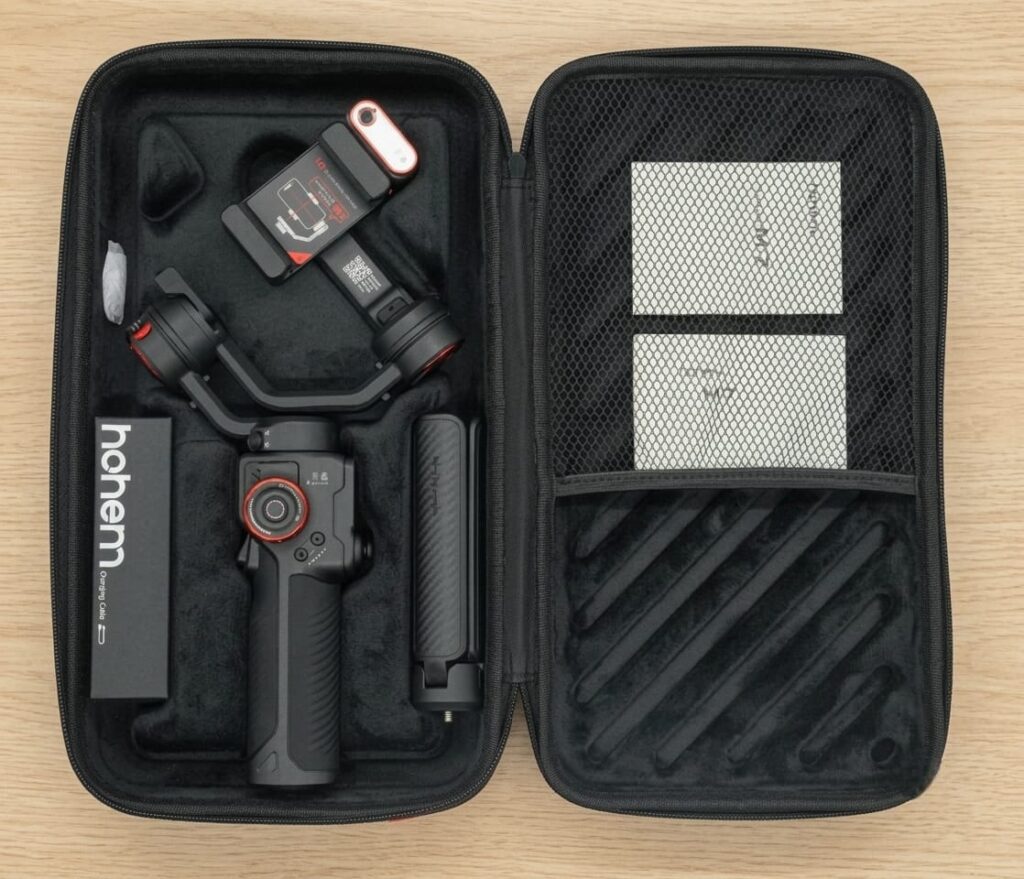
From the moment I opened the package, it was clear that the iSteady M7 was not designed as just another basic smartphone gimbal. Everything comes neatly organized inside a high-quality hard carrying case, which immediately adds confidence for anyone who regularly travels with filming equipment. If you have ever carried camera accessories in a backpack, you know that protecting delicate equipment during transportation is not something to ignore.
Inside the package, you get:
- Hohem iSteady M7 gimbal
- Magnetic AI Tracker module
- Built-in RGB + CCT lighting module
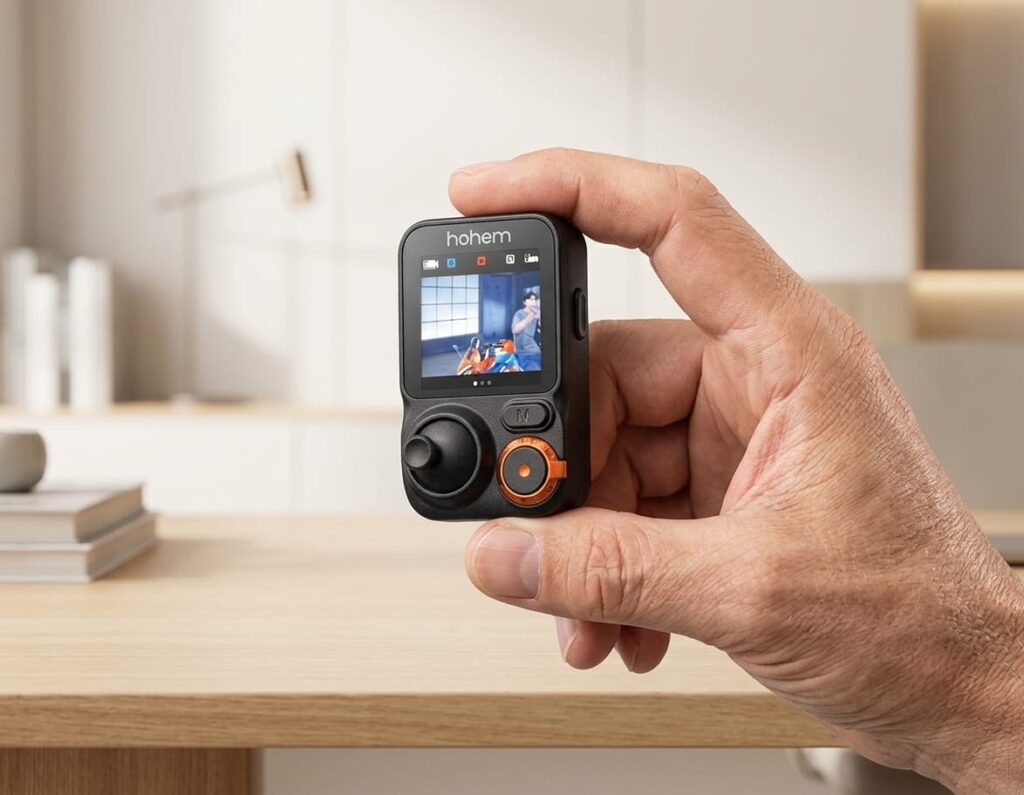
- Detachable smart remote with a 1.4-inch color touchscreen
- Desktop tripod
- Hard carrying case
- USB-C charging cables
- User manual
The accessories included in the box feel premium. There is no cheap plastic feeling, loose connection, or sense that these are afterthought additions. Everything feels designed for repeated use rather than occasional experimentation.
Design: Bigger, But for a Reason
The first thing you notice about the Hohem iSteady M7 is that it is larger than many smartphone gimbals currently available. This is not a device designed to disappear into a jacket pocket. However, after holding it for the first time, the reason becomes obvious.
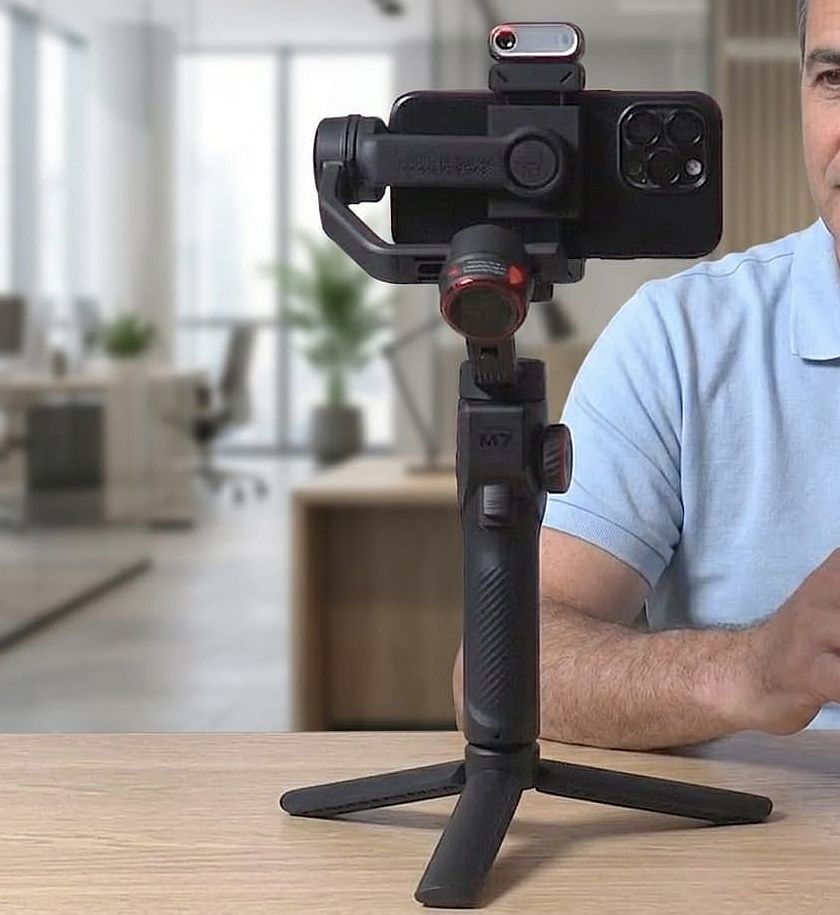
The handle is thick, ergonomic, and comfortable, and even after extended filming sessions, I did not experience unusual hand fatigue. The construction feels solid, with a rigid body and separate Axis Locks on the arms that prevent unwanted movement during storage or transportation.
The smartphone clamp is also noticeably wider than many competing models. It supports devices up to 90mm wide and 12.5mm thick, which allowed me to mount even large smartphones like Samsung Galaxy S26 Ultra, without difficulty.
The 500-gram payload capacity is one of the strongest specifications in the smartphone gimbal category. This means the M7 can handle not only large flagship smartphones but also devices with additional accessories such as external microphones, lenses, or other attachments.
Built-In Extension Rod: One of the Most Useful Upgrades
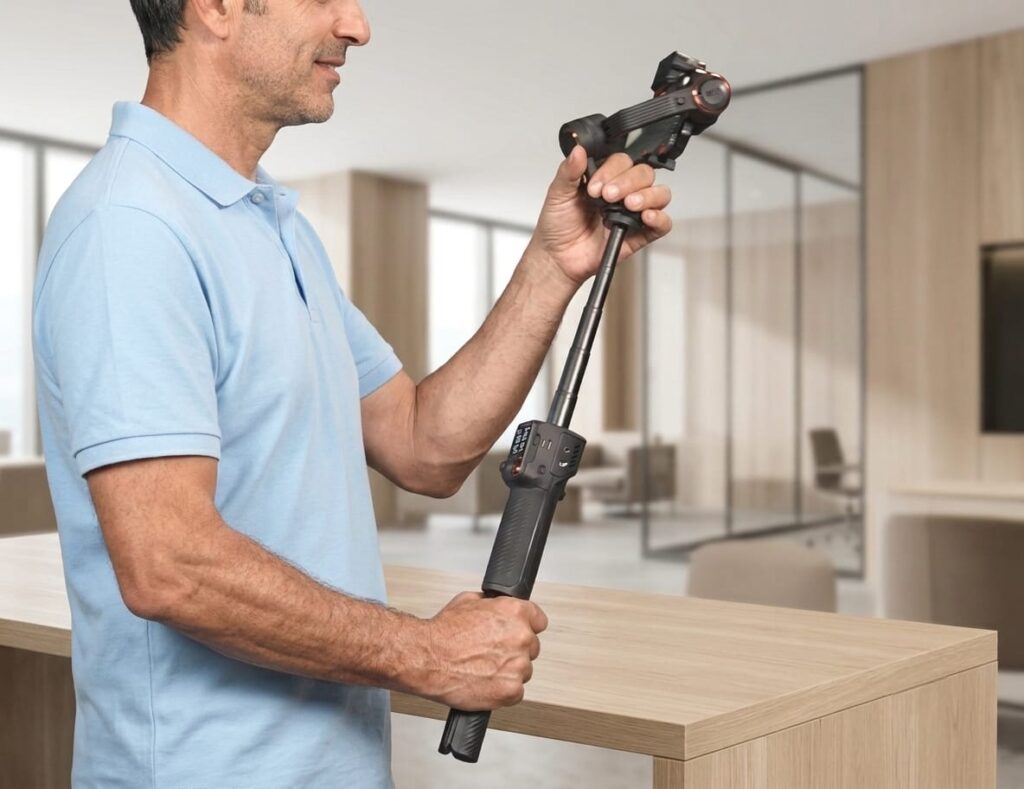
One of my favorite features of the iSteady M7 is the integrated extension rod. With a simple press, a telescopic arm extends from the handle, reaching 193mm in length. This small addition significantly changes the shooting possibilities. During testing, I found myself using it repeatedly for wider selfies, elevated shots above crowds, pet videos from lower angles, and creative perspectives that would normally require a separate extension accessory.
Instead of carrying another piece of equipment, the functionality is already built into the gimbal itself.
AI Tracker: The Real Star of the iSteady M7
In my opinion, the most impressive addition to the Hohem iSteady M7 is the AI Tracker module. This small magnetic accessory attaches above the smartphone clamp and includes its own built-in camera.
Unlike many tracking systems that depend on a dedicated smartphone application, the AI Tracker works independently. It can follow a selected subject while the phone continues recording through its own camera app.
During testing, I walked around the room, moved outdoors, changed angles, and recorded myself while walking. The system managed to keep me centered in the frame with impressive consistency. Even when I temporarily moved out of view and returned, it was usually able to detect and track me again.
This independence is a major advantage. It means creators are not forced into a specific app ecosystem and can continue using the camera applications they already prefer. For solo creators, vloggers, online instructors, and anyone who regularly records themselves without another person behind the camera, this feature changes the entire experience.
Detachable Screen Remote: A Built-In Camera Operator
Another feature that immediately stands out is the detachable remote control. This wireless unit includes a 1.4-inch color touchscreen and works from a distance of approximately 10 meters. However, it is not just a simple control panel. The screen also displays a live preview from the gimbal’s tracking system.
In practice, this means you get a small remote monitor that allows you to select tracking subjects, control the gimbal, and frame your shot without physically touching the smartphone.
For solo filming, this is extremely useful. Instead of walking back and forth between the camera and the phone every time you need to adjust something, most important controls are available directly from the remote.
RGB and CCT Lighting: More Than Just Decoration
The built-in lighting system is another area where Hohem tried to add practical value rather than simply include a flashy feature. The lighting module combines full RGB colors with CCT adjustment between 2700K and 6500K. CCT, or Correlated Color Temperature, refers to controlling the color temperature of white light. Instead of being limited to a single white tone, users can adjust between:
- Warm light around 2700K
- Neutral white around 4000–5000K
- Cooler daylight-style lighting up to approximately 6500K
The advantage is flexibility. If you are filming in a warm indoor environment, you can match the lighting accordingly. In a room with neutral white lighting, you can adjust the balance. Outdoors during daylight, a cooler setting may create a more natural appearance.
The built-in light obviously cannot replace a professional lighting panel, but as an integrated feature inside a smartphone gimbal, it is a very useful addition.
360° Infinite Spin: Creating More Cinematic Shots
One feature that separates the iSteady M7 from simpler smartphone gimbals is its ability to perform unlimited 360-degree rotation. In practical terms, this allows creators to produce more dynamic movements, including cinematic spinning transitions and creative camera effects that are impossible with gimbals that have limited rotation ranges.
After experimenting with this feature for only a short time, I was able to create shots that felt much closer to professional production techniques rather than typical handheld smartphone footage. For casual users it may be something they use occasionally, but for creators who enjoy experimenting with visual storytelling, it opens additional possibilities.
Real-World Experience: More Than Just Stabilization
After spending significant time with it, I understood that Hohem created the iSteady M7 for people who regularly create content. This Hohem iSteady M7 review shows why the gimbal stands out in a crowded smartphone stabilization market, especially for creators who need more than basic shake reduction. The iSteady 9.0 stabilization system performs extremely well. I walked, ran, climbed stairs, and filmed while moving, and the results remained impressively stable.
Hohem placed the joystick, side control wheel, and thumb buttons exactly where they should be. The controls feel accurate and comfortable during extended shooting sessions. I particularly liked adjusting focus, motor movement, and lighting directly from the handle without constantly touching the smartphone.
This is where the M7 separates itself from basic smartphone gimbals. It does not only remove unwanted movement. It gives the creator more control over the entire filming process.
Battery Life and Reverse Charging
Hohem states that the internal battery can provide up to 12 hours of operation under ideal conditions. In real-world use, results depend heavily on which features are active. With AI tracking enabled, I reached approximately eight hours of usage. When combining tracking with the built-in lighting system, battery life dropped to around three to four hours of continuous filming. That difference is expected because both features require additional power.
Another feature that surprised me was reverse charging. The gimbal can provide power to the smartphone, which can be extremely useful during long shooting sessions. When recording outside for several hours, battery management becomes one of the biggest challenges. Having the ability to recharge the phone directly from the gimbal can be the difference between completing a project and searching for a power outlet.
Not Everything Is Perfect
The Hohem iSteady M7 delivers impressive performance, but it will not suit every user. Its larger size compared with compact smartphone gimbals means it is not the ideal choice for users who want something that disappears into a jacket pocket or small bag. The detachable touchscreen remote is a great idea, although I found the interface slightly less responsive than I expected at times.
These are relatively minor complaints, especially considering the amount of functionality packed into the device, but they are worth mentioning.
Who shouldn’t buy it?
Compared with smaller smartphone gimbals, the iSteady M7 clearly prioritizes functionality over portability. Users who only need basic stabilization for occasional videos may find simpler models more suitable. However, creators who regularly film alone will appreciate the additional control, tracking capabilities, and built-in tools.
Hohem iSteady M7 Review: Final Verdict
After extended use of the Hohem iSteady M7, it is clear that this is not just another smartphone stabilizer. It is a complete content creation tool designed to give smartphone users capabilities that previously required additional equipment or another person behind the camera.
The combination of independent AI tracking, detachable screen remote, RGB and CCT lighting, built-in extension rod, reverse charging, high payload capacity, and excellent stabilization transforms it from a simple accessory into a serious filming companion.
For people who regularly create content, record vlogs, produce reviews, document events, or simply want better control over their personal videos, the iSteady M7 offers a combination of features that is difficult to find in a single product.
It is not the cheapest smartphone gimbal available, but it provides a complete solution rather than just basic stabilization. After spending considerable time with it, I found it difficult to return to a simpler gimbal.
Pros
✓ Excellent three-axis stabilization performance
✓ Independent AI tracking without relying on a smartphone app
✓ Detachable remote with live preview screen
✓ Built-in RGB and CCT lighting
✓ Integrated extension rod
✓ Supports smartphones and accessories up to 500g
✓ 360° infinite rotation capability
✓ Reverse charging for smartphones
✓ Premium carrying case included
✓ Strong option for vloggers and content creators
Cons
✗ Larger and heavier than compact smartphone gimbals
✗ Not ideal for users looking for maximum portability
✗ Remote screen could feel more responsive
✗ Lighting cannot replace a dedicated professional panel
✗ Higher price compared with basic smartphone gimbals