
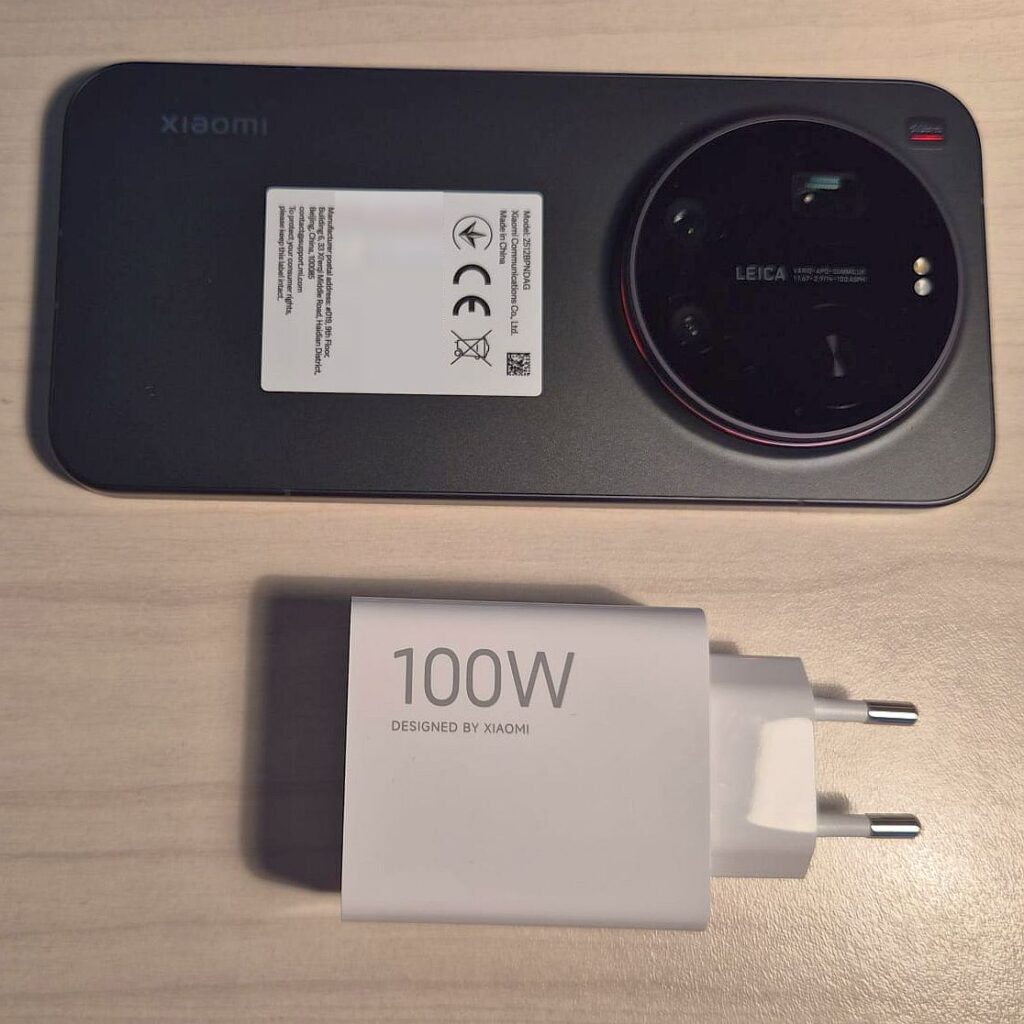
The Xiaomi 17 Ultra review demonstrates that the camera is the main event, and the camera phone around it almost feels like the extra. After several days of shooting with it, I started wondering whether Xiaomi had built a remarkable camera that happens to be a smartphone, rather than another flagship phone with an impressive camera attached to it.
A little more than a decade ago, anyone who wanted genuinely high-quality photographs had to own a dedicated camera. There was no real shortcut. You could choose a large DSLR with interchangeable lenses or a smaller mirrorless camera, but either way, serious photography meant carrying equipment, changing lenses, learning how to work with manual settings and, quite often, returning home before the real work even began, because the photographs still had to be transferred to a computer and edited. A smartphone was there mainly to make calls, send messages and capture the occasional snapshot that would serve as a reminder of a moment, but expecting it to produce a photograph you would actually be proud to print or publish would have seemed unrealistic.
That world has changed almost completely. Today, an enormous number of the photographs we see on social media, news websites and even in professional editorial work are taken with smartphones, while the once ubiquitous compact camera has all but disappeared from everyday life and become a niche product.
The technology inside smartphones has advanced at an extraordinary pace, yet most manufacturers like samsung with the S26 Ultra which was reviewed here, still treat the camera as one feature among many. A new sensor appears here, an additional lens there, image processing gets a little more sophisticated and another AI feature is added to the camera application, but the basic approach often remains the same, with the camera being just another component in a phone designed around everything else.
Xiaomi has taken a different route with its Ultra series. Instead of building a smartphone that happens to take very good photographs, the company has increasingly built a camera system that happens to contain a very powerful smartphone. It may sound like a marketing line, but the philosophy is visible in the physical design of the device, the size of its sensors, the complexity of its optics and the collaboration with Leica, which is involved in the imaging system rather than simply lending its name to the back of the phone.
The Xiaomi 15 Ultra was the first model that really convinced me this approach could work. It came close enough to a dedicated camera in terms of the images it could produce that I found myself wanting to see what Xiaomi would do with its successor, the Xiaomi 17 Ultra.
Over the past few days, I have been using the 16GB RAM and 512GB storage configuration, taking it on trips and using it for landscape photography, wildlife, close-ups, night photography and the everyday photographs that most people normally take with a smartphone. Before long, I realized that the more interesting question was no longer whether the Xiaomi 17 Ultra could take good smartphone photographs, but whether it could make me leave my dedicated camera at home. Quite often, it did.
Xiaomi Is No Longer Android’s Underdog
When Xiaomi was founded in 2010, it was easy to think of the company as another Chinese manufacturer whose main advantage was price. Its early reputation was built around smartphones that offered an unusually strong specification sheet for the money, attracting consumers who wanted as much hardware as possible without paying flagship prices. That is no longer Xiaomi’s identity.
Over the years, the company has invested heavily in research and development and built partnerships with some of the most respected names in their respective fields. The collaboration with Leica is probably the clearest example of that transformation.
The Leica partnership is not simply about putting a prestigious logo on the back of the phone. Leica’s involvement extends into the optical and imaging experience, including lens development, color profiles and the way the camera is intended to render a scene. The goal is to create photographs that have more of the character associated with a dedicated camera, rather than relying on software to make an otherwise ordinary smartphone photograph look impressive after the shutter has already been pressed.
That distinction is important because it represents a different philosophy from the one that dominates much of smartphone photography today. Apple has built an enormous advantage around its ecosystem, while Samsung continues to push computational photography and AI-assisted editing, but Xiaomi is putting considerable emphasis on what happens before the software gets involved, starting with the sensor, optics and the amount of information captured at the moment of exposure. That philosophy is exactly what the Xiaomi 17 Ultra is about.
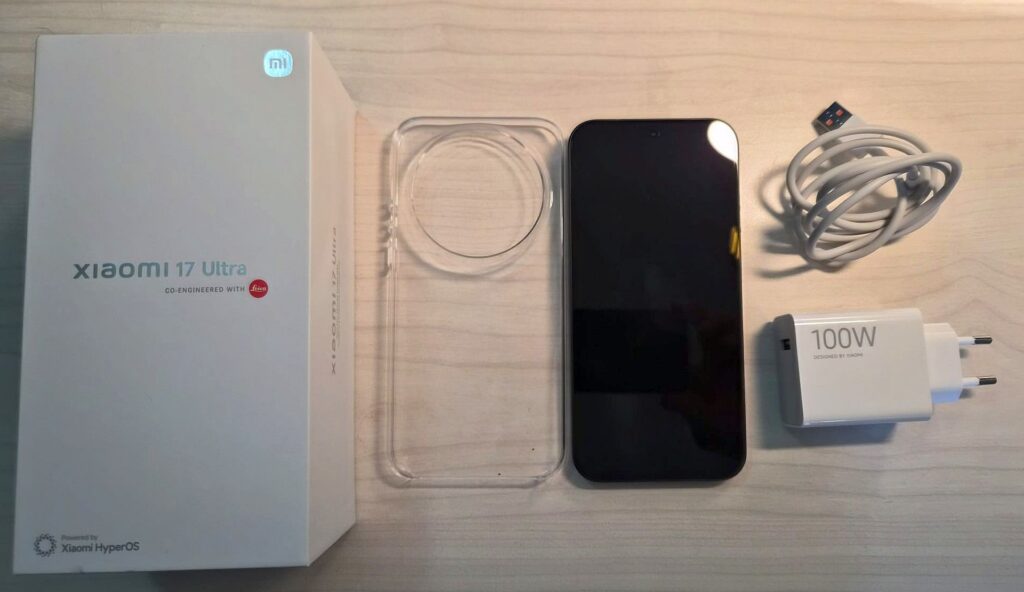
What’s in the Box
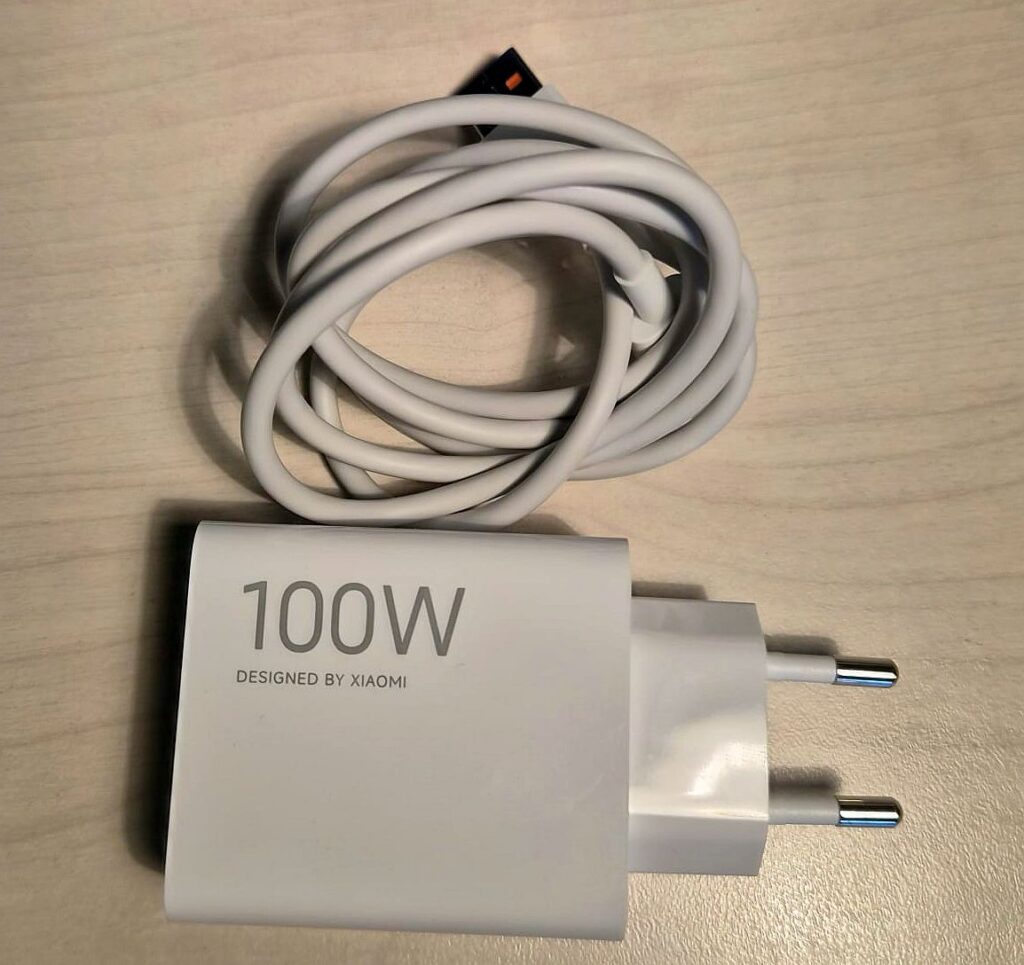
Xiaomi has been unusually generous with the standard package, at least in the version I received for testing. Alongside the phone itself, the box includes a powerful 100W charging adapter, a USB Type-C cable, a transparent protective case and a screen protector that is already applied to the display, so the phone can be protected from the moment you take it out of the box.
The included accessories are a welcome change from the increasingly common flagship approach of making buyers purchase basic necessities separately. The transparent case protects the rear of the phone while leaving its distinctive camera design visible, while the pre-applied screen protector provides immediate protection without requiring you to align and install one yourself. The 100W charger is particularly useful for a phone designed around heavy photography and video use, although charging speeds and included accessories can vary between regional versions.
A Design You Can’t Ignore
You may love the Xiaomi 17 Ultra’s design, or think Xiaomi has gone too far, but there is no mistaking it for an ordinary smartphone. At a time when premium phones have become increasingly similar, with thin rectangular bodies, flat displays and camera modules that manufacturers try to blend into the rear design, Xiaomi has gone in the opposite direction and made the camera the visual center of the device.
The large circular camera module occupies a significant portion of the rear panel, although it feels more polished and mature than the system used on the Xiaomi 15 Ultra. The black version I received for testing has a smooth finish that does not feel slippery and does not attract fingerprints in the same way a glossy glass back would.
The aluminum frame adds to the feeling of rigidity, and I did not encounter creaks, flex or any obvious compromise in construction. The camera assembly feels integrated into the body rather than simply attached to it, which is important on a phone whose entire identity revolves around photography.
There is still a trade-off, however. This is not a small phone, and although Xiaomi describes the 17 Ultra as its thinnest and lightest Ultra to date, it is still a substantial piece of hardware. The phone measures 8.29mm thick, and Xiaomi’s current specifications place its weight at roughly 218 grams.
If your priority is a phone that disappears inside the pocket of a pair of jeans, this is not it. After a few days, though, I stopped seeing the size as a design flaw and started seeing it as the inevitable result of Xiaomi’s priorities. Larger sensors, more sophisticated optics, a large battery and a serious camera system all require physical space.
That means buying the Xiaomi 17 Ultra involves a conscious decision to sacrifice some compactness in exchange for photographic hardware that can deliver results other phones may struggle to reproduce.
Controls and Handling
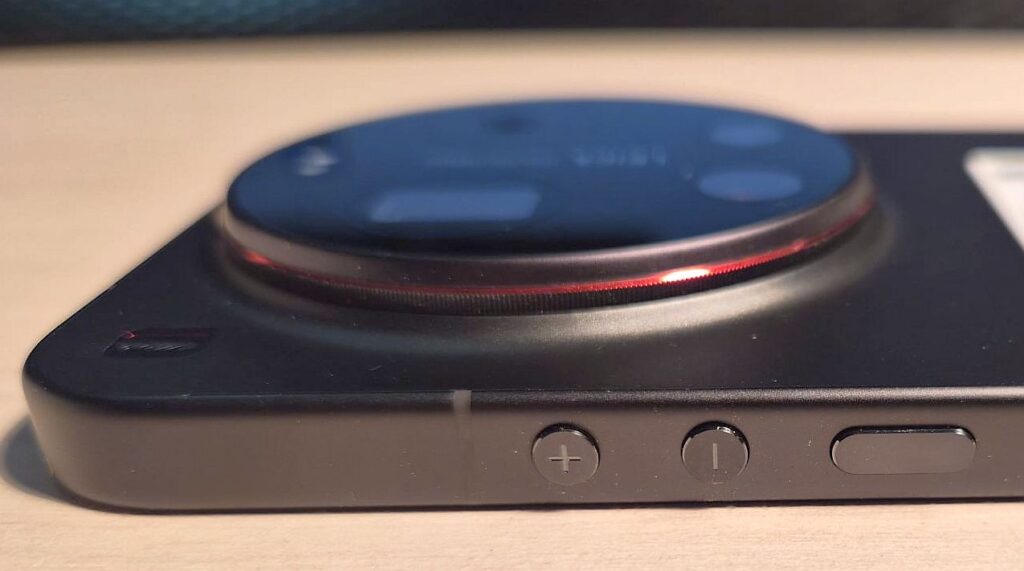
Xiaomi has retained a familiar control layout, with the power and volume buttons positioned on the right side of the phone at a comfortable height for the thumb. The buttons have a firm, precise click, and that becomes more important than it sounds when you are holding the phone as a camera and trying to capture a moment without looking away from your subject.
The overall handling also benefits from the way Xiaomi has worked the camera module into the rear of the device. It remains large, but the company has tried to make it less intrusive, and after several days of use I found myself adapting to it surprisingly quickly.
Display
Even before opening the camera application, the display makes an impression. The Xiaomi 17 Ultra uses a 6.9-inch HyperRGB display with a 2608 × 1200 resolution and an adaptive refresh rate ranging from 1Hz to 120Hz. Xiaomi also rates it for up to 3,500 nits of peak brightness in supported scenarios, with HDR10+ and Dolby Vision support. Those numbers are impressive, but what matters more is how the display looks when you actually use it.
Colors are rich without becoming excessive, whites look clean, blacks are deep and fine detail is excellent. That last point becomes particularly useful when reviewing photographs because the screen lets you inspect small details immediately after shooting, rather than waiting until you return to a computer.
Outdoor visibility is also excellent. Even when photographing under direct sunlight, I rarely found myself looking for shade simply to see what was on the screen, which is exactly the kind of thing that becomes important when a smartphone is being used as a serious camera rather than just another device for browsing and messaging.
Anyone who edits photographs on the phone will also appreciate how convincing the display looks when reviewing a finished image. It does not seem determined to make every photograph brighter, more saturated or more dramatic than the scene actually was.
Performance
There was a time when smartphone reviews could be reduced to benchmark scores. The higher the number, the faster the phone, and therefore the better the phone was supposed to be. That has become much less useful as flagship processors have become so powerful that almost every premium device feels fast. What matters now is how that performance translates into actual use.
The Xiaomi 17 Ultra is extremely responsive, with the Snapdragon 8 Elite Gen 5 Mobile Platform and the 16GB of RAM in my review configuration providing enough headroom that I rarely encountered a task capable of slowing it down. Apps open quickly, switching between applications is immediate, large photographs can be edited without frustrating pauses and video exports are faster than what I have become accustomed to on many other phones. Xiaomi lists the 17 Ultra with 16GB RAM and up to 1TB of UFS 4.1 storage in supported configurations.
The place where that performance matters most, however, is the camera. Moving between focal lengths is quick, burst shooting does not leave the phone struggling to process what it has just captured, night photography activates without a noticeable delay and even high-resolution photographs do not make the device feel as though it needs to stop and catch its breath.
That is the kind of performance I expect from a flagship. It should not merely produce an impressive score in a benchmark application. It should make the device feel as though there are very few limits to what you can ask it to do.
Photography: This Is the Real Story
If there is one reason I asked to review the Xiaomi 17 Ultra, it is sitting on the back of the phone. Xiaomi has put much of its ambition into the camera system, and that is where the biggest difference between this phone and its rivals becomes apparent. While some manufacturers rely heavily on software and AI to compensate for the limitations of small sensors and compact optics, Xiaomi has continued to invest in the physical side of photography, starting with large sensors and sophisticated lenses and then building computational photography on top of that foundation.
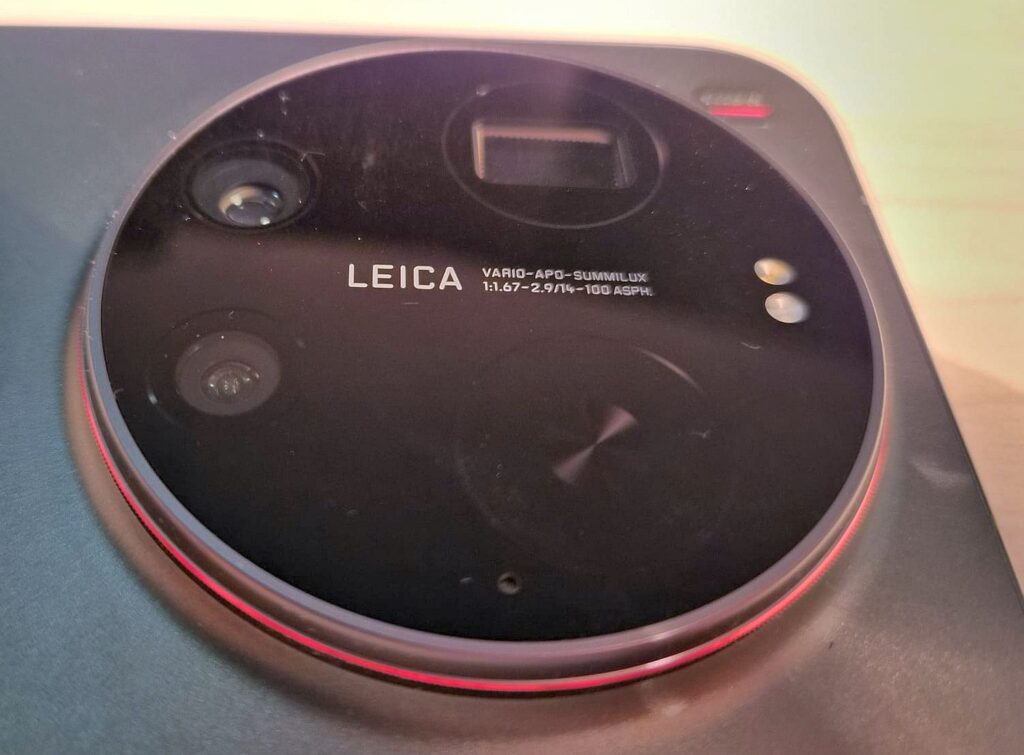
The main camera is a 50MP unit built around a one-inch Light Fusion 1050L sensor with a 23mm equivalent focal length and optical image stabilization. The headline-grabbing telephoto camera is a 200MP Leica unit with a 1/1.4-inch sensor and a continuous mechanical optical zoom covering 75mm to 100mm. The third camera is a 50MP Leica ultra-wide with a 14mm equivalent focal length and a 115-degree field of view.
The telephoto system is particularly interesting because the 75–100mm range is not simply a digital crop between two fixed lenses. Xiaomi uses a mechanical optical zoom system with three lens groups, allowing the focal length to move continuously between 75mm and 100mm, while the company says the system can deliver optical-quality zoom out to the equivalent of 400mm.
The lenses also receive specialized coatings designed to reduce reflections and optical artifacts, while the telephoto uses Leica APO optical design intended to reduce color fringing and preserve more natural rendering at longer focal lengths.
That is all impressive on paper, but specifications are not what ultimately matters. The question is whether the technology produces photographs that are actually better when you are standing outside with the phone in your hand.
The Photography Experience
There are plenty of smartphones that take beautiful photographs. Almost every flagship launched today can produce an image that looks excellent on Instagram, Facebook or a phone screen, but the differences become much easier to see when you open the same photograph on a large monitor, crop into it or start shooting in difficult light.
This is where the Xiaomi 17 Ultra’s approach starts to make sense. Rather than simply chasing the largest possible megapixel number, Xiaomi has improved the parts of the system that actually determine how the photograph is created, from the lens and sensor to the image processor working behind the scenes.
I spent time shooting during the day in a variety of locations, and the first thing that consistently caught my attention was detail. Leaves looked like individual leaves rather than a green texture, natural stone retained its surface character and buildings in the distance remained convincing when I enlarged the photographs later.
Just as important, I did not see the kind of aggressive sharpening that can make a smartphone photograph look spectacular at first glance but strangely artificial when you zoom into it. The photographs often looked as though they had been captured through a genuinely good lens rather than processed until the software decided they were sharp enough.
Color is another area where Xiaomi’s approach becomes obvious. There are smartphones that seem determined to make every photograph look like a frame from a cartoon, with grass glowing green, skies turning unnaturally blue and human skin receiving a layer of digital makeup. The Xiaomi 17 Ultra generally takes a more restrained approach.
The phone offers two Leica color profiles, Leica Authentic and Leica Vibrant. Leica Authentic is the more subdued option, with restrained color and contrast that give photographs a more traditional camera-like character, while Leica Vibrant adds more life without pushing the image into the exaggerated territory that some computational photography systems produce.
I found myself preferring Leica Authentic. It felt closer to the way the scene actually looked, and more importantly, closer to the way I remembered it.
Taking Photos
If I had to choose the area where I noticed the biggest improvement compared with the Xiaomi 15 Ultra, dynamic range would be one of my first answers. Shooting toward a bright sun has been one of the hardest challenges for smartphone cameras for years. Either the sky turns completely white or the subject in front of the camera becomes a dark silhouette, because the camera simply cannot preserve enough information at both ends of the exposure. The Xiaomi 17 Ultra handles this situation remarkably well.

I repeatedly found myself looking at the finished image and wondering how the camera had managed to retain so much information in both the highlights and the shadows. The answer is partly the large one-inch sensor and partly Xiaomi’s LOFIC HDR technology, which is designed to preserve more information across difficult lighting conditions. Xiaomi specifically highlights the 1-inch Light Fusion 1050L sensor and LOFIC HDR as major parts of the camera system.
The result is a photograph that remains much more convincing when the subject is standing against bright sunlight or when the scene contains a mixture of very bright and very dark areas.
Close-up photography was another pleasant surprise. It is easy to assume that macro photography is simply about making a small object look sharp, but there is considerably more to it than that. The camera needs to focus accurately, the depth of field needs to make sense, the transition into background blur needs to feel natural and autofocus needs to lock onto the subject without spending several seconds searching.
The Xiaomi 17 Ultra did all of that very well. I photographed a wristwatch from a very short distance and could clearly see tiny grooves in the metal, lettering around the bezel and reflections in the glass that are usually difficult to reproduce with a smartphone.

I then moved to a plant leaf and could see its finest veins and surface texture, including details that I have often found difficult to capture convincingly with smartphone cameras. The moment that surprised me most, however, came when I photographed the skin on my hand. Smartphone processing can easily make skin look either unnaturally smooth or excessively detailed, but here the small wrinkles, hairs and natural surface texture remained remarkably convincing.
Wildlife photography also worked extremely well, which is important because animals are among the least cooperative subjects you can photograph. I took pictures of parrots and dogs, and the Xiaomi 17 Ultra’s autofocus was exceptionally quick. Once it locked onto an animal, it generally stayed with the subject even when it moved toward the camera.

Night photography is another area where Xiaomi has been pushing hard for several generations. Night mode used to be one of the weakest areas of smartphone photography, but it has become one of the biggest battlegrounds among flagship manufacturers.
The Xiaomi 17 Ultra can produce remarkably rich photographs in very dark environments without simply turning night into an artificial version of daytime. The photographs still look like they were taken at night, bright light sources do not become enormous glowing blobs and the sky remains dark instead of being lifted into an unnatural gray.
The telephoto camera is arguably one of the strongest reasons for choosing the 17 Ultra over a more conventional flagship. At moderate zoom levels, the photographs often look as though no zoom was applied at all. Detail remains high, the transition between focal lengths is smooth and the mechanical 75–100mm optical zoom gives the phone a level of flexibility that is unusual even among premium smartphones. Xiaomi says the telephoto system can provide optical-quality zoom up to 400mm, with the 200MP sensor helping maintain detail as the focal length increases.
At longer zoom levels, the results continued to surprise me. I photographed distant buildings, animals and people standing tens of meters away, and the results were consistently better than I would normally expect from a smartphone.

Video Recording
There is a saying in photography that almost any camera can produce a good still image, while genuinely good video is much harder. Video places demands on almost every part of the system at once. The sensor has to perform continuously, stabilization needs to work while you move, autofocus has to remain reliable, exposure has to adapt in real time and the microphones need to produce usable sound.
The Xiaomi 17 Ultra does more than produce attractive video. It provides a set of tools that makes it a genuinely useful device for people who shoot travel content, family events or other material where carrying a dedicated camera is not always practical.
The first thing I noticed was stabilization. Walking while recording produced footage that remained controlled, without the sharp movements that can make smartphone video uncomfortable to watch. The phone can record 8K video at 30fps, while 4K recording is available at 30, 60 and 120fps, including Dolby Vision in supported modes. Xiaomi also lists Log recording, ACES support, Movie mode, Pro video, Night Video, ShootSteady stabilization and a four-microphone array among the phone’s video features.
I also spent time shooting in 8K because, on paper, the number always sounds impressive. In practice, the important question is what you can actually do with that additional information. The 8K footage stores considerably more detail and looks excellent on a large screen, but I suspect most people will still prefer 4K for everyday shooting because the practical improvement is not always enough to justify the larger files and greater storage demands.
For someone who actually intends to edit video, however, having 8K available can be useful, particularly when the footage is going to be cropped or reframed later.
Interface
One of the biggest changes in smartphones over the past few years has been the way artificial intelligence has moved from a marketing feature into the operating system itself. A modern flagship is no longer expected merely to be fast. It is expected to understand what the user is doing, help with editing and automate tasks that once required dedicated software.
HyperOS 3 reflects that shift. Xiaomi has integrated AI capabilities into the broader user experience, including tools that can identify objects in photographs, provide information about what is being viewed, remove unwanted elements from backgrounds, enhance older images and perform editing tasks that previously would have required a computer.
The more interesting part, however, is what happens when AI and photography work together. A conventional camera receives light and records an image. A modern smartphone increasingly attempts to understand what is in front of it. The Xiaomi 17 Ultra can recognize people and animals, track subjects and adjust its processing accordingly. Xiaomi’s ProFocus system includes motion tracking, eye tracking and motion capture capabilities.
That kind of computational photography is most useful when it complements good hardware rather than trying to disguise its limitations, and the 17 Ultra benefits from having a substantial optical system underneath the software.
Battery and Charging: Finally, No Need to Chase a Charger
Photography can be brutal on battery life. Large sensors, image processing, AI features and high-resolution video all consume power, particularly when you spend an entire day outside taking hundreds of photographs. The Xiaomi 17 Ultra addresses that problem with a 6,000mAh battery, which Xiaomi lists as its typical capacity. The company also rates the phone for 100W wired HyperCharge and 50W wireless charging.
During intensive photography, I was able to get through a full day without having to stop and search for an outlet. Under more conventional use, combining messages, calls, browsing and occasional photography, the phone can comfortably go beyond a full day, with actual endurance naturally depending on how heavily the camera, display and mobile connection are being used.
Charging is particularly important when a phone is being used as a camera because there are few things more frustrating than finding a perfect subject and discovering that the battery is nearly empty.
The 100W wired charging system is designed to make short charging sessions genuinely useful, which is particularly valuable for someone who spends the entire day traveling or shooting outdoors. One important point for North American readers is that included chargers and charging specifications can vary by market, so the exact package should be checked against the regional version being purchased.
Audio Quality
When talking about a smartphone aimed at photographers and content creators, it is easy to focus entirely on the cameras, but anyone who has filmed a serious video knows that bad audio can ruin footage that otherwise looks excellent. The Xiaomi 17 Ultra’s stereo speaker system is surprisingly powerful for a phone of this size, with more depth than I expected from such a thin device.
Call quality is also strong, and the noise reduction system does a good job of dealing with busy surroundings. My voice remained clear even when I was speaking in places where other people were talking nearby.
For anyone using the phone as an all-in-one content creation device, that combination of cameras, microphones and speakers makes the 17 Ultra more useful than a simple camera specification sheet would suggest.
Against the Competition
Directly comparing flagship smartphones is difficult because there is rarely one device that is better than every competitor in every category. The Xiaomi 17 Ultra, however, feels like a camera before it feels like a phone. The large sensors, Leica collaboration, natural color rendering, sophisticated telephoto system and emphasis on optics rather than excessive computational effects give it a personality that is different from the typical flagship.
An enthusiast who enjoys photographing nature, family, pets, travel and everyday life is likely to appreciate the 17 Ultra more than someone whose priority is a small, light and unobtrusive phone. This is not a device that tries to disappear into your pocket. It wants you to notice what the camera can do.
That is particularly interesting at a time when premium smartphones have become remarkably similar. Most now have excellent displays, extremely powerful processors and camera systems capable of producing good photographs in almost any situation.
Xiaomi has chosen a much narrower target. It has built a phone for people who care about photography and want the camera in their pocket to replace a dedicated camera as often as possible.
That becomes obvious from the moment you pick it up. The weight, thickness and large camera module are not simply the result of poor design decisions. They are the result of different priorities. Xiaomi could have made a thinner phone with a smaller camera system, but it chose to use that physical space for larger sensors, more sophisticated optics and a more ambitious imaging system.
After several days, the camera bump stopped feeling like an inconvenience. Instead, it became a reminder that there was a very specific piece of hardware in my pocket, one that had been designed around photography first.
The phone knows exactly what it wants to be: exceptionally good at taking pictures.
The Xiaomi 17 Ultra is not perfect, though, and pretending otherwise would miss part of what makes the device interesting. It is still a large phone, so anyone who prefers compact devices will feel the difference in a pocket. There is no microSD expansion, although the 512GB configuration I tested should be more than enough for most users, particularly because the phone is also available with 1TB of storage in supported markets. Xiaomi’s official specifications list 16GB RAM with 512GB or 1TB storage for the Ultra.
The other issue is price. Xiaomi may have built its reputation by offering aggressive value, but the Ultra line no longer plays that game. The 17 Ultra sits firmly in the premium flagship category and is designed to compete on capability rather than affordability.
For a North American audience, there is another practical consideration worth mentioning: the Xiaomi 17 Ultra is sold through different regional channels and configurations, and availability, warranty coverage, network compatibility, pricing and included accessories can vary considerably by market. The review unit and its pricing should therefore not be presented as a direct indication of U.S. retail pricing.
Conclusion
The Xiaomi 17 Ultra is not designed for someone who simply wants the smallest or lightest smartphone. It is designed for the person who stops during a hike to photograph the landscape, pulls out the phone to capture the family, follows a dog or a bird with the telephoto camera, takes pictures after sunset and would rather leave the dedicated camera bag at home.
The Leica collaboration, large sensors, sophisticated optics, 200MP continuous telephoto system, strong zoom performance, AI capabilities and powerful hardware make the Xiaomi 17 Ultra one of the most ambitious camera phones I have used.
It still does not replace a professional interchangeable-lens camera in every situation. A dedicated camera still offers advantages in areas such as lens selection, ergonomics, sensor formats and the degree of manual control available to an experienced photographer. I also do not think that is the right question to ask.
The better question is how close a smartphone can get to a dedicated camera when the entire system has to fit inside one device that you can carry with you everywhere. The Xiaomi 17 Ultra gets remarkably close.
For photography enthusiasts, content creators, travelers, wildlife shooters and anyone who wants the strongest photographic experience they can get from a smartphone, the Xiaomi 17 Ultra is an unusually compelling device. It does not merely take good pictures for a phone. In the right conditions, it produces photographs good enough that you may stop thinking about the device in your hand as a smartphone at all.
North American pricing, availability, warranty coverage, network compatibility and included accessories may differ from the version reviewed here.