
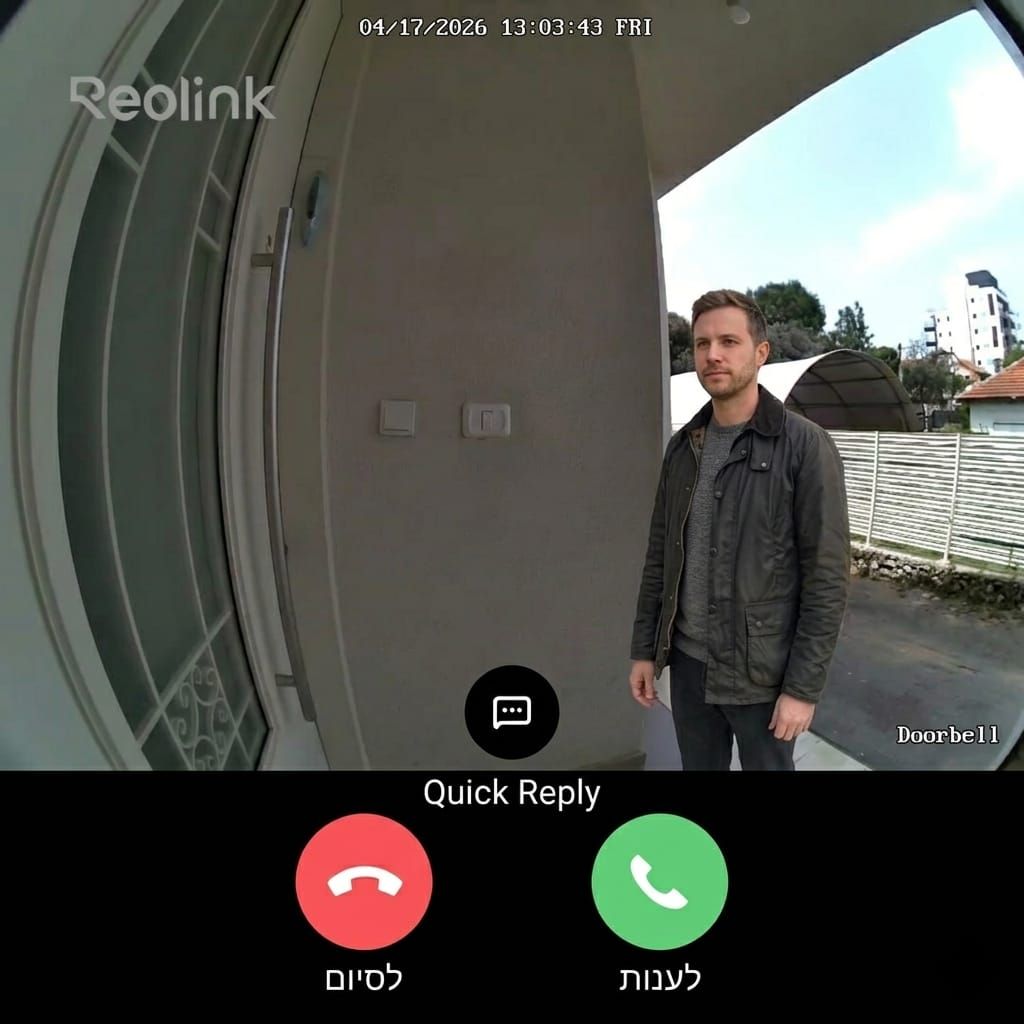
A no-subscription smart doorbell with strong performance, flexible connectivity, and real peace of mind.
Let’s be honest: the traditional doorbell hasn’t been just a simple chime for quite some time. The days of a harsh metallic buzz and a generic red button are long behind us. In today’s world, especially over the past decade, the way we view home entry points has fundamentally changed. Whether it’s the front door of an apartment or the gate of a private house, this threshold is now seen as the last line of privacy before someone enters our personal space.
And really, who hasn’t told their kids at least once, “Don’t open the door for anyone until I get back”? Today’s social and security realities have made it clear that not every visitor has innocent intentions. Sometimes, a simple press of the doorbell is used to check whether anyone is home, or whether the house is empty and potentially vulnerable. In fact, quite a few break-ins begin exactly this way, with what appears to be an innocent ring. It’s no surprise, then, that the doorbell industry has undergone a major transformation, especially with the integration of cameras. The next step in that evolution was connecting those cameras to the internet, allowing homeowners to receive real-time alerts, see who’s at the door, and even communicate remotely via smartphone, sometimes without the visitor realizing the homeowner isn’t actually there.
Reolink
Reolink has become a prominent player in the home security camera space, building a strong reputation over the years. The company is known for delivering products that are easy to install and use, without compromising on image quality or reliability.
One of Reolink’s most notable advantages is its business model. Unlike many competitors, such as Amazon’s Ring or Google’s Nest, which require a monthly subscription even for basic functionality, Reolink does not. This significantly lowers the total cost of ownership over time.
In addition, its interface is widely regarded as clean and intuitive, making it accessible even for non-technical users. Installation is often completed in under an hour, and the ability to connect multiple devices under one unified system adds to its appeal. Support for both wireless and wired connections provides valuable flexibility. Altogether, these factors reinforce the sense that Reolink is focused on user needs, not just selling hardware.
Video Doorbell Wi-Fi
I chose to review this product as a follow-up to the Argus 3 Ultra camera with solar panel, which I previously reviewed here.
Together, these products represent what I consider one of the most practical and popular combinations for apartment dwellers and homeowners alike.
Design
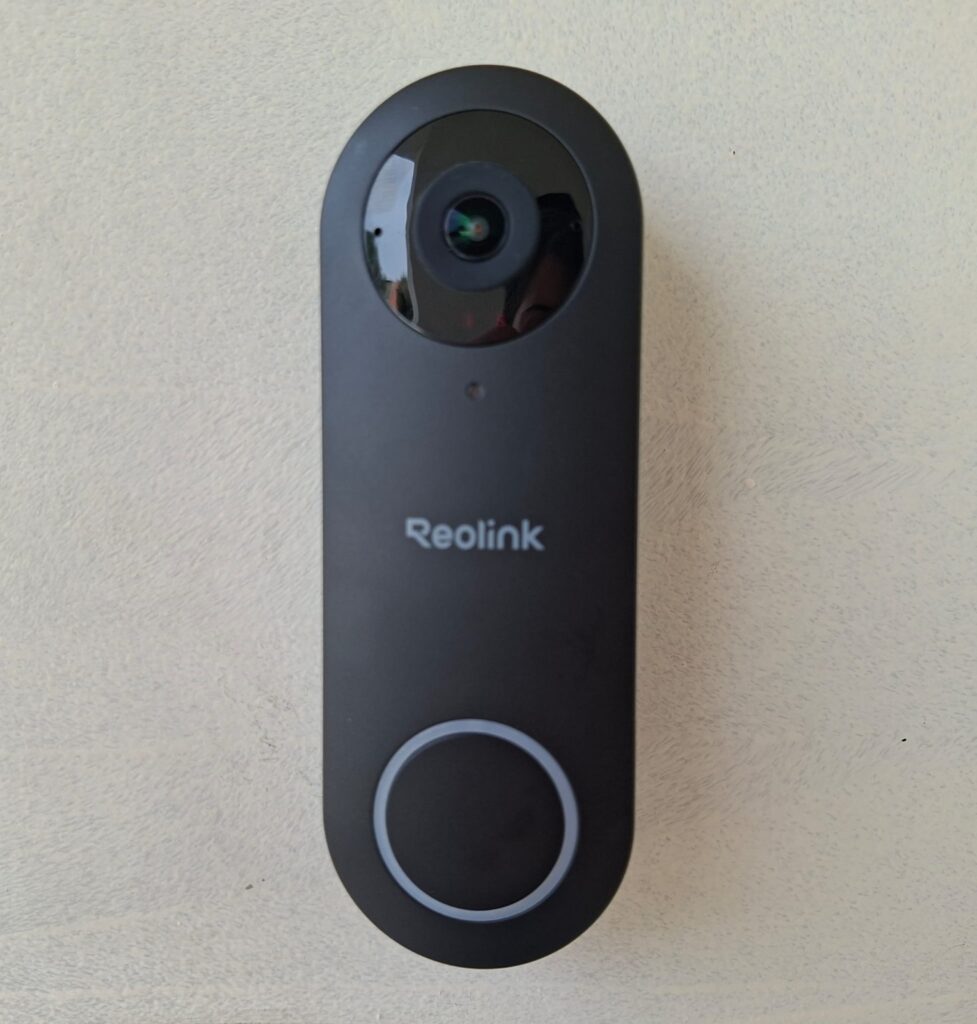
From a design perspective, the Video Doorbell Wi-Fi strikes a thoughtful balance between modern aesthetics and functional simplicity. The outdoor unit is compact, with a slim profile that makes it easy to install even in tighter spaces, such as narrow door frames or gate posts.
The front combines matte-finish durable plastic with a dark lens, allowing it to blend naturally into most entryways without drawing unnecessary attentionת while still clearly signaling that it’s a doorbell. The button itself is softly illuminated with an LED ring, providing both a visual indicator that the unit is active and improved visibility at night.
Build quality is solid. The unit is made from weather-resistant plastic with a degree of protection against dust and water, while the rear panel is metal, making it more resistant to tampering or forced removal.
Technical Specifications
The camera features a resolution of 2560×1920 and a wide horizontal field of view of approximately 100 degrees, providing good coverage of the entry area. There is also a white variant with a vertical field of view, which is better suited for narrower entryways.
Two-way communication is supported via a built-in microphone and speaker, along with basic noise reduction.
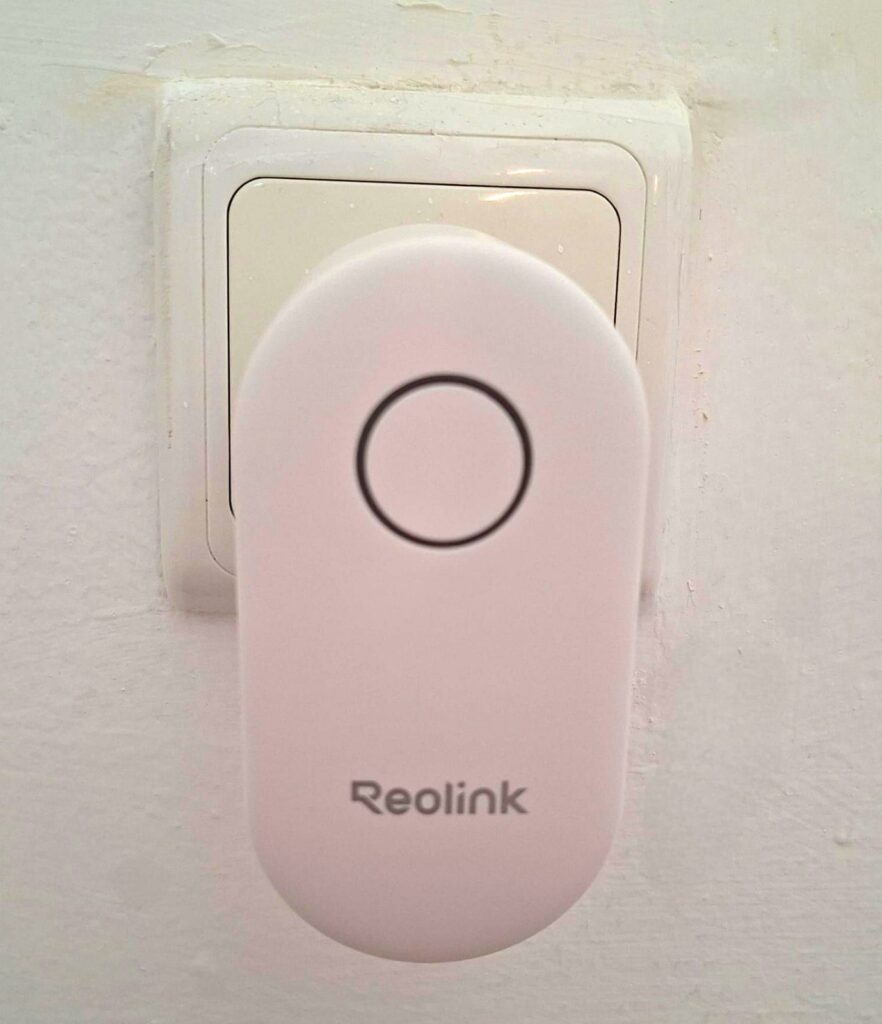
The indoor chime is a plug-in unit that connects to a standard power outlet inside the home. It delivers very strong audio output, with multiple selectable tones, loud enough that you won’t miss it, even if you’re on another floor.
In terms of connectivity, the device supports both 2.4 GHz and 5 GHz Wi-Fi, as well as wired Ethernet. This is a meaningful advantage: if you have a wired network connection at your entry point, you can avoid relying on wireless signal strength altogether.
The communication range between the outdoor unit and the indoor chime can reach dozens of meters indoors, depending on walls and interference.
Installation
The installation process highlights one of the product’s biggest strengths, especially for users who aren’t particularly technical. The first step is choosing whether to use a wired or wireless network connection. I opted for a wired setup to ensure maximum stability and responsiveness.
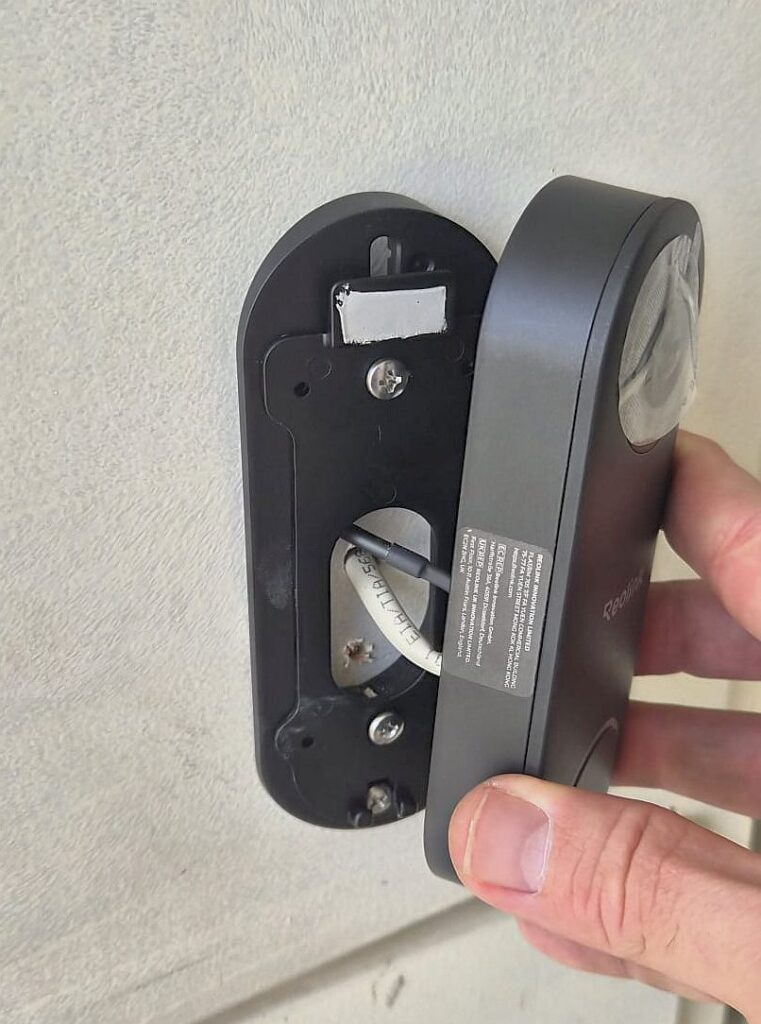
The physical installation involves mounting the bracket to the wall using screws and anchors, then attaching the doorbell unit. If you choose a wired connection, simply plug the Ethernet cable into the back of the unit. If your network supports PoE (Power over Ethernet), there’s no need for a separate power adapter, the device receives power directly through the network cable, which is a major advantage. If PoE is not available, you’ll also need to connect a power adapter.
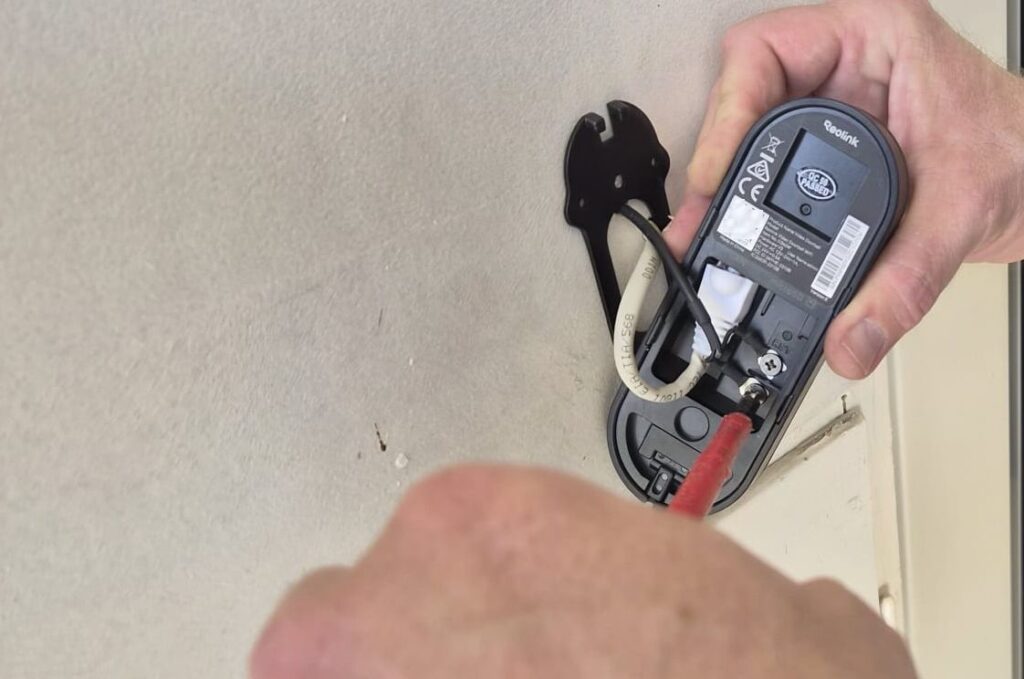
Once everything is connected, download the Reolink app to your smartphone, create an account, and begin setup. The app detects the device via a QR code located on the back of the doorbell or through a temporary network broadcast. From there, connect it to your home Wi-Fi, set a password, and perform a firmware update if needed.
The indoor chime simply plugs into a wall outlet and syncs automatically with the outdoor unit. The entire process is fast and straightforward, especially if you already have other Reolink devices. There’s no need for a professional installer, which is a significant advantage both in terms of cost and user control.
User Experience
This is the critical part, as real-world performance doesn’t always match what’s promised on paper, but in this case, it does.
The Reolink app allows live viewing, motion alerts, doorbell notifications, and immediate two-way communication with whoever is at your door. Daytime image quality is very good, with sharp detail and clear identification of people and objects. Night performance is decent, though it can be improved by adding a motion-activated light to illuminate the entryway.
Motion alerts are delivered very quickly, and you can define detection zones and adjust sensitivity to reduce false alerts. That said, the detection algorithm isn’t flawless and may occasionally trigger on movement that isn’t human.
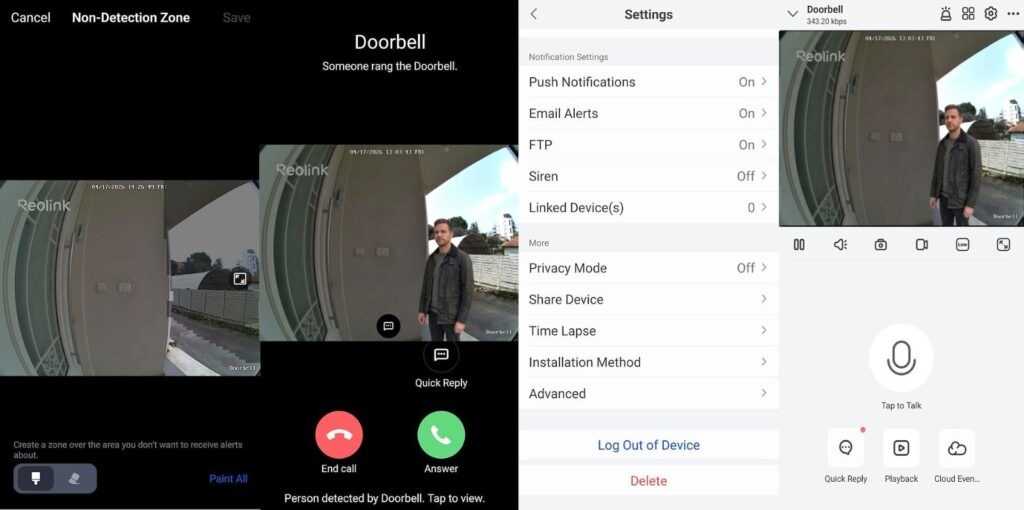
Audio quality is very good for everyday conversations, particularly in quieter environments.
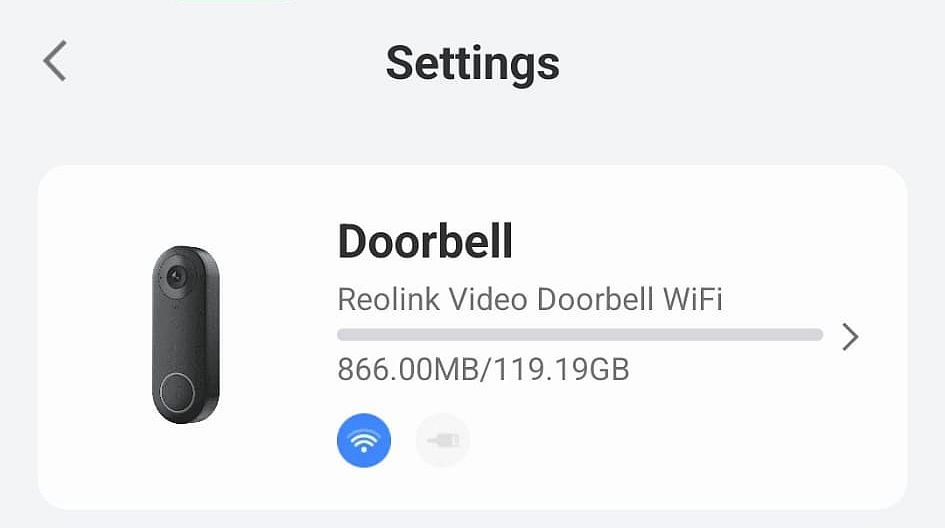
A major advantage, as mentioned earlier, is the ability to store recordings locally on a microSD card inserted into the outdoor unit, or in the cloud via a separate paid subscription. Personally, I would have preferred the storage to be located in the indoor unit, to better ensure the integrity of recordings in case someone attempts to tamper with or steal the outdoor unit.
The indoor chime performs reliably and can reach volume levels that easily cover even larger homes. The combination of camera, alerts, and remote control provides a strong sense of security, especially when you’re not at home.
Final Thoughts
The Video Doorbell Wi-Fi delivers what I consider a well-balanced package for the average user: solid video and audio quality, real-time alerts, dependable build quality, and no mandatory subscription fees. It’s not perfect: the microSD card is housed in the outdoor unit, and the construction is primarily plastic, but for most users the advantages clearly outweigh the drawbacks.
Its ability to integrate seamlessly with other Reolink products under a single, intuitive interface is a major benefit for anyone looking to gradually build a complete home security system without relying on professional installation.
The lack of ongoing subscription fees makes it especially appealing over the long term. Easy installation, clean design, and practical functionality make it a great fit for users who want an efficient, straightforward solution without unnecessary complexity.
Ultimately, it delivers on a simple but essential need: knowing who’s at your door, smartly, conveniently, and at a reasonable cost.
Price: ~$160