
AI-powered license plate recognition surveillance camera that captures them flawlessly, even in total darkness, and turns a camera into a full security control system.
This review is part of a series that focuses on more advanced, professional-grade cameras, that offer familiar home security solutions. Alongside this model, you’ll find reviews on cameras like the AI-powered Dahua Wiz Color, Hikvision AcuSense the unique triple-lens camera, ANPR, Duo 180°, and even a thermal security camera designed to detect what standard cameras can’t. Together, they represent different approaches to the same goal: giving you a clearer, smarter view of what’s really happening around your home.
Do you feel like the in home break-ins is getting out of control? If so, then you’re definitely not alone. According to the United States Department of Justice yearly data, there are an average of over one million burglaries annually in the United States (source thezebra.com), with over half of these being home invasions. In fact, reports suggest that burglary rates have become so aggressive that the same crews are breaking into multiple homes in a single night. At the same time, the National Insurance Crime Bureau reports that 334,114 vehicle thefts were reported only in the first half of 2025.
One particularly memorable case involved a my neighbor who told me that two of his vehicles were stolen and in the same incident, the thieves also took his adjacent neighbor’s car. All this happened around 8 PM. When I reviewed my security camera footage, I could clearly see the vehicle the thieves arrived in, as well as their escape with all three stolen cars. However, I couldn’t identify their license plate because it was completely washed out by their headlights. A police detective who later requested my footage told me that even municipal cameras installed along the entire escape route failed to capture the license plate for the exact same reason: every single one of them was blinded by the vehicle’s lights.
If an ANPR camera had been in place, the outcome could have been very different.
ANPR – a License Plate Recognition Camera
Cameras that automatically detect and record vehicle license plates are known as LPR (License Plate Recognition) or ANPR (Automatic Number Plate Recognition) cameras. These systems use optical character recognition (OCR) to read license plates in real time.
The technology was originally deployed in toll road management and law enforcement, and later expanded into parking management and high-security environments where vehicle access must be controlled. These cameras use infrared illumination, allowing them to capture clear images at any time of day or night.
Some ANPR camera manufacturers require an additional software license to manage the data collected by the camera. Others allow full management directly through the camera interface, eliminating the need for separate software purchases.
Extracting license plate data is extremely simple: users can export results into an Excel file or search within the system by time. More recently, systems also allow filtering by vehicle type and even vehicle color. Advanced law enforcement systems can go even further: using infrared illumination to penetrate the windshield, illuminate the interior of the vehicle, and identify all occupants.
WizMind
As mentioned, ANPR cameras have been available for several years. However, the integration of AI-based analyticsת capable of identifying people by clothing or appearance and vehicles by type and colorת makes these systems significantly more effective. This is often referred to as Smart ANPR.
Dahua has recently taken analytics even further with its WizMind platform, which incorporates an advanced AI chip beyond the WizSense system I previously reviewed.
With deep learning algorithms, cameras equipped with this technology can:
- Identify vehicles and license plates
- Distinguish between vehicle types like private cars, trucks, SUVs, etc
- Recognize vehicle manufacturers
- Differentiate between vehicle colors
Instead of simply documenting license plates, a WizMind-enabled camera can act based on predefined scenarios tied to specific license plates. For example, if your building has a gated parking lot, you can create a list of authorized vehicles so that the gate opens automatically for them. If an unauthorized vehicle enters, the system can trigger both visual alerts (flashing lights) and audio alerts (sirens or voice messages).
WizMind can also be integrated with IVS (Intelligent Video System) analytics, allowing you to define scenarios such as triggering an alert if a vehicle crosses a virtual line or enters a restricted zone.
DHI-ITC413-PW4D-IZ1
Dahua provided this model for review, as it represents one of their newest and most advanced ANPR cameras, incorporating the full range of technologies the company has developed to date.
- WizSense for detecting humans and motor vehicles while ignoring animals and shadows
- Identification of vehicle manufacturers and types (private, SUV, truck, etc.), as well as differentiation from non-motorized vehicles such as bicycles
- Built-in LED light for warning signals
- Integrated speaker for announcements
- Built-in microphone
- Motorized zoom and focus
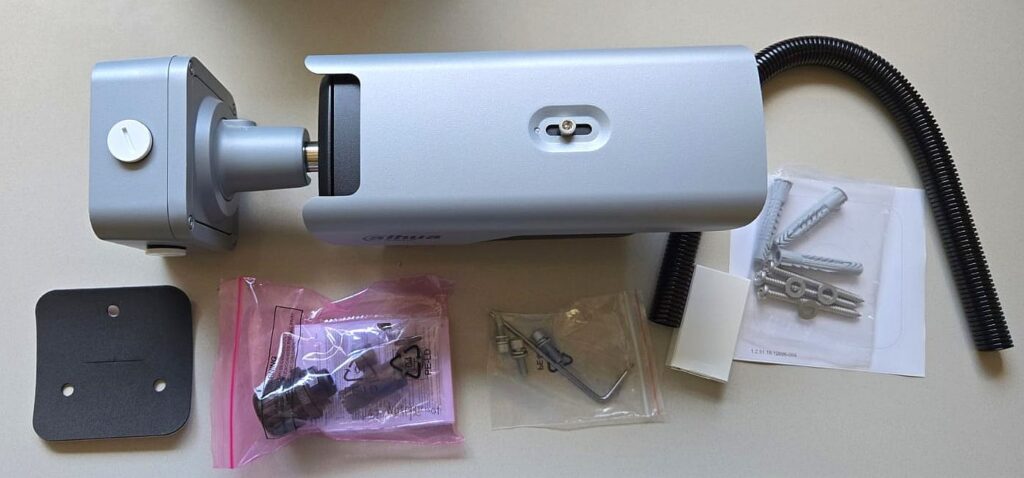
The DHI-ITC413-PW4D-IZ1 is a network camera that supports PoE (Power over Ethernet) connectivity and belongs to Dahua’s ANPR series. It features a 4-megapixel sensor with a resolution of 2688×1520 pixels. The result is an extremely sharp image, rich in detail, so much so that even when performing digital zoom, meaningful data can still be extracted.
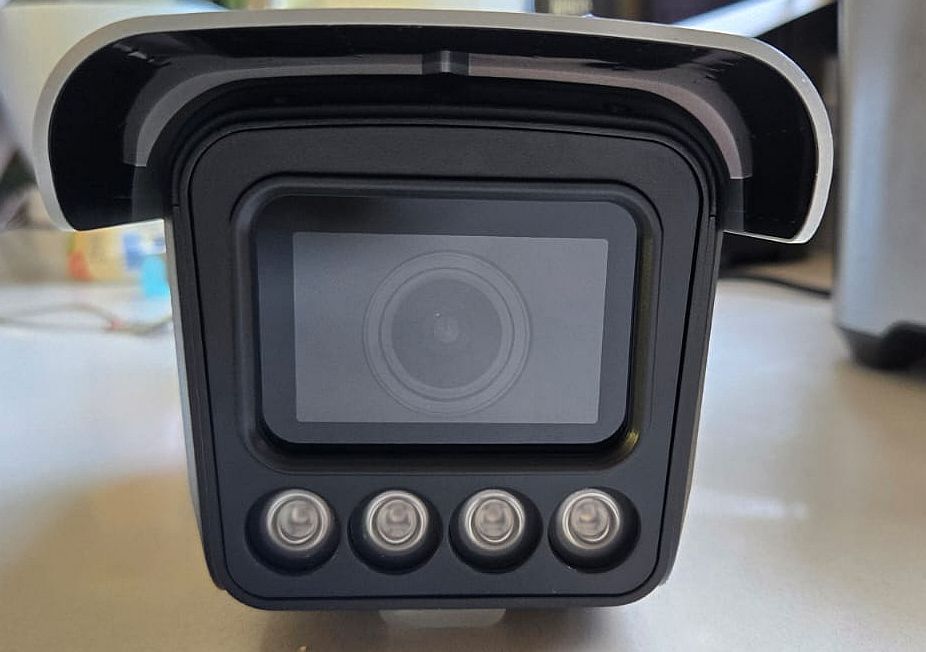
Since ANPR cameras can store both license plate images and video footage of passing vehicles, storage efficiency becomes important. This model supports H.265 compression, which produces smaller file sizes compared to H.264, as well as Variable Bit Rate (VBR), which dynamically adjusts the data rate depending on how much the scene changes. In other words, when there is no movement, data usage is minimal; when there is significant activity, the bitrate increases accordingly.
In addition, the camera includes:
- A motorized zoom lens with a range of 2.7–12mm (a parallel model offers 8–32mm)
- Full IP67 protection against water and dust
- IK10 vandal resistance (tested against heavy impact)
- 120dB WDR (Wide Dynamic Range) for handling scenes with both bright and dark areas
Installation
One thing I particularly appreciated about this camera is that Dahua includes everything needed for installation: a dedicated junction box, long and heavy-duty screws, and anchors designed for secure mounting. This is unlike other models where the junction box must be purchased separately.
This ensures that connections are fully weatherproof and that installation is both clean and highly stable.
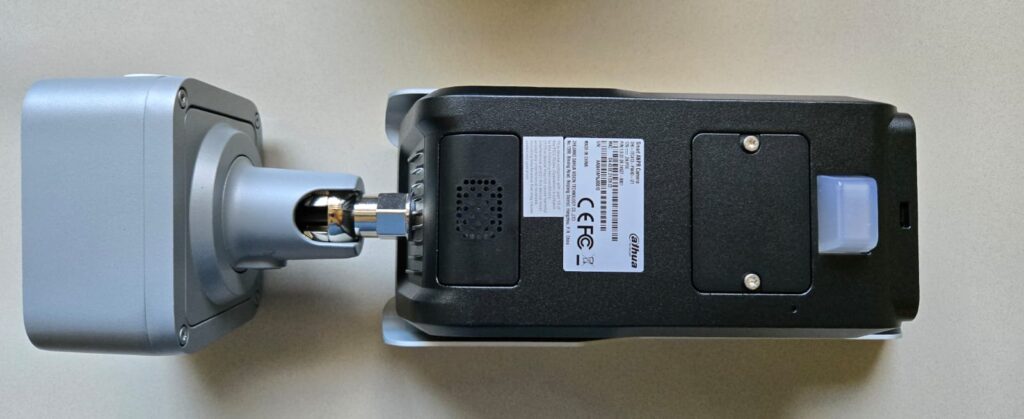
The junction box also serves as the mounting base and is installed directly onto the wall. While the camera supports separate power inputs, it works perfectly using just a PoE network cable. All I had to do was connect the Ethernet cable, neatly coil the wiring inside the junction box, and secure it with screws.
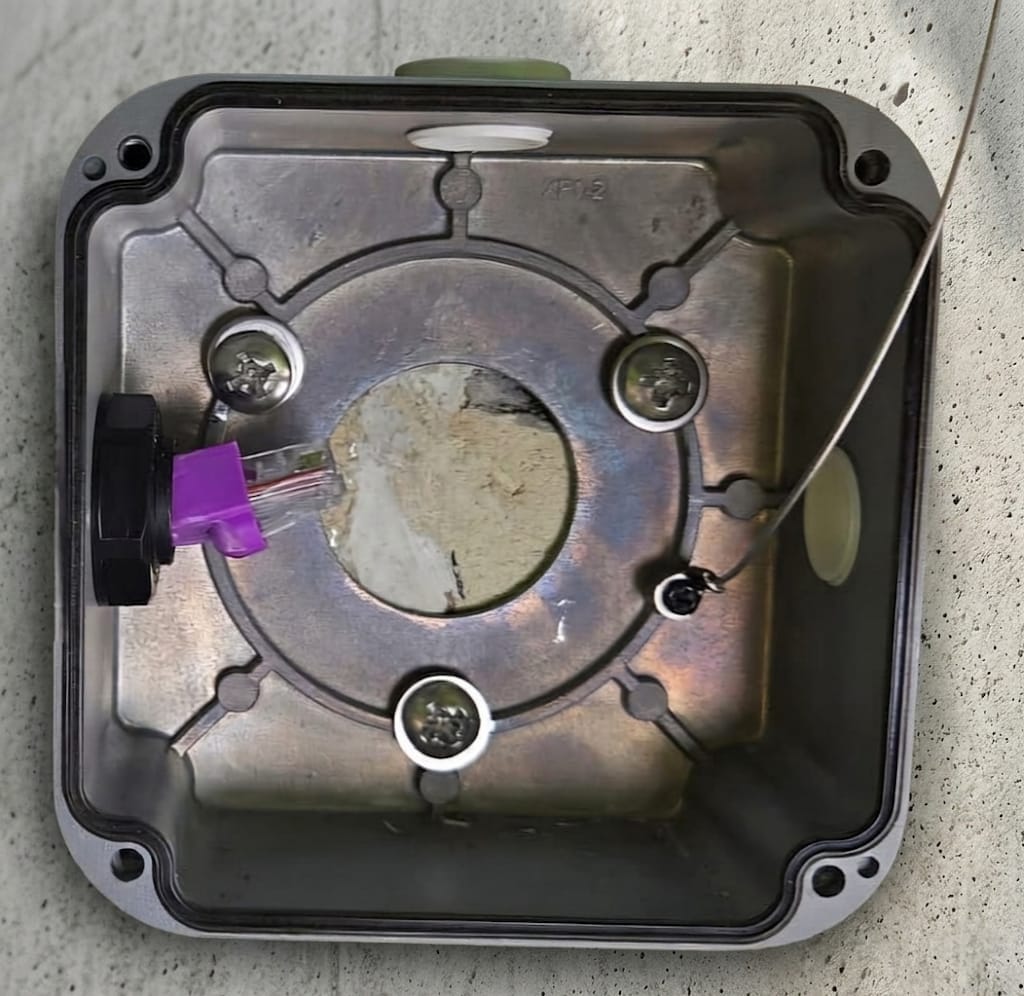
Unlike other bullet cameras from Dahua, adjusting this camera requires loosening just a single screw at the base, allowing full rotation and both horizontal and vertical tilt until the desired angle is achieved.
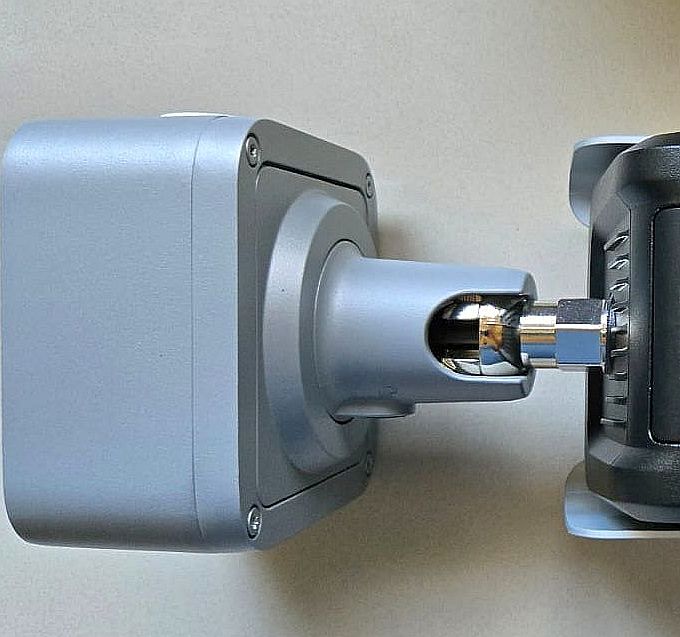
The end result is a clean installation, without unnecessary drilling into exterior walls, and full flexibility in positioning the camera without interference from external junction boxes.
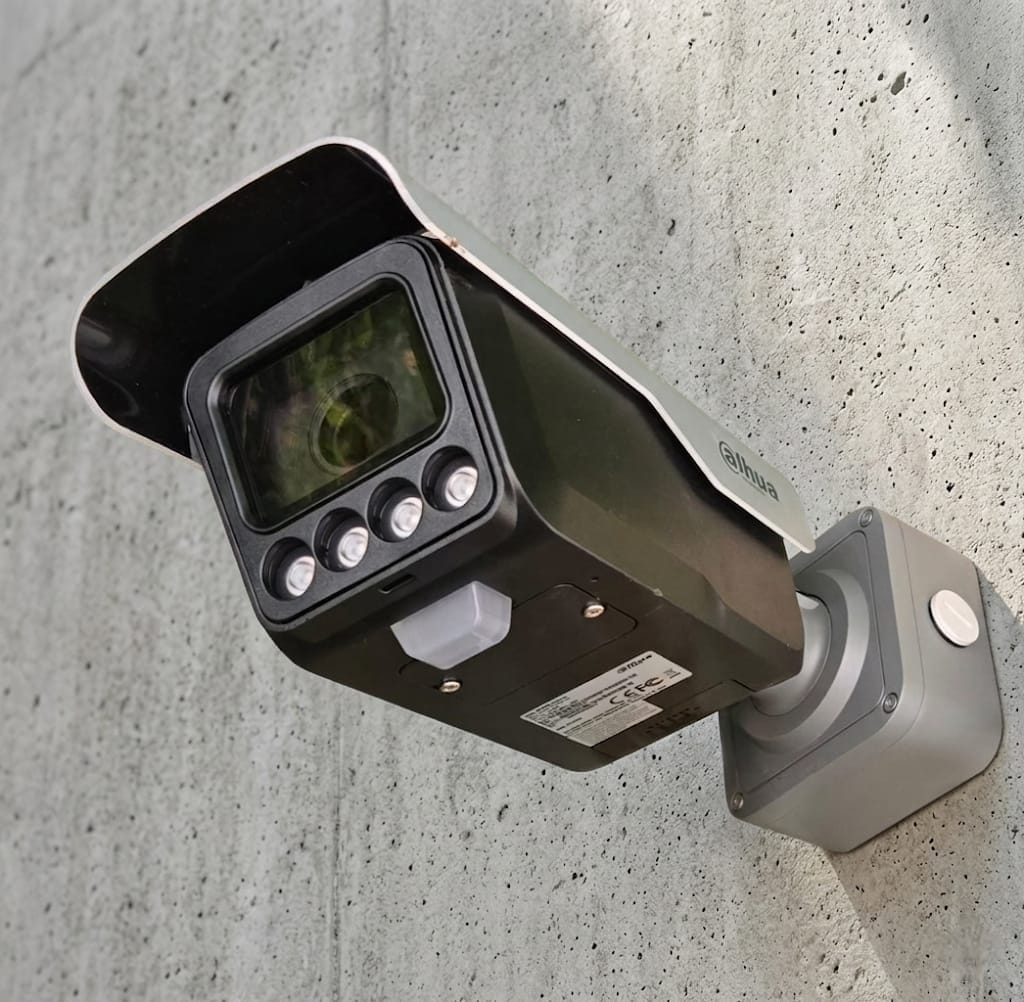
User Experience
To fully demonstrate the camera’s capabilities, I connected it to a Dahua NVR (model NVR5208-EI), which also includes advanced AI functionality. To add the camera, you simply need to configure its IP address to match your network.
The camera uses a general-purpose codec, and combined with its 2688×1520 resolution, it delivers exceptionally high-quality images capable of supporting real-time alerts.
To understand just how advanced the AI tools are in Dahua’s latest NVR systems, you need to explore the event search menu. You can generate reports for all vehicles captured by the camera, categorized into motorcycles and cars. Within the car category, the system identifies both the manufacturer and the color.
To test the AI’s capabilities, I filtered results to display only vehicles from a specific manufacturer and color. For example, white Toyota cars. As expected, the system filtered out all other vehicles and displayed only white Toyotas.
I also tested searching by license plate number, and once again received accurate results. The system provided both a still image of the license plate and a corresponding video clip confirming the vehicle’s presence.
If the camera is installed directly above the roadway, facing downward (similar to highway enforcement systems), it becomes possible to filter vehicles based on even more granular criteria: such as objects on the dashboard or even whether a seatbelt is being worn.
When searching for two-wheeled vehicles, I was equally impressed. The system allows differentiation between bicycles, motorcycles, and tricycles, and can even determine whether the rider is wearing a helmet.
The system can also respond to database queries. For example, if you manage a list of authorized vehicles for a parking facility, you can define expiration dates for access permissions and search for vehicles by owner name or license plate number. In other words, the level of functionality goes far beyond what most people would expect.
Advanced Capabilities
Dahua has also enhanced its IVS (Intelligent Video System) analytics. The system can now detect a person or vehicle entering a restricted area or crossing a defined boundary and trigger an alert accordingly.
In my experience, unlike older camera systems, this new model, equipped with an AI chip, generated only true alerts. For example, I defined a virtual zone near my driveway entrance. If someone blocks the driveway, an alert is triggered. Animals such as dogs or birds do not trigger false alarms.
Accessing the camera interface via its IP address reveals even more configuration options. You can define specific lanes on a road that should be monitored—for example, ignoring parked vehicles along the curb.
Additional configurable features include:
- Adjusting detection width across the road
- Adding pedestrian detection
- Identifying vehicles where only part of the license plate is visible (e.g., obscured or damaged plates)
- Managing barriers with scheduled operating times
- Adding a white light projector to improve vehicle detection
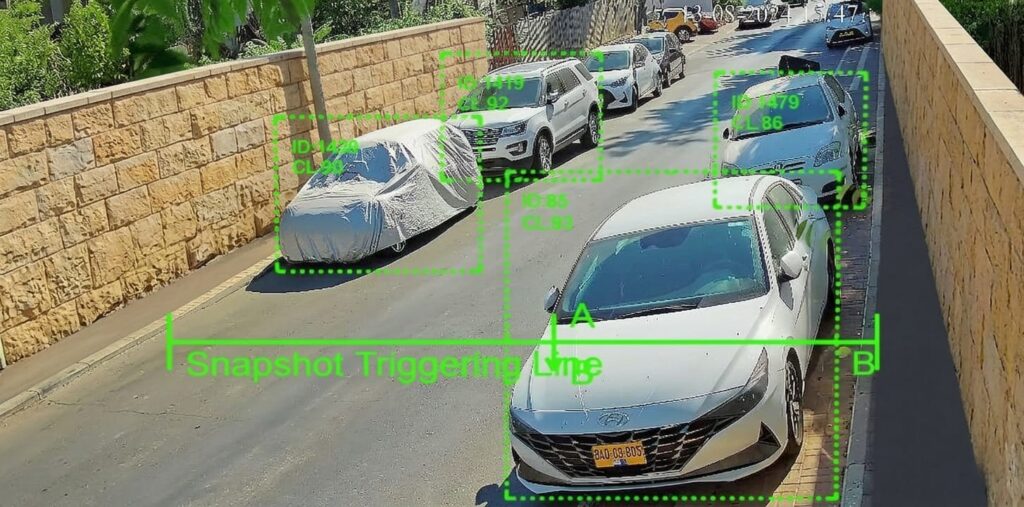
You can also configure audio alerts for events such as intrusion, loitering, or unauthorized gate access.
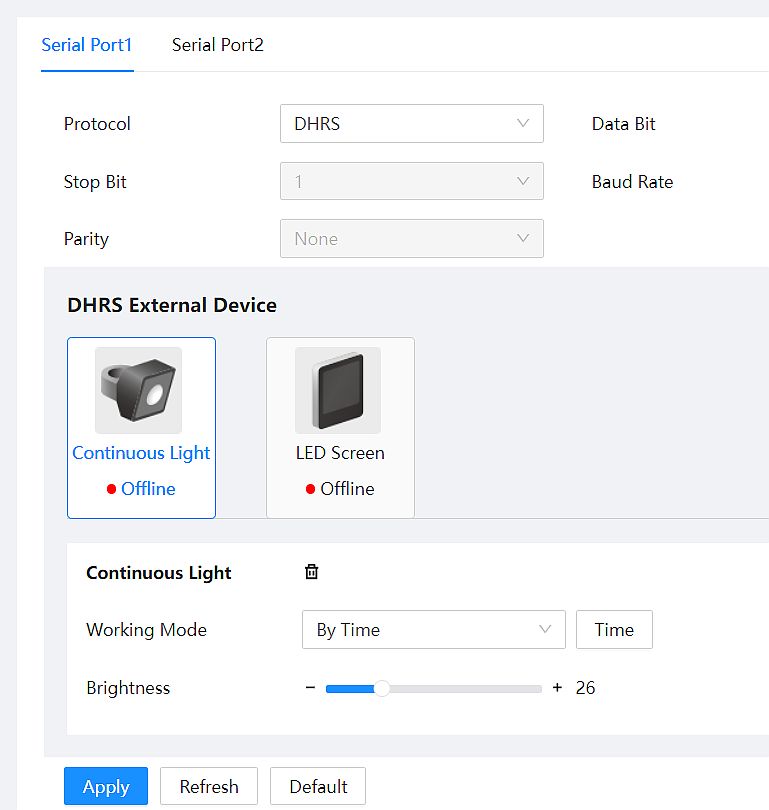
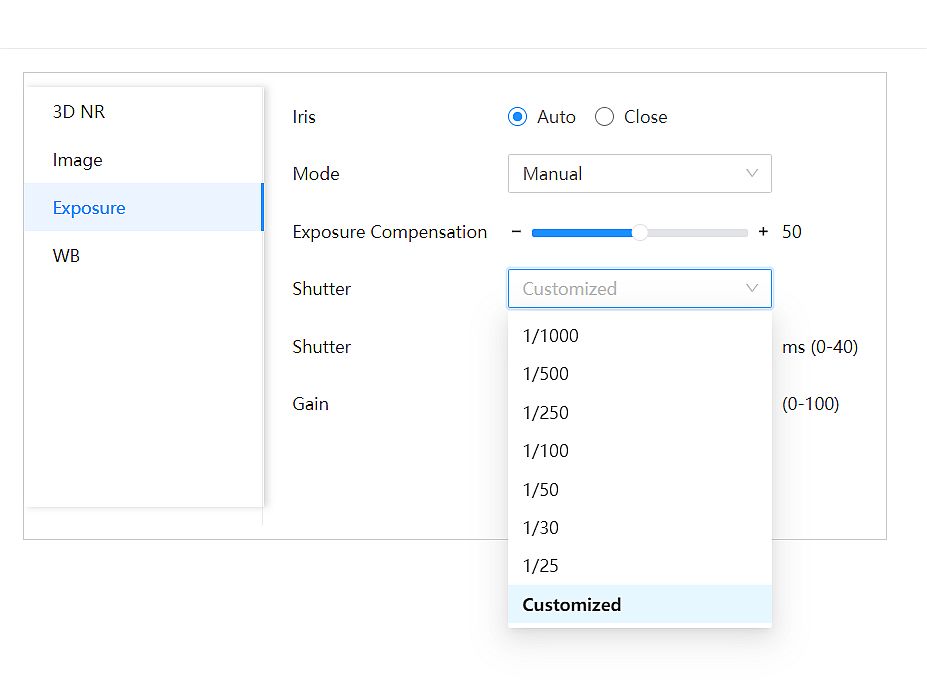
Because the camera is designed to capture license plates under challenging conditions, it includes a wide range of image parameter controls, most notably shutter speed adjustments.
Remote Control
The mobile app allows remote control of the motorized zoom and enables two-way audio communication with the subject being recorded. Based on my testing, the built-in speaker and microphone are effective at a distance of approximately 16 feet (5 meters).
This remote interaction capability is extremely useful. As soon as you receive an alert, you can open a live audio channel and address a vehicle blocking access, someone parking improperly, or even a person engaging in vandalism, without needing to physically approach them.
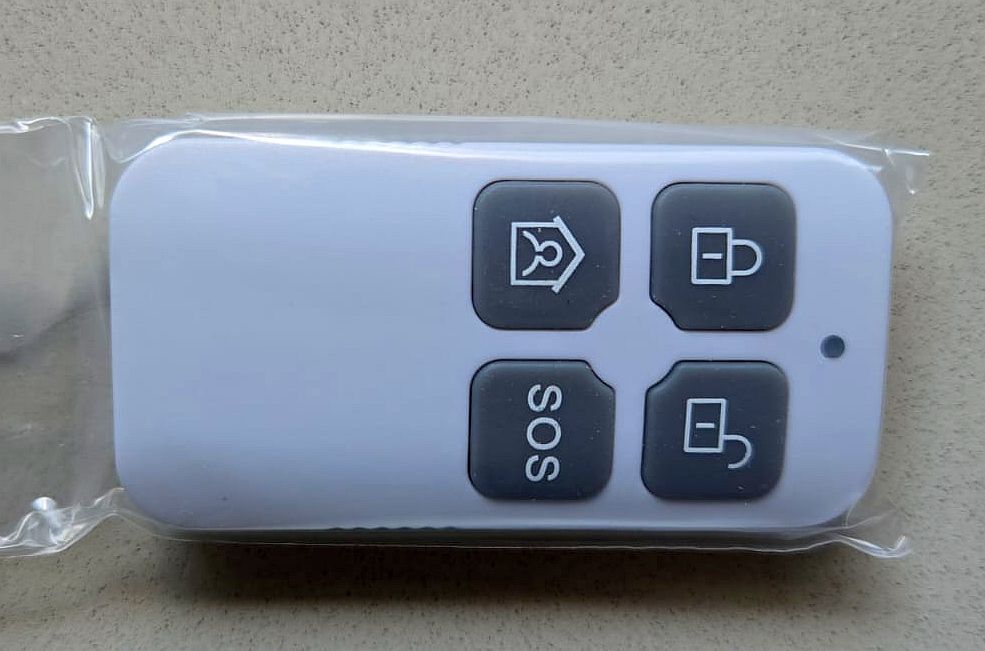
Additionally, the camera comes with a remote control that operates up to 50 feet (15 meters), making it useful for controlling entry gates. I found the built-in speaker powerful enough to function effectively as a public address system.
Night Image Quality
To evaluate image quality, I tested the DHI-ITC413-PW4D-IZ1 both during the day and at night, comparing it to an older 4MP Dahua camera installed in the same location.
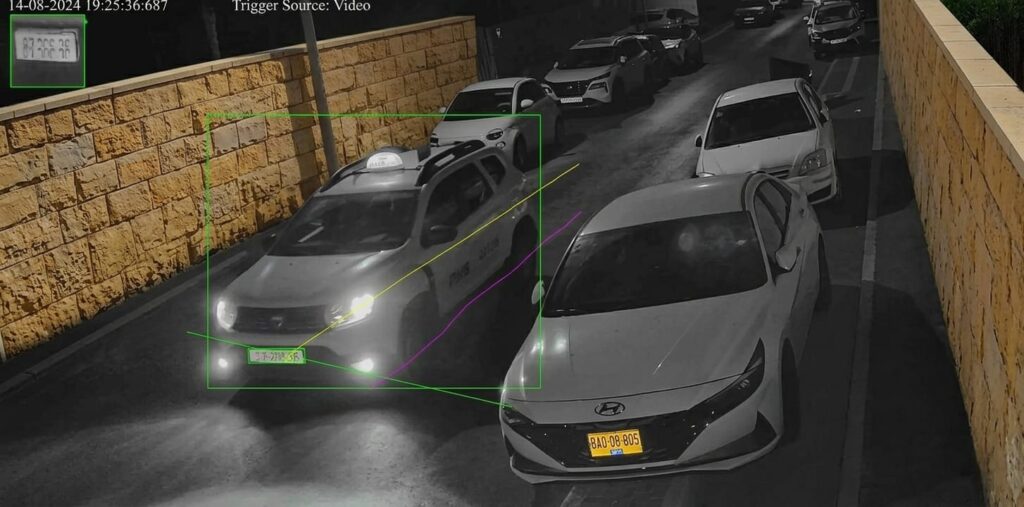
While the older, non-ANPR camera was completely blinded by vehicle headlights, the DHI-ITC413-PW4D-IZ1 successfully illuminated license plates and captured them clearly, even in complete darkness.
The difference in detail becomes even more pronounced as visibility conditions worsen. For this ANPR camera, challenging lighting conditions are simply not an issue.
Conclusion
The DHI-ITC413-PW4D-IZ1 ANPR camera is far more than a device for capturing license plates. Beyond its advanced imaging capabilities, it continuously analyzes the scene in real time. In addition to identifying vehicle manufacturers, types, motorcycles, and bicycles, it adds another layer of intelligence: detecting whether a vehicle is parked in a restricted area, whether a breach is occurring, and even responding according to predefined scenarios.
These responses can include:
- Activating lights
- Triggering alarms
- Playing voice messages such as “Do not climb the fence” or “Warning: Private property”
- Opening a live, two-way communication channel with the individual on site
The built-in speaker is powerful enough to serve as a full public announcement system.
Over the course of testing, it became clear that this is not just an ANPR camera, but a fully integrated solution offering multiple capabilities in a single device: vehicle monitoring, gate control, unauthorized access alerts, parking enforcement, and intrusion detection, with customizable responses such as sirens, lighting, recorded messages, or live communication.
The integration of AI significantly reduces false alerts caused by animals, tree branches, or shadows: issues that were common in older systems.
In conclusion, if you’re considering installing a security camera system for your property, it’s worth knowing: the future of AI-powered surveillance is already here.
Dahua camera systems are sold and installed by authorized integrators.
Note: Vehicle license plates shown in the images were blurred to protect the privacy of their owners.