

Samsung Galaxy Foldables hands-on, with the new Galaxy Z Fold 8, Galaxy Z Flip 8, Galaxy Watch Ultra 2 and Galaxy Watch 9 reveals a company focused on thinner designs, smarter AI and a deeper health experience
Samsung’s latest mobile launch is not about a single device. It is about an ecosystem.
Unlike many launch-day reviews that focus only on specifications, this is a hands-on look at Samsung’s newest Galaxy devices after spending time with the hardware before launch. The biggest takeaway is not only how much thinner or faster these products are, but how Samsung is trying to make them fit more naturally into everyday routines.
After years of building the foldable category and expanding the role of smartwatches beyond simple notifications, Samsung is now trying to connect every part of the daily digital experience, from the phone users carry in their pockets to the watch they wear throughout the day.
Reading my previous analysis on Samsung’s hardware strategy today feels particularly relevant. This year’s Galaxy foldable lineup doesn’t suggest that innovation has stopped. Instead, it suggests that innovation has changed direction, moving away from spectacular hardware breakthroughs toward meaningful refinements, AI-powered features and a more connected ecosystem.
I had the opportunity to spend hands-on time with Samsung’s newest generation of devices ahead of the official launch, including the Galaxy Z Fold 8, Galaxy Z Fold 8 Ultra, Galaxy Z Flip 8, Galaxy Watch Ultra 2 and Galaxy Watch 9.

After spending time with the hardware, the biggest impression is that Samsung is no longer trying only to prove that foldable phones are possible or that smartwatches can track health data. It is now focused on making these devices feel more natural, personal and integrated into everyday life.
The new generation brings improvements across performance, battery life, photography, artificial intelligence and health tracking, but the bigger story is how Samsung is positioning these products as everyday companions rather than simply premium gadgets.
Galaxy Watch Ultra 2: Samsung’s most advanced smartwatch becomes a personal health coach
Samsung opened its new product generation with its most ambitious smartwatch yet, the Galaxy Watch Ultra 2. The focus this year is clear: endurance, health insights and outdoor performance.
The first thing noticeable about the Galaxy Watch Ultra 2 is the combination of increased battery capacity and a thinner design. Samsung increased the battery to 800mAh, a 35% improvement compared with the previous generation, while also reducing the thickness of the watch by 12%.
That combination is important because one of the biggest challenges in premium smartwatches has always been balancing advanced sensors and long battery life with comfort. Samsung is clearly targeting users who want continuous health tracking without constantly thinking about charging their watch.
The display is another major upgrade. The Galaxy Watch Ultra 2 reaches 5,000 nits of peak brightness, making it one of the brightest smartwatch displays available and allowing users to read information more easily under direct sunlight.
During my hands-on time with the watch, the brighter display immediately stood out, especially when considering the type of users Samsung is targeting: runners, hikers, outdoor athletes and people who spend significant time outside.
Under the hood, the Galaxy Watch Ultra 2 is powered by Qualcomm’s Snapdragon Wear Elite platform, which Samsung says improves speed, efficiency and overall responsiveness. But hardware is only part of the story. Samsung’s bigger push this year is turning the watch into a health assistant that can translate biometric information into practical recommendations.
Outdoor sports, running and diving get deeper tracking
For outdoor athletes, Samsung added several new capabilities designed around performance and safety. The Trail Run feature provides detailed information about elevation changes, climbing progress and terrain impact, helping runners better manage their pace and reduce the risk of overexertion.
The watch also adds Nutrition Alert, which works alongside existing sweat loss tracking to provide recommendations related to hydration during demanding activities. For users who spend time in the water, Samsung expanded the Galaxy Watch Ultra 2’s diving capabilities through a partnership with Mares, a leading diving equipment brand.
The watch can track real-time diving information including depth, dive duration and water temperature, while additional diving features are expected through the Ultra 2 Diving application later. With IP69K, 10ATM and EN13319 certifications, Samsung is positioning the Galaxy Watch Ultra 2 not only as a fitness watch but as a device designed for more extreme environments.
Galaxy Watch 9: A smartwatch built around everyday health
While the Galaxy Watch Ultra 2 targets users looking for maximum performance, the Watch 9 is designed for a broader audience. Its mission is simpler: become a daily health companion that quietly collects information and helps users understand their habits.
The Watch 9 comes in 40mm and 44mm sizes and features a lighter aluminum design, improved comfort and updated interchangeable bands. It is powered by the same Snapdragon Wear Elite platform and includes a 390mAh battery, along with a display reaching 3,000 nits of peak brightness.
But the most interesting part of the Galaxy Watch 9 is not the hardware, but Samsung’s continued move toward AI-powered health insights. Instead of simply showing numbers, Samsung wants the watch to explain what those numbers mean.
The BioActive Sensor collects health data throughout the day, while AI-based features analyze trends related to sleep, activity, heart health and recovery. One of the major additions is Sleep Apnea detection, which uses AI algorithms to identify possible breathing disruptions during sleep. Samsung says the feature has received FDA approval and is designed to provide users with earlier insights into potential sleep-related issues.
Additional health features include Heart Health Score, Daily Cardio Load and Fitness Index, all designed to turn complicated health measurements into easier recommendations. The approach reflects a larger change in the smartwatch industry. The question is no longer only “how many steps did I take?” but rather “what does my body data actually tell me, and what should I do next?”
Samsung Galaxy Z Fold 8 Ultra: pushing the flagship foldable forward
The centerpiece of Samsung’s foldable lineup remains the Galaxy Z Fold family, and this year Samsung’s message is clear: the foldable phone is no longer an experiment. It is becoming a mature premium category.
The Galaxy Z Fold 8 Ultra represents the company’s most ambitious foldable design yet, focusing on three key areas: a thinner body, stronger construction and improved performance.
When opened, the Galaxy Z Fold 8 Ultra measures only 4.2mm in thickness, making it the thinnest Fold device Samsung has created. Achieving this required a redesigned internal structure, including the new Flex Titanium display construction, which uses titanium-based reinforcement layers designed to improve durability while maintaining a slimmer profile.
The challenge with foldable devices has always been finding the right balance between portability and reliability. A thinner foldable is impressive, but it also needs to survive the daily routine of opening, closing, carrying and using the device hundreds of times. Samsung says the new structure improves durability while also reducing the visibility of the crease, one of the areas users continue to pay attention to when moving from traditional smartphones to foldables.
The camera system also receives a significant upgrade. The Z Fold 8 Ultra includes a 200-megapixel main camera, 8K video recording and HDR support, bringing the photography experience closer to Samsung’s traditional flagship smartphones.
The large internal display remains the defining feature of the Fold experience. Designed for multitasking, watching content, productivity and creative work, it continues to blur the line between smartphone and compact tablet.
During hands-on testing, the biggest difference is not simply the ability to fold the screen. It is how much more natural the larger display feels when switching between tasks. Reading, editing documents, watching video and managing multiple applications all benefit from the additional space.
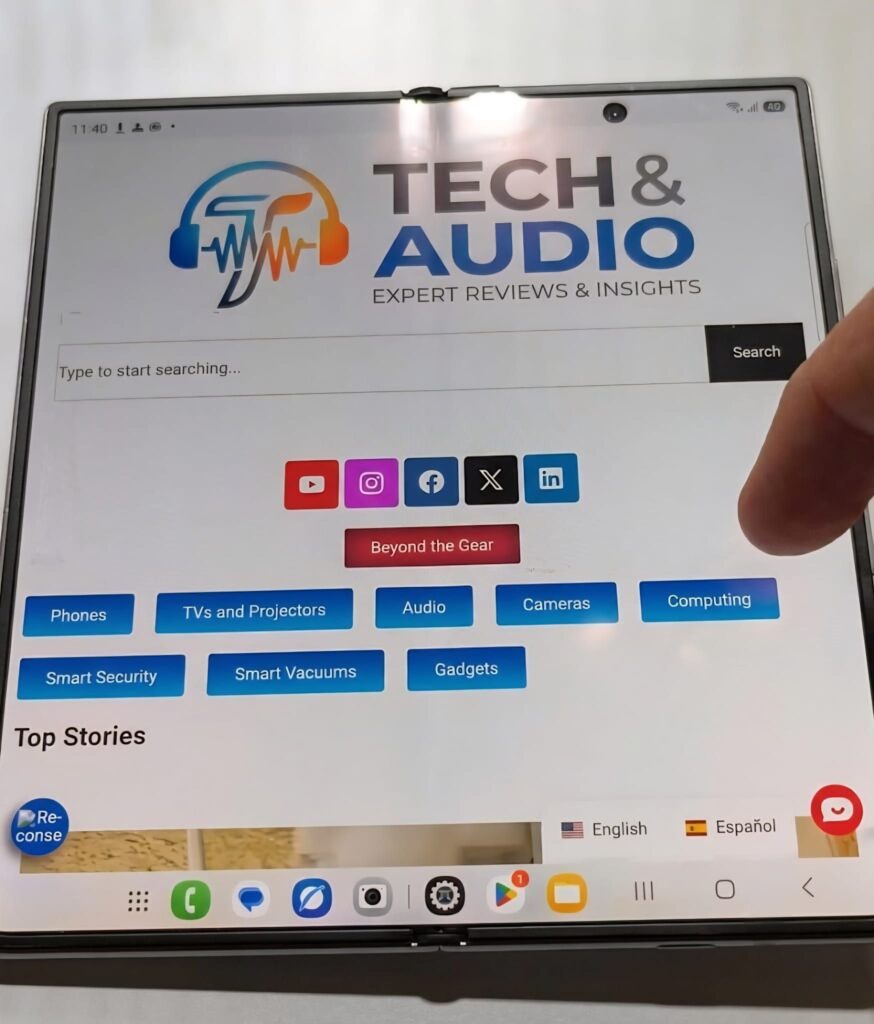
Galaxy Z Fold 8: making foldables more practical for everyday users
Alongside the Ultra model, Samsung introduced the Galaxy Z Fold 8, a version designed to bring the foldable experience to a wider audience. The biggest change is the updated display ratio, aimed at improving usability both when the phone is closed and when it is opened.
Samsung adjusted the outer display to a 10:16 ratio, making everyday actions such as typing, reading messages and browsing feel more natural without immediately opening the device.
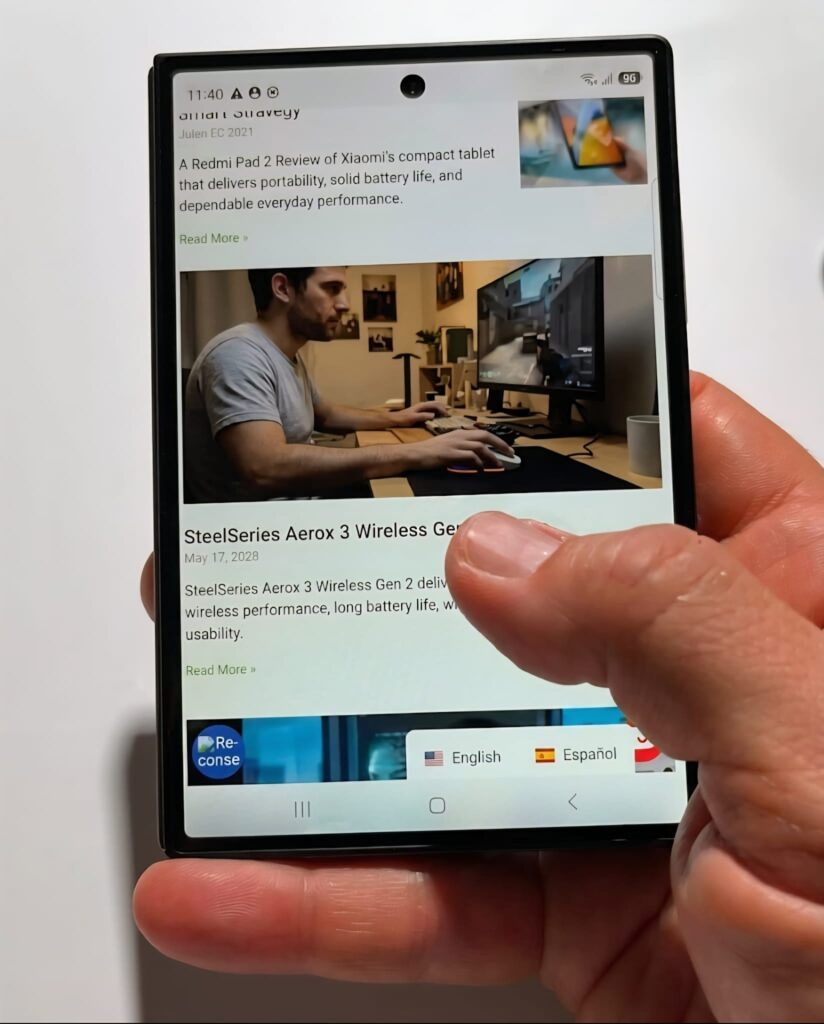
When unfolded, the 3:4 ratio is optimized for productivity, social media and content consumption. Weight is another important improvement. At 201 grams, the Galaxy Z Fold 8 becomes the lightest Fold device Samsung has produced, addressing one of the common criticisms of earlier generations: that foldables could sometimes feel heavier and bulkier than traditional flagship phones.

The camera system includes 50-megapixel sensors and new AI-powered photography tools. One of the interesting additions is My Fan Cam, a feature that automatically identifies the main subject in a photo, tracks it and adjusts framing to keep the important element centered. It is a good example of Samsung’s broader AI strategy this year: technology working quietly in the background rather than requiring users to actively manage settings.
Galaxy Z Flip 8: the foldable designed around personality and convenience
While the Galaxy Z Fold series focuses on productivity, the Galaxy Z Flip continues to represent a different vision of foldables: compact, stylish and designed around everyday convenience. The Z Flip 8 improves one of the most important parts of the experience, the external Flex Window.
Samsung is expanding what users can do without opening the phone, including direct access to Google Gemini from the outer display. This small change has a big impact on the way the device feels. Instead of opening the phone for every interaction, users can quickly check information, perform actions and access AI features directly from the cover screen.
Hardware improvements include a 4,200mAh battery, 25W wired charging, 15W wireless charging and the new Exynos 2600 processor. The Flip remains the device in Samsung’s lineup that most clearly demonstrates the emotional side of foldables. It is not only about specifications; it is about changing the way people interact with their phone.

AI becomes the connection between Samsung’s devices
One of the strongest themes throughout Samsung’s launch was artificial intelligence. Rather than presenting AI as a separate feature, Samsung is integrating it across the entire ecosystem. On smartphones, AI helps with image editing, document scanning, contextual assistance and everyday tasks through deeper integration with Google Gemini.
On smartwatches, AI works differently. It analyzes health information, identifies patterns and turns raw measurements into recommendations that are easier to understand. The vision is that devices should not only respond to commands but understand the situation around the user.
A smartwatch can recognize changes in activity or sleep patterns. A phone can understand what the user is trying to accomplish. Together, they create a more personalized experience. This approach is becoming increasingly important as smartphone hardware improvements become harder to notice from one generation to another. Samsung is betting that intelligence and personalization will become the next major reason consumers upgrade.
Hands-on impressions: a more mature Galaxy ecosystem
After spending time with Samsung’s new devices, the most noticeable change is not one specific specification or feature. It is the feeling that Samsung is trying to make technology less visible.
- The Galaxy Watch Ultra 2 does not feel like a device that simply records data; it feels like a companion designed to help users make decisions.
- The Galaxy Z Fold 8 and Galaxy Z Fold 8 Ultra are not simply phones that transform into larger screens; they are devices designed around the idea that work, entertainment and communication increasingly happen in the same place.
- The Galaxy Z Flip 8 continues to explore the more personal side of technology, showing that a smartphone can also be an object of design and self-expression.
The challenge for Samsung remains adoption.
The company did not reveal the exact percentage of foldables compared with its overall smartphone sales, saying only that the category continues to grow year over year. That answer reflects the reality of the market: foldable phones have clearly moved beyond the early experiment stage, but they still face the challenge of convincing mainstream consumers to pay a premium price for a different form factor.
With the eighth generation of Galaxy foldables, Samsung is sending a clear message: foldables are not a temporary experiment. They are a central part of the future of mobile computing.
Availability
Samsung’s new foldables and smartwatches are available for pre-order starting July 22, 2026, at 2:00 GMT time in selected markets. The new lineup includes Galaxy Z Fold 8 Ultra, Galaxy Z Fold 8, Galaxy Z Flip 8, Galaxy Watch Ultra 2 and Galaxy Watch 9.
Galaxy Watch Ultra 2 will be available in a 47mm size with Titanium Silver and Titanium Gray finishes. Galaxy Watch 9 will be available in 40mm and 44mm versions, with different color options depending on size.
Samsung is also offering pre-order benefits, including a memory upgrade option for select devices at a reduced price.
After spending time with Samsung’s latest generation of devices, one thing is clear: the company is no longer simply building faster phones or smarter watches. It is building an ecosystem where hardware, artificial intelligence and health technology are designed to work together throughout the entire day.