
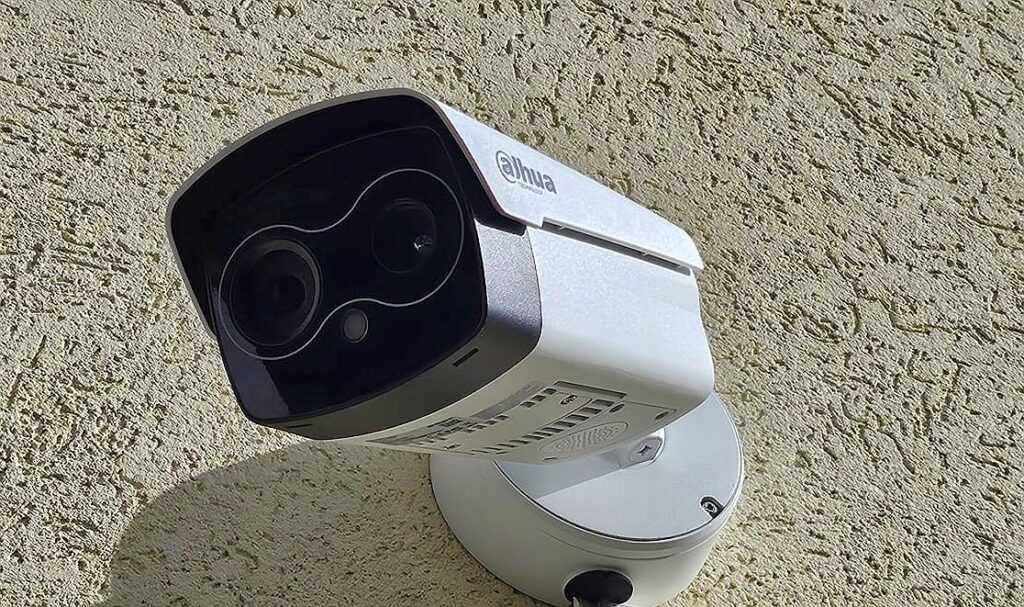
Dahua’s thermal security camera with advanced analytics that detects heat, smoke, and intrusions when traditional cameras fail
This review is part of a series that focuses on more advanced, professional-grade cameras, that offer familiar home security solutions. Alongside this model, you’ll find reviews on cameras like the AI-powered Dahua Wiz Color, Hikvision AcuSense the unique triple-lens camera, ANPR and Duo 180° even a thermal security camera designed to detect what standard cameras can’t. Together, they represent different approaches to the same goal: giving you a clearer, smarter view of what’s really happening around your home.
Let me start with a story. A few years ago, I was spending an evening with my wife and friends by the backyard pool at their home. Suddenly, she said alarmed that someone was watching us from the other side of the hedge.

I tried to reassure her, saying there was no one there. But she insisted: “I’m telling you, someone is there“. The hedge was dense and tall, therefore impossible for me to see through, and not easy to climb either. As you can imagine, the relaxed evening quickly turned tense. The atmosphere changed, and everyone became alert.
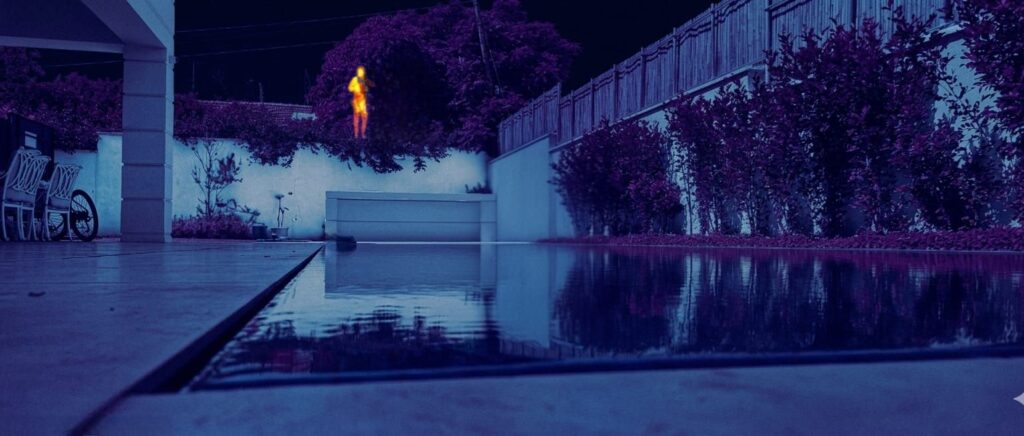
Why am I sharing this? Because this house was equipped with security cameras that weren’t able to identify anything beyond the vegetation. This is exactly where a thermal security camera comes in.
What Is a Thermal Security Camera?
The most important thing to understand about thermal cameras is that they don’t work like standard cameras. While regular cameras capture visible light and convert it into an image, a thermal security camera creates an image based on heat emitted by objects.
Both visible light and heat include infrared radiation, a part of the electromagnetic spectrum.
A thermal camera produces images using infrared radiation emitted from objects, a process known as thermal imaging. The image is based on temperature differences. Typically, the hotter the object, the brighter or more highlighted it appears, often in yellow or orange tones depending on the palette.
A thermal camera consists of a lens, a thermal sensor, and electronic processing components. The lens focuses infrared energy onto the sensor, and the sensor determines the resolution. Thermal cameras generally have lower resolution than visible-light cameras because thermal detectors must capture longer wavelengths, requiring larger sensor elements.
Use Cases of Thermal Security Cameras
Thermal imaging applications are nearly limitless. Originally developed for military use, thermal cameras are now widely used in:
- Fire detection
- Temperature monitoring
- Building inspections
- Autonomous vehicle navigation
While commonly used in enterprise and industrial settings, many people are still unaware of their powerful applications for residential security.
To bridge the gap between thermal and standard imaging, Dahua developed dual-lens cameras combining a thermal lens and a standard optical lens. These sit side-by-side and generate two separate views of the same scene. After seeing the results of combining thermal imaging with advanced analytics, I decided to review one.
Vanadium Oxide Uncooled Detector
At the core of every thermal camera is an uncooled infrared detector. This sensor works on a simple principle: Any object above absolute zero (-459.67°F / -273°C) emits infrared radiation. The detector absorbs this energy and converts it into heat, which changes its physical properties. That change is then converted into an electrical signal, to form the thermal image.
The most common material used is Vanadium Oxide (VOx), which is lightweight and cost-effective, making it suitable for widespread use.
Fire Detection: A Critical Use Case in the U.S.
Accidental house fires remain a major risk, especially in the United States, where many homes are wood-framed. Fires can spread rapidly, causing severe damage within minutes.
According to U.S. statistics, there are over 350,000 residential fires annually, resulting in thousands of fatalities. Additionally, many homes have exposed propane or gas tanks outdoors, making early fire detection even more critical.
A thermal security camera can detect heat sources and even smoke, providing early alerts before a fire escalates.
Dahua DHI-TPC-BF5641 Overview
When I first took a closer look at the DHI-TPC-BF5641, it wasn’t just because it’s another security camera, but due to what it represents. On paper, it’s easy to list features: thermal imaging, optical lens, AI analytics. But those specs don’t really explain what it feels like to use a system that sees the world differently.
This model is part of Dahua’s Series 5 lineup, designed for more advanced, real-world scenarios, and not just basic monitoring. What caught my attention immediately is the combination of two completely different ways of “seeing” built into a single, compact bullet-style camera. One lens captures the world as we’re used to seeing it, with colors, detail and sharpness. While the other interprets heat, turning invisible signals into something you can actually act on.
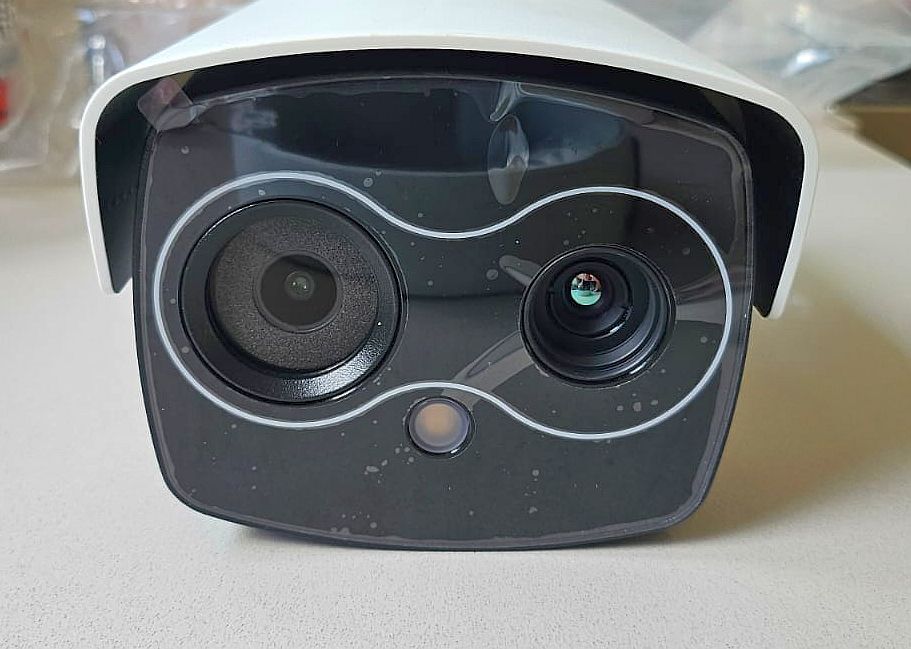
That combination changes the role of the camera. It’s no longer just recording events after they happen, but actively helping you to notice things you would otherwise miss.
As I started exploring its capabilities, it became clear that this isn’t just about imaging, but about interpretation. The built-in IVS 2.1 analytics adds another layer, allowing the camera to distinguish between what matters and what doesn’t. It can tell the difference between a person and a passing shadow, between a vehicle and random motion, reducing the kind of noise that makes many security systems frustrating to use.
At the same time, Dahua didn’t treat this as a purely technical device. The camera also includes a built-in speaker and microphone, which means it’s not limited to passive monitoring. You can interact, trigger alerts, play messages, and even respond in real time to what’s happening on-site.
The more time I spent with the DHI-TPC-BF5641, the more it felt like a shift in perspective rather than just an upgrade in hardware. It’s still a security camera, but one that understands its environment in a much deeper way.
Dual-Lens System and Detection Capabilities
At first glance, the dual lenses might seem like a simple combination: a thermal lens and a standard optical lens. But in practice, they complement each other in a way that fundamentally changes what you’re able to detect, understand, and act on.
Thermal Lens (640×512 resolution)
The thermal sensor doesn’t aim to deliver high-resolution detail in the traditional sense. Instead, its strength lies in detecting heat differences. With a resolution of 640×512 pixels, it produces an image that may appear simpler, but tells a completely different story.
The camera uses up to 18 color palettes to represent temperature variations, meaning that people, animals, or any heat-emitting object immediately stand out, regardless of lighting conditions, camouflage, or partial obstructions like trees or bushes.
In real-world use, this means that even when visibility is poor or completely absent, the thermal image still provides clarity where a standard camera would struggle.
Optical Lens (4MP – 2688×1520 resolution)
Alongside the thermal sensor, the optical lens delivers what you would expect from a modern high-quality security camera. With a 4-megapixel resolution (2688×1520 pixels), it captures sharp, detailed footage suitable for identification and digital zoom.
It also includes infrared illumination that can reach distances of up to 80 meters (approximately 260 feet), allowing it to maintain visibility even in complete darkness. This is the lens you rely on for visual confirmation of faces, objects, and scene details, while the thermal lens ensures nothing goes unnoticed in the first place.
Understanding Detection, Recognition, and Identification
As I spent more time with the system, I realized that detection isn’t just about seeing something. It’s about understanding how well you can interpret what you’re seeing, and at what distance.
Dahua defines this in three practical levels:
- Detection Distance: This is the point where the camera can tell that something is present in the scene, but not what it is. At this stage, the object needs to occupy at least 3.6 pixels. It might be a person, an animal, or an object, but you simply know something is there. In real-world scenarios, this is often the first early warning signal.
- Recognition Distance: Here, the camera goes a step further. Not only does it detect an object, but it can begin to classify it. For example, distinguishing between a person and a vehicle. To achieve this, the object needs to cover at least 14 pixels. This is where the system starts becoming actionable. It’s no longer just aware of motion, but understand its nature.
- Identification Distance: This is the most precise level. At this point, the camera can identify specific characteristics, such as distinguishing between a car and a truck, or even differentiating between an adult and a child. For this level of detail, the object must occupy at least 28 pixels, and it is also where it moves from awareness to decision-making.
Compression, Lens Options, and Durability
As powerful as the imaging capabilities are, continuous recording can quickly generate large amounts of data. That’s where efficient compression becomes critical.
H.265 Video Compression
The camera supports H.265 compression, which significantly reduces file size compared to H.264 while maintaining high image quality. In practical terms, this means longer recording times, lower storage costs, and more efficient bandwidth usage, especially important for continuous monitoring setups.
Fixed Lens (4mm) with Additional Options
The optical camera comes with a fixed 4mm lens as standard, providing a balanced field of view suitable for most residential and mid-range perimeter scenarios. However, for more specific use cases, additional lens options are available, such as 6mm and 12mm, allowing you to adjust the field of view and focus depending on the distance and area you want to monitor.
IR Illumination and Environmental Protection
The infrared illumination reaches up to 80 meters, ensuring a very strong night performance. The camera is also rated IP67, meaning it is fully protected against dust and capable of withstanding harsh weather conditions, making it suitable for outdoor deployment year-round.
Wide Dynamic Range (WDR)
The inclusion of WDR allows the camera to handle scenes with both bright and dark areas, such as direct sunlight and deep shadows, without losing critical details.
Built-in Storage Backup
A microSD card slot is integrated into the camera, providing local backup recording in case of network or NVR failure. This adds an extra layer of reliability to the system.
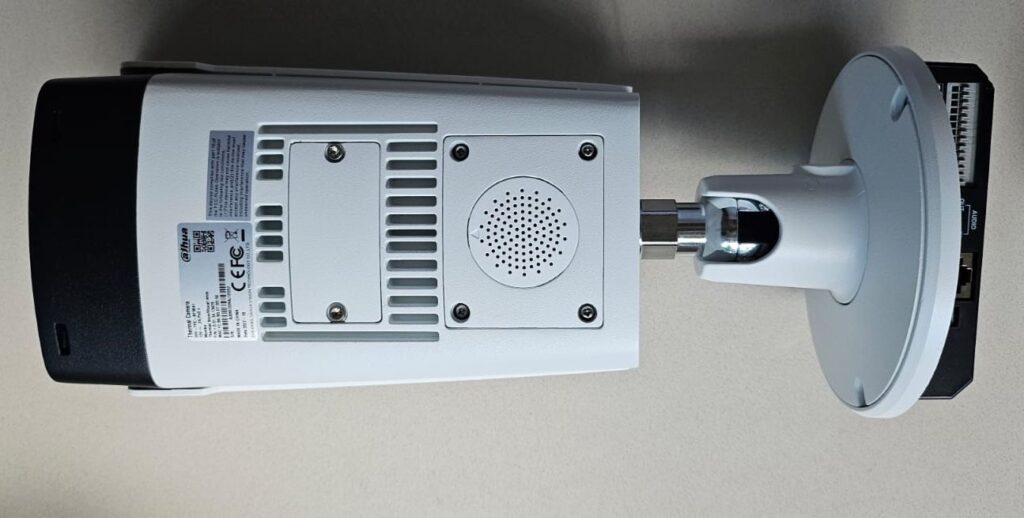
IVS 2.1: Intelligent Video System
What truly elevates this camera beyond traditional systems is not just what it sees, but how it interprets what it sees. IVS 2.1 is designed to solve one of the biggest problems in video surveillance: false alarms.
In many older systems, almost anything can trigger an alert, such as moving branches, shadows, birds, or even changes in lighting. Over time, this leads to alert fatigue where users begin to ignore notifications altogether.
IVS 2.1 approaches this differently. Instead of reacting to motion alone, it analyzes the shape, behavior, and movement patterns of objects in the scene. This allows it to:
- Accurately detect human figures and distinguish them from animals or irrelevant motion
- Identify vehicles and separate them from background activity
- Ignore environmental noise such as wind-blown objects or lighting changes
Beyond object classification, the system allows you to define specific rules:
- Tripwire (Line Crossing Detection): You can draw a virtual line in the scene, and the system will trigger an alert only when a person or vehicle crosses it in a defined direction.
- Intrusion Detection (Area Protection): Define a specific zone, and receive alerts when someone enters or stays within that area beyond a defined duration.
Scheduled Alerts
You can configure when these rules are active. For example, only at night or during certain days, therefore reducing unnecessary notifications during normal activity hours.
What stood out to me during actual use was the consistency. The system didn’t just reduce false alarms, but almost eliminated them in my testing. And that changes the entire experience, since instead of constantly checking alerts that don’t matter, you start trusting the system. And when it does notify you, you actually pay attention.
Installation
One of the small but surprisingly frustrating things I’ve seen over the years with security cameras is the installation process, especially the part nobody talks about: the wiring.
If you’ve ever installed a camera, you probably know exactly what I mean. You mount the camera, run the cable, and then suddenly you’re left with this awkward bundle of wires and a separate junction box mounted next to it. It works, but never really looks clean.
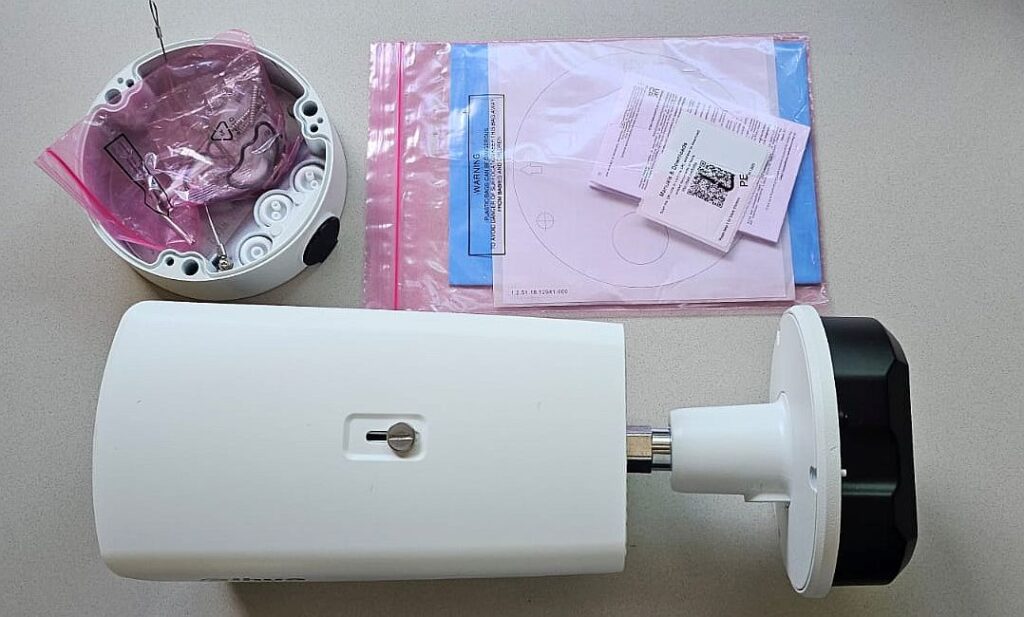
So when I opened the box of the DHI-TPC-BF5641, I immediately noticed something different. Dahua includes a dedicated junction box in the package, specifically designed for this camera. It’s slightly larger than what you’d typically see in consumer setups, but that’s intentional, as it gives you enough room to comfortably manage the wiring without forcing anything.
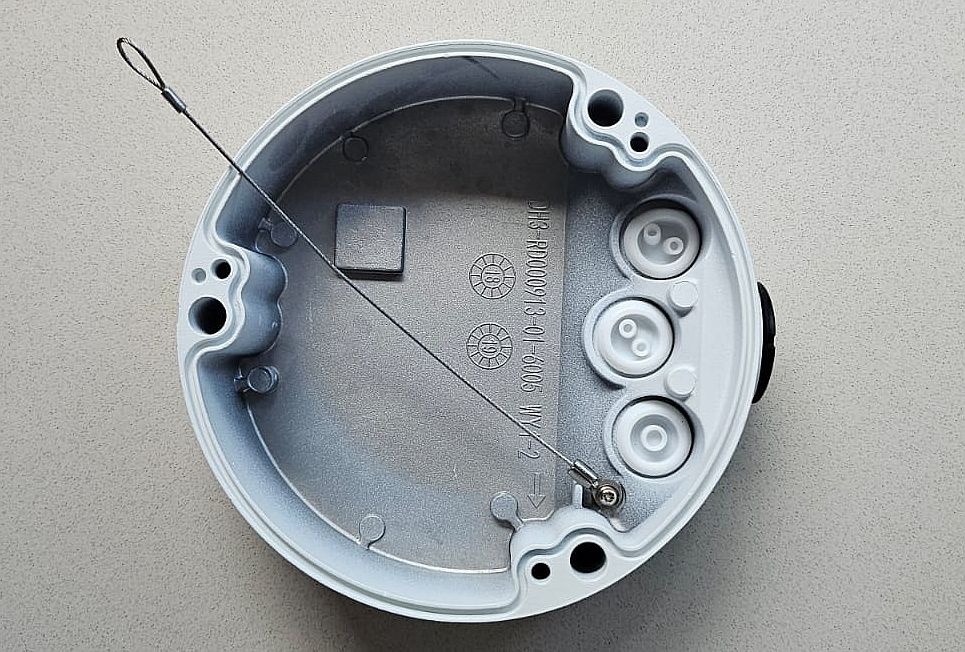
What stood out even more was a small but thoughtful detail: a built-in metal safety hook. During installation, you can hang the camera on it while connecting cables, instead of trying to hold the camera in one hand and tighten screws with the other. If you’ve ever dropped a camera, or almost did, you’ll appreciate how practical that is.
Despite the camera offering multiple connection options including separate power input, line-in, and line-out for audio, you don’t actually need most of them for a standard setup. In my case, I went with a simple PoE connection. One Ethernet cable from the PoE switch, and that’s it. The camera powers on and connects to the network.
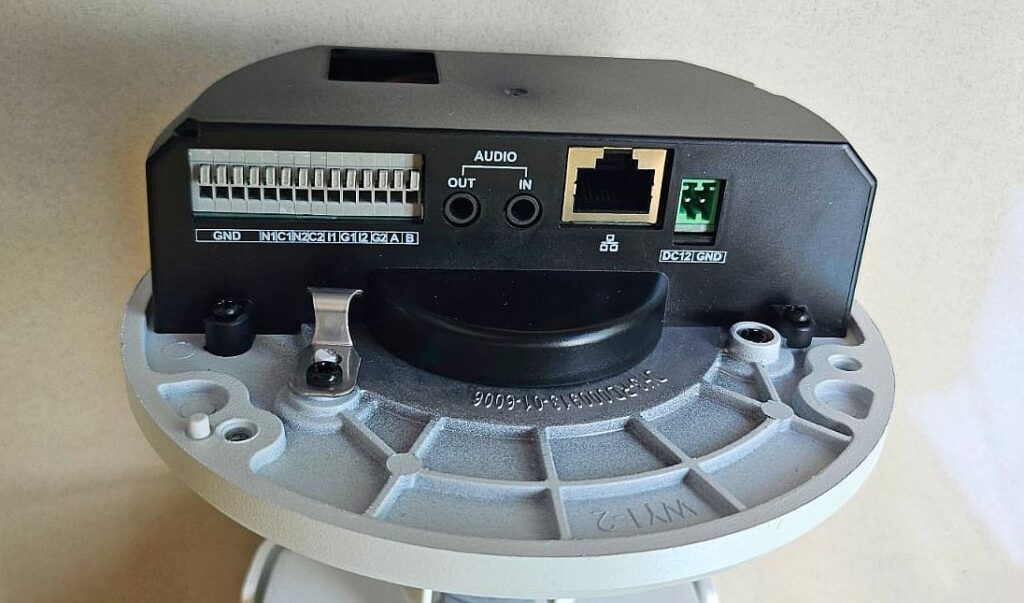
From there, it was just a matter of neatly placing the cable inside the junction box, closing it, and securing everything. The result is a much cleaner installation compared to traditional setups, with no exposed wiring, extra drilling for external boxes, or visual clutter on the wall.
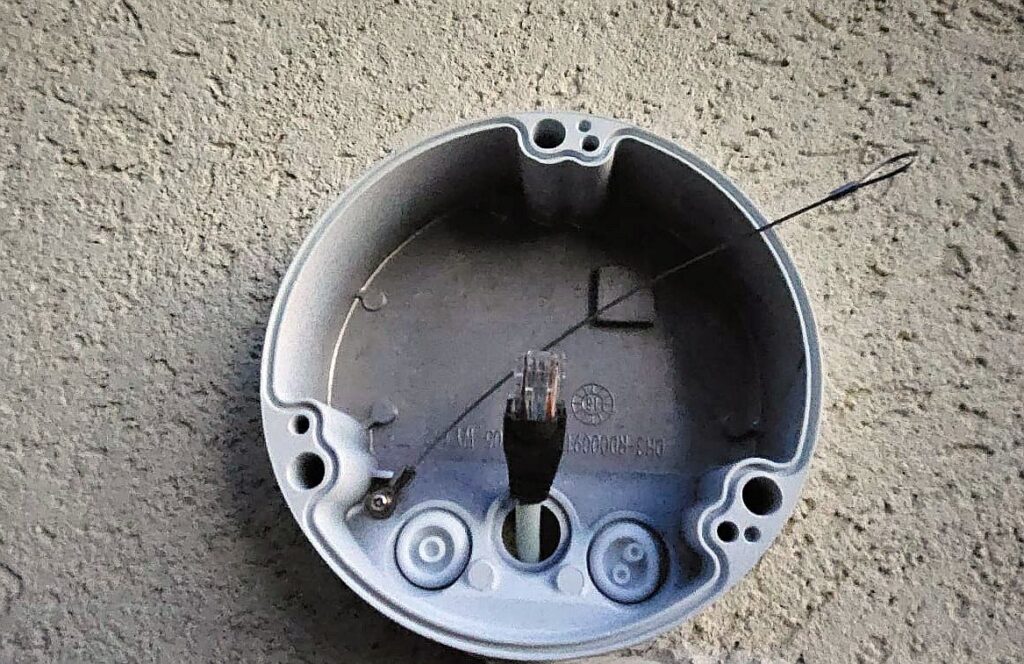
Another improvement over older bullet-style cameras is the adjustment mechanism. Instead of loosening multiple screws and struggling to align the angle, here you only need to loosen a single screw at the base. That allows full horizontal and vertical control, until you get the exact framing you want.
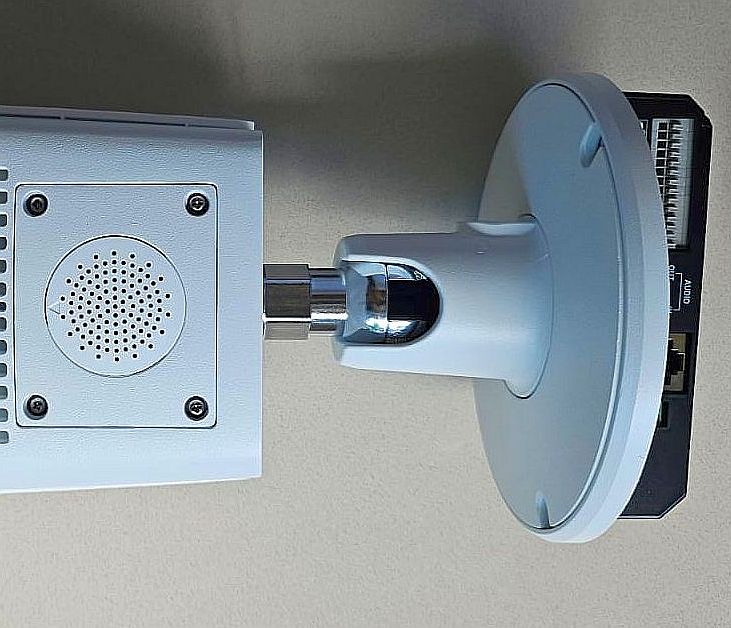
The end result feels intentionaly clean and professional. Like something that was designed not just to work, but also to be installed properly.
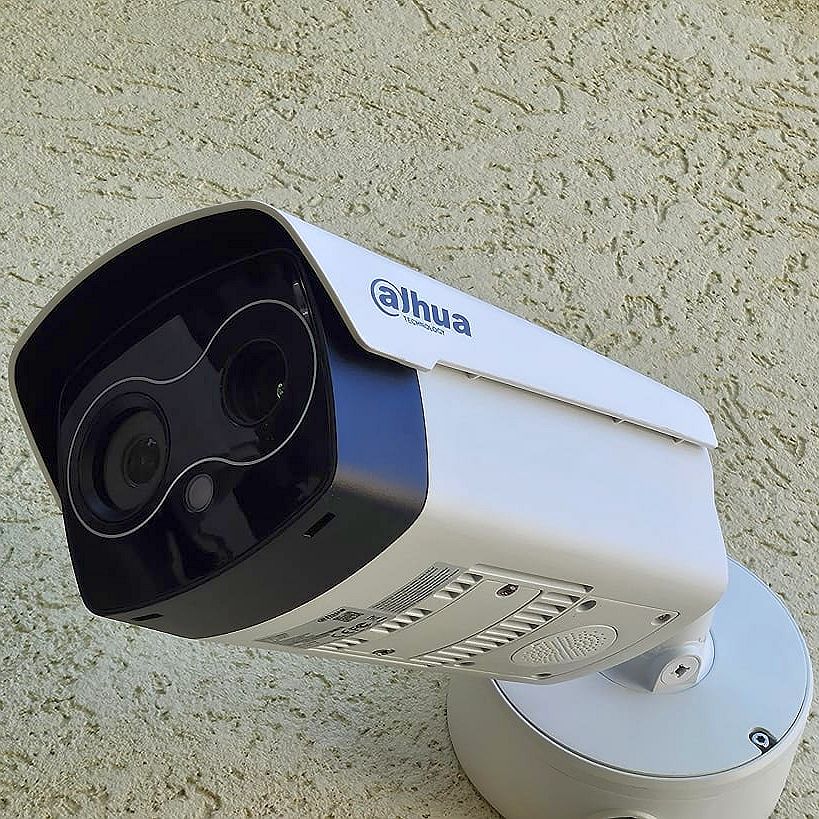
User Experience
To really understand what this camera is capable of, I wanted to push it beyond a basic setup. So I connected it to a Dahua NVR (model NVR5208-EI), which supports advanced AI features and gives access to the full range of analytics.
The first step was straightforward: assigning the camera an IP address that matches the network. Once connected, it immediately appeared in the NVR interface, and from there, things started to get interesting.
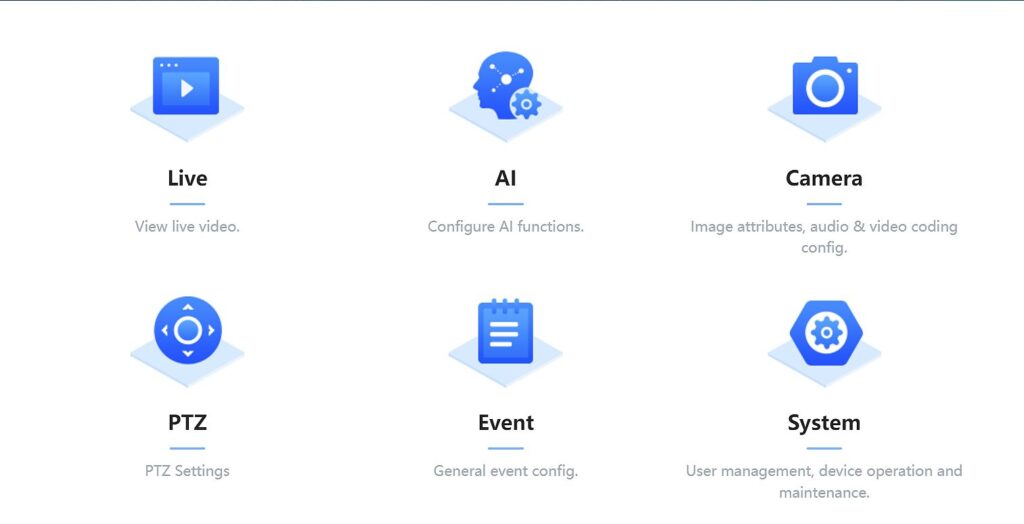
Unlike standard cameras, adding a thermal security camera unlocks entirely new layers of control. One of the first things I noticed was a dedicated fire and smoke detection menu, which is something you simply don’t see in regular camera systems.
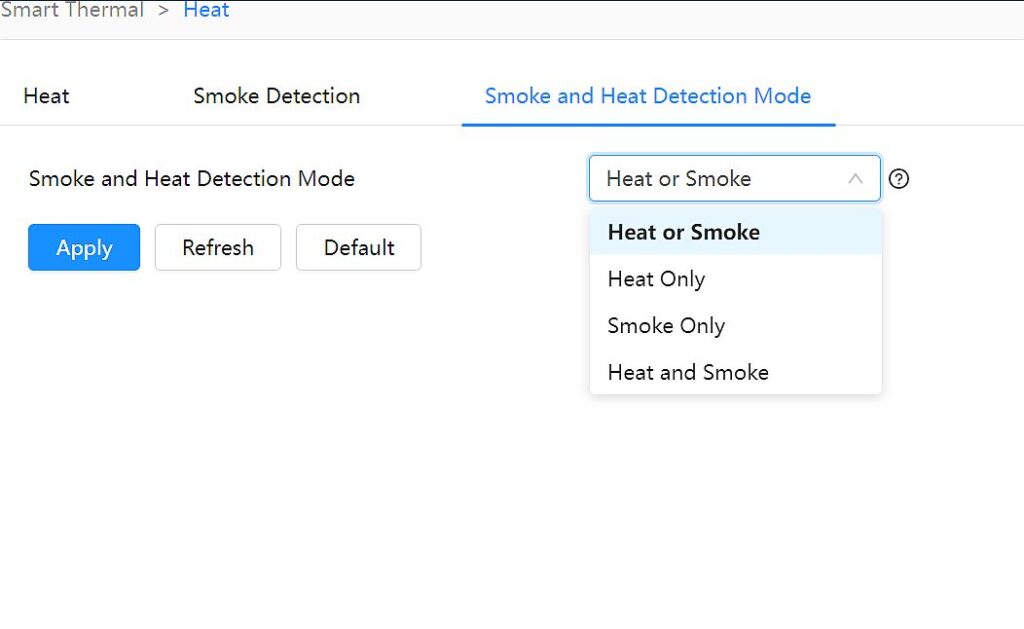
As I explored further, more options became available. You can switch between H.264 and H.265 compression, adjust bitrate settings, and enable VBR (variable bitrate), which dynamically adapts recording quality based on what’s happening in the scene, saving storage without sacrificing important details.
But the real difference is in how the camera understands what it sees.
Using the IVS 2.1 analytics, I set up a simple test: a virtual tripwire along the fence line between two properties. The idea was straightforward: if someone crosses that line, I want to know.
What I found during actual use was something that’s often promised but rarely delivered: accuracy.
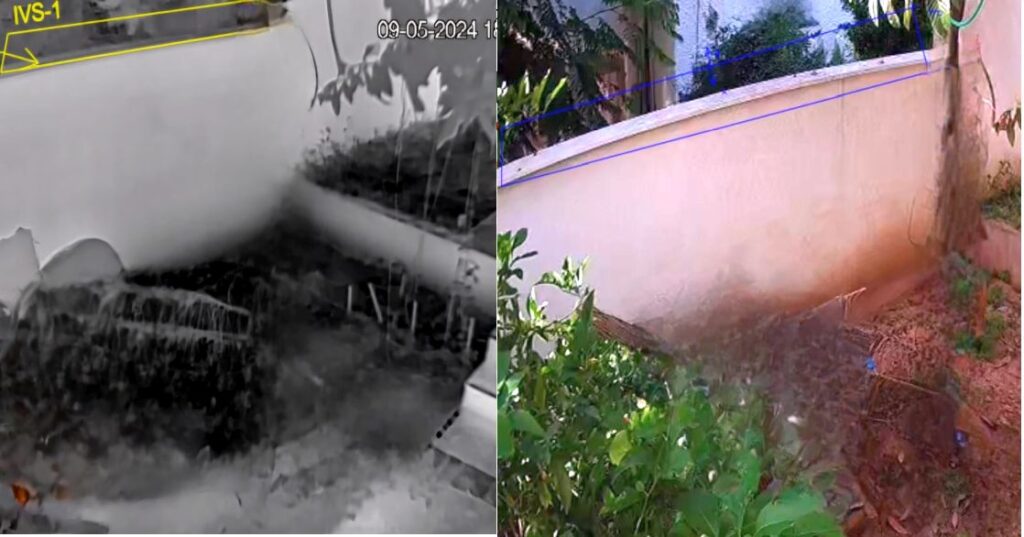
Unlike older systems that trigger alerts from shadows, moving branches, or even birds, this one stayed quiet, until it actually mattered. When a person entered the defined zone, the alert triggered exactly as expected. With no noise or false alarms.
Viewing the footage is also a unique experience because you’re essentially seeing two realities at once. On one side, the optical lens shows a familiar, high-resolution image. On the other, the thermal lens highlights heat signatures with people, animals, and anything emitting warmth, which stands out clearly regardless of lighting conditions or visual obstacles.
At one point, I tested visibility behind partial cover like a tree or shaded area. In the optical view, details were limited ,but the thermal view showed the subject immediately visible.
Accessing the camera directly through its IP interface opens even more capabilities: event uploads, scheduling alerts by time and day, and managing recordings from the onboard SD card.
Over time, what stood out wasn’t just the technology, but the confidence it creates. The system doesn’t just record what happens. It actively filters, identifies, and tells you when something actually requires your attention.
And that’s a very different kind of user experience.
Image Quality – Seeing Beyond Visibility
Evaluating image quality in a thermal security camera is a very different experience compared to a standard camera.
At first, I approached it the usual way: looking for sharpness, clarity, detail. But very quickly, I realized that with thermal imaging, the question isn’t just how good the image looks, but what the image reveals.
The most striking difference appears the moment a person or animal enters the frame.
Thermal Visibility: What You Can’t Hide
In the thermal view, anything that emits heat immediately stands out. It doesn’t matter if the subject is partially hidden behind a tree, standing in deep shadow, or wearing dark clothing. The body naturally emits infrared radiation, and the camera captures it clearly.
In real-world terms, this means that traditional blind spots become far less relevant. Areas that would normally obscure visibility, foliage, darkness, or uneven lighting, no longer provide the same level of concealment.
Optical Clarity: When Details Matter
On the optical side, the 4MP resolution delivers the level of detail you would expect from a high-quality modern security camera. Faces, objects, and environmental details remain sharp enough even when applying digital zoom.
This is where confirmation happens, since once the thermal lens alerts you to something, the optical lens helps you understand exactly what you’re looking at.
Two Perspectives, One Decision
What makes the experience unique is the ability to view both lenses side by side. You’re not choosing between thermal and optical, but actually combining them. One shows presence and the other detail. Together, they create a much more complete understanding of the scene.
Over time, I found myself relying less on visual clarity alone and more on this combined interpretation. And that’s a shift because it changes how you evaluate security footage altogether.
Conclusion: A Different Kind of Security Camera
Let’s be honest. Until recently, most people associated thermal cameras with military, law enforcement, or industrial use. But after spending time with the DHI-TPC-BF5641, it becomes clear that this technology is no longer limited to specialized environments.
What this camera demonstrates is not just an improvement in image capture, but an actual shift in how security systems operate. It doesn’t wait for you to notice something in the footage.
It actively helps you notice what matters, detects heat where traditional cameras see nothing, identifies real threats while filtering out noise and reduces false alerts to the point where notifications regain their value.
The combination of a thermal lens and a high-resolution optical lens creates a system that doesn’t just document events: it interprets them.
And when you add features like built-in speaker for real-time deterrence, microphone for environmental awareness and smart analytics that understand behavior, you start to see that this is no longer just a passive security device. It becomes part of an active security strategy.
Perhaps the most important takeaway is this that thermal security cameras are no longer a niche solution. They’re becoming practical, accessible, and highly relevant, especially for homeowners who want more than just recorded footage.
They want awareness, early detection and confidence.
And in that sense, the DHI-TPC-BF5641 delivers something that traditional cameras simply can’t.
Note:
- Dahua camera systems are sold and installed by authorized integrators.
- Some images were blurred to protect the privacy of their owners.